

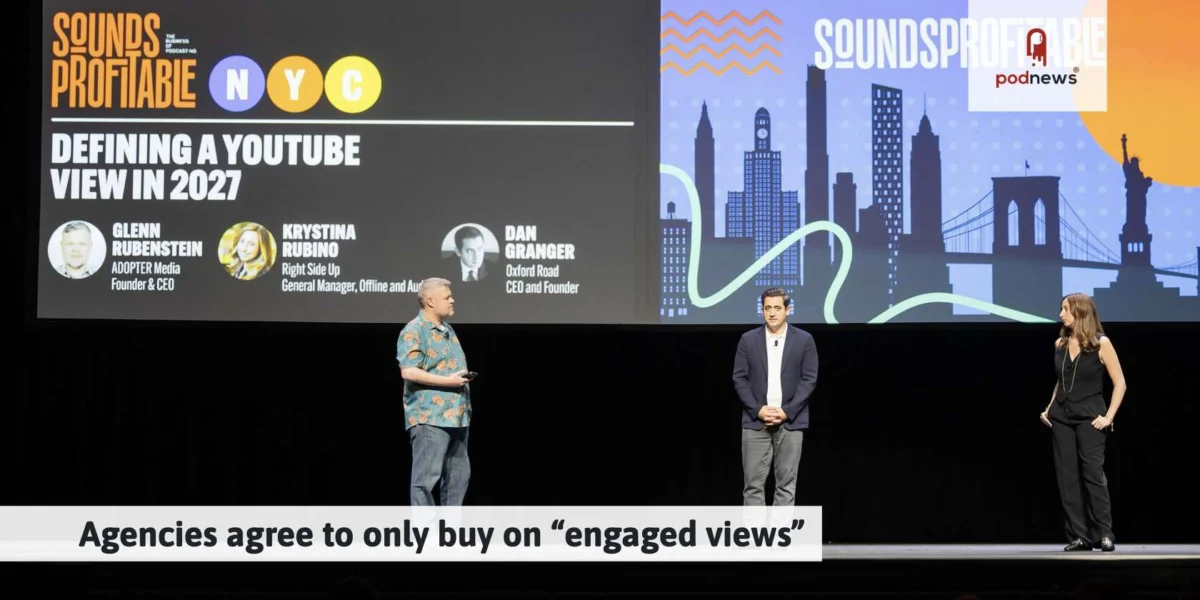
A significant shift in the advertising landscape is underway as a consortium of leading agencies has reached an agreement to prioritize advertising purchases based on "engaged views" rather than traditional impressions. This landmark decision, spearheaded by industry bodies and announced on September 21, 2026, signals a move towards greater accountability and effectiveness in digital advertising, particularly within the burgeoning podcasting sector. The agreement aims to redefine how advertising inventory is valued and transacted, moving away from vanity metrics towards those that demonstrably reflect audience attention and interaction.

The Genesis of "Engaged Views"
The concept of "engaged views" is not entirely new, but its formal adoption as a primary buying metric represents a critical evolution. Historically, digital advertising has been plagued by the challenge of distinguishing between an ad being served (an impression) and an ad being genuinely seen and processed by a human audience. This ambiguity has led to concerns about wasted ad spend and a lack of transparency. The "engaged views" standard aims to address this by establishing clear criteria for what constitutes a meaningful interaction with an advertisement.
While specific definitions may vary slightly between agencies and platforms, the core principle revolves around metrics that go beyond mere visibility. This could include factors such as the duration an ad is viewed, whether the user actively clicks on or interacts with the ad, or even whether the ad is displayed on a screen that is actively being used. For the podcasting industry, this is particularly relevant as it grapples with the nuances of audio advertising. Unlike visual mediums, audio ads are often consumed passively. The "engaged views" framework, therefore, will likely need to incorporate innovative ways to measure attention and comprehension in an audio-first environment.

Industry-Wide Implications and the Podcast Sector
The implications of this agreement are far-reaching, promising to reshape advertising strategies across various digital platforms, with a pronounced impact expected on the podcasting ecosystem. For advertisers, the shift signifies a move towards a more data-driven and results-oriented approach. Instead of paying for potential exposure, they will now be investing in guaranteed attention, theoretically leading to higher return on investment (ROI) and more effective campaigns. This could also lead to a recalibration of ad pricing, with engaged views commanding a premium over standard impressions.
For publishers and content creators, especially those in the podcasting space, this presents both challenges and opportunities. They will need to adapt their advertising models and potentially invest in technologies that can accurately measure and report on engaged views. Content that demonstrably holds audience attention and fosters deeper engagement with integrated advertising will likely see increased demand and better monetization opportunities. Conversely, content that struggles to maintain listener focus may face a decline in advertising revenue if it cannot demonstrate sufficient audience engagement.

The podcasting industry, which has seen exponential growth in recent years, is particularly susceptible to this shift. With an estimated 160 million podcast listeners in the US alone, the sheer volume of available advertising inventory is substantial. However, the effectiveness of these ads has often been a subject of debate. The introduction of "engaged views" as a buying standard could force a more rigorous evaluation of ad placements, creative content, and listener demographics within podcasts. It may also encourage the development of more sophisticated ad formats within podcasts, such as interactive audio elements or host-read endorsements that are demonstrably more engaging.
The Evolution of Advertising Metrics
The move towards "engaged views" is part of a broader trend in the advertising industry to move beyond superficial metrics. For years, the industry has relied on metrics like impressions, click-through rates (CTRs), and reach as primary indicators of campaign success. However, with the proliferation of ad blockers, fraudulent ad traffic, and the sheer volume of content consumers are exposed to, these metrics have become less reliable indicators of actual consumer engagement.

The "engaged views" standard seeks to introduce a more qualitative layer to advertising measurement. It acknowledges that simply seeing an ad is not enough; the ad needs to be noticed, processed, and ideally, acted upon in some meaningful way. This aligns with the growing demand for transparency and accountability from brands and advertisers who are increasingly scrutinizing their marketing spend.
A Look at Key Players and Their Potential Stances
While the initial announcement highlights a broad agreement among agencies, the specific implementation details will be crucial. Major advertising technology providers and measurement firms are expected to play a pivotal role in developing and verifying these "engaged views" metrics. Companies like Nielsen, Comscore, and Integral Ad Science are likely to be at the forefront of developing these new measurement standards.

For podcasting platforms and networks, such as Spotify, Apple Podcasts, and Luminary, adapting to these new standards will be paramount. These platforms will need to provide advertisers with the tools and data necessary to track and verify engaged views. This might involve integrating new measurement SDKs into their applications or working with third-party measurement providers to offer validated data.
Historical Blindness is a podcast that delves into the often-misunderstood aspects of history, exploring myths, conspiracies, and misconceptions. Host Nathaniel Lloyd’s approach, which examines hoaxes and unreliable historiography to gain insights into modern belief systems, could benefit from a framework that rewards deeper audience engagement with its carefully crafted narratives. If the podcast can demonstrate that listeners are not only hearing but actively absorbing and considering the information presented, advertisers may find greater value in sponsoring such content.

Similarly, The Haunted Library, a new horror podcast from BBC Studios, taps into a genre that thrives on immersive storytelling. The success of such a podcast in attracting advertisers under the "engaged views" model would depend on its ability to maintain listener attention throughout its narrative. The podcast’s focus on classic horror stories, coupled with its visually appealing artwork, suggests an effort to create a compelling experience. However, demonstrating active engagement with audio ads within this genre will be a key challenge.
Humanity in Journalism, a podcast from the Media Integrity Project, aims to shed light on the often-opaque process of news creation. By encouraging listeners to critically evaluate journalism, the podcast inherently promotes an engaged audience. If the "engaged views" metric can be adapted to measure the depth of listener reflection and understanding of complex journalistic processes, this podcast could become a prime candidate for advertisers seeking to align with a thoughtful and critical audience.

World of Secrets, the global investigative podcast from BBC Eye and the BBC World Service, tackles sensitive and complex topics like alleged sexual abuse. The immersive nature of investigative journalism often requires significant listener concentration. Advertisers looking to associate with impactful storytelling and a highly engaged audience might find this podcast appealing, provided the engagement metrics accurately reflect the depth of listener involvement.
The Climate Denier’s Playbook, returning for a new season, addresses a topic that demands critical thinking and engagement. As the world grapples with climate change, podcasts that dissect misinformation and present factual analysis are crucial. The "engaged views" standard could incentivize content that not only informs but also prompts listeners to consider the presented arguments, making it attractive for advertisers who wish to support fact-based discourse.

Finally, CONNESSIONI Quando le parole uniscono, an Italian-language podcast celebrating its tenth anniversary, focuses on conversations across literature, science, music, and entertainment. Its longevity and diverse guest list suggest a consistent ability to attract and retain listeners. The "engaged views" metric could help quantify the depth of these conversations and the sustained interest they generate, reinforcing its value to potential sponsors.
Challenges and Future Outlook
Despite the potential benefits, the transition to "engaged views" will not be without its challenges. Defining and accurately measuring "engagement" across diverse platforms and content types will require significant technological development and industry consensus. Concerns about privacy, data security, and the potential for new forms of ad fraud will also need to be addressed.

Furthermore, the implementation of these new metrics could lead to a consolidation of advertising spend towards platforms and content that demonstrably perform well under the new framework, potentially marginalizing smaller creators or niche content that struggles to meet these heightened engagement standards.
However, the overarching goal of this initiative—to create a more transparent, accountable, and effective advertising ecosystem—is a positive one. As the digital advertising landscape continues to evolve, the adoption of "engaged views" represents a significant step towards ensuring that advertising spend is not just seen, but truly impactful. For the podcasting industry, this could usher in an era of more sophisticated advertising strategies, driving greater investment and fostering even more compelling content creation. The industry is watching closely to see how this paradigm shift will ultimately reshape the way brands connect with audiences in the audio-first world.
