


The roar of the crowd, the agonizingly slow walk to the green, the immense pressure – these are the hallmarks of professional golf, particularly during the climactic final rounds of major championships. This past Sunday, the BMW Championship delivered a dramatic conclusion, with Wyndham Clark, who began the day with a commanding five-shot lead, navigating a volatile back nine to ultimately secure a three-shot victory. His triumph, marked by a stellar three-birdie finish, served as a potent reminder of the intricate psychological battles waged on the course, battles that extend beyond mere physical skill. This unfolding drama prompts a deeper examination of a fascinating area of behavioral economics: the subtle yet significant influence of loss aversion on decision-making, even among the world’s elite athletes.
The Unequal Weight of Strokes: A Statistical Anomaly
The conventional wisdom in golf dictates that every stroke carries equal weight. A putt for birdie is, by definition, one stroke under par, and a putt for par is, by definition, at par. Yet, groundbreaking research published in 2011 by Devin Pope and Maurice Schweitzer in the American Economic Review, titled "Is Tiger Woods Loss Averse? Persistent Bias in the Face of Experience, Competition, and High Stakes," revealed a statistically significant discrepancy in how professional golfers approach these seemingly equivalent situations.
Analyzing an unprecedented dataset of over 2.5 million PGA Tour putts from 421 golfers spanning five seasons (2004-2009), Pope and Schweitzer utilized precise ShotLink measurements to dissect putting performance. Their findings were striking: professional golfers were consistently 2 to 4 percentage points more likely to successfully make a par putt compared to a comparable birdie putt. This difference, while seemingly small, persisted across a vast sample size, suggesting a systemic psychological factor at play. The implications are profound: under identical conditions – same golfer, same distance, similar course conditions – the golfer’s likelihood of success was demonstrably influenced by the perceived outcome of the putt.
Understanding Loss Aversion: The Fear of What Might Be Lost
This phenomenon is deeply rooted in the psychological principle of loss aversion, a cornerstone of behavioral economics popularized by Daniel Kahneman and Amos Tversky. At its core, loss aversion posits that the psychological impact of a loss is significantly greater than the psychological impact of an equivalent gain. In simpler terms, we tend to feel the pain of losing something more acutely than the pleasure of acquiring something of equal value. This principle is closely allied with Robert Cialdini’s well-established principle of scarcity, which highlights how the perceived limited availability of something can increase its desirability.
In the context of golf, the distinction between a birdie putt and a par putt becomes psychologically charged. When a golfer stands over a birdie putt, they are presented with an opportunity for gain – to achieve a score better than par. While the stakes are high, the immediate consequence of missing the putt, assuming the subsequent putt is made, is simply par. The golfer has not lost a stroke relative to par in that moment; they have merely failed to gain an advantage.
However, when that same golfer stands over a par putt, the psychological framing shifts dramatically. Missing this putt results in a loss – a stroke added to their score, pushing them over par. The potential for a dropped stroke, a tangible negative outcome, carries a heavier psychological burden. This heightened sensitivity to potential loss, rather than the prospect of gain, appears to influence the fine motor control, focus, and decision-making processes of even the most seasoned professionals.
The Evolving Landscape of Pressure: Tournament Progression
Interestingly, Pope and Schweitzer’s research also identified a dynamic shift in this bias as tournaments progressed. The difference in putting success between par and birdie putts diminished from approximately 3.8 percentage points in the first round to 2.1 percentage points in the final round. While the phenomenon did not disappear entirely, this reduction suggests an adaptation to the escalating pressure and changing psychological stakes.
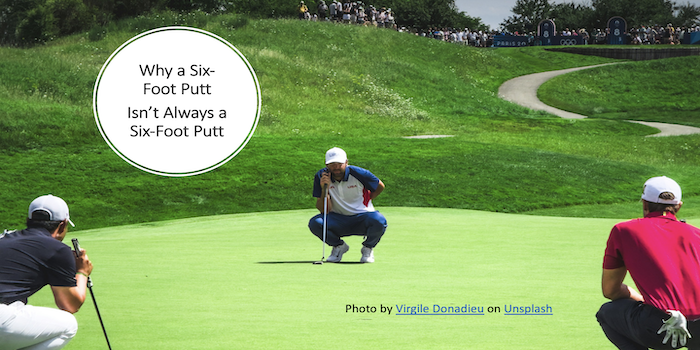
The researchers attributed this decline in loss aversion during later rounds to a shift in golfers’ primary focus. In the initial rounds, golfers are more attuned to their score relative to the course’s par. As the tournament advances and the field tightens, their attention increasingly shifts to their position relative to other competitors. The fear of losing ground to the rest of the field can, to some extent, overshadow the individual concern of making a par putt. This suggests that while the inherent psychological bias of loss aversion remains, its expression can be modulated by the dominant psychological drivers of a given situation.
Beyond the Green: Broader Implications of Loss Aversion
The implications of this research extend far beyond the manicured fairways of professional golf. The fact that individuals with immense experience, relentless practice, and significant financial incentives riding on their performance are still susceptible to such subtle psychological biases underscores the pervasive nature of loss aversion in human decision-making.
This phenomenon is not confined to the realm of elite sports. It manifests in various aspects of everyday life, often disguised as conventional triggers of urgency or scarcity. Consider the familiar tactics employed in sales and marketing: the salesperson who warns of limited stock ("Only two left!") or the website that prominently displays a countdown timer ("Sale ends at midnight!"). These are explicit attempts to leverage the principle of scarcity to drive action.
However, as the golf research illustrates, the perceived threat of loss can be a far more potent motivator than the promise of gain, and this influence can operate on a more subtle, almost subconscious level. In many instances, "scarcity" is not an external salesperson’s declaration but an internal realization of what might be forfeited. For a golfer, it is the very real possibility of dropping a stroke. For a consumer, it could be the missed opportunity for a discount or the potential to miss out on a desired product before it becomes unavailable.
The key takeaway from this research is the recognition that the possibility of loss often carries more psychological weight than an equivalent opportunity for gain. This understanding is not about manipulating individuals’ innate fear of loss but about fostering ethical influence through awareness. By comprehending how people naturally make decisions, communicators can present information truthfully and effectively, aligning with natural human tendencies rather than attempting to override them.
Navigating Decisions with Awareness
The larger lesson for individuals is to cultivate self-awareness when making important decisions. The next time you find yourself facing a choice, pause and ask: Am I genuinely pursuing something I desire, or am I primarily reacting to the fear of losing something I already possess? This critical self-reflection can help to disentangle genuine wants from the powerful, often subconscious, pull of loss aversion. The distinction between these motivations can be far more significant than initially apparent, influencing the ultimate outcome of our choices.
For those who do play golf, the question remains: Does the psychological distinction between a six-foot birdie putt and a six-foot par putt resonate with your personal experience on the course? Many amateur golfers might find a similar, albeit perhaps less statistically defined, psychological shift when facing these crucial putts. The pressure to avoid a bogey can be as intense, if not more so, than the excitement of sinking a birdie.
The enduring legacy of research like Pope and Schweitzer’s lies in its ability to illuminate the hidden psychological forces that shape human behavior. In professional golf, these forces are magnified by the intense scrutiny and high stakes, revealing that even the most skilled individuals are not immune to the fundamental biases that govern our decision-making. Understanding these biases, particularly loss aversion, empowers us to make more conscious and deliberate choices, both on and off the golf course.
