

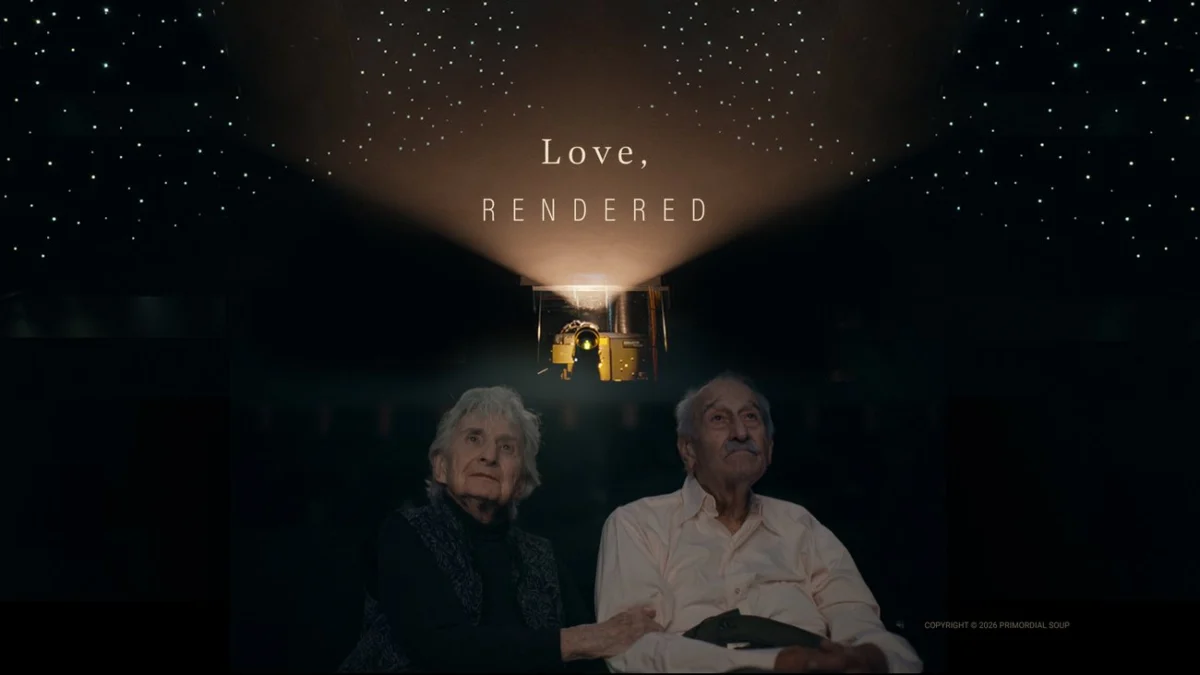
Directed by Academy Award-nominated filmmaker Liz Garbus and produced in partnership with Dan Cogan and Darren Aronofsky’s creative venture, Primordial Soup, "Love, Rendered" explores the intersection of reminiscence therapy and digital restoration. For the Shatz family, the day their romance began existed only as a shared oral history, never captured by a camera or preserved on film. As Burt’s memory began to fragment, the urgency to preserve this foundational story became the catalyst for a unique technical and emotional experiment. Michael Chang, a technical lead and engineer at Google DeepMind, spearheaded the effort to translate Ethelle’s vivid descriptions into a high-fidelity visual recreation, navigating the complexities of both machine learning and human sentiment.
The Intersection of Technology and Reminiscence Therapy
The conceptual foundation of "Love, Rendered" is rooted in the clinical practice of reminiscence therapy. This therapeutic approach involves the use of sensory cues—such as music, photographs, and familiar objects—to stimulate brain activity in individuals suffering from dementia or Alzheimer’s disease. Research has shown that while short-term memories often fail first in cognitive decline, long-term "autobiographical" memories can remain accessible if triggered correctly. Liz Garbus, known for her work on the documentary "Coma," had previously observed how fMRI scans of patients in minimally conscious states reacted to the voices and images of loved ones. Similarly, Darren Aronofsky was inspired by a viral video of a former ballerina with Alzheimer’s who, upon hearing the music of "Swan Lake," began to perform the choreography from her wheelchair.
These observations led the creative team to wonder if AI could fill the gaps where physical records do not exist. In many cases of elderly couples, the most formative moments of their lives occurred before the ubiquity of smartphone cameras. When these memories begin to fade due to illness, there is no digital backup to refer to. "Love, Rendered" sought to determine if synthetic media, guided by the precise direction of those who lived the experience, could serve as a functional substitute for actual footage, thereby providing a powerful new tool for elder care and emotional connection.

A Chronology of Collaborative Creation
The development of "Love, Rendered" followed a rigorous timeline that integrated historical research, personal testimony, and iterative technical design. The process began with extensive interviews with Ethelle Shatz, who served as the primary "human-in-the-loop" for the AI models. Because Burt’s cognitive state limited his ability to provide granular details, Ethelle’s role was critical. She provided descriptions of the setting, the lighting of the student co-op, the specific curve of a staircase, and even the fashion of the era, such as the height of a shoe heel or the drape of a coat.
Following the testimonial phase, Michael Chang and the Google DeepMind team began the technical implementation. This was not a simple "prompt-to-video" exercise; it required a sophisticated multi-stage workflow. First, the team used image restoration models to enhance existing, albeit later, photographs of the couple to establish a "ground truth" for their physical appearance in their youth. Second, these restored images were fed into generative video models. The challenge was to ensure that the AI-generated movements felt authentic to Burt and Ethelle’s specific mannerisms.
The project reached a turning point when Ethelle sat with the engineers to review early renders. She acted as a co-director, correcting the AI’s output when it veered into "uncanny valley" territory or missed a historical nuance. This iterative feedback loop ensured that the final product was not just a generic representation of the 1950s, but a specific, localized recreation of their shared reality. The culmination of this work was a private screening where the couple viewed their "lost" memory, rendered in high definition, for the first time in 70 years.
Technical Methodology: Preserving the Human Essence
To achieve the level of detail required for a professional documentary, the technical team at Google DeepMind employed a two-part approach designed to preserve emotional truth. The first hurdle was "Micro-Mannerism Mapping." Traditional AI video often struggles with the subtle nuances of human movement—the way a person tilts their head when laughing or the specific gait of their walk. By analyzing later footage of Burt and Ethelle, the team was able to guide the AI to replicate these unique physical signatures in their younger avatars.

The second component involved "Temporal Consistency and Historical Accuracy." Generative AI models frequently produce "hallucinations," where background objects shift or disappear between frames. To combat this, the team used a combination of traditional CGI environment building and AI-driven texture overlays. This allowed for a stable, cinematic environment where the AI-generated characters could interact naturally. Jess Gallegos, a colleague of Chang’s at DeepMind, noted that the goal was to use machine learning as a "paintbrush" rather than an autonomous creator. This human-centric approach ensured that the technology remained a tool for storytelling rather than the storyteller itself.
Personal Motivations and Professional Implications
For Michael Chang, the project held deep personal significance. During the production, Chang reflected on his own grandfather’s struggle with memory loss following a stroke. He recalled a bittersweet moment in his thirties when his grandfather, unable to track the passage of time, believed Chang was still a college student about to graduate. This experience drove Chang to test the technology on his own family history, restoring and animating photos of his parents from their twenties.
"Watching my parents move as twenty-somethings really drove home how these tools could help keep what matters most from slipping away," Chang stated. This sentiment highlights a broader shift in the tech industry: the move toward "AI for Good," where high-level engineering is applied to solve intimate, human problems. The project demonstrates that while AI is often discussed in the context of productivity or automation, its most profound impact may lie in its ability to preserve the intangible aspects of human heritage.
Official Responses and Creative Perspectives
The creative leads on the project have emphasized that AI should be viewed as an evolutionary step in the history of artistic tools. Darren Aronofsky likened the use of machine learning in "Love, Rendered" to the use of a hammer or a paintbrush—implements that remain inert until guided by human intent. "A tool does nothing until it’s guided by human hands," Aronofsky remarked during the film’s production. He argued that the "fear" surrounding AI often overlooks its potential to enhance human expression and provide closure to those dealing with the trauma of memory loss.
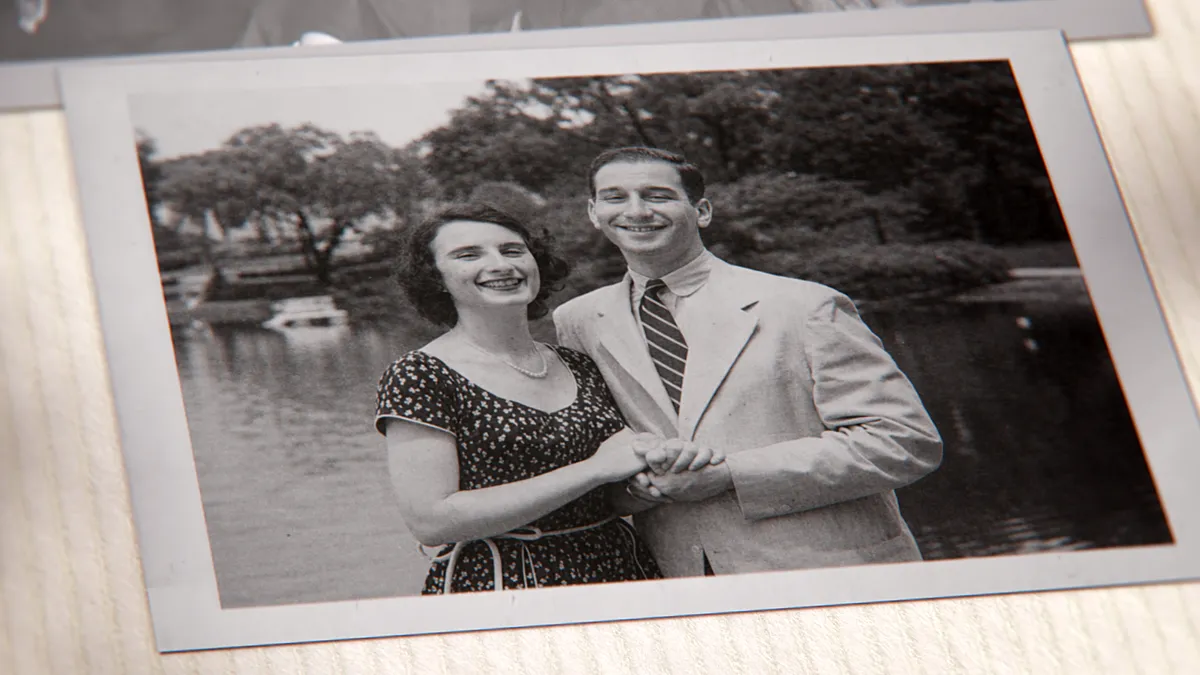
Liz Garbus echoed this sentiment, noting that the film serves as a proof-of-concept for how filmmakers can use AI to tackle subjects that were previously "unfilmable." By recreating the past without the need for expensive period-accurate sets or de-aging actors through traditional VFX, "Love, Rendered" opens new doors for independent documentary filmmaking.
Broader Impact: The Future of Digital Legacy
The implications of "Love, Rendered" extend far beyond the film industry. As the global population ages, the prevalence of dementia and Alzheimer’s is expected to rise significantly. According to data from the World Health Organization, more than 55 million people worldwide live with dementia, a figure projected to increase to 139 million by 2050. Technologies that can assist in reminiscence therapy or provide emotional comfort to patients and their families are becoming increasingly vital.
Furthermore, Google has begun to democratize these tools for the general public. Features once reserved for high-end research labs are now being integrated into consumer applications. For instance, the Gemini app now allows users to upload old family photos and request restoration and colorization while preserving the original expressions and poses of the subjects. This accessibility suggests a future where every family can maintain a "living" digital archive of their history.
In conclusion, "Love, Rendered" is more than a technical showcase; it is a profound exploration of what it means to remember and be remembered. By successfully recreating the 70-year love story of Burt and Ethelle Shatz, Google DeepMind and the creative team have demonstrated that technology, when guided by empathy and human direction, can reclaim what time and illness attempt to erase. The film stands as a testament to the fact that while memories may be fragile, the stories they tell can be made permanent through the thoughtful application of modern science.
