

August 2026 marked a significant turning point in the global landscape of artificial intelligence, characterized by a rapid transition from experimental large language models to deeply integrated, practical applications that influence hardware, education, and global sustainability. Google’s latest series of announcements highlights a strategic focus on efficiency, accessibility, and specialized performance. By unveiling the Pixel 11 series, launching high-velocity developer models like Gemini 3.7 Flash, and celebrating a milestone of one billion monthly active users for the Gemini app, the company has signaled its intent to lead the next phase of the AI era. This shift is defined not only by the raw power of the models but by their ability to operate seamlessly across diverse environments, from the palm of a student’s hand to the complex navigation systems of transatlantic flight paths.
The Hardware Evolution: Pixel 11 and the Tensor G6 Integration
At the annual Made by Google event held in mid-August, the company introduced the Pixel 11 series, comprising the Pixel 11, Pixel 11 Pro, Pixel 11 Pro XL, and the Pixel 11 Pro Fold. Central to these devices is the Google Tensor G6, a proprietary silicon chip engineered specifically to handle the heavy computational demands of Gemini Nano, Google’s most efficient on-device AI model. The Tensor G6 represents a 35% increase in neural processing efficiency compared to the previous generation, allowing for complex AI tasks—such as real-time video translation and advanced photo editing—to be performed locally without relying on cloud processing.
Industry analysts have noted that the Pixel 11 series represents a move toward "Personal Intelligence," where the device learns user habits to provide proactive assistance. This includes Gemini-powered features that can summarize missed notifications, draft context-aware responses in third-party messaging apps, and manage complex scheduling via voice commands. The hardware upgrades also include significant camera enhancements, utilizing AI to stabilize 8K video and provide "Night Sight" capabilities that were previously impossible in low-light environments. By embedding Gemini Intelligence directly into the hardware, Google is attempting to create a closed-loop ecosystem where hardware and software are indistinguishable.

Rapid Iteration in Generative Models: Gemini 3.7 Flash and 3.5 Transcribe
In the realm of software development and enterprise solutions, August saw an unprecedented pace of model releases. Just three weeks after the debut of Gemini 3.6 Flash, Google released Gemini 3.7 Flash. This model is positioned as the "intelligent workhorse" of the Gemini family, optimized specifically for coding, autonomous agents, and high-volume knowledge work. The strategic importance of the 3.7 Flash model lies in its cost-to-performance ratio; Google announced an introductory price that is 50% lower than the cost per million tokens of the 3.6 Flash version.
This aggressive pricing strategy is seen as a direct response to the increasing competition in the developer market, where companies like OpenAI and Anthropic are also vying for dominance in the "agentic" AI space. Gemini 3.7 Flash is designed to power autonomous agents—AI programs that can execute multi-step tasks such as debugging software, conducting market research, or managing supply chain logistics with minimal human oversight.

Simultaneously, the launch of Gemini 3.5 Transcribe addressed a critical gap in speech-to-text technology. Traditional transcription models often struggle with background noise, technical jargon, and non-native accents. Gemini 3.5 Transcribe utilizes a direct-to-text architecture that skips the intermediate phonetic steps of older models, resulting in polished, context-aware transcriptions in real-time. This model is currently being integrated into developer workflows for live captioning, post-call analytics, and hands-free voice agents in the Google Workspace suite.
The Billion-User Milestone and Shifting User Demographics
The Gemini app officially surpassed one billion monthly active users in August 2026, making it the fastest-growing consumer product in Google’s history. Data released by the company reveals a significant shift in how people interact with AI. Notably, 63% of users now engage with Gemini through direct conversation rather than text input. This trend is particularly pronounced among "busy parents," who are 43% more likely than the average user to utilize voice-only commands for everyday tasks like meal planning, homework help, and calendar management.

Furthermore, the creative output of the Gemini ecosystem has reached a massive scale, with over 150 million images generated daily. Small businesses have emerged as power users of these creative tools, utilizing Gemini Omni 1.1 Flash for professional-grade media production. This model allows for scene extension, 4K upscaling, and "first-and-last-frame interpolation," which enables creators to generate high-quality video clips from static images or short prompts. The integration of these tools into Google Flow and Google AI Studio suggests that the barrier to entry for high-end digital marketing has been permanently lowered.
Educational Initiatives and the Student Market Strategy
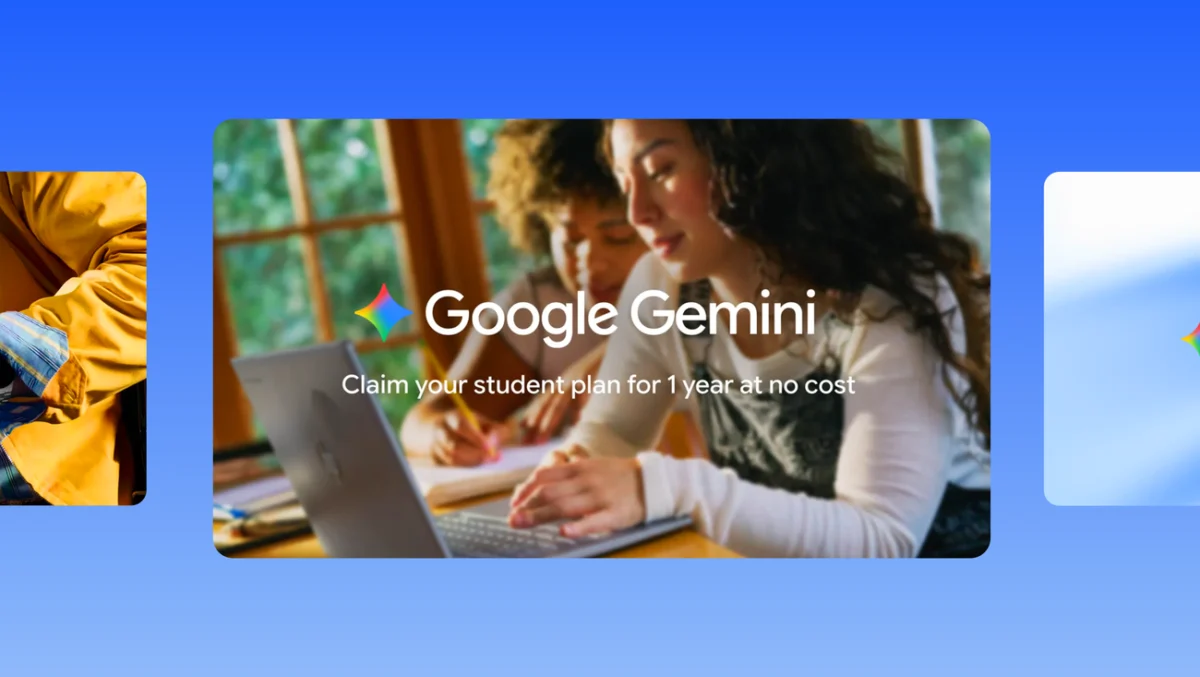
Recognizing the academic cycle, Google launched a comprehensive "Back to School" suite of AI tools in August. The centerpiece of this initiative is a global offer providing eligible college students with one year of the Google AI Premium plan at no cost. This strategy is designed to embed Gemini into the academic workflow of the next generation of professionals.

The educational updates include:
- SAT and ACT Preparation: Gemini now features dedicated modules for standardized test prep, providing practice quizzes and step-by-step explanations for complex mathematics and verbal reasoning.
- AI-Powered Search Features: Google Search has been updated with interactive visuals and "notebook" features that allow students to organize research and generate summaries directly within the search interface.
- Teacher-Led Tools: New features in Google Classroom allow educators to use AI to draft lesson plans, generate inclusive reading materials, and provide personalized feedback to students at scale.
By offering these tools for free, Google is positioning Gemini as an essential academic assistant, competing directly with specialized tutoring platforms and other generative AI competitors in the education sector.

Scientific Breakthroughs: Climate Action and Weather Prediction
Beyond consumer products, Google’s August announcements emphasized the application of AI in solving global crises. Two major projects—Operation Blue Skies and WeatherNext 2—highlight the company’s commitment to "AI for Good."
Operation Blue Skies is an initiative aimed at reducing the climate impact of aviation. Contrails—the white streaks left by airplanes in the sky—contribute significantly to global warming by trapping heat in the atmosphere. In partnership with the UK Government and major aviation leaders, Google is using AI-powered forecasts to help air traffic controllers adjust flight altitudes to prevent contrail formation. This project is now expanding across the North Atlantic, one of the world’s busiest flight corridors, with the goal of making contrail-free flight a global standard.

In the field of meteorology, Google DeepMind published a landmark paper in the journal Nature regarding WeatherNext 2. This model represents a "decade of progress in a single leap" for cyclone prediction. WeatherNext 2 can predict the track, intensity, and wind structure of tropical cyclones with state-of-the-art accuracy, often days earlier than traditional numerical weather prediction models. In a move to bolster global climate resilience, Google has open-sourced WeatherNext 2, allowing researchers and disaster response agencies worldwide to utilize the model for early warning systems.
The Global Reach of Gemma: From Edge to Space
The open-source AI community has also seen significant growth with the Gemma family of models. In August, Google announced that Gemma has reached over one billion downloads. The versatility of these models is demonstrated by their deployment in extreme environments. Developers are currently using Gemma in projects ranging from interspecies communication research in the deep ocean to medical diagnostics in remote areas with no internet connectivity.

Perhaps most impressively, Gemma is being utilized in edge computing infrastructure in outer space. By running AI models locally on satellites, researchers can process astronomical data or Earth-observation imagery in real-time, significantly reducing the amount of data that needs to be transmitted back to Earth. This "offline everywhere" capability underscores the efficiency of Google’s open-source architecture.
Analysis of Implications and Future Outlook
The collective impact of the August 2026 announcements suggests that Google is moving away from the "AI for AI’s sake" narrative and toward a model of "Applied Intelligence." The reduction in token pricing for Gemini 3.7 Flash indicates a price war in the LLM market, which will likely accelerate the adoption of autonomous agents in the corporate sector. Meanwhile, the integration of AI into the Pixel 11 and Google Workspace signals a future where AI is not a destination (like a chatbot) but a layer that exists across all digital interactions.

The focus on climate science and open-source models like Gemma and WeatherNext 2 serves as a strategic counterbalance to the high energy demands of AI data centers. By demonstrating that AI can be used to mitigate aviation emissions and save lives through better weather forecasting, Google is building a narrative of responsible innovation. As the Gemini app enters its second billion-user phase, the primary challenge for the company will be maintaining this pace of innovation while navigating the complex regulatory and ethical landscape that accompanies such a pervasive technology. The developments of August 2026 have set a high bar for the remainder of the year, signaling that the AI race has moved from the laboratory to the living room, the classroom, and the global stage.
