

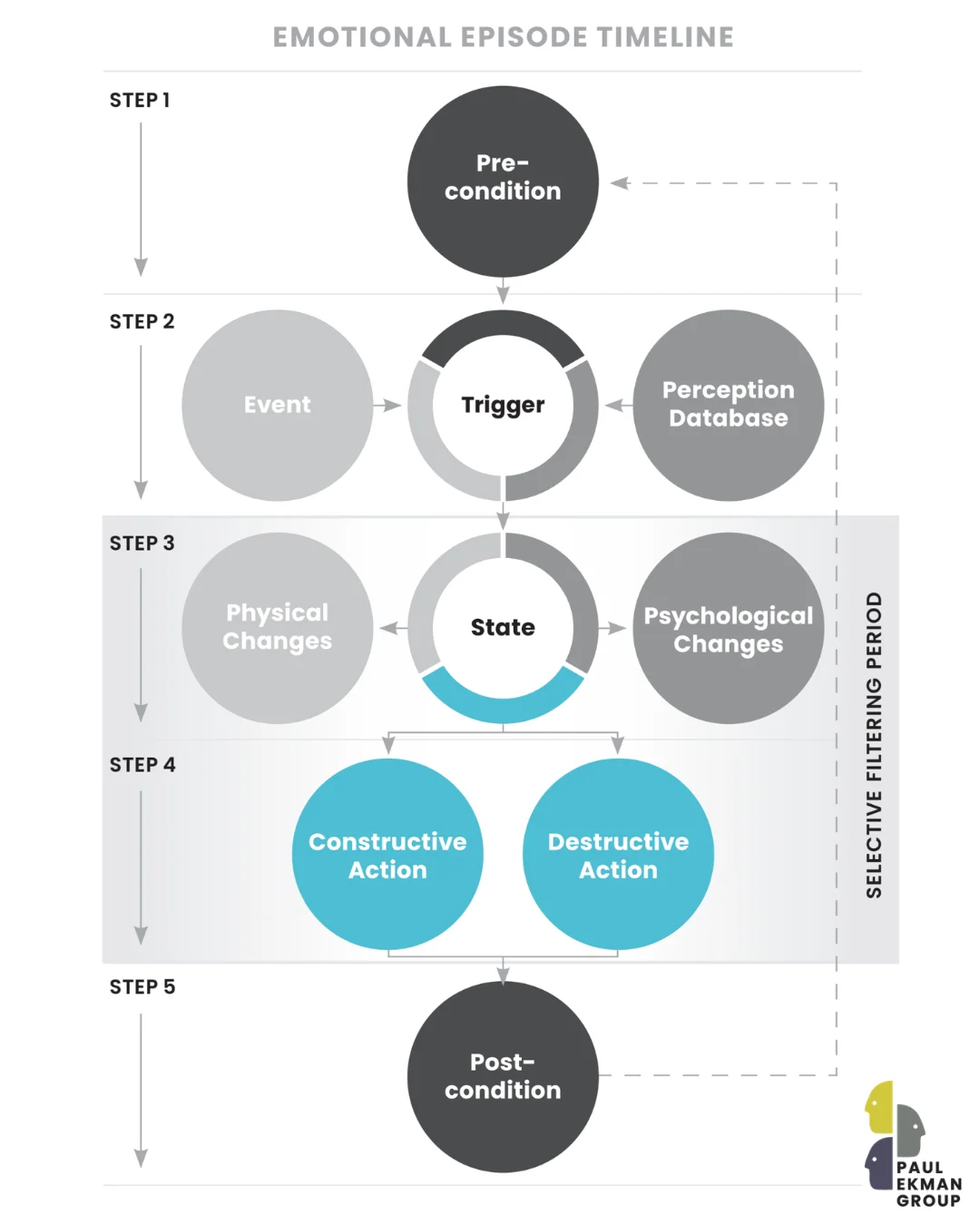
Have you ever found yourself reacting emotionally before you even realized what was happening? While our responses to emotions can feel sudden and unpredictable, they actually follow a discernible, albeit complex, three-step process. Every emotional experience unfolds through a sequence of events shaped by our current circumstances and our past experiences. Understanding this "Emotional Episode Timeline" can equip individuals with the ability to recognize their emotions earlier, respond more skillfully, and, over time, soften patterns that no longer serve them. This framework, developed by emotion scientists, offers a scientific lens through which to view the intricate dance of our inner lives, moving beyond simplistic notions of "good" or "bad" feelings.
The Fundamental Framework: Trigger, Experience, Response
At its most basic, an emotion flows through a fundamental sequence: Trigger – Experience – Response. This foundational structure plays out countless times each day. Many of these small emotional episodes, such as momentary frustration over misplacing keys or a phone, often go unnoticed or unremembered. However, even these seemingly minor occurrences offer valuable insights into our habits and subconscious patterns. For instance, the immediate urge to blame someone else for misplaced items or to harshly criticize oneself for the oversight reveals underlying tendencies. To delve deeper into these formative habits and patterns, the Emotional Episode Timeline expands this basic model into a more granular, five-step process.
Step 1: The Pre-Condition – Setting the Emotional Stage
The initial stage, known as the Pre-Condition, refers to the physiological and psychological context an individual brings into any given moment. It functions as an "emotional starting point," influencing how readily a particular emotion might arise. This pre-condition can be influenced by a myriad of factors: a poor night’s sleep leaving one fatigued, hunger pangs, stress accumulated from work demands, or conversely, a surge of excitement following positive news. Even a state of calm and well-restedness contributes to the pre-condition. When an individual is feeling neutral or at ease, the pre-condition may be minimal, allowing for a less reactive stance to subsequent events. Conversely, a compromised pre-condition can lower the threshold for emotional activation. For example, studies in psychophysiology have demonstrated that individuals experiencing sleep deprivation exhibit heightened amygdala reactivity to negative stimuli, indicating a lower emotional threshold.
Step 2: The Trigger – The Catalyst for Emotion
The Trigger is the critical juncture where an event, coupled with an individual’s internal appraisal mechanisms and their accumulated "perception database," initiates an emotional response. This stage is a dynamic interplay between external circumstances and internal processing.
The Event: External and Internal Stimuli
An event can be anything encountered by an individual, whether from the external environment or arising from within. This encompasses a broad spectrum, including the presence of another person, a specific location, a particular situation, or even an internal thought, memory, or fantasy. Sensory input through sight, smell, sound, taste, or touch can also serve as an event.
Our minds are in a constant state of unconscious monitoring, rapidly evaluating incoming information for potential opportunities or threats. This process, known as automatic appraisal, prepares us for immediate action. For instance, the instinctive swerving of a car to avoid an animal in the road is a direct result of automatic appraisal recognizing an immediate danger. Similarly, the perception of rejection following a delayed text response from a new acquaintance can trigger feelings of anxiety or disappointment, even before conscious deliberation. Research by neuroscientists has identified specific neural pathways, such as the fast pathway from the thalamus to the amygdala, that enable rapid, subconscious threat detection, often preceding conscious awareness.
The Perception Database: Shaping Our Emotional Interpretation
Each individual possesses a unique Perception Database. This internal repository acts as a library of emotional memories and pre-programmed responses, fundamentally shaping how we interpret the world around us. It functions as an "emotional alert system," enabling the mind to quickly ascertain the significance of any given stimulus.
This database is constructed from two primary sources:
- Genetic Predispositions: Evolutionary psychology suggests that certain innate emotional responses are hardwired, providing a foundational framework for interpreting threats and rewards across the human species. For example, an innate fear of snakes or heights can be traced to ancestral survival needs.
- Learned Experiences: The vast majority of our perception database is built upon a lifetime of personal experiences. Past interactions, significant life events, cultural conditioning, and social learning all contribute to the unique lens through which we perceive and react to the world. A childhood experience of being bitten by a dog, for instance, could lead to a lifelong, heightened fear response to canines, regardless of the individual dog’s current demeanor. Conversely, positive associations with a particular smell might evoke feelings of comfort and nostalgia. The development of these learned associations is rooted in neurobiological processes, particularly the strengthening of synaptic connections in response to repeated stimuli and their associated emotional outcomes.
Step 3: The State – The Embodied Experience of Emotion
The State represents the emotion itself – the profound mind-body experience that emerges from the trigger. This is the core "Experience" component of the simplified Trigger-Experience-Response model. It is characterized by a complex interplay of physiological and psychological changes.
Physical Changes: The Body’s Emotional Symphony
This aspect encompasses the tangible ways our bodies react when experiencing an emotion. Depending on the specific emotion, individuals might observe a range of physiological responses: an accelerated heart rate, a flush of heat rising in the face, tension in the jaw, the sensation of "butterflies" in the stomach, the onset of tears, muscle tightening, or altered breathing patterns. Scientific research has established that each universal emotion is associated with a distinct physiological signature. For instance, studies utilizing fMRI and physiological monitoring have demonstrated that anger often correlates with increased heart rate and blood pressure, while fear is linked to heightened respiration and increased perspiration. These characteristic patterns are believed to have evolved to prepare the body for specific actions – fight, flight, or freeze responses, for example. Crucially, individuals may become aware of these bodily sensations before they consciously identify the emotion or its trigger.
Psychological Changes: The Subjective "Felt Sense"
This dimension refers to the internal, subjective experience of an emotion – the "felt sense." Each emotion possesses its own unique "flavor" that colors our psychological landscape. For example, sadness might be perceived as a heavy, slow, and enveloping sensation, while anger can feel hot, sharp, and expansive. These subjective experiences are shaped by the interplay of cognitive appraisal and the physiological arousal. The intensity and quality of these psychological changes can vary significantly based on individual differences, the strength of the trigger, and the pre-condition. Research in affective neuroscience suggests that the insula plays a crucial role in processing these subjective bodily feelings, integrating them into a conscious emotional experience.
Step 4: The Action – Responding to the Emotional Wave
Emotions are inherently motivating forces, driving us to act. These Actions can manifest externally, such as vocalizing anger, reaching out in joy, or withdrawing in fear. Alternatively, responses can be internal, involving the suppression of anger, a conscious effort to soften into compassion, or rumination over a perceived slight.
Rather than categorizing emotions as strictly "positive" or "negative," a more functional approach is to evaluate whether the resultant actions are constructive or destructive.
- Constructive Actions: These are actions that are beneficial to oneself and/or others, promote well-being, and contribute to problem-solving or positive connection. For instance, expressing assertiveness in a calm manner to address a grievance is constructive. Seeking support from a friend when feeling overwhelmed is also a constructive response.
- Destructive Actions: These are actions that are harmful to oneself or others, lead to negative consequences, and hinder progress or well-being. Yelling aggressively at a colleague, engaging in self-sabotaging behaviors, or withdrawing completely from social interaction can be considered destructive.
It is important to note that even emotions often labeled as "negative," such as anger, can lead to constructive outcomes. As articulated by emotion scientists, constructive anger can serve as a powerful motivator for positive social change or for setting necessary boundaries. The key lies not in the emotion itself, but in the skillful and mindful way in which it is expressed and acted upon.
Step 5: The Post-Condition – The Lingering Echo and Learning Opportunity
Every emotional episode leaves an imprint, creating a Post-Condition that can influence subsequent experiences. If an individual yelled in anger, the recipient might respond with defensiveness or anger, potentially sparking a new emotional cycle. Conversely, suppressing anger might lead to lingering irritation or resentment.
These post-conditions can serve as the genesis of future emotional episodes, perpetuating cycles of reactivity. However, they also present a critical opportunity for reflection and learning. By pausing to analyze the preceding episode, individuals can gain valuable insights into their emotional triggers, response patterns, and the effectiveness of their actions. This metacognitive process is essential for personal growth and for developing greater emotional intelligence. For example, recognizing that a particular interaction consistently leads to frustration can prompt a person to develop new strategies for managing that specific situation or relationship.
The Selective Filtering Period: When Emotion Narrows Perception
It is crucial to understand that a Selective Filtering Period occurs during Steps 3 (State) and 4 (Action). When an emotion is actively being experienced, our perception tends to narrow. We subconsciously filter information to align with the prevailing emotional state. In a state of fear, for instance, an individual’s focus may become hyper-vigilant, fixating on perceived threats, both real and imagined, while downplaying reassurances. Similarly, during anger, the focus can become exclusively on the frustrating elements of a situation, effectively tuning out any positive aspects. While this filtering mechanism can be adaptive, aiding survival by prioritizing immediate concerns, it can also significantly distort our perception of reality if we are not consciously aware of its influence. This phenomenon is well-documented in cognitive psychology and has implications for decision-making, interpersonal communication, and problem-solving.
Continuing the Exploration of Emotion Science
For those seeking a deeper understanding of these concepts, resources like "The Feelings Field Guide" offer the Emotional Episode Timeline within its companion guidebook. This resource delves into other fundamental principles of emotion science, providing practical exercises and activities designed to cultivate emotional awareness.
The Emotional Episode Timeline is also a foundational concept within the Atlas of Emotions, a free interactive tool developed by Drs. Paul and Eve Ekman. This platform is designed to empower individuals with a greater comprehension of how emotions emerge, evolve, and ultimately shape our actions. Dr. Eve Ekman is currently developing "The Atlas of Emotions book," which promises to expand upon the online Atlas with additional insights, compelling illustrations, and practical guidance for navigating the complexities of human emotion. Interested individuals can join a notification list to be among the first to learn of its release.
Frequently Asked Questions
Why do I react before I even know what’s happening?
This phenomenon is largely attributed to automatic appraisal, which occurs unconsciously during the trigger stage. Your brain rapidly evaluates potential help or harm, initiating a response before your conscious awareness fully registers the event.
Why do small things set me off more on some days than others?
Your pre-condition significantly influences your emotional threshold. Factors like fatigue, stress, hunger, or a state of calm can make you more or less susceptible to emotional activation by minor stimuli.
Why can’t I think clearly when I’m upset?
During the state and action stages of an emotional episode, you enter a selective filtering period. Your perception narrows, focusing intensely on the emotion you are experiencing, which can impair cognitive clarity and rational thought.
Can I control how I react to an emotion?
While the trigger and state stages are largely automatic, the action stage offers a crucial window for agency. This is where constructive choices and mindful responses become possible, allowing you to shape how you move forward from an emotional experience.
