

The trajectory of global industry is often dictated by massive capital investments and long-term strategic planning, yet some of the most transformative breakthroughs in human history have originated from a single moment of individual curiosity. In July 1965, at the DuPont Experimental Station in Wilmington, Delaware, a chemist named Stephanie Kwolek made a discovery that would eventually save thousands of lives and revolutionize materials science. Her refusal to discard a "failed" experiment—a liquid that looked more like cloudy dishwater than a high-performance polymer—serves as the foundational case study for a broader discussion on innovation, psychological safety, and the role of storytelling in modern leadership.
As explored in recent industrial analyses and the latest discourse from global forums like the 2026 World Economic Forum in Davos, the story of Kevlar is no longer just a history of chemistry; it is a blueprint for how organizations must foster a culture of experimentation to survive in an era of rapid technological disruption. By examining the chronology of Kwolek’s breakthrough, the scientific properties of the resulting fibers, and the modern application of narrative in high-stakes leadership, it becomes clear that the "invisible power" of curiosity is an essential asset for the 21st-century economy.
The 1965 Breakthrough: A Chronology of Discovery
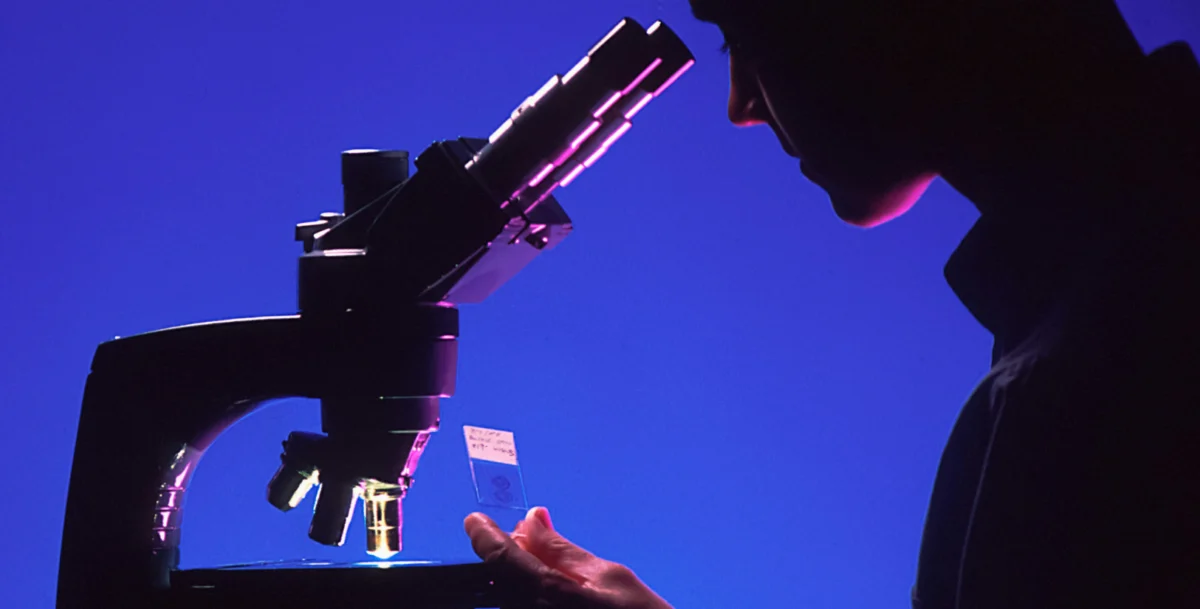
In the mid-1960s, the automotive industry was facing a specific challenge: the need for lighter, more fuel-efficient tires that did not sacrifice strength. DuPont, a leader in polymer science, tasked Stephanie Kwolek with finding a new fiber that could replace the heavy steel wires used in tire reinforcement. Kwolek was working with aromatic polyamides, complex molecules that she hoped could be spun into a high-strength thread.
The standard procedure for creating synthetic fibers involved dissolving a polymer in a solvent to create a "dope"—a thick, clear, syrupy liquid—which would then be pumped through a spinneret (a device similar to a showerhead) to create strands. However, Kwolek’s specific mixture of poly-p-phenylene terephthalamide behaved unexpectedly. Instead of the expected clear syrup, the resulting solution was thin, opalescent, and cloudy.
Under the established protocols of the time, such a result was considered a failure. A cloudy solution usually indicated that the polymer had not dissolved correctly or was contaminated, and the standard reaction from a supervisor was to discard the batch and start over. Kwolek’s supervisor initially suggested exactly that. However, Kwolek noticed that when the liquid was stirred, it displayed a unique silk-like shimmer, suggesting a high degree of molecular alignment.
The resistance to testing this "failed" substance was significant. The technician in charge of the laboratory’s spinning equipment initially refused to run the solution, fearing that the cloudy particles would clog the delicate holes of the spinneret and cause expensive damage to the machinery. Kwolek persisted, staking her professional reputation on the hunch that the liquid’s unusual behavior held hidden potential. When the solution was finally spun into fibers, the results were unprecedented. The fibers did not break under tension; instead, they demonstrated a tensile strength five times greater than steel on an equal-weight basis. This was the birth of Kevlar.

The Science of Strength: Why Kevlar Changed Everything
The discovery of Kevlar represented a fundamental shift in materials science. Unlike traditional polymers like nylon, which have a folded molecular structure, Kevlar’s molecules are arranged in long, straight chains that are highly oriented. These chains are linked by strong hydrogen bonds, creating a "liquid crystalline" state that allows the material to absorb massive amounts of energy without fracturing.
Statistical data regarding Kevlar’s performance highlights its industrial utility:
- Tensile Strength: Approximately 3,600 megapascals (MPa).
- Density: 1.44 grams per cubic centimeter, making it significantly lighter than steel (7.8 g/cm³).
- Thermal Stability: Kevlar does not melt; it decomposes only at temperatures exceeding 450°C (850°F).
- Impact Resistance: The material’s ability to deform and distribute the energy of a high-velocity projectile across its woven fibers is what makes it the gold standard for ballistic protection.
While DuPont initially marketed the material for use in premium tires, its most profound impact was felt in the 1970s. During this period, law enforcement agencies in the United States were grappling with a sharp increase in firearm-related fatalities among officers. In 1975, the National Institute of Justice (NIJ) initiated the "Soft Body Armor Evaluation Program." The results were transformative. Lightweight vests made of Kevlar allowed officers to maintain mobility while providing a level of protection previously only available through heavy, rigid steel plating.
The Business Case for Experimentation and Open-Mindedness
The story of Stephanie Kwolek is frequently cited by management consultants as a primary example of the "hidden costs of premature shutdown." In many corporate environments, the pressure for immediate results leads to the dismissal of any data that does not fit a predetermined hypothesis. If Kwolek had followed the "standard practice" of discarding her cloudy solution, DuPont would have lost a product that eventually generated billions of dollars in revenue and defined an entire sector of the materials industry.
Modern leadership experts, including those featured in the Anecdotally Speaking series, argue that the "Kwolek moment" requires two components: an observant, curious employee and an organizational culture that allows for "safe failure." Without the psychological safety to insist on a test that might have damaged equipment, Kwolek’s discovery would have remained a literal footnote in a laboratory logbook.
This theme of fostering curiosity was a central pillar of the discussions at the 2026 Davos summit. Analysts noted that in the transition to green energy and advanced AI, the "cloudy solutions"—the ideas that look wrong at first glance—are often where the most significant breakthroughs reside. Leaders are now being encouraged to move away from "command and control" structures toward "curiosity and coaching" models, where the primary role of a manager is to remove the barriers that prevent employees from testing their unconventional instincts.
Leadership and the Invisible Power of Narrative
The link between scientific innovation and global leadership was further emphasized by Mark Carney, the former Governor of the Bank of England and current UN Special Envoy on Climate Action and Finance, during his 2026 speech at Davos. Carney has increasingly utilized storytelling to frame complex economic and environmental challenges. By moving beyond dry statistics and toward human-centric narratives, Carney and other global leaders are tapping into the "invisible power" of persuasion.

Storytelling in leadership serves several functions that data alone cannot achieve:
- Contextualizing Risk: Like the story of the technician who feared clogging the spinnerets, narratives help leaders illustrate the tension between short-term risk and long-term reward.
- Humanizing Data: Statistics on "lives saved" by Kevlar become much more potent when paired with the stories of individual police officers who returned home to their families because of a chemist’s persistence.
- Driving Cultural Change: When a CEO shares a story of a "productive failure," they signal to the entire organization that experimentation is valued over rigid adherence to protocol.
Carney’s Davos 2026 speech highlighted that the global transition to a net-zero economy requires a "Kevlar mindset"—a willingness to look at the "cloudy" and uncertain technologies of today (such as carbon capture or advanced fusion) with the same dogged curiosity that Kwolek applied to her polymers in 1965.
Broader Impact and Industrial Legacy
The legacy of Stephanie Kwolek’s curiosity extends far beyond body armor. Today, Kevlar and its derivative aramid fibers are used in a staggering array of applications:
- Aerospace: Reinforcing the fuselages of commercial aircraft and the landing bags of Mars rovers.
- Infrastructure: Strengthening suspension bridge cables and fiber-optic housing.
- Consumer Goods: Enhancing the durability of everything from high-end smartphone cases to professional-grade climbing ropes.
- Safety Gear: Providing cut-resistant gloves for industrial workers and fire-resistant suits for firefighters.
According to industry reports, the global aramid fiber market is projected to reach a valuation of over $6 billion by 2030, driven by the increasing demand for lightweight materials in the electric vehicle (EV) sector. This market would not exist had Kwolek not challenged the urge to discard her "off" mixture.
Furthermore, Kwolek’s success paved the way for women in STEM (Science, Technology, Engineering, and Mathematics). In 1994, she became the fourth woman ever inducted into the National Inventors Hall of Fame. Her career stands as a testament to the fact that technical expertise, when combined with an unwavering sense of wonder, can change the world.
Conclusion: The Enduring Value of the "Kwolek Moment"
As organizations navigate the complexities of the mid-2020s, the lessons from DuPont’s Laboratory 101 remain more relevant than ever. The story of Stephanie Kwolek and the invention of Kevlar serves as a reminder that innovation is rarely a linear path of successes. Instead, it is a messy, often "cloudy" process that requires leaders to protect the curious and value the unconventional.
By integrating these narratives into the core of leadership—as seen in the persuasive strategies of figures like Mark Carney—the global business community can better prepare for the challenges of the future. The invisible power of a story is that it makes the impossible seem achievable, just as a thin, cloudy liquid once proved to be five times stronger than steel. The future of industry lies not just in the labs of the world, but in the stories we tell about what happens inside them, and the culture of curiosity we build to support the next great discovery.
