

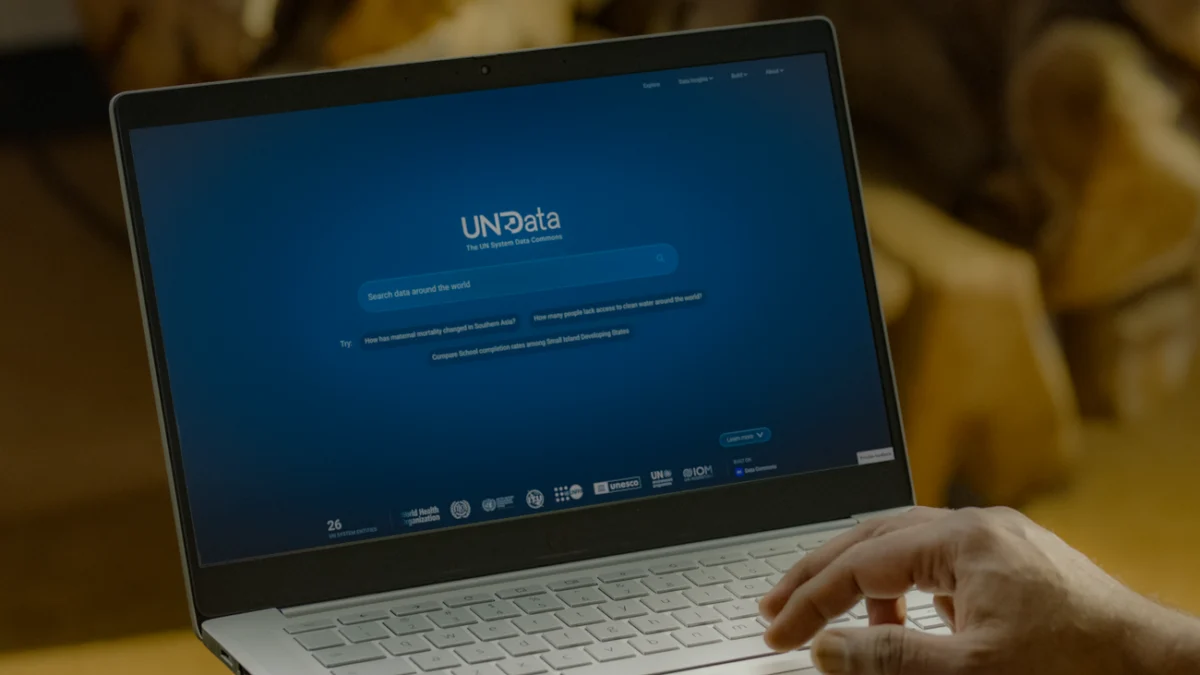
The Challenge of Fragmented Global Statistics
The United Nations system is responsible for some of the highest-integrity data globally, covering everything from maternal health rates in Sub-Saharan Africa to carbon emission trends in industrialized nations. However, until the inception of this platform, these statistics lived in organizational silos. A researcher attempting to correlate educational outcomes with local climate shifts might have had to manually download and reformat spreadsheets from UNESCO, the World Bank, and the IPCC. This process, known in the industry as "data wrangling," often consumed up to 80% of an analyst’s time, leaving little room for actual interpretation or policy design.
The UN System Data Commons eliminates this friction by acting as a universal translator. By leveraging Google’s Data Commons technology, the platform maps diverse datasets to a common schema. This means that a geographic boundary defined by one agency is recognized identically by another, and a timeline of economic growth can be instantly overlaid with public health metrics. The result is an "AI-ready" knowledge graph—a structured database where entities and their relationships are clearly defined, making it possible for large language models (LLMs) to query the data with high precision and minimal hallucination.
A Chronology of Data Integration
The journey toward the UN System Data Commons began several years ago as part of a broader "Data Revolution" championed by the UN Secretary-General. In 2020, the UN released its "Data Strategy for Action by Everyone, Everywhere," which emphasized the need for a data-driven ecosystem to achieve the 17 Sustainable Development Goals (SDGs) by 2030.
In 2021 and 2022, pilot programs were initiated to test the feasibility of merging complex humanitarian data with commercial cloud computing capabilities. Google’s Data Commons, which had been in development since 2018, emerged as the ideal technological backbone. Unlike traditional databases, Google’s approach focused on "normalizing" data at the source, allowing different datasets to "speak the same language."
By 2023, the UN Foundation, with financial and technical support from Google.org, began the intensive work of onboarding the first wave of UN agencies. This involved working closely with statisticians from UNICEF, the World Health Organization (WHO), and the International Labour Organization (ILO) to ensure that their rigorous standards for data integrity were maintained during the transition to the knowledge graph. The launch in late 2024 marks the culmination of this multi-year effort, providing a public-facing portal that is already being utilized by major international organizations.
Technical Innovation: AI and Natural Language Exploration
One of the most significant features of the UN System Data Commons is its integration of natural language processing (NLP). Traditionally, accessing complex statistics required knowledge of specific query languages or advanced proficiency in software like Excel or R. The new platform democratizes this access by allowing users to ask questions in plain English. For example, a user can type, "How has child malnutrition in Southeast Asia changed relative to GDP growth over the last decade?" and the platform will instantly generate a comparative visualization using verified UN data.
Furthermore, the platform introduces "agentic" research capabilities. Built on open standards like the Model Context Protocol (MCP), the Data Commons allows AI agents to autonomously fetch authoritative figures. This is a critical advancement for the integrity of AI-generated content. When a policy writer uses an AI assistant to draft a report, the agent can now pull grounded, verified facts directly from the UN System Data Commons rather than relying on potentially outdated or inaccurate training data. This "grounding" ensures that the AI’s output is anchored in official statistics, providing a layer of transparency and accountability that was previously difficult to achieve.
Supporting Data and Use Cases
The scale of the data currently integrated into the platform is immense. The UN system aims to include 80% of all its statistical datasets by 2027, a goal that would encompass billions of data points. Already, the platform has demonstrated its utility in specific humanitarian contexts.
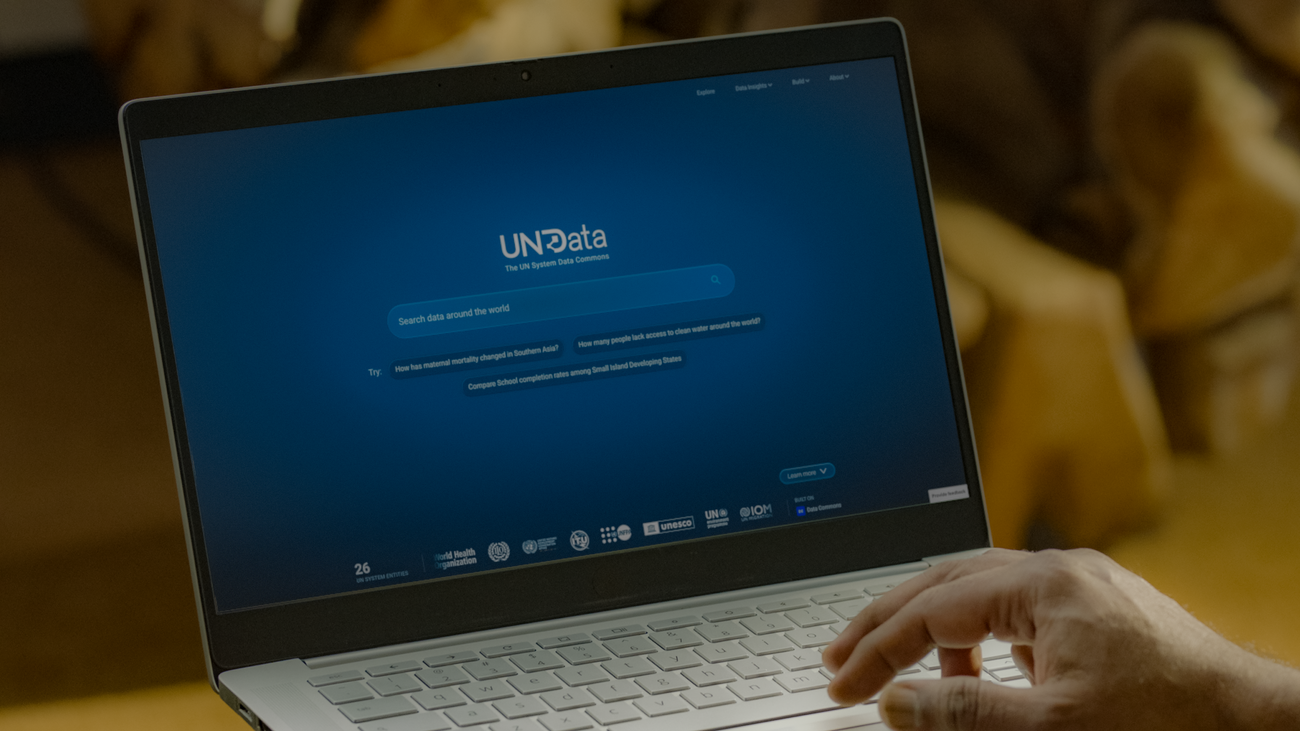
A recent report published on the Data Commons blog utilized UNICEF data to explore global child poverty. By using the platform’s visualization tools, researchers were able to identify "what works" across different regions, highlighting specific interventions in education and social safety nets that led to measurable decreases in poverty rates. This type of analysis, which previously required months of coordination, can now be conducted in a matter of minutes.
In the realm of climate change, the platform allows for the intersection of environmental data with demographic statistics. Analysts can now more easily map which populations are most vulnerable to rising sea levels by overlaying coastal topography data with census information and infrastructure maps. This level of granular, interconnected data is essential for the "just transition" policies being discussed at international climate summits.
Official Responses and Strategic Alignment
The launch has been met with praise from both the technological and diplomatic communities. Prem Ramaswami, Head of Data Commons at Google, emphasized that the project is about making data "universally accessible and useful." He noted that by providing a single interconnected resource, the UN is empowering a new generation of researchers to tackle complex global challenges with evidence-based solutions.
Within the UN, the project is seen as a fulfillment of the "Quintet of Change"—a set of five core capabilities (data, innovation, digital, foresight, and behavioral science) that the Secretary-General identified as essential for a "UN 2.0." Official statements from the UN Foundation indicate that the Data Commons is viewed not just as a tool for the UN, but as a public good. By making the platform open-source, the UN ensures that even small NGOs and local governments in the Global South have access to the same high-quality data as major world powers.
Broader Impact and Global Implications
The implications of the UN System Data Commons extend far beyond the technical realm. At its core, this initiative is an attempt to bridge the "global data divide." In many developing nations, the lack of centralized, accessible data has been a barrier to securing international funding and designing effective domestic policies. By providing a free, AI-ready platform, the UN is leveling the playing field, allowing all nations to participate in data-driven governance.
Moreover, the platform enhances global transparency. When data is siloed, it is easier for discrepancies to go unnoticed or for progress to be overstated. A unified knowledge graph makes it easier to spot inconsistencies and hold institutions accountable to their stated goals. For instance, if a country reports progress on an SDG, the Data Commons allows independent observers to verify that claim against related metrics from different agencies.
The move toward "AI-ready" data also sets a standard for other international bodies. As the world moves further into the age of artificial intelligence, the need for high-integrity, structured data will only grow. The UN’s proactive approach in building a knowledge graph serves as a blueprint for how other sectors—such as global finance or public health—might organize their information to be both human-readable and machine-interpretable.
Looking Toward 2027
As the UN System Data Commons moves into its next phase, the focus will be on expansion and refinement. The roadmap to 2027 includes the onboarding of more specialized UN entities, such as the International Atomic Energy Agency (IAEA) and the International Maritime Organization (IMO). There are also plans to integrate more "real-time" data sources, such as satellite imagery and IoT sensor data, which would allow the platform to track events like natural disasters or disease outbreaks as they happen.
The UN System Data Commons is more than just a website; it is a foundational piece of digital infrastructure for the 21st century. By breaking down the walls between datasets and harnessing the power of AI, the United Nations is ensuring that the world’s most important decisions are based on the world’s best data. The platform is currently live and accessible to the public at data.un.org, inviting the global community to explore, analyze, and contribute to a more informed future.
