


Ten years ago, the Atlas of Emotions was introduced to the world. Created through a unique collaboration between Dr. Paul Ekman, Dr. Eve Ekman, and His Holiness the Dalai Lama, the Atlas set out to map the landscape of human emotion in a way that was both scientifically grounded and deeply accessible. A decade later, this emotional awareness framework and its impact continues to ripple across classrooms, therapy offices, research labs, and everyday conversations around the world.
The Genesis of Understanding: A Decade of the Atlas of Emotions
The year 2016 marked the public unveiling of the Atlas of Emotions, a groundbreaking project that aimed to demystify the complexities of human feelings. This ambitious initiative was born from the convergence of scientific rigor, artistic design, and spiritual wisdom, a testament to the power of interdisciplinary collaboration. At its core, the Atlas sought to provide a universally understandable framework for navigating the intricate tapestry of our emotional lives.
The conceptualization of the Atlas began with Dr. Paul Ekman’s long-standing research into universal emotions. A renowned psychologist, Dr. Ekman’s work has consistently emphasized the biological and evolutionary underpinnings of human emotions, positing that certain emotional expressions are innate and recognizable across cultures. To establish a robust foundation for the Atlas, Dr. Ekman undertook a comprehensive survey involving nearly 250 leading emotion scientists. This extensive study, detailed in his seminal work, revealed a significant consensus on the nature of universal emotions, identifying core affective states that form the bedrock of human emotional experience. This agreement among experts provided the scientific validation necessary for the Atlas’s development.
The collaboration with His Holiness the Dalai Lama brought a profound contemplative and ethical dimension to the project. His Holiness’s lifelong advocacy for compassion, mindfulness, and emotional well-being resonated deeply with the project’s goal of fostering greater emotional understanding and self-awareness. His involvement ensured that the Atlas was not merely a scientific treatise but also a tool for personal growth and societal harmony. Dr. Eve Ekman, drawing on her expertise in clinical psychology and contemplative sciences, played a crucial role in translating complex psychological theories and spiritual insights into an accessible and actionable framework. Her work ensured the Atlas could be effectively utilized by a broad audience, from academic researchers to individuals seeking to better understand their own emotional responses.
A Glimpse Behind the Scenes: Unveiling the Creative Process
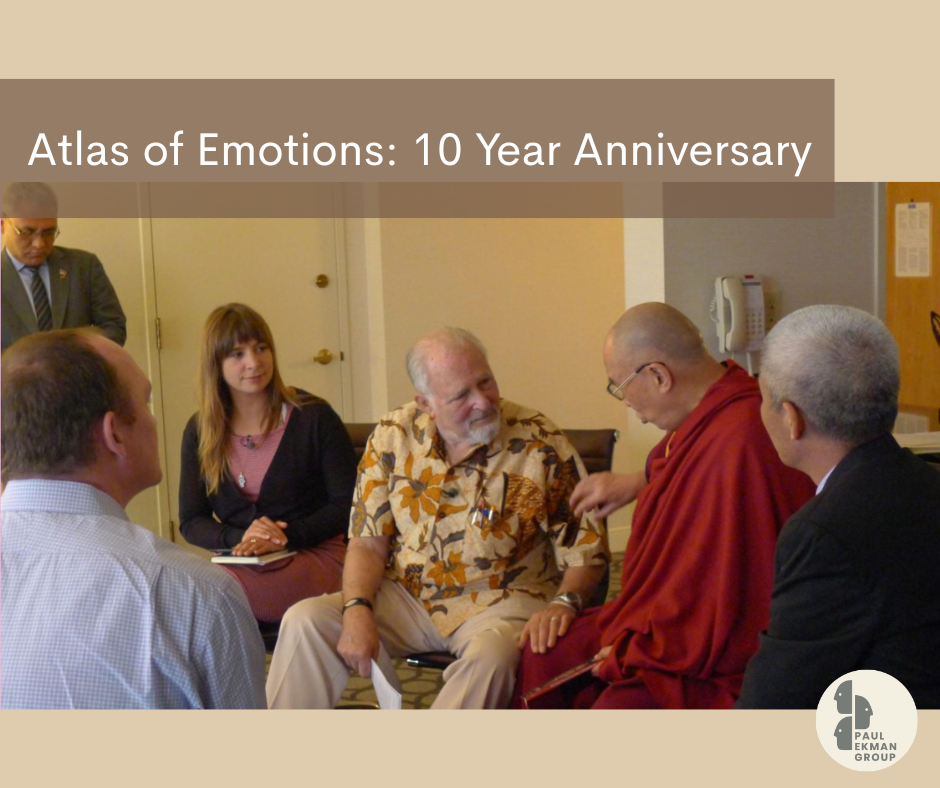
To commemorate the Atlas of Emotions’ tenth anniversary, a rare and insightful glimpse into its creation has been shared. Never-before-seen footage from a working meeting between Dr. Paul Ekman, Dr. Eve Ekman, and His Holiness the Dalai Lama offers a unique perspective on the collaborative spirit and intellectual exchange that shaped the project. This video captures a pivotal moment where the visionaries reviewed the Atlas in its developmental stages, engaging in discussions that underscore the interdisciplinary nature of the undertaking.
The footage highlights the fusion of rigorous psychological research, sophisticated graphic design, and the profound wisdom of the Dalai Lama. This synthesis was instrumental in transforming abstract emotional concepts into a visually intuitive and easily navigable resource. The presence of Dr. Paul Ekman, a pioneer in the study of facial expressions and universal emotions, alongside Dr. Eve Ekman, who brings a clinical and contemplative perspective, and His Holiness the Dalai Lama, a global icon of compassion and peace, illustrates the project’s commitment to bridging scientific inquiry with lived human experience and ethical reflection. The very essence of this collaborative inquiry—an effort to map the human emotional landscape through consensus-building and diverse expertise—is vividly preserved in this archival material.
From Launch to Global Influence: The Atlas’s Enduring Legacy
Upon its launch in 2016, the Atlas of Emotions garnered significant international attention. Its innovative approach to visualizing and explaining emotions quickly captured the public imagination and the interest of various professional communities. Prominent media outlets, including The New York Times, recognized the Atlas for its groundbreaking methodology in mapping emotions and its success in making complex psychological concepts accessible to a global audience. The New York Times article, published on May 7, 2016, specifically highlighted the unique partnership between Dr. Paul Ekman and His Holiness the Dalai Lama, underscoring the project’s ambition to foster emotional intelligence on a broad scale.
This early recognition served as a catalyst for widespread adoption. Over the past decade, the Atlas of Emotions has been integrated into a multitude of settings, demonstrating its versatility and enduring relevance. In educational institutions, it has become a valuable tool for teaching emotional literacy to students of all ages, equipping them with the language and understanding to identify, express, and manage their feelings constructively. Within the therapeutic landscape, psychologists and counselors have utilized the Atlas to facilitate deeper client self-awareness and to provide a shared framework for discussing emotional challenges, thereby enhancing the efficacy of treatment.
The research community has also embraced the Atlas as a foundational resource. Scholars and scientists are employing its framework in studies exploring emotional regulation, cross-cultural emotional expression, and the neurological underpinnings of affective states. The interactive nature of the online Atlas has proven particularly valuable for data collection and for disseminating research findings in an engaging and accessible format. Beyond formal settings, the Atlas has permeated everyday conversations, empowering individuals to engage more thoughtfully with their own emotions and those of others, fostering empathy and improving interpersonal relationships. The impact extends to organizational development, where it is used to enhance communication, teamwork, and leadership effectiveness by promoting a greater understanding of emotional dynamics within the workplace.
Data-Driven Impact: Quantifying the Reach of the Atlas
While specific, granular data on every user interaction with the Atlas of Emotions is proprietary and constantly evolving, publicly available metrics and anecdotal evidence point to a substantial global footprint. The online Atlas of Emotions, hosted at atlasofemotions.org, has experienced consistent traffic growth since its inception, with millions of unique visitors engaging with its resources annually. Analysis of website analytics reveals a diverse user base, with significant engagement from North America, Europe, and Asia, underscoring its international appeal.
The interactive nature of the Atlas allows users to explore various emotional states, their triggers, and potential responses. The platform’s design encourages repeated engagement, with many users returning to refine their understanding of specific emotions or to explore new affective territories. Furthermore, the Atlas has been translated into multiple languages, expanding its accessibility and reach across linguistic barriers. While precise download or usage statistics for related applications or curricula are not publicly disclosed, the consistent presence of the Atlas framework in academic syllabi, training programs, and professional development workshops suggests a deep and sustained integration into various fields.
The impact can also be gauged by the proliferation of scholarly articles and research papers that cite the Atlas of Emotions as a key theoretical or practical resource. A review of academic databases reveals a steady increase in such citations over the past decade, indicating its growing influence within the scientific community. This academic validation, coupled with its widespread application in practical settings, paints a picture of a tool that has moved beyond novelty to become an established resource for understanding and navigating human emotions.
Charting the Future: Engaging the Community and Evolving the Framework
As the Atlas of Emotions celebrates its tenth anniversary, the team behind the project is not solely focused on reflection but is actively looking towards the future. A crucial element of this forward-looking strategy involves engaging directly with the community of users who have benefited from the Atlas. To this end, a call for user experiences has been initiated, inviting individuals to share how they have utilized the Atlas, what insights it has provided, and what changes it has facilitated in their lives.
This feedback mechanism, facilitated through a dedicated online form, is designed to gather qualitative data that will inform the ongoing development of the Atlas. Understanding the practical applications and perceived benefits from the user’s perspective is invaluable for identifying areas of strength and opportunities for enhancement. The insights gleaned from these shared experiences will play a pivotal role in shaping the next chapter of the Atlas’s evolution, ensuring its continued relevance and impact.
Innovations on the Horizon: A New Book and Enhanced Digital Resources
The anniversary year heralds significant developments in expanding the reach and depth of the Atlas of Emotions. Updates to the online, interactive Atlas are slated for release in the near future. These enhancements are expected to improve user experience, incorporate new research findings, and potentially introduce novel ways to explore the emotional landscape. While specific details of these digital upgrades are yet to be fully disclosed, the commitment to continuous improvement underscores the project’s dedication to remaining at the forefront of emotional intelligence resources.
In addition to these digital advancements, Dr. Eve Ekman is currently undertaking the ambitious project of authoring an "Atlas of Emotions" book. Scheduled for release in 2027, this forthcoming publication promises to build upon the foundation of the original Atlas, offering a more comprehensive and in-depth exploration of the subject matter. The book is anticipated to delve deeper into the scientific underpinnings, philosophical considerations, and practical applications of emotional understanding. It will likely present updated insights, expand on the foundational concepts, and introduce new methodologies for engaging with the complex emotional experiences that define human existence. This literary endeavor represents a significant step in consolidating and disseminating the accumulated knowledge and wisdom associated with the Atlas.
Individuals interested in being among the first to know about the book’s availability and related announcements are encouraged to join a dedicated announcement list. This proactive approach to community engagement ensures that those invested in the Atlas of Emotions remain informed and connected to its ongoing development and future offerings. The anticipation surrounding these upcoming initiatives suggests a continued trajectory of growth and influence for the Atlas of Emotions in the years to come.
