

In a recent exploration of the intersection between historical narrative and modern leadership, Episode 284 of the Anecdotally Speaking podcast highlights the life of Tsutomu Yamaguchi, the only person officially recognized by the Japanese government as a survivor of both the Hiroshima and Nagasaki atomic bombings. The episode, hosted by storytelling experts Mark and Shawn from Anecdote International, uses Yamaguchi’s harrowing experience as a foundational case study to examine how the construction of personal and organizational narratives influences resilience, decision-making, and leadership integrity. By analyzing the "double hibakusha" (atomic bomb survivor) experience, the discussion moves beyond historical trivia to address a fundamental psychological question: whether an individual perceives themselves as a victim of extraordinary misfortune or a recipient of extraordinary luck.
The Dual Atomic Bombing of August 1945
The historical facts of Tsutomu Yamaguchi’s survival remain some of the most statistically improbable events in the history of modern warfare. In August 1945, Yamaguchi was a 29-year-old naval engineer employed by Mitsubishi Heavy Industries. His primary role involved designing oil tankers, a position that required frequent travel across the Japanese empire. On August 6, 1945, Yamaguchi was completing a three-month business trip to Hiroshima. As he prepared to leave for the train station to return home to Nagasaki, he realized he had forgotten his "hanko"—a personal seal used for official documents—and returned to his workplace to retrieve it.
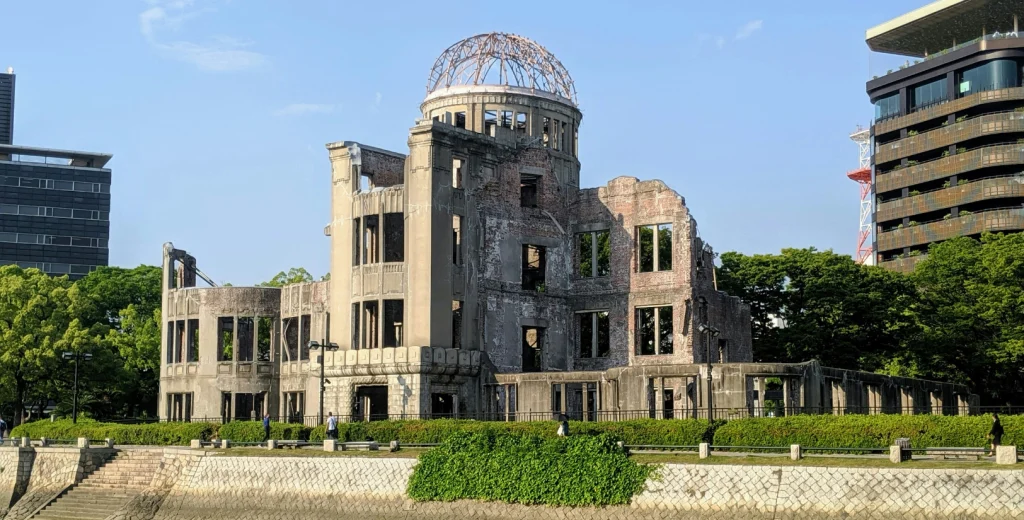
At approximately 8:15 a.m., while Yamaguchi was walking back toward the shipyards, the United States Army Air Forces B-29 bomber, the Enola Gay, dropped the "Little Boy" atomic bomb over the center of Hiroshima. Yamaguchi was located approximately three kilometers (roughly 1.9 miles) from the hypocenter. The initial blast resulted in a blinding flash that he later described as the "lightning of a magnesium flare." The shockwave threw him into a nearby potato patch, leaving him with ruptured eardrums and severe thermal burns across the left side of his upper body.
Despite these catastrophic injuries, Yamaguchi sought shelter and spent a restless night in a makeshift air-raid bunker. The following day, amidst a city reduced to ash and radioactive debris, he navigated through the ruins to reach the Hiroshima railway station, which was miraculously still operating in a limited capacity. He boarded a train filled with other burned and traumatized survivors, heading toward his hometown: Nagasaki.
A Second Encounter with Nuclear Devastation
Yamaguchi arrived in Nagasaki on August 8 and sought medical treatment at a local hospital. Despite his bandages and obvious physical trauma, he reported for work at the Mitsubishi office on the morning of August 9 to brief his supervisor on the events in Hiroshima. Historical records indicate that his superior was skeptical of Yamaguchi’s account, questioning how a single bomb could destroy an entire city.
At 11:02 a.m., as Yamaguchi was attempting to explain the scale of the devastation he had witnessed, the second atomic bomb, "Fat Man," was detonated over Nagasaki. Once again, Yamaguchi was approximately three kilometers from the blast’s center. Though the office windows were shattered and the building was damaged, the reinforced structure and the local geography provided enough protection to prevent further lethal injury. Yamaguchi had become a witness to the only two nuclear attacks in human history, surviving both within a span of three days.
Chronology of Events: The Five Days in August
To understand the magnitude of Yamaguchi’s experience, it is necessary to view the events in a tight chronological sequence:
- August 6, 8:15 AM: Hiroshima is bombed. Yamaguchi is injured but survives.
- August 7: Yamaguchi traverses the ruined city to find transport.
- August 8: Yamaguchi arrives in Nagasaki and receives basic medical care.
- August 9, 11:00 AM: Yamaguchi arrives at work to report the Hiroshima disaster.
- August 9, 11:02 AM: Nagasaki is bombed. Yamaguchi survives a second time.
- August 15: Emperor Hirohito announces the unconditional surrender of Japan.
Data on Survival and the Hibakusha Legacy
The statistical probability of surviving two nuclear blasts is nearly infinitesimal. In Hiroshima, an estimated 70,000 to 80,000 people, or 30% of the population, were killed instantly. In Nagasaki, the death toll was approximately 40,000 initially, rising to over 70,000 by the end of the year due to radiation sickness and injuries.
While the Japanese government has recognized approximately 165 individuals who were present in both cities during the bombings, Tsutomu Yamaguchi remains the only person to receive official "double hibakusha" status for both the initial blasts and the subsequent radiation exposure. He lived to the age of 93, passing away in 2010. His longevity, despite the heavy radiation doses he received, has been a subject of study for oncologists and radiation specialists, contributing to the broader understanding of long-term survival after nuclear exposure.

Narrative Framing: Luck Versus Misfortune
In Episode 284, Mark and Shawn pivot from the historical details to the psychological implications of how Yamaguchi’s story is told. They pose a central question: Is Tsutomu Yamaguchi the unluckiest man in history for being at ground zero twice, or the luckiest man for surviving both?
This distinction is not merely semantic; it is a core component of "meaning-making" in leadership. The hosts argue that while the facts of a situation are immutable, the meaning derived from those facts is a choice. In a corporate context, leaders often face "double bombings"—successive crises that can demoralize a workforce. How a leader frames these events determines the organization’s resilience. If a leader frames a series of setbacks as a sign of being "cursed" or "unlucky," it fosters a culture of victimhood and passivity. Conversely, framing survival and the ability to continue as a "fortunate opportunity to rebuild" encourages proactive problem-solving.
Storytelling Techniques in Leadership
The podcast episode delves into specific storytelling techniques that leaders can use to influence organizational culture, specifically focusing on "foreshadowing" and "audience participation."
Foreshadowing as a Strategic Tool
Foreshadowing in a narrative sense involves dropping hints about what is to come. In leadership, this translates to transparency regarding upcoming changes or challenges. By preparing an audience for a "flash" before it happens, leaders can reduce the shock and trauma of organizational shifts. Mark and Shawn suggest that when leaders provide context for future decisions, they allow employees to build their own internal narratives of resilience before the crisis hits.
The Role of Audience Participation
Meaning is not something a leader "gives" to an audience; it is something the audience creates in response to the leader’s story. The episode highlights that the most effective leaders do not dictate the meaning of an event. Instead, they provide a narrative framework that allows employees to find their own sense of purpose within the story. In the case of Yamaguchi, his later life was defined by this principle. He eventually became a vocal advocate for nuclear disarmament, transforming his trauma into a global message of peace. He allowed the world to participate in his story to create a collective meaning centered on the prevention of future conflict.
Communicating with Integrity and Authentivity
A significant portion of the discussion addresses the challenge of communicating decisions that a leader may not personally agree with. This is a common occurrence in mid-level and senior management where directives come from boards or global headquarters.
The hosts argue that maintaining integrity in these situations requires a delicate balance of narrative. A leader must be able to present the "official" story while remaining authentic about their own perspective. By using the principles of storytelling, leaders can explain the rationale behind a decision—the "why" of the narrative—even if they would have preferred a different outcome. This transparency prevents the erosion of trust that occurs when leaders simply parrot "corporate speak" without acknowledging the human element of the decision.
Broader Impact and Global Implications
The story of Tsutomu Yamaguchi serves as a profound metaphor for the human condition in the face of overwhelming technological and political forces. From a journalistic perspective, his life reflects the broader 20th-century transition from traditional warfare to the nuclear age. His survival and subsequent advocacy work highlight the shift in Japanese social consciousness from the "shame" of defeat to the "responsibility" of the survivor.
For modern organizations, the implications are clear. We live in an era of "permancrisis," where economic, technological, and social shifts occur with the frequency and impact of metaphorical blasts. The Anecdotally Speaking podcast suggests that the tools of the storyteller—meaning-making, narrative framing, and authentic communication—are not "soft skills" but essential survival mechanisms.
By studying the life of Yamaguchi, leaders are reminded that resilience is not just the ability to endure, but the ability to reconstruct a narrative of hope from the wreckage of disaster. The facts of the 21st-century marketplace are often harsh, but as the story of the man who survived two atomic bombs proves, the meaning we assign to our survival is what ultimately shapes the future. As Anecdote International continues to expand its global network of partners, the focus remains on bringing this level of humanity and narrative depth back to the global workforce, ensuring that even in the face of unprecedented change, the human story remains central to leadership.
