

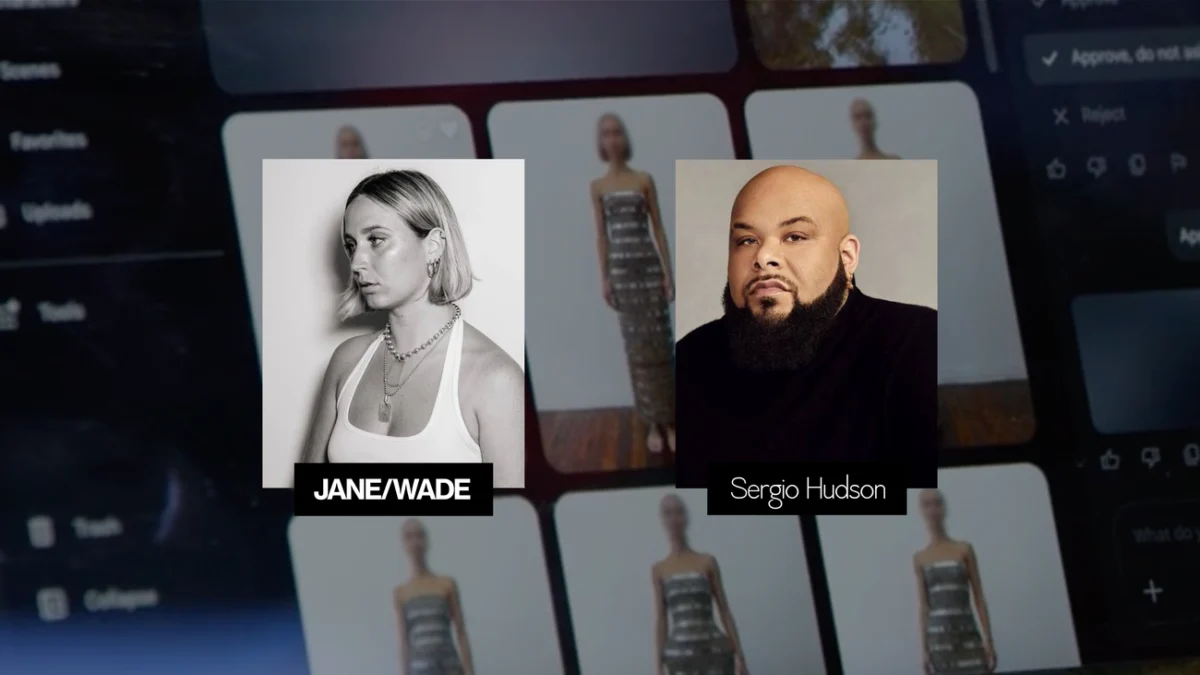
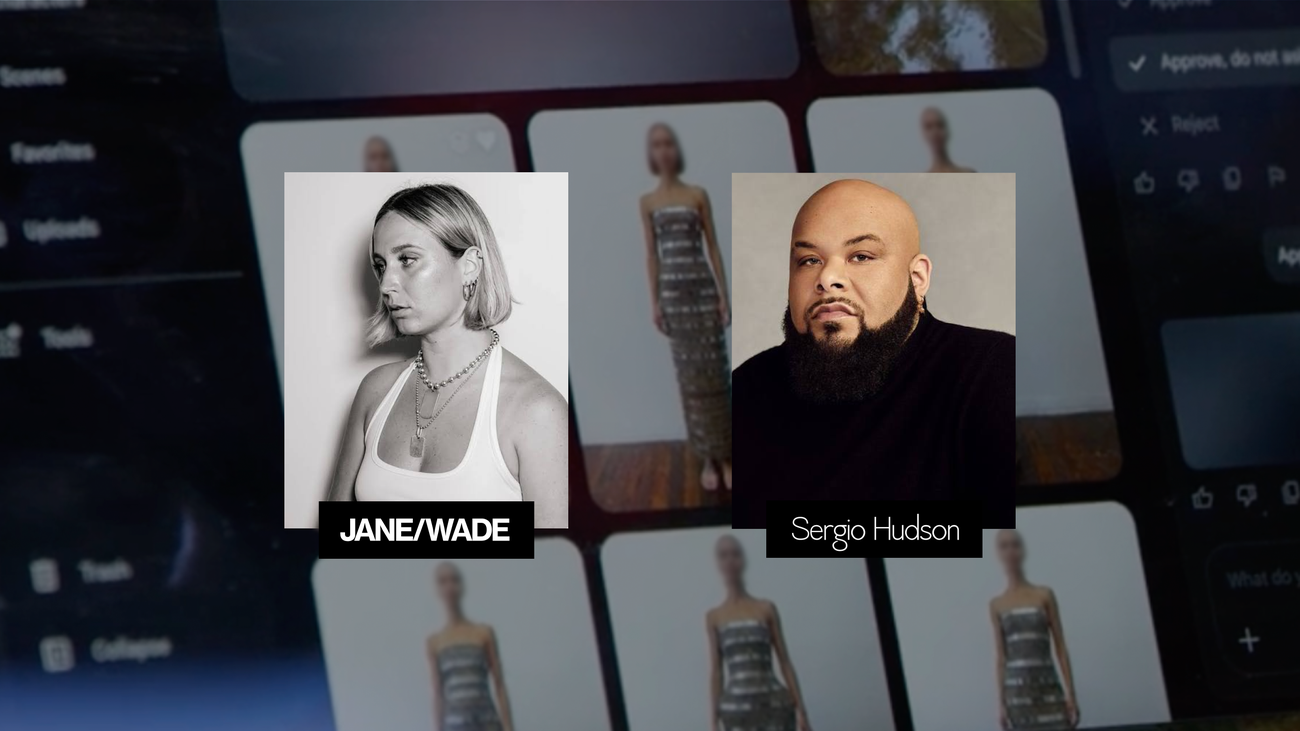
The traditional image of a fashion designer—sketched charcoal lines on parchment, draped silks over a mannequin, and the rhythmic snip of shears—is increasingly being augmented by a digital revolution. As New York Fashion Week (NYFW) continues to serve as the global epicenter for sartorial innovation, the behind-the-scenes reality for independent designers remains a grueling marathon of administrative hurdles, logistical bottlenecks, and financial constraints. To address these systemic pressures, Google’s Envisioning Studio, in partnership with Google Labs, recently unveiled a collaborative project that integrates generative artificial intelligence into the creative workflows of two prominent American designers: Jane Wade and Sergio Hudson. By utilizing Google Flow, an AI-driven creative studio, these designers have transitioned AI from a theoretical curiosity into a functional, high-stakes tool for the runway.
The Administrative Crisis in Independent Fashion
For the modern independent designer, the act of "designing" often occupies a surprisingly small fraction of the workday. Industry data suggests that creative directors at emerging labels spend upwards of 80% of their time on non-creative tasks, including factory logistics, fabric sourcing, vendor coordination, and complex administrative management. This "administrative creep" significantly limits the ability of designers to experiment or refine their collections before they reach the production stage.
During the lead-up to New York Fashion Week, the pressure intensifies. The cost of producing a traditional runway show in Manhattan can range from $100,000 to well over $1 million, depending on the venue, casting, and production value. For independent labels, there is zero margin for error. Every physical sample produced and every hour spent in a fitting represents a significant financial investment. It was within this high-pressure environment that Google sought to test whether AI could reclaim time for designers by streamlining the friction-heavy stages of styling and set design.
Google Flow: Democratizing AI Development
The centerpiece of this collaboration is Google Flow, a specialized AI creative studio that allows users to build bespoke tools using natural language. Unlike traditional software development, which requires a background in coding, or complex 3D modeling suites that demand hundreds of hours of training, Google Flow enables creatives to describe a desired workflow or tool in plain English.
Google engineers worked directly with Jane Wade and Sergio Hudson to translate their specific pain points into custom-built digital solutions. This co-creation process marks a departure from "off-the-shelf" AI products, focusing instead on tools that integrate seamlessly into the existing rhythms of a fashion house. The objective was not to replace the designer’s intuition but to provide a digital sandbox where that intuition could be tested and validated at a fraction of the traditional cost and time.
Case Study: Jane Wade and the Virtual Styling Suite
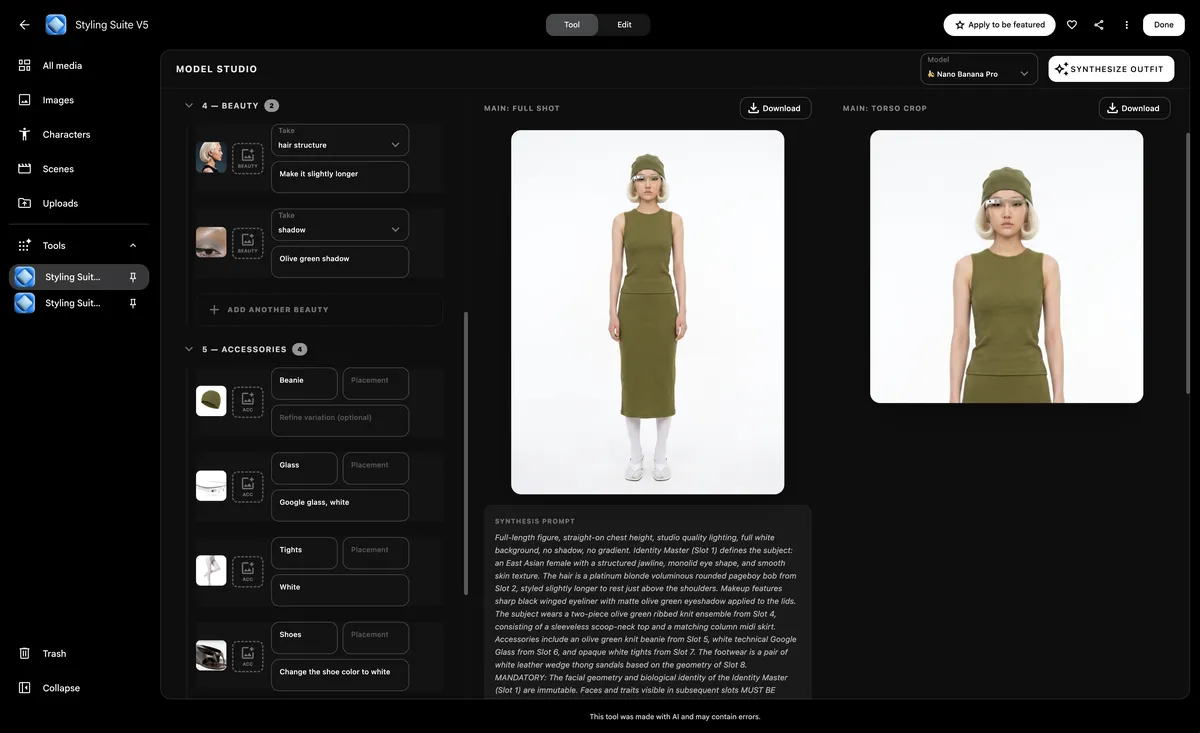
Jane Wade, known for her innovative approach to office-ready attire and technical construction, faced a common industry bottleneck: the fitting process. Traditionally, "casting and fittings" involve a three-day window where models, stylists, and tailors gather to assemble head-to-toe looks. If a specific accessory or garment doesn’t work during these sessions, the designer must often scramble to produce new physical pieces or settle for a compromised vision.
The "Styling Suite," a custom tool built in Google Flow, allowed Wade to bypass these physical limitations. By mapping every facet of her collection onto digital models, Wade could curate hair, makeup, accessories, and footwear virtually. The AI tool enabled her to:

- Balance Collections: Identify whether certain colors or silhouettes were overrepresented or missing from the lineup.
- Virtual Prototyping: Experiment with styling combinations—such as layering or accessory placement—before a single stitch of fabric was cut for the final runway samples.
- Time Efficiency: Reduce the reliance on in-person model hours, which are a major expense in the NYFW budget.
By the time Wade reached the physical fitting stage, the creative direction was already solidified, allowing her team to focus on technical execution rather than conceptual trial and error.
Case Study: Sergio Hudson and Runway Visualization
While Wade focused on the garments, Sergio Hudson—a designer celebrated for his high-glamour, tailored silhouettes—utilized Google Flow to solve a logistical and financial challenge: set design. Hudson’s challenge was to create a world-class runway experience on a fixed studio budget.
Historically, staging a show requires hiring production crews to create 3D renderings of the venue. Every time a designer wants to change the lighting, move a prop, or alter the path the models walk, a new rendering is required, incurring additional fees and delays. Hudson’s co-developed tool, "Runway Visualization," functioned as a real-time simulator for his venue. The tool allowed Hudson to:
- Simulate Lighting and Props: Swap different lighting rigs and stage elements virtually to see how they interacted with the collection’s color palette.
- Budgetary Alignment: Test various set configurations to find the most impactful visual arrangement that stayed within his financial constraints.
- Model Pathing: Refine the "walk" of the models to ensure that every seat in the house had an optimal view, thereby maximizing the experience for buyers and press.
This tool effectively eliminated the expensive back-and-forth between the designer and the production house, giving Hudson direct control over the environmental storytelling of his brand.
A Chronology of Collaboration
The development of these tools followed a structured timeline that aligned with the rigorous New York Fashion Week schedule:
- Discovery Phase (6 Months Prior): Google’s Envisioning Studio conducted deep-dive interviews with Wade and Hudson to identify specific "friction points" in their creative cycles.
- Tool Development (3-4 Months Prior): Google engineers and the designers used Google Flow to iterate on the software, using natural language prompts to refine the AI’s outputs.
- Pre-Production Integration (1 Month Prior): The designers integrated the Styling Suite and Runway Visualization tools into their daily workflows, using them to make final decisions on the Spring/Summer collections.
- The Runway (September): The final collections were debuted at NYFW, with the staging and styling directly informed by the AI-assisted planning phase.
Economic and Environmental Implications
The implications of this technology extend beyond mere convenience. The fashion industry is under increasing pressure to address its environmental footprint. By allowing designers to finalize looks and sets in a digital environment, the need for multiple physical prototypes and wasted materials is significantly reduced. This "digital-first" approach supports a more sustainable model of production where physical resources are only committed once the creative vision is perfected.
Furthermore, from an economic perspective, these AI tools serve as an equalizer. High-end luxury houses have long had the capital to hire massive teams and expensive consultants. By providing independent designers with low-cost, high-efficiency tools like those found in Google Flow, the technology lowers the barrier to entry for creative talent that may lack the massive backing of a global conglomerate.
Moving Beyond "Pilot Mode"
For several years, AI in fashion was relegated to "pilot mode"—experimental projects that often felt like marketing gimmicks rather than essential tools. The collaboration between Google, Jane Wade, and Sergio Hudson represents a shift toward "utility-grade" AI.
Industry analysts note that the success of these tools lies in their "human-in-the-loop" design. The AI does not generate the clothes; it facilitates the management of the creative process. This ensures that the designers remain "in the driver’s seat," using technology to handle the logistical "noise" that so often drowns out creative signal.
As generative AI continues to evolve, the focus is expected to shift toward even more complex integrations, such as predictive supply chain management and personalized digital fittings for consumers. For now, however, the focus remains on the creators. By streamlining the path from a designer’s imagination to the New York runway, Google and its collaborators are demonstrating that the future of fashion is not just about what we wear, but how we solve the problems of the people who make it.
The success of the Styling Suite and Runway Visualization tools suggests a new standard for the industry. As Google Flow becomes more accessible to the public, the next generation of designers may find that their most valuable tool is not a sewing machine or a sketchbook, but a bespoke AI assistant designed to handle the heavy lifting of the modern fashion industry.
