

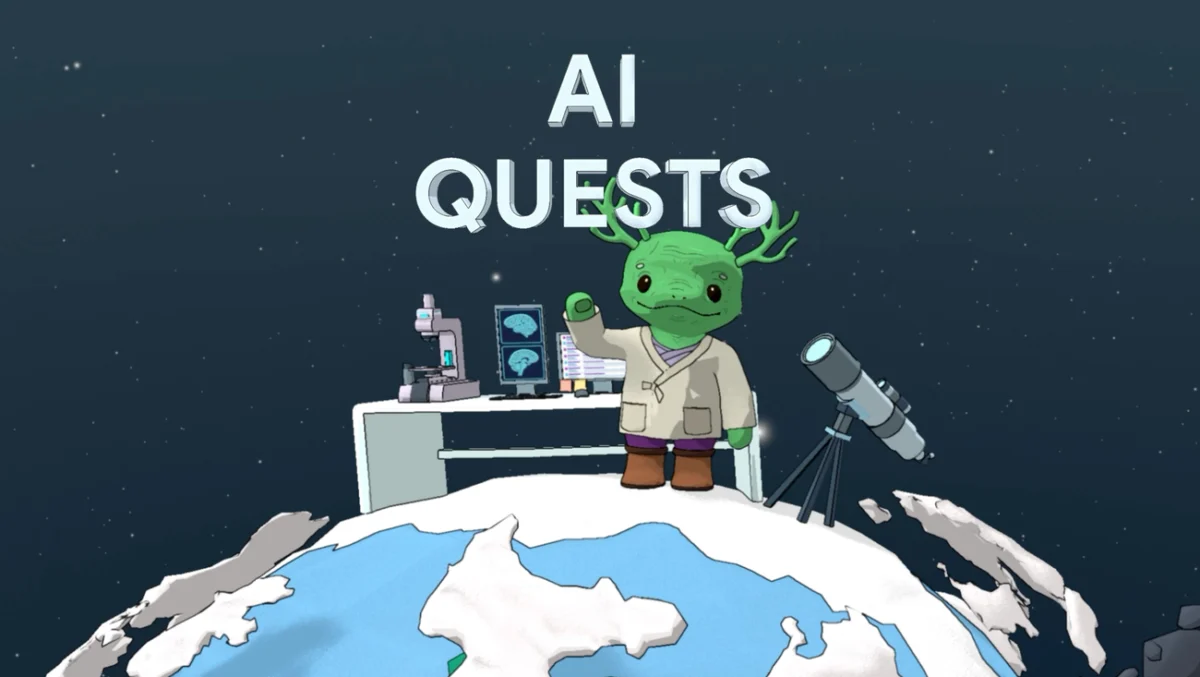
Google Research, in a strategic collaboration with the Stanford Accelerator for Learning, has officially unveiled "Polar Peaks," the third installment in its highly acclaimed AI Quests series. This digital educational initiative is specifically engineered to bridge the gap between complex computer science and middle school curricula, targeting students between the ages of 11 and 14. By integrating the intricacies of neuroscience with the fundamentals of artificial intelligence, the quest provides a hands-on simulation of the challenges faced by contemporary researchers. The program arrives at a critical juncture in global education, as school systems worldwide grapple with the necessity of fostering AI literacy among the next generation of the workforce.
The AI Quests series has already demonstrated significant global traction, with over 400,000 quests completed to date. The curriculum has been localized into 10 languages, reflecting a concerted effort to democratize access to high-level technical concepts. Alongside the release of "Polar Peaks," Google is expanding its support for the academic community by launching specialized training modules for educators. These modules, housed within the Google AI Educator Series, are designed to empower teachers with the pedagogical tools required to facilitate discussions on responsible AI use and the technical mechanics of machine learning.
The Evolution of AI Quests: A Chronology of Innovation
The journey of AI Quests began as a response to the growing need for experiential learning in the field of computer science. Recognizing that theoretical knowledge often fails to capture the nuances of high-stakes research, Google Research partnered with Stanford’s educational experts to create a narrative-driven platform. The series was designed to place students in the shoes of professional researchers, tasking them with solving real-world problems using simulated AI tools.
The first quest focused on Google’s Flood Forecasting initiative. In this module, students explored how satellite imagery and historical data are synthesized by AI models to predict natural disasters, potentially saving lives in vulnerable regions. The second quest shifted the focus to healthcare, specifically eye disease detection. Based on Google’s real-world research into diabetic retinopathy, students learned how computer vision can identify medical anomalies in retinal scans, an application that has already seen deployment in clinical settings across India and Thailand.
"Polar Peaks" represents the most ambitious chapter of the series thus far. While previous quests dealt with environmental and clinical data, this new installment ventures into the "final frontier" of biological science: the human brain. The quest is not merely a game but a reflection of a decade of advancements in connectomics—the field dedicated to mapping the incredibly complex network of neural connections that drive human thought, memory, and behavior.
Inside Polar Peaks: Merging Neuroscience with Data Science
In "Polar Peaks," students are introduced to a narrative where they must assist a character suffering from memory loss. To solve the mystery, they must engage in the process of scanning and mapping neurons. This simulation is grounded in the actual workflow used by Google’s Connectomics team. Students are tasked with "data cleaning" and "model testing," two pillars of modern data science that are often overlooked in introductory courses.
The pedagogical goal of "Polar Peaks" is to demystify the "black box" of AI. By requiring students to identify incorrect labels and oversee model training, the quest emphasizes that AI is not an autonomous oracle but a tool that requires rigorous human oversight. This "human-in-the-loop" philosophy is central to Google’s approach to responsible AI. Students learn that the accuracy of a brain map depends heavily on the quality of the data and the critical thinking of the person managing the algorithm.
The quest culminates in an interactive session where students hear from the actual researchers who achieved significant milestones in the field. This includes the team responsible for the recent mapping of a fruit fly’s brain. While a fruit fly brain is significantly smaller than a human brain, the project involved mapping millions of synapses, representing the largest brain map by neuron count ever completed. By connecting the game’s tasks to these real-world breakthroughs, the program validates the students’ efforts and provides a clear pathway from the classroom to a potential career in STEM.
Supporting the Educators: The Google AI Educator Series
Recognizing that the success of any educational tool depends on the proficiency of the teacher, Google has integrated "Polar Peaks" into a broader support ecosystem. The new teacher training modules are designed to help educators integrate these quests into existing science and technology curricula. These resources address common challenges, such as explaining the ethics of AI and managing classroom discussions around the limitations of technology.
The training for the first two quests is currently available, providing teachers with lesson plans, discussion prompts, and assessment rubrics. The specific training module for "Polar Peaks" is scheduled for release next month. These efforts are part of the Google AI Educator Series, a broader initiative to ensure that the rapid advancement of generative AI and machine learning does not leave the academic community behind.
Industry analysts suggest that this proactive approach to teacher training is essential. As AI tools become more prevalent in everyday life, the "digital divide" is no longer just about access to hardware but about the ability to understand and manipulate the algorithms that govern information. By providing free, high-quality training, Google and Stanford are attempting to level the playing field for schools that may not have the resources to develop their own AI curricula.
The Scientific Foundation: A Decade of Connectomics
The release of "Polar Peaks" is timed to coincide with major milestones in Google’s own research laboratories. For over ten years, Google Research has been a leader in the field of connectomics, utilizing high-resolution electron microscopy and advanced machine learning to reconstruct neural circuits. In collaboration with partners like the Howard Hughes Medical Institute and Harvard University, Google has produced some of the most detailed maps of brain tissue in history.
One of the most significant achievements mentioned in the "Polar Peaks" curriculum is the H01 dataset, a one-cubic-millimeter fragment of the human cerebral cortex. Despite its small size, mapping this fragment required 1.4 petabytes of data and revealed unprecedented details about the structure of the human brain. This research is not purely academic; understanding the "wiring diagram" of the brain is essential for future breakthroughs in treating neurodegenerative diseases like Alzheimer’s and Parkinson’s.
By bringing this level of scientific rigor to a middle school audience, Google is fostering a high level of scientific literacy. The quest teaches students that mapping the brain is a "big data" problem that can only be solved through the synergy of biology and computer science. This interdisciplinary approach is a hallmark of modern research and is a core theme of the AI Quests series.
Broader Impact and Global Recognition
The impact of the AI Quests series has not gone unnoticed by the global educational community. Earlier this year, the initiative was honored with a 2026 Webby Award for AI Education, Learning & Training. It also received the title of Best Global K–12 Learning Solution at the ETIH Innovation Awards. These accolades underscore the effectiveness of the program’s design and its ability to engage a demographic that is often difficult to reach with traditional technical materials.
Beyond the awards, the broader implication of the AI Quests series lies in its potential to shape the future of STEM education. By providing a free, accessible, and high-quality introduction to AI, Google is helping to cultivate a diverse pipeline of future scientists and engineers. The focus on responsible AI and human oversight ensures that these students are not just learning how to use technology, but how to use it ethically and effectively.
As the school year progresses, Google and the Stanford Accelerator for Learning have pledged to continue expanding the program. Plans are already underway for additional quests that will explore other frontiers of science and technology. The success of "Polar Peaks" and its predecessors suggests a growing appetite for educational content that is both rigorous and engaging.
In a statement regarding the launch, Ronit Levavi Morad, Senior Director at Google Research, emphasized the importance of this mission. She noted that by inviting students to step into the shoes of researchers, the program aims to inspire a sense of wonder and possibility. As students navigate the "Polar Peaks" of neuroscience, they are not just playing a game; they are gaining the foundational skills necessary to navigate a world increasingly defined by artificial intelligence. Through this initiative, the complexities of the human brain and the power of AI are being brought to the forefront of the modern classroom, preparing the next generation to tackle the biggest challenges facing humanity.
