

The history of evolutionary biology offers a profound, often overlooked lesson for modern corporate leadership: the most groundbreaking ideas do not succeed on merit alone, but through the efficacy of their communication. While Charles Darwin is globally recognized for the theory of evolution by natural selection, he was not the first to describe the mechanism. Patrick Matthew, a Scottish horticulturalist, published a nearly identical theory 28 years before Darwin’s "On the Origin of Species." The divergence in their impact—one changing the world, the other relegated to a historical footnote—provides a critical framework for how contemporary organizations must approach the dissemination and adoption of business strategy.
The Historical Chronology of Natural Selection
The timeline of evolutionary theory is marked by three distinct milestones that illustrate the difference between discovery and successful implementation.
In 1831, Patrick Matthew published "On Naval Timber and Arboriculture." Primarily a technical manual for the British Royal Navy during an era when wooden ships defined global power, the book contained an appendix that outlined the principles of natural selection. Matthew noted that environmental pressures favored specific variations in organisms, eventually leading to the emergence of new species. However, because the insight was buried within a niche publication on shipbuilding, it failed to ignite a scientific revolution.
Nearly three decades later, in 1858, Alfred Russel Wallace, a naturalist working in the Malay Archipelago, independently arrived at the same conclusion while recovering from a fever on the island of Ternate. Wallace drafted an essay and sent it to Charles Darwin, who had been privately developing similar ideas for twenty years but had hesitated to publish.
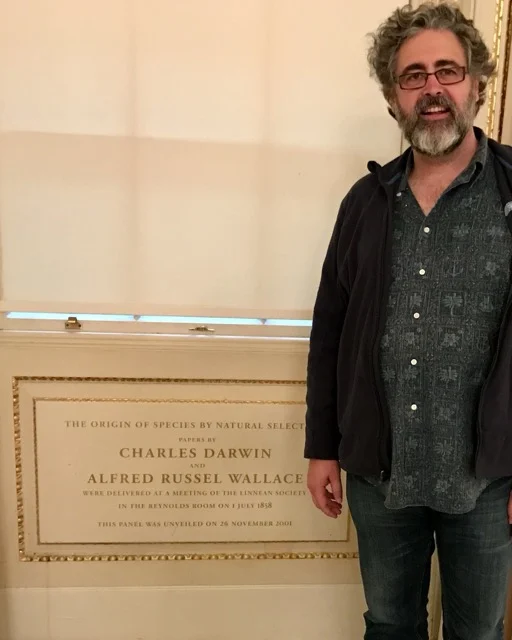
The crisis of simultaneous discovery led to a joint presentation of Darwin’s and Wallace’s papers at the Linnean Society of London on July 1, 1858. Ironically, the significance of the event was entirely missed by the scientific establishment of the time. Thomas Bell, the president of the Linnean Society, remarked in his annual report that the year 1858 had not been marked by "any of those striking discoveries which at once revolutionize, so to speak, the department of science on which they bear."
It was only with the 1859 publication of "On the Origin of Species" that the theory gained the momentum necessary to reshape human understanding. The distinction lay not in the core idea, which Matthew had held since 1831, but in the method of delivery and the breadth of engagement.
The Matthew Gap: Why Superior Ideas Fail to Gain Traction
Patrick Matthew’s failure to influence the scientific community serves as a cautionary tale for "siloed" expertise. Matthew possessed the data and the correct conclusion, but he lacked the narrative infrastructure to make his ideas accessible or relevant to a broader audience.
In a corporate context, the "Matthew Gap" is frequently observed when specialized departments—such as R&D or Data Analytics—identify a critical strategic shift but fail to communicate it beyond their immediate circle. Matthew’s work was buried in an appendix of a book about timber; similarly, many transformative corporate strategies are buried in 100-page slide decks or technical white papers that never reach the employees responsible for execution.

Analysis of Matthew’s approach suggests that he viewed the truth as self-evident. He believed that stating the mechanism was sufficient. Darwin, conversely, understood that for a radical new idea to take root, the audience must be guided through a process of "sense-making."
Darwin’s Empirical Narrative: The "Three Tablespoons of Mud" Experiment
A defining characteristic of Darwin’s "On the Origin of Species" is its reliance on empirical storytelling rather than abstract theorizing. Darwin did not merely announce his conclusions; he provided a series of observations and experiments that allowed the reader to experience the logic of his theory.
One of the most cited examples is Darwin’s investigation into how freshwater plants spread between isolated bodies of water. To test the hypothesis that birds transport seeds via mud on their feet, Darwin conducted a controlled experiment. He collected three tablespoons of mud from the edge of a pond. After drying the mud—which weighed less than seven ounces—he kept it covered in his study for six months.
The resulting data was startling: from that small amount of mud, 537 plants germinated. Darwin wrote, "I took in February three table-spoonfuls of mud from three different points… 537 plants grew."
This experiment serves as a masterclass in strategic communication. Darwin did not just state that "avian transport is a viable vector for seed dispersal." He provided a concrete, visualizable story. He took the reader to the edge of the pond, into his study, and through the patient counting of 537 plants. By providing a specific, data-backed narrative, he made a radical idea seem plausible and, eventually, inevitable.
The Corporate Disconnect: Strategy as an Event vs. a Process
Modern leadership teams often fall into the "Matthew Trap." Executives may spend months analyzing market trends, customer behavior, and competitive threats. By the time they reach a strategic conclusion, they have fully integrated the logic of the new direction.
However, the communication of this strategy is often reduced to a single "event"—the 45-minute town hall or the "all-hands" email. In this scenario, the leadership team has spent months making sense of the strategy, while the employees are given less than an hour to adopt it. This creates a disconnect where the workforce hears the conclusions but has not been invited on the journey of the thinking that produced them.
Industry data suggests that this lack of engagement is a primary driver of strategic failure. According to various organizational studies, while 95% of employees are often unaware of or do not understand their company’s strategy, organizations that successfully "story-tell" their strategy see significantly higher rates of alignment and execution.
Case Study: Zambia Sugar and the Visual Strategy Map
To bridge the gap between abstract strategy and daily operations, some organizations have turned to "strategy maps" and narrative-based training. Zambia Sugar, a major African producer with approximately 7,000 employees, implemented this approach in collaboration with consultancy firms to bring its corporate goals to life.

The company moved away from traditional slide presentations, opting instead for a large, illustrated strategy map depicting the entire ecosystem of the business—from cane fields and logistics to factory operations and community impact. This map was not a static poster but a tool for "repeated engagement."
During training sessions, facilitators used the map to spark "progress stories." For instance, when discussing the core value of "integrity," a participant shared a story of a cyclist at the factory gate. The employee, unaware he was being watched, stopped at a pedestrian boom gate, dismounted, opened the gate, walked through, and closed it, despite the fact that he could have easily ridden around it in the early morning hours.
This story provided a concrete, culturally relevant example of what "integrity" looked like in the context of Zambia Sugar. Like Darwin’s mud experiment, this narrative allowed employees to provide their own evidence for the strategy, transforming an abstract value into a tangible behavior.
Strategy Adoption as a Continuous Evolution
A final lesson from Darwin’s success is his commitment to refinement and response. Darwin did not view "On the Origin of Species" as a finished product upon its 1859 release. He published six editions over thirteen years, using each iteration to respond to critics, incorporate new fossil evidence, and address scientific objections.
In the corporate world, this highlights the necessity of the "Progress Story." Strategy is rarely perfect at launch; it evolves as it encounters market realities. Leaders who successfully embed strategy do not just repeat the same presentation; they create forums where new stories of progress, difficulty, and adaptation can be shared.
The distinction between a strategy that is "heard" and a strategy that is "embedded" lies in the transition from the leader telling the story to the employees contributing their own. When a manager stops an activity because it no longer fits the strategic direction, or a salesperson changes their approach based on a new value, these moments become the "new data" that reinforces the strategy.
Conclusion: Lessons for the Modern Executive
The comparison between Charles Darwin and Patrick Matthew suggests that the success of a strategy is determined by three factors:
- Narrative Evidence: Moving beyond abstract goals to provide concrete, "sense-making" stories that allow employees to see the logic for themselves.
- Continuous Engagement: Treating strategy as a process of ongoing conversation rather than a one-time announcement.
- Participatory Storytelling: Creating tools and environments where employees can contribute their own experiences, turning the corporate strategy into a shared narrative.
Ultimately, a strategy becomes embedded not when it is published in an annual report, but when it becomes the lens through which every employee makes decisions. As Darwin demonstrated, the most effective way to change a worldview—or a company—is not just to present the truth, but to provide the story that allows others to discover it.
