

The fundamental human capacity for influence is a skill honed from the earliest moments of life, extending its reach from the nascent stages of infancy to the twilight years of existence. This pervasive ability, often underestimated in its daily application, underpins a significant portion of our professional achievements and personal contentment. Understanding and mastering ethical influence, therefore, is not merely an advantage but a necessity in navigating the complexities of human interaction.
This ubiquitous nature of influence is vividly illustrated by research highlighted by author Dan Pink in his seminal work, "To Sell Is Human." Pink’s findings reveal that the average American worker dedicates approximately 40% of their workday to persuading, convincing, or influencing others, a figure that climbs even higher for professionals in sales roles. This data underscores that influence is not an exclusive domain of a select few but an intrinsic and constant element of daily professional life for the vast majority of the workforce.
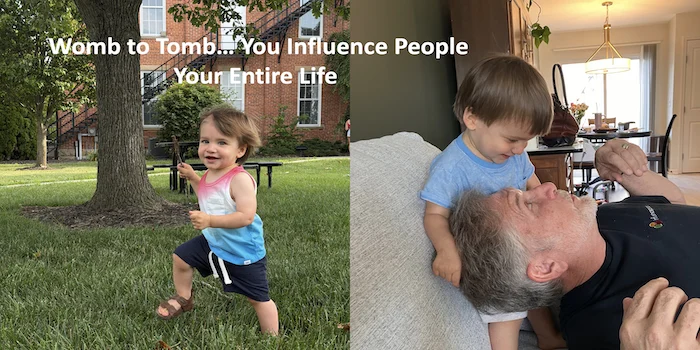
The profound impact of influence can be observed in the developmental trajectory of an individual, beginning with the earliest forms of communication. Consider the case of Emmett, a seventeen-month-old child who, from his birth on March 14, 2025, demonstrated an innate ability to influence his environment and caregivers. Despite lacking the capacity for verbal language, Emmett effectively communicated his needs—hunger, fatigue, discomfort, or a desire for proximity—through crying. This non-verbal communication compelled his parents, grandparents, and other family members to interpret his distress and respond accordingly. This fundamental interaction, devoid of vocabulary or negotiation skills, exemplifies influence in its most primal form: altering the thoughts, feelings, and, crucially, the behaviors of those around him to achieve a desired outcome.
As Emmett matured, his communication skills evolved, aided by his mother, Abigail, an American Sign Language major. The introduction of simple signs provided him with a more nuanced method of expressing himself. For instance, if he requires more of something, he can now sign "more," a clear and direct request that elicits a more informed response than generalized crying. Similarly, when faced with a challenge, he can communicate a need for "help," enabling his caregivers to offer targeted support. This progression highlights how the development of communication tools amplifies one’s ability to influence effectively, transforming the dynamics of interaction and fostering a more responsive and less frustrating environment. This experience, familiar to many parents, underscores the significant ease that arises when individuals can articulate their needs and desires.
Influence as Purposeful Communication
This developmental arc from non-verbal cues to structured communication illuminates a critical distinction: influence is not synonymous with manipulation. Instead, it is fundamentally about purposeful communication. Ethical influence involves clearly conveying one’s needs, values, or beliefs to others, enabling them to make informed decisions. This principle extends far beyond childhood, permeating all facets of human endeavor.
The enduring power of influence was poignantly demonstrated in the final months of Jane’s father’s life. Despite his physical decline and the increasing difficulty he experienced in speaking, he continued to exert influence on those around him. His expressions, gestures, his very presence, and the palpable love he conveyed to his family served as powerful forms of communication that resonated deeply. This underscores the continuous and multifaceted nature of influence, which can manifest through both explicit and implicit means, even in the face of significant physical limitations. His passing, just months before his 99th birthday, serves as a stark reminder that influence is an integral aspect of the human condition, present from the first cry of a newborn to the final moments of life.
This pervasive reality leads to a pivotal question: "Wouldn’t you agree that much of your professional success and personal happiness depends on hearing ‘yes’?" Whether the context is leading a team, serving customers, raising children, negotiating with a client, or simply endeavoring to strengthen a personal relationship, the ability to elicit a positive response, to achieve a desired outcome, is invariably tied to the effective application of influence.
The Pillars of Ethical Influence
The good news is that the pursuit of influence need not be a morally ambiguous endeavor. Ethical influence is not about coercion or manipulation to achieve personal gain at the expense of others. Rather, it is rooted in a profound understanding of human psychology and a commitment to communicating in ways that create mutual benefit and foster positive outcomes for all parties involved. This approach emphasizes building trust, understanding perspectives, and leveraging principles of persuasion ethically to achieve win-win scenarios.
The mission of organizations like Influence PEOPLE, founded by Brian Ahearn, has consistently centered on disseminating the principles and practices of ethical influence. Through a comprehensive array of resources, including books, LinkedIn Learning courses, articles, keynote presentations, and workshops, the organization aims to equip individuals and organizations with the tools to enhance their influence capabilities. This educational initiative is built upon a foundation of scientific research and practical application, drawing heavily from the groundbreaking work of social psychologist Robert Cialdini, Ph.D.
Brian Ahearn, Chief Influence Officer at Influence PEOPLE and a faculty member at the Cialdini Institute, is a leading advocate for the ethical application of influence. As one of a select group of Cialdini Method Certified Trainers, Ahearn received direct training and endorsement from Dr. Cialdini himself, a testament to his expertise in the science of persuasion. His published works, including "Influence PEOPLE," "Persuasive Selling," and "Influenced from Above," have garnered significant recognition, with "Influence PEOPLE" being lauded as one of the 100 Best Influence Books of All Time by Book Authority. Furthermore, his LinkedIn Learning courses on persuasive selling and coaching have reached an audience of over 850,000 individuals globally, and his TEDx Talk on pre-suasion has accumulated over a million views, demonstrating a broad and impactful reach in educating the public on these crucial skills.
Broader Implications and Future Directions
The implications of mastering ethical influence extend across various sectors. In business, it translates to improved sales performance, enhanced leadership effectiveness, stronger customer relationships, and more productive team dynamics. In personal life, it fosters healthier relationships, more effective parenting, and greater personal fulfillment. The ability to communicate persuasively and ethically allows individuals to navigate disagreements constructively, build consensus, and inspire positive change.
The increasing recognition of influence as a vital skill set is evident in the growing demand for training and development in this area. As the professional landscape becomes more competitive and interconnected, the capacity to connect with, persuade, and motivate others becomes an increasingly valuable asset. The data from Dan Pink’s research, highlighting the substantial amount of time professionals spend on influence-related activities, reinforces the need for targeted education and skill development.
Organizations that prioritize ethical influence training are likely to see tangible benefits. This includes a more engaged workforce, higher customer retention rates, and a stronger brand reputation built on trust and integrity. The Cialdini Institute, through its certified trainers like Brian Ahearn, provides a framework for understanding the psychological principles that drive human decision-making, enabling individuals to apply these insights in a manner that is both effective and morally sound.
The journey from a baby’s cry to the sophisticated communication of an adult highlights the evolutionary nature of influence. As individuals develop their cognitive and communication abilities, their capacity to influence expands and refines. This evolution underscores the importance of continuous learning and adaptation in the realm of influence.
For organizations and individuals seeking to enhance their effectiveness in eliciting positive responses and achieving their objectives, engaging in a dialogue about influence is a crucial first step. Brian Ahearn and Influence PEOPLE offer a pathway to explore how these principles can be applied to specific challenges, fostering environments where "yes" is heard more often, not through coercion, but through mutual understanding and ethical persuasion.
The question of when one first recognized influence as a ubiquitous daily tool is a personal reflection that resonates with many. For some, it might be the realization of a parent’s subtle guidance, a teacher’s motivational speech, or a colleague’s persuasive argument. Regardless of the specific moment of awakening, the underlying principle remains consistent: influence is an inherent and powerful force shaping our interactions and outcomes. As we continue to navigate an increasingly complex world, the mastery of ethical influence will undoubtedly remain a cornerstone of both professional success and personal well-being.
The author’s personal journey, exemplified by his grandson Emmett, serves as a powerful testament to the innate and evolving nature of influence. This narrative, woven through research-backed insights and real-world examples, underscores that the ability to affect others’ thoughts, feelings, and actions is not a specialized talent but a fundamental aspect of the human experience. It is a skill that, when honed ethically, can unlock significant potential for both individual and collective advancement.
