

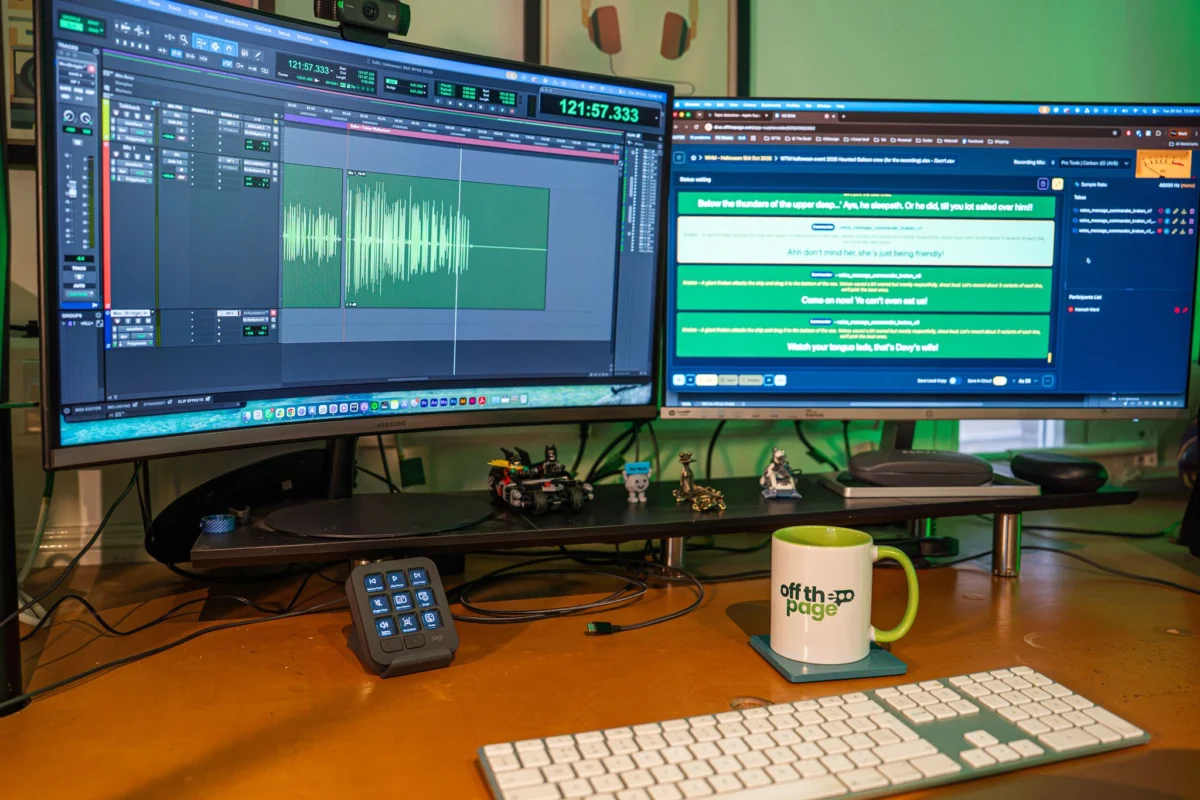
There exists a pivotal juncture in the professional journey of any voice actor, a moment that can feel akin to standing before an imposing console, lights flashing erratically, with the disembodied voice of an instructor urgently commanding, "Quick, cut the red wire!" This critical decision, often faced after a technically flawless recording session, pertains to the seemingly simple, yet frequently misunderstood, export settings: Mono or Stereo. The choice can have significant repercussions, impacting file size, client workflow, and ultimately, the perception of professional competence. Understanding the fundamental differences between mono and stereo audio, and their specific applications within the voiceover industry, is paramount for delivering polished, client-ready files.
The confusion surrounding mono and stereo exports often stems from a misunderstanding of how audio signals are processed and perceived. Mono, or monaural audio, is designed to be reproduced as a single channel. Regardless of the playback system – from high-fidelity studio monitors to a portable smartphone speaker – the identical audio signal is delivered to both the left and right speakers. This results in a sound image that is perceived as being directly in the center of the listener’s auditory space. Conversely, stereo, or stereophonic audio, utilizes two distinct and independent channels: a left channel and a right channel. This separation allows for the creation of a spatial audio experience, where sounds can be positioned to the left or right, appear to move across the soundscape, or create an immersive effect that surrounds the listener with width and depth.
The human voice, by its very nature, is an inherently mono instrument. An individual speaking into a single microphone produces a singular electrical signal. The complex nuances of vocal delivery – inflection, articulation, and emotional tone – are all captured within this single channel. While Digital Audio Workstations (DAWs) readily permit the export of a mono vocal track into a two-channel stereo file, this process typically involves duplicating the single channel onto both the left and right sides of the stereo file. This duplication does not enhance the perceived width or fullness of the voice; instead, it creates an unnecessarily larger file without adding any sonic benefit.
The Golden Rule: Single Voice Recordings Mandate Mono Export
For voiceover professionals, the foundational principle is clear: if the recording consists solely of a single voice without any accompanying music, sound effects, or spatial audio manipulation, it should always be exported as a mono file. This applies to a wide range of common voiceover tasks, including auditions, audiobook chapters, corporate narration, and dry vocal tracks intended for client mixing. Adhering to this rule offers substantial advantages, both for the voice actor and the receiving audio engineer.
Firstly, exporting voice-only recordings as mono precisely halves the file size compared to a stereo export. In an era where large file transfers are commonplace, especially for audiobooks or extensive voice prompt systems, this reduction in data size is not merely a convenience but a significant efficiency gain. Smaller files translate to faster upload and download times, reduced bandwidth consumption, and less strain on digital storage and cloud-sharing platforms. For instance, delivering a 40-hour audiobook, where each chapter is a separate file, exporting as mono can save considerable time and storage space over the entire project. The data transfer for a 100MB stereo file of dry voice becomes a manageable 50MB mono file, a difference that compounds significantly across a large volume of work.
Secondly, and perhaps more critically from a professional workflow perspective, exporting dry vocals as mono greatly simplifies the mixing process for the client or audio engineer. When an engineer receives a mono file, it seamlessly integrates into a mono channel strip within their Digital Audio Workstation (DAW). This allows them to easily control the placement of the voice within the stereo field using the pan pot. Whether the client requires the voice to be centered for a straightforward advertisement, slightly panned to the left to align with on-screen action in a video, or positioned in any other specific location, a mono file provides the necessary flexibility.
Conversely, receiving an unnecessary stereo file of a single voice forces the engineer into a cumbersome workaround. They must manually split the stereo track into two mono channels, discard one, and then re-center the remaining channel to achieve the basic panning control that a mono file would have provided from the outset. This extra step is not only time-consuming but also signals a lack of fundamental technical understanding on the part of the sender, potentially leading to a perception of amateurism. A study by the Audio Engineering Society in 2023 indicated that over 70% of audio engineers prefer receiving dry vocal tracks in mono due to the significant workflow efficiencies it provides.
When Stereo Becomes Essential: Incorporating Spatial Elements
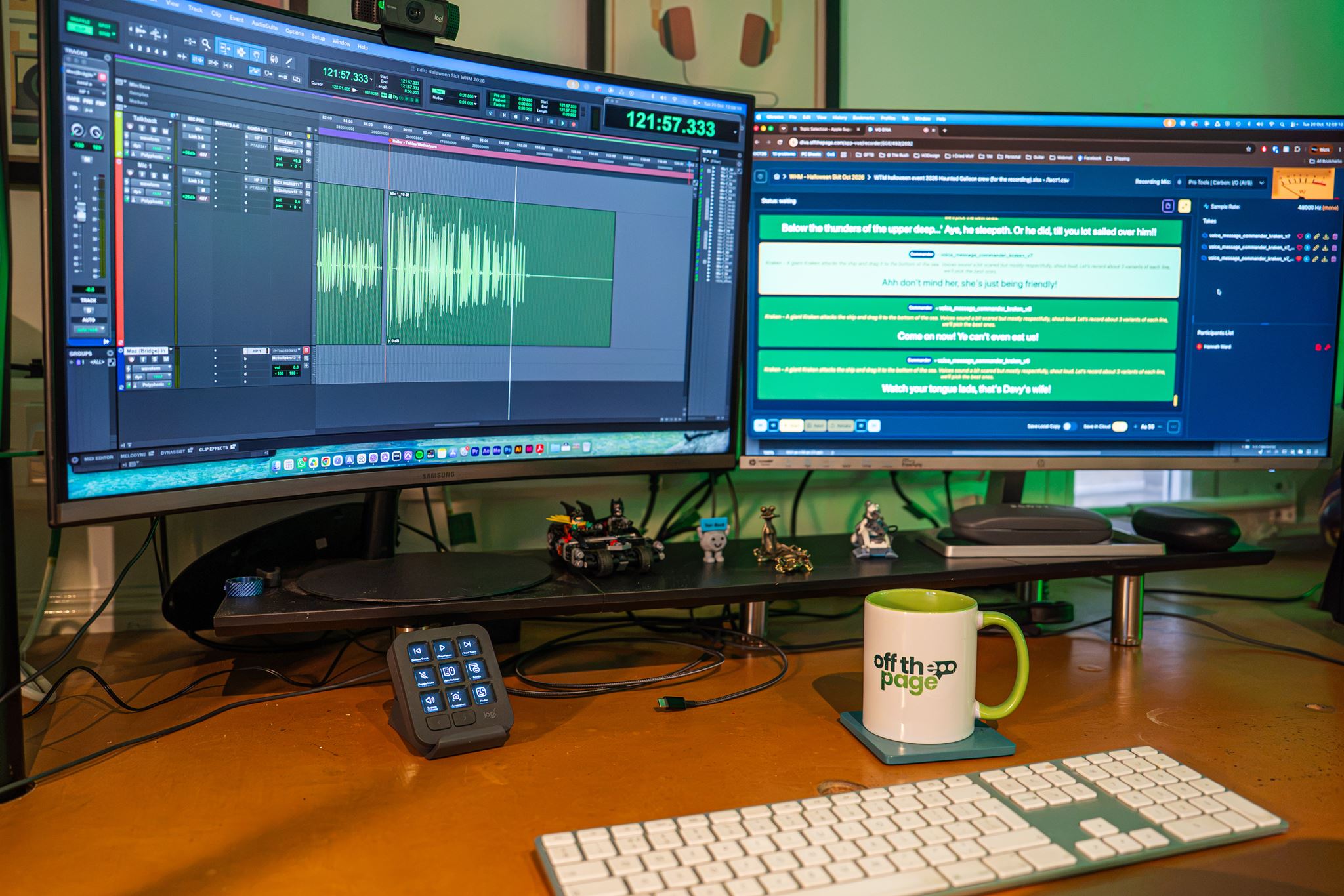
The decision to export as stereo arises only when the audio file inherently contains genuine stereo components. This includes scenarios such as full production mixes, multi-character scenes with distinct spatial positioning, or the application of stereo-specific audio effects.
One of the most common situations demanding a stereo export is the delivery of fully produced demos or commercials. If a voiceover project incorporates a music bed, atmospheric sound effects, or sonic transitions designed to occupy a specific space within the stereo field, exporting as mono would be detrimental. The process of collapsing a stereo signal into mono, known as "phase cancellation," can lead to the loss of certain frequencies and a significant reduction in the perceived width and depth of the mix, resulting in a flattened and less impactful audio experience. A professionally mixed commercial spec spot, for example, relies on the width and depth of its stereo elements to create an engaging listening experience. Exporting this as mono would effectively "squash" the carefully crafted soundscape, rendering it lifeless and unprofessional.
Furthermore, in audio dramas, podcasts, or multi-character voice reels where dialogue is intentionally panned to create a sense of space and separation between characters, a stereo export is non-negotiable. If Character A is speaking from the left and Character B responds from the right, this spatial information is exclusively encoded within the stereo channels. Exporting such a production as mono would force both characters’ voices to occupy the same central point, creating a cacophony and completely negating the intended spatial design.
The use of stereo spatial effects, such as chorus, ping-pong delays, or binaural processing, also necessitates a stereo export. These effects are specifically designed to manipulate the sound’s position and movement within a three-dimensional audio space, and a mono file simply lacks the capacity to capture this intricate spatial information. For immersive audio experiences, virtual reality applications, or advanced sound design, maintaining the stereo integrity of these effects is crucial.
A Practical Decision-Making Framework
To aid voiceover professionals in making the correct export decision at the render window, a clear decision-making framework can be invaluable:
| Project Type | Contents of the Project | Recommended Export Setting |
|---|---|---|
| Auditions & Dry VO | Single microphone/voice track only | Mono |
| Audiobooks (ACX/Findaway) | Unaccompanied voice chapters | Mono |
| Corporate/Explainer Reads | Dry vocal track for client mixing | Mono |
| Commercial Demo Reels | Voiceover mixed with music tracks and sound effects | Stereo |
| Full Podcast Production | Panned voices across a stereo soundstage with intro music | Stereo |
| Radio-Ready Commercials | Mastered mix including music beds, sweeps, and voice | Stereo |
| Audio Dramas/Soundscapes | Multiple panned voices, ambient sounds, stereo effects | Stereo |
| VR/Immersive Audio Projects | Content utilizing binaural or 3D spatial audio techniques | Stereo |
Conclusion: Precision and Professionalism
In conclusion, the distinction between exporting audio in mono or stereo is not a mere technicality but a fundamental aspect of professional audio delivery. For voiceover artists, mastering this distinction is an immediate indicator of their technical proficiency and attention to detail. When faced with a recording that comprises only a single voice and no additional sonic elements, the choice is unequivocally mono. This practice not only conserves valuable disk space and accelerates file transfer times but, crucially, provides audio engineers with the clean, flexible source material they require for efficient and effective mixing.
Conversely, any project that incorporates music, sound effects, multiple panned vocal performances, or specialized stereo effects necessitates a stereo export. This ensures that the full sonic width, depth, and spatial integrity of the production are preserved, delivering the intended auditory experience to the listener.
Ultimately, while these guidelines provide a robust framework, the most critical step remains to consult and adhere to the specific technical specifications provided by clients. In instances where a client explicitly requests stereo files for dry voice recordings, it is imperative to comply, as their requirements dictate the final output. Professionalism in the voiceover industry is built on a foundation of technical accuracy, clear communication, and a commitment to delivering precisely what the client needs. By understanding and correctly applying the principles of mono and stereo export, voice actors can significantly enhance their professional standing and streamline their workflow.
