


A decade after its groundbreaking introduction, the Atlas of Emotions, a unique framework for understanding and navigating the complexities of human feelings, is celebrating a significant milestone. Launched in 2016, this ambitious project, born from a rare convergence of scientific rigor, contemplative wisdom, and artistic design, has transcended its origins to become a widely recognized tool in education, psychology, and personal development worldwide. The initiative, spearheaded by renowned emotion scientist Dr. Paul Ekman, his daughter Dr. Eve Ekman, and His Holiness the Dalai Lama, aimed to create an accessible yet scientifically robust map of the emotional landscape, a goal that has demonstrably been achieved and continues to evolve.
The genesis of the Atlas of Emotions can be traced back to Dr. Paul Ekman’s extensive research into universal emotions. His foundational work, including a landmark survey of nearly 250 emotion scientists, established a global consensus on the existence and nature of core human emotions. This scientific bedrock provided the essential common ground upon which the Atlas was built. The vision was to translate this scientific understanding into a format that could be readily understood and utilized by individuals from diverse backgrounds, fostering greater emotional literacy and promoting well-being. The collaboration with His Holiness the Dalai Lama brought a profound contemplative dimension, emphasizing the importance of emotional regulation and compassion in navigating life’s challenges. Dr. Eve Ekman played a pivotal role in bridging these scientific and contemplative perspectives, ensuring the Atlas was both intellectually sound and practically applicable.
A Rare Glimpse into the Collaborative Process
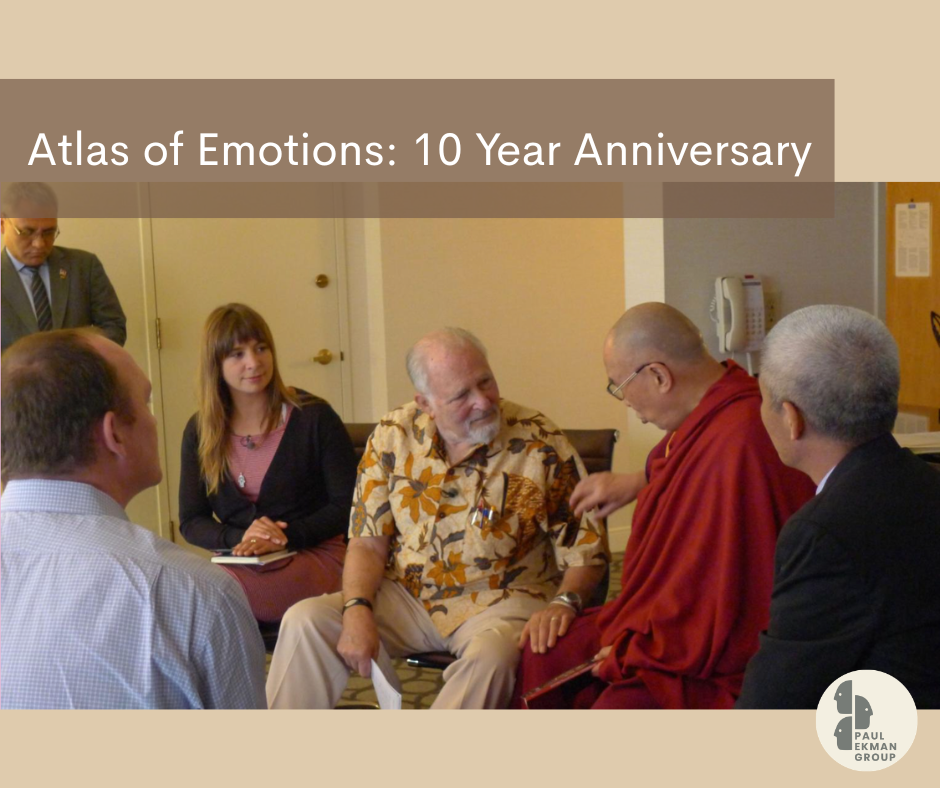
To commemorate this ten-year anniversary, the Paul Ekman Group has unveiled previously unseen footage offering an intimate look into the collaborative process that shaped the Atlas. This archival material captures a working meeting between Dr. Paul Ekman, Dr. Eve Ekman, and His Holiness the Dalai Lama as they meticulously reviewed the Atlas in its developmental stages. The video underscores the interdisciplinary nature of the project, showcasing the seamless integration of rigorous psychological research, innovative graphic design, and the profound insights of the Dalai Lama. This behind-the-scenes glimpse highlights the dedication and thoughtful deliberation that went into crafting a tool designed for universal comprehension. The footage serves as a testament to the spirit of inquiry and consensus-building that defined the Atlas’s creation, demonstrating a shared commitment to enhancing human understanding of emotions.
From its initial unveiling, the Atlas of Emotions garnered significant international attention. Its innovative approach to visualizing emotional states and their interconnections quickly resonated with a global audience. Prominent media outlets, including The New York Times, recognized the Atlas for its pioneering effort in demystifying complex psychological concepts and making them accessible to the public. The article, "Dalai Lama Website, Atlas of Emotions, Offers Guide to Feelings," published in May 2016, highlighted the unique partnership and the potential of the Atlas to foster emotional awareness on a broad scale. This early recognition was instrumental in propelling the Atlas into various spheres of influence.
The Atlas’s Impact Across Diverse Fields
Over the past decade, the Atlas of Emotions has found widespread application across a multitude of sectors, demonstrating its versatility and profound impact. In educational settings, educators have utilized the Atlas to cultivate emotional intelligence in students, equipping them with the language and understanding to identify, express, and manage their feelings constructively. This has contributed to creating more supportive and empathetic learning environments.
Within the therapeutic landscape, mental health professionals have integrated the Atlas as a valuable tool for clients to explore their emotional experiences. Its visual and conceptual framework aids in articulating complex emotional states, facilitating deeper self-awareness and more effective therapeutic interventions. Researchers have also leveraged the Atlas as a foundational model for further study into the nuances of emotional experience, contributing to advancements in affective science.
Beyond these professional domains, the Atlas has permeated everyday conversations and personal development journeys. Individuals have reported using the Atlas to enhance their relationships, improve their communication skills, and cultivate greater self-compassion. The framework provides a shared language for discussing emotions, fostering understanding and connection between people. While specific quantitative data on the exact number of users across all platforms is not publicly available, the consistent global media coverage and the testimonials gathered through feedback channels indicate a substantial and growing user base. The interactive nature of the online Atlas, coupled with its availability in multiple languages, has undoubtedly facilitated its broad reach.
A Decade of Growth and Evolution: Key Milestones
The journey of the Atlas of Emotions has been marked by continuous development and expansion.
- 2016: The Atlas of Emotions is officially launched, introducing its innovative framework to the public. Initial media coverage, including The New York Times, generates widespread awareness.
- 2017-2020: The Atlas gains traction in educational and therapeutic communities. Translations into various languages begin, increasing global accessibility. Research utilizing the Atlas as a conceptual tool starts to emerge.
- 2021-2023: The Paul Ekman Group actively engages with users, collecting feedback and identifying areas for enhancement. Discussions and planning commence for future iterations of the Atlas.
- 2024: The ten-year anniversary is celebrated, marked by the release of archival video footage and a call for user feedback to inform future developments. Plans for updates to the online Atlas and the forthcoming book are announced.
The project’s foundation, built on a consensus of nearly 250 emotion scientists, provides a robust starting point. This scientific agreement on universal emotions, a core tenet of Dr. Ekman’s work, has been crucial in establishing the Atlas’s credibility and broad applicability. The framework meticulously details the nuances of various emotional states, their triggers, and their potential behavioral responses, offering a comprehensive guide to the human affective experience.
Looking Towards the Future: Innovations and User Engagement
As the Atlas of Emotions marks its tenth anniversary, the focus is firmly on the future. The Paul Ekman Group is actively soliciting feedback from its global community to inform the next phase of its development. Users are encouraged to share their experiences with the Atlas, detailing how it has influenced their perceptions, understanding, or actions. This direct engagement is crucial for ensuring that the Atlas continues to evolve and remain relevant to the needs of its users. A dedicated feedback form is available for individuals to contribute their insights, which will directly shape future iterations of the Atlas.
In anticipation of continued growth and deeper exploration, exciting new developments are on the horizon. Significant updates are planned for the online, interactive Atlas of Emotions, promising enhanced features and a more dynamic user experience. Furthermore, Dr. Eve Ekman is currently authoring an "Atlas of Emotions" book, slated for release in 2027. This forthcoming publication is expected to delve deeper into the conceptual underpinnings of the Atlas, incorporate updated research and insights, and offer novel perspectives on engaging with our emotional lives. This expansion into a comprehensive book format signifies a commitment to providing a more in-depth and accessible resource for individuals seeking to enhance their emotional literacy and well-being. Those interested in being notified of the book’s release are invited to join an announcement list.
The enduring legacy of the Atlas of Emotions lies in its ability to bridge the gap between complex scientific understanding and practical, everyday application. By providing a universally accessible framework for understanding emotions, it empowers individuals to navigate their inner worlds with greater clarity, fostering empathy, resilience, and a more profound connection with themselves and others. The celebration of its first decade is not just a reflection of past achievements but a vibrant testament to its ongoing relevance and the promising future of emotional intelligence exploration.
