


The scientific understanding of human emotions, long confined to academic discourse and laboratory settings, is now being made accessible to the public through a novel tool developed by leading emotion researchers. "The Feelings Field Guide," a product of over 50 years of groundbreaking research by Drs. Paul and Eve Ekman, aims to bridge the gap between abstract psychological theory and actionable everyday skills for recognizing and responding to emotions. This comprehensive toolkit, featuring 92 emotion flashcards and a scientific guidebook, translates complex behavioral science into a tangible resource for parents, professionals, and anyone seeking to enhance their emotional intelligence and non-verbal communication capabilities.
The Genesis of Emotional Literacy
The development of "The Feelings Field Guide" is rooted in the pioneering work of Dr. Paul Ekman, a distinguished psychologist whose research has fundamentally shaped our understanding of universal emotions and facial expressions. Beginning in the mid-20th century, Dr. Ekman’s work, often in collaboration with Wallace Friesen, established the existence of seven universal emotions – happiness, sadness, anger, fear, surprise, disgust, and contempt – that are expressed with distinct, recognizable facial configurations across all cultures. This discovery challenged prevailing anthropological theories that suggested emotions were entirely culturally constructed. Ekman’s extensive cross-cultural studies, involving diverse populations from remote tribes to urban centers, provided compelling evidence for the innate, biological basis of these emotional expressions.
The Facial Action Coding System (FACS), developed by Ekman and Friesen, is a cornerstone of this research. FACS is a comprehensive, anatomically based system for describing all observable facial movements, assigning a unique code to each "action unit" (AU) of the face. By meticulously cataloging how muscles contract and relax to produce expressions, FACS provides an objective and quantifiable method for analyzing facial behavior, moving beyond subjective interpretation. "The Feelings Field Guide" directly leverages this scientific foundation, ensuring that the expressions depicted and described are not merely approximations but are grounded in the rigorous methodology of FACS.
Bridging Science and Everyday Application
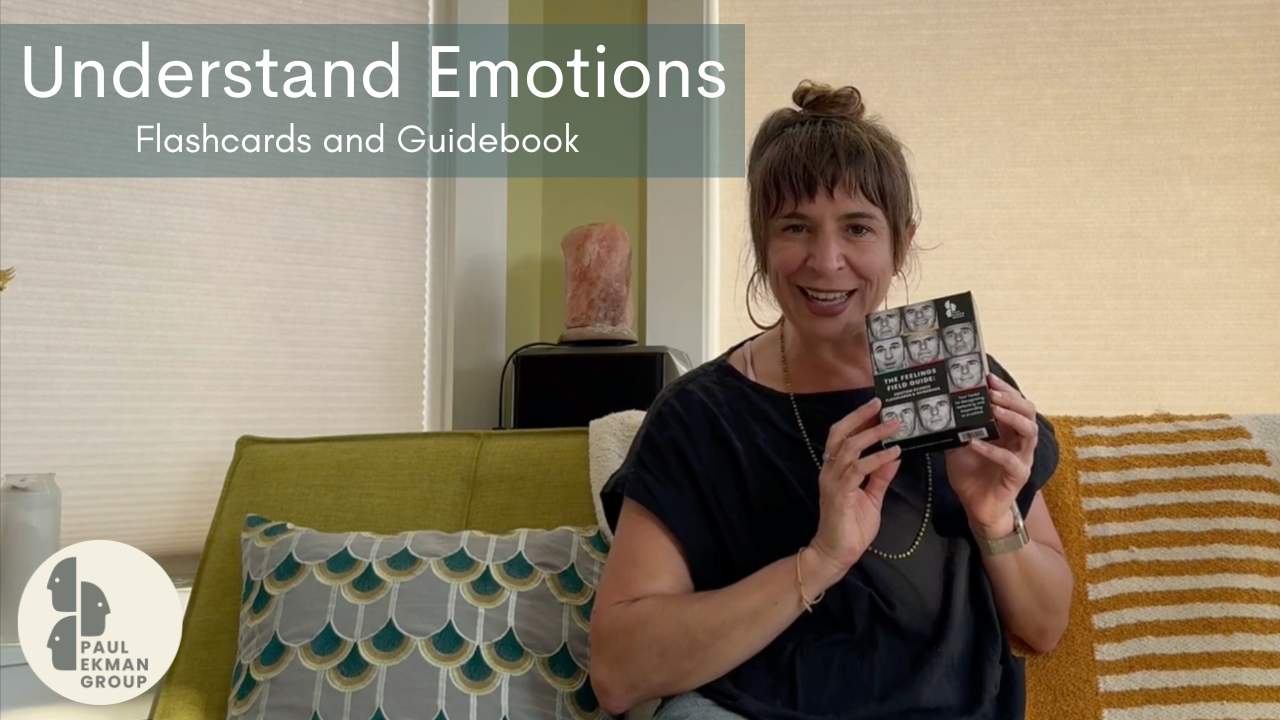
"The Feelings Field Guide" is designed to democratize the insights gleaned from decades of scientific inquiry. The core of the toolkit consists of 92 flashcards, each illustrating a specific emotion or a nuance within an emotional spectrum. These are accompanied by a scientific guidebook that explains the underlying principles of emotion recognition, the universality of facial expressions, and the practical applications of this knowledge.
Dr. Eve Ekman, a clinical psychologist and a key figure in the development of the guide, highlights the importance of making this knowledge accessible. In an introductory video accompanying the guide, she explains the methodology behind recognizing the seven universal emotions, emphasizing how subtle muscular movements contribute to distinct facial displays. The guide aims to equip individuals with the ability to identify these expressions, both in themselves and in others, fostering greater empathy and more effective communication.
The toolkit is not simply a passive learning device. It encourages active engagement through various exercises. Users can quiz themselves using the expression cards, focusing on recognizing specific emotions or differentiating between similar expressions. The guide also suggests focusing on one emotion at a time to build a deeper understanding or working through reflection exercises to connect observed expressions with internal emotional states and behavioral responses. This flexibility allows individuals to tailor their learning experience to their specific needs and goals.
Practical Utility Across Diverse Contexts
The applications of "The Feelings Field Guide" are broad, extending from personal relationships to professional environments. For parents, it offers a structured approach to discussing emotions with children, helping them to identify and label their feelings and understand the emotional cues of others. This can be particularly beneficial for children experiencing anxiety or social difficulties, providing a concrete framework for emotional exploration.
In professional settings, particularly those involving high-stakes interactions, the ability to accurately read emotions can be a significant asset. Professionals in fields such as negotiation, sales, law enforcement, and healthcare can benefit from enhanced emotional awareness. Understanding the subtle non-verbal signals of clients, colleagues, or adversaries can lead to more informed decision-making, improved rapport, and more effective conflict resolution. As exemplified by testimonial from Simon B., working in information security, the guide has proven valuable in understanding colleagues, customers, and suppliers, leading to improved interactions and a more nuanced perception of people’s true feelings versus their spoken words.
Addressing Misconceptions and Enhancing Empathy
A significant implication of "The Feelings Field Guide" is its potential to combat common misconceptions about emotions. For instance, the idea that emotions are purely subjective or entirely a product of individual interpretation is challenged by the scientific evidence for universal emotional expressions. While the intensity and triggers of emotions may vary culturally, the fundamental facial configurations remain consistent.
By providing a science-backed framework for understanding these expressions, the guide helps to demystify emotional communication. This can lead to a reduction in misunderstandings and conflicts that arise from misinterpreting emotional cues. When individuals are better equipped to recognize emotions accurately, they can respond more empathetically and constructively, fostering stronger relationships and a more harmonious social environment.
Data and Research Underpinning the Guide
The efficacy of "The Feelings Field Guide" is directly linked to the robust scientific foundation upon which it is built. Dr. Paul Ekman’s research has been a continuous effort spanning over five decades, involving numerous studies and collaborations. For instance, his early work with Friesen in the 1960s and 70s involved examining facial expressions in various cultures, including the Fore people of New Guinea, who had had minimal contact with the outside world. The findings consistently demonstrated the universal nature of the basic emotion expressions, providing strong empirical support for his theories.
Further research has delved into the neurological underpinnings of these emotions and their expressions, utilizing tools such as fMRI and EEG to understand brain activity associated with different emotional states. The development of FACS itself has been a monumental undertaking, involving extensive observation and coding of facial movements. The "Micro-expression Training Tools," often used in conjunction with the Field Guide, are designed to train individuals to detect fleeting facial expressions that often betray concealed emotions, further underscoring the scientific rigor behind the Ekman Group’s work.
Testimonials and Real-World Impact
The impact of "The Feelings Field Guide" is being felt by individuals across various walks of life. Mark B., a parent without a formal background in behavioral sciences, found the guide to be an effective tool for discussing emotions with his son, who struggles with anxiety and social regression. He expressed confidence in the product’s validity, knowing it was pioneered by Dr. Ekman, a figure he greatly admires. This highlights the guide’s success in translating complex scientific concepts into practical, family-friendly applications.
Simon B.’s testimonial from the information security sector underscores the professional utility of the guide. His experience demonstrates how a deeper understanding of micro-expressions and emotions can significantly enhance interpersonal interactions in a professional context, particularly in discerning genuine feelings from expressed statements. This ability is crucial in fields where accurate assessment of intent and sentiment is paramount.
The Broader Implications of Enhanced Emotional Literacy
The development and dissemination of tools like "The Feelings Field Guide" have broader societal implications. In an increasingly complex and interconnected world, the ability to navigate emotional landscapes effectively is a critical life skill. Misunderstandings rooted in emotional misinterpretations can lead to personal conflict, fractured relationships, and even societal division. Conversely, enhanced emotional literacy can foster greater empathy, improved collaboration, and more effective problem-solving.
The guide’s emphasis on translating insight into action is particularly important. It is not enough to simply recognize an emotion; understanding how to respond constructively is key. By providing a framework for this, "The Feelings Field Guide" empowers individuals to move beyond passive observation to active, empathetic engagement. This can lead to:
- Improved Relationships: Enhanced understanding of others’ emotions can foster deeper connections and reduce interpersonal friction.
- Better Decision-Making: Recognizing emotional influences on oneself and others can lead to more rational and effective choices.
- Increased Empathy: Developing the ability to accurately perceive emotions cultivates a greater capacity for understanding and sharing the feelings of others.
- Effective Conflict Resolution: By identifying underlying emotions, individuals can address the root causes of conflict more productively.
- Enhanced Self-Awareness: Understanding how one’s own emotions are expressed can lead to greater self-understanding and emotional regulation.
Future Directions and Accessibility
While "The Feelings Field Guide" is a physical, tactile tool, the Ekman Group also offers digital resources, such as the "Micro-expression Training Tools," for those seeking more intensive, performance-based training. This dual approach acknowledges the diverse learning preferences and needs of individuals. The continued development and promotion of such scientifically grounded tools suggest a growing recognition of the importance of emotional intelligence as a fundamental skill for personal and societal well-being.
The FAQ section addresses common queries, such as the distinction between "The Feelings Field Guide" and other emotion flashcards. It clarifies that the guide’s unique selling proposition lies in its direct connection to the scientifically validated Facial Action Coding System (FACS), ensuring accuracy and universality. This commitment to scientific integrity distinguishes the product and reinforces its value as a reliable resource for learning about emotions.
In conclusion, "The Feelings Field Guide" represents a significant step forward in making the profound scientific insights into human emotions accessible and actionable. By translating over half a century of research into a practical, engaging toolkit, Drs. Paul and Eve Ekman are empowering individuals to better understand themselves and others, fostering a more emotionally intelligent and connected world.
