

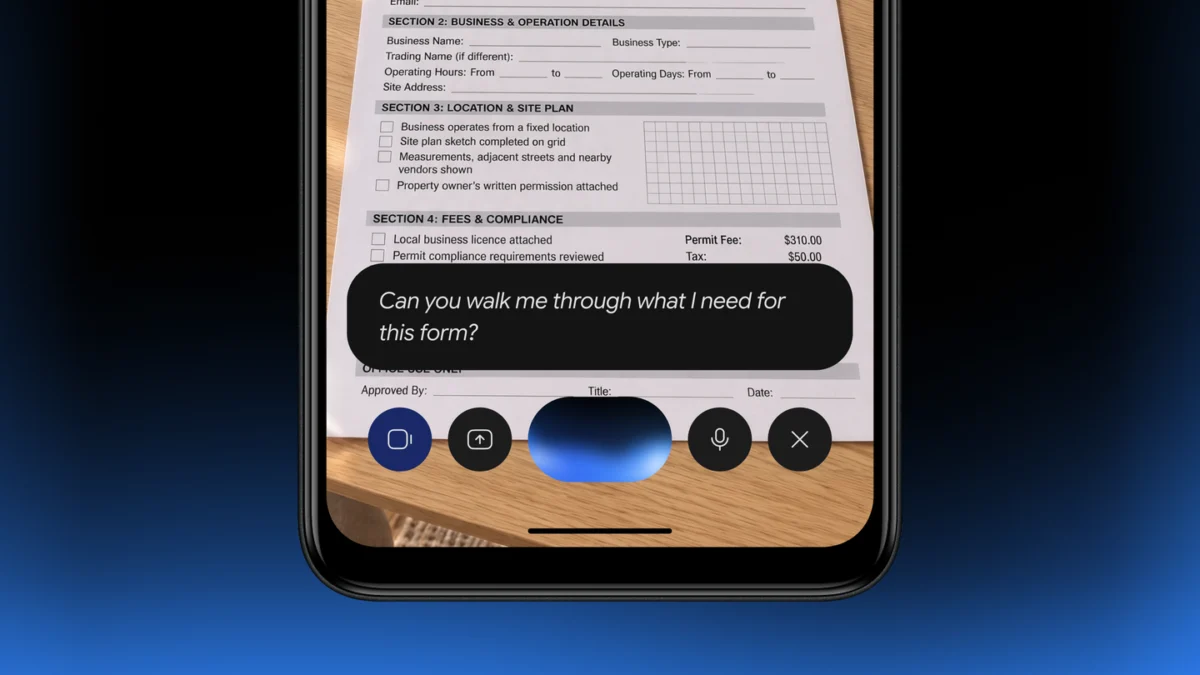
In a significant move toward the democratization of artificial intelligence, Google has officially announced the expansion of its Gemini app to Android (Go edition) devices. This strategic update aims to bring advanced generative AI capabilities to hundreds of millions of users globally who rely on budget-friendly, lower-memory hardware for their primary internet access. By re-architecting the core components of the Gemini application, Google has managed to overcome long-standing hardware limitations that previously restricted entry-level smartphones to basic voice commands and limited computational tasks. This development marks a pivotal shift in the mobile landscape, ensuring that the "Next Billion Users"—a demographic largely concentrated in emerging markets—are not left behind in the rapidly accelerating AI revolution.
Bridging the Computational Gap for Entry-Level Hardware
For years, the technological divide between flagship smartphones and budget devices has been defined by memory capacity and processing power. While high-end devices transitioned into the era of on-device AI and sophisticated neural processing, users of Android (Go edition) remained tethered to simplified versions of essential apps. Android Go, first introduced in 2017, was specifically designed for smartphones with less than 2GB of RAM, optimizing the operating system to provide a stable experience on affordable hardware.
Until this recent update, the hardware constraints of these devices made running a comprehensive AI assistant like Gemini nearly impossible. Standard AI models require significant random-access memory (RAM) and computational cycles to process natural language and generate responses. Google’s engineering team addressed this by re-architecting the Gemini app’s framework. By optimizing the code to run more efficiently and offloading specific heavy-duty computations to Google’s cloud infrastructure while maintaining a responsive local interface, the company has ensured that the core Gemini experience remains fluid even on devices with minimal memory.
A Chronology of Gemini’s Evolution and Mobile Integration
The journey toward bringing Gemini to lower-memory devices follows a rapid timeline of development and deployment by Google.
- February 2023: Google introduces Bard, its initial foray into consumer-facing generative AI, as a conversational web service.
- December 2023: Google unveils Gemini, its most capable multimodal model, designed to operate across a variety of platforms from data centers to mobile devices.
- February 2024: Bard is rebranded as Gemini, and the first dedicated Android app is launched, though it initially requires mid-to-high-tier hardware specifications.
- Mid-2024: Google launches Gemini Live, allowing for fluid, voice-based conversations, and begins integrating the AI assistant deeper into the Android ecosystem.
- Late 2024: The announcement of Gemini for Android (Go edition) marks the final step in a year-long push to make the assistant universally accessible across the entire Android hardware spectrum.
This progression highlights Google’s commitment to a "mobile-first" AI strategy, ensuring that the software is not just a novelty for high-end users but a functional tool for the global population.
Technical Re-engineering and Optimized Features
The version of Gemini arriving on Android (Go edition) is not a "lite" version in the traditional sense; rather, it is a re-engineered portal to the full Gemini ecosystem. Users on eligible devices can now access a suite of features that were previously reserved for premium hardware.
Gemini Live and Multilingual Support
One of the most notable inclusions is Gemini Live, which enables users to engage in spoken dialogue with the AI. This is particularly transformative for users in regions where literacy rates may vary or where voice-first interaction is the cultural norm. The service supports more than 45 languages, allowing users to practice for job interviews, ask complex questions, or brainstorm ideas through natural speech.
Visual Intelligence and Translation
The integration of the device’s camera with Gemini’s multimodal capabilities allows users to point their phones at physical objects, such as handwritten notes, official forms, or street signs. The AI can then interpret, summarize, or translate the text in real-time. This functionality is critical for educational purposes and for small business owners who may need to navigate documents in multiple languages.
Creative Tools and Image Generation
The app also includes access to "Nano Banana," a specialized toolset for creating custom images. This allows users to generate visual content—such as flyers for local businesses, educational diagrams, or social media graphics—directly on their budget devices. This level of creative empowerment was previously inaccessible to users without high-performance GPUs or expensive design software.
Strategic Partnerships and Global Market Penetration
To ensure the successful rollout of Gemini on lower-memory devices, Google is collaborating closely with original equipment manufacturers (OEMs). A key partner in this initiative is Transsion Holdings, the manufacturer behind popular brands such as Tecno, Infinix, and Itel. Transsion dominates the smartphone markets in Africa, Southeast Asia, and parts of Latin America—regions where Android (Go edition) has its highest adoption rates.
According to industry analysts, the decision to preload Gemini on upcoming Transsion devices is a tactical move to capture market share in emerging economies. By providing a high-value AI assistant out of the box, these manufacturers can offer a premium software experience on affordable hardware, potentially disrupting the competitive landscape in the sub-$150 smartphone segment.
Supporting Data: The Impact on Emerging Markets
The scale of this rollout is supported by the sheer volume of the Android Go user base. As of the latest industry reports, there are over 250 million active monthly users of Android Go edition worldwide. In markets like India, Nigeria, and Brazil, budget smartphones account for more than 60% of total mobile sales.
Data from market research firms suggests that for approximately 70% of these users, their smartphone is their only device for accessing the internet. By introducing Gemini to this demographic, Google is effectively providing a personal tutor, a business consultant, and a creative assistant to a population that has historically lacked access to such resources. Furthermore, the inclusion of 45+ languages covers the native tongues of over 3 billion people, ensuring that the AI’s utility is not restricted by linguistic barriers.
Official Responses and Industry Perspectives
While official statements from Google executives emphasize the goal of "universal access," industry analysts have offered a more nuanced view of the move. Tech industry consultant Marcus Thorne noted, "Google is playing a long game. By embedding Gemini into the entry-level ecosystem now, they are building brand loyalty among the next generation of consumers. When these users eventually upgrade to more powerful hardware, they are already deeply integrated into the Google AI ecosystem."
Representatives from the educational sector in developing nations have also expressed optimism. "For a student in a rural area with limited access to libraries, a voice-activated AI that can explain complex scientific concepts in their local language is a game-changer," said Dr. Amara Okafor, an educational technology advocate. "This isn’t just an app update; it’s an educational intervention."
Broader Socio-Economic Implications and Future Outlook
The deployment of Gemini on lower-memory devices carries profound socio-economic implications. In many developing economies, the "digital divide" is not just about connectivity, but about the quality of tools available to the user. High-end AI has the potential to accelerate productivity, but if it remains gated behind $800 smartphones, it risks widening the global inequality gap.
Economic Empowerment
For small-scale entrepreneurs, Gemini can act as a bridge to professionalization. The ability to generate marketing materials or translate business inquiries can help local artisans and traders reach a wider market. The optimization of the app for low-memory devices ensures that these users do not have to choose between a functional phone and an AI-powered one.
Educational Equality
In regions with a shortage of qualified teachers, AI assistants can serve as supplementary educational tools. The ability to "talk things through" with an AI can facilitate personalized learning at a scale previously thought impossible.
The Competitive Landscape
This move also places pressure on Google’s competitors, such as OpenAI and Apple. While Apple Intelligence is currently limited to the most recent and powerful iPhone models, Google’s ability to scale its AI down to the most basic hardware provides it with a unique advantage in the global south.
Conclusion: The Path to Ubiquitous Intelligence
The arrival of the Gemini app on Android (Go edition) signifies the end of an era where high-quality AI was a luxury good. Through rigorous re-architecting and strategic hardware partnerships, Google has demonstrated that computational constraints can be overcome through software innovation. As hundreds of millions of new users begin to interact with Gemini, the feedback loop will likely drive further optimizations, making AI even more efficient and pervasive.
For the global technology industry, this event serves as a reminder that the true value of innovation is measured by its reach. By prioritizing the needs of users on lower-memory devices, Google is not only expanding its user base but is also setting a new standard for inclusive technology development. As the Gemini app becomes a standard feature on devices from partners like Transsion and through the Google Play Store, the digital landscape is set to become more equitable, one prompt at a time.
