

Rites of passage mark significant transitions in life and business, from celebrating new year’s beginnings with "Auld Lang Syne" to christening a ship for its maiden voyage. In the corporate world, the annual sales kickoff (SKO) serves a similar pivotal role, initiating the yearly sales cycle with a renewed sense of purpose and alignment. Far from being merely a ceremonial gathering, a well-executed SKO is a strategic investment, a carefully choreographed event designed to invigorate sales teams, unveil new initiatives, and forge collective momentum for the demanding year ahead. Its success hinges on meticulous preparation, forward-thinking strategy, and a compelling narrative that resonates deeply with every participant.
The Evolving Significance of Sales Kickoffs
Historically, sales kickoffs might have been straightforward meetings focused on quota setting and product updates. However, in today’s dynamic global marketplace, characterized by rapid technological advancements, shifting customer behaviors, and intense competition, the SKO has evolved into a sophisticated, high-stakes event. It represents a significant financial and time commitment for organizations, often involving substantial budgets for logistics, speakers, and content development. Industry analyses suggest that companies typically invest thousands, sometimes millions, of dollars into these events, with the expectation of a tangible return in heightened motivation, improved performance, and strategic alignment. A recent survey by Sales Management Association indicated that top-performing sales organizations are 3x more likely to have a well-defined SKO strategy compared to their peers.
The primary objective remains to unify the sales force and inspire them to achieve ambitious targets. Yet, the pathways to achieving this unity and excitement are diverse. Some organizations opt for high-profile celebrity keynotes, others for elaborate spectacles, and many fall into the trap of overemphasizing numerical goals without providing a clear, actionable roadmap for attainment. The most impactful SKOs, however, transcend superficial engagement, aiming instead to foster deep understanding, emotional connection, and a shared sense of ownership among sellers. This strategic shift necessitates a re-evaluation of content, delivery, and overall experience design, with four core elements emerging as critical for transforming a good event into an exceptional one.
Prioritizing the Audience: The Foundation of Engagement
A common pitfall for leaders is to approach an SKO primarily from an organizational standpoint, focusing on company health, strategic direction, and financial objectives. While these are undeniably crucial, allowing them to exclusively dictate the SKO’s messaging risks alienating the very audience the event aims to inspire: the sales team. The assumption that sellers inherently share leadership’s top-level concerns often leads to presentations dominated by abstract figures and high-level projections, resulting in disengagement and a lack of actionable takeaway for those on the front lines.

To circumvent this, the first and most vital element of a successful SKO is an unwavering focus on the audience. Before any content is drafted or agenda points finalized, organizers must delve into the mindset and experiences of their sales professionals. This involves asking fundamental questions: What challenges did they face last year? What are their current anxieties, aspirations, and pain points? What motivates them beyond financial incentives? Understanding their daily realities—the struggles with legacy systems, the triumphs of closing a difficult deal, the desire for career growth—is paramount.
This audience-first approach mandates crafting messaging that articulates company goals in terms directly relatable to sellers. For instance, instead of merely announcing a new AI-enabled sales workflow as a "productivity win," leaders should frame it around the tangible benefits for sellers: "Imagine reclaiming 8-10 hours a week from administrative tasks," or "Focus more on nurturing high-value relationships, not just chasing leads." This reframing addresses potential reservations head-on, such as fear of job displacement or increased complexity, by highlighting time savings, reduced workload, and enhanced customer engagement.
Beyond content, the audience-first principle extends to the overall event design. This includes the strategic placement of sessions throughout the day, ensuring a balance of passive learning and active participation. Ample breaks, quality catering, and opportunities for networking—whether in-person or virtual—are not mere luxuries but essential components for sustaining energy and focus. Integrating interactive elements, such as small group breakouts for hands-on testing of new technologies, allows sellers to directly experience and internalize new initiatives, fostering a sense of investment rather than passive reception. Organizations increasingly leverage tools like the "Audience Needs Map™" to systematically gather insights from team leaders and directly from sellers, ensuring that programming is not only informative but also emotionally resonant and practically valuable. As Sarah Chen, Head of Global Sales at a leading tech firm, recently noted, "Our best SKOs are the ones where our sellers feel seen, heard, and empowered. It’s about translating corporate strategy into their personal success stories."
Unifying the Message: The Duarte Big Idea™
In an era of information overload, clarity is a competitive advantage. Sales kickoffs, often packed with diverse topics ranging from financial performance and product roadmaps to market trends and operational changes, risk overwhelming their audience. This proliferation of information can dilute the overall impact, leaving sellers with a fragmented understanding of the year’s overarching priorities. The second critical element for a successful SKO is the establishment and unwavering commitment to a single, unifying message, often articulated as a "Big Idea."
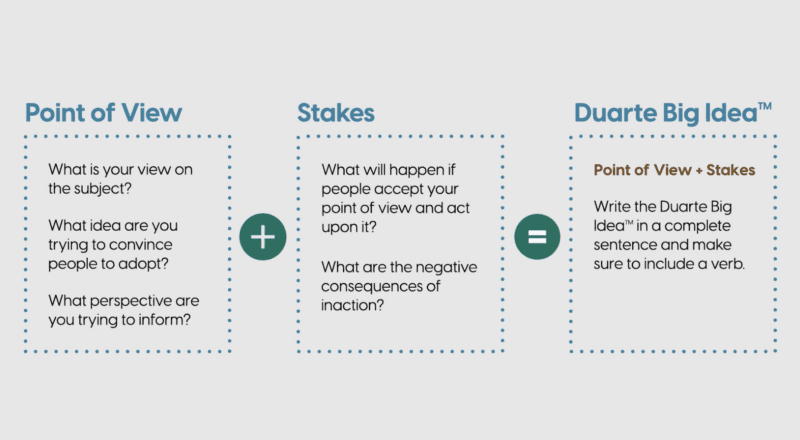
Popularized by communication experts like Duarte, this framework distills complex information into a clear, concise takeaway. It mandates articulating the organization’s unique point of view on a subject, combined with what is at stake for the audience, encapsulated in a single, digestible sentence. For example, if the SKO’s core objective is to launch the aforementioned AI workflow, the Big Idea might be: "This new AI workflow will cut clerical tasks for sellers by 20% and free up between 8-10 hours a week for high-value account holders, empowering them to forge deeper client relationships and accelerate revenue growth." This statement is not merely a goal; it’s a promise, a clear articulation of both the organizational shift and the direct benefit to the individual seller.
The Big Idea serves as the North Star for all SKO content. Every keynote address, breakout session, and supporting material must align with and reinforce this central message. Anything that deviates or fails to support the Big Idea is either re-evaluated, reframed, or communicated through alternative channels. This rigorous focus ensures that despite the variety of topics covered, the audience leaves with a singular, memorable, and actionable understanding of the year’s most important directive. Companies that successfully implement a Big Idea approach report higher message retention rates and greater alignment among their sales teams, often seeing a 5-10% improvement in initial adoption rates for new initiatives. It transforms a collection of presentations into a cohesive narrative, making the overall message unmissable and highly impactful.
Structuring the Narrative: The 3-Act Framework
Humans are inherently wired for stories. From ancient myths to modern blockbusters, the narrative arc provides a familiar and compelling framework for understanding change and motivating action. The third essential element for an effective SKO is to structure its messaging using a classic 3-act narrative framework: a beginning, a middle, and an end. This structure not only makes the content more engaging but also allows the audience to emotionally connect with the journey outlined by leadership.
The beginning of the SKO narrative sets the stage. It acknowledges the current circumstances, validates the audience’s experiences (their successes, challenges, and aspirations from the previous year), and positions them as the heroes of the unfolding story. This act establishes empathy and rapport, demonstrating that leadership understands their reality.
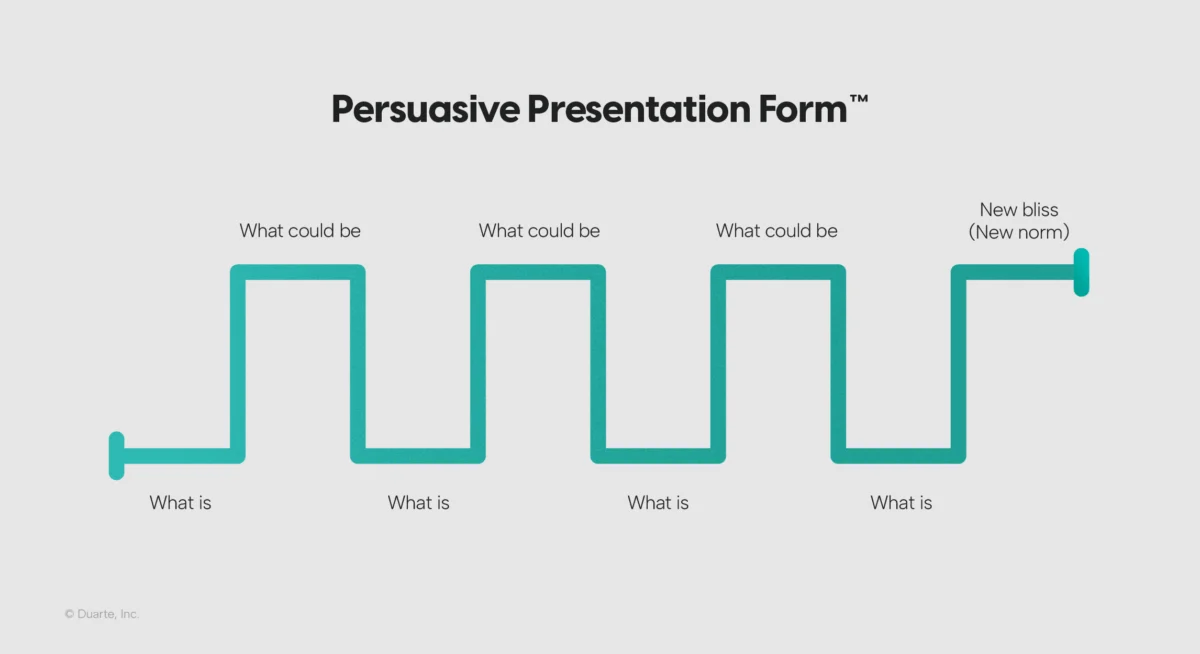
The middle is where the core action unfolds. It introduces the challenges, the "new reality," or the innovative solutions (like the AI workflow) that require change and effort. This section utilizes a dynamic known as the "Persuasive Presentation Form™," which alternates between describing "what is" (the current state, its inefficiencies, or pain points) and "what could be" (the envisioned future, the benefits, and the opportunities). This oscillation creates narrative tension, allowing the audience to fully grasp the existing problems before being guided towards the compelling vision of the future. For example, a speaker might highlight the time currently lost to manual data entry ("what is"), then pivot to the hours saved and deepened client relationships possible with the new AI tool ("what could be"). This structured back-and-forth builds a powerful argument for change, making the "new bliss" of the resolution highly desirable.
The end provides resolution and a call to action. The hero (the sales team) emerges transformed, equipped with new tools, strategies, and motivation. Tension is released as the path forward becomes clear, culminating in a new reality where the Big Idea is realized. This final act inspires confidence and mobilizes the team towards collective achievement, solidifying their investment in the future. By mirroring the structure of timeless stories, SKO programming becomes inherently more memorable and emotionally impactful, fostering a deeper commitment than a purely factual presentation ever could.
The Human Touch: Weaving in Personal Stories
Even with a clear Big Idea and a compelling narrative structure, an SKO can feel impersonal without the human element. The fourth crucial ingredient is the strategic integration of personal stories. While daunting for some, authentic anecdotes can powerfully connect leaders with their teams, making abstract concepts tangible and building invaluable rapport. These stories don’t need to be deeply vulnerable; rather, they should offer a glimpse into the leader’s own experiences, challenges, and triumphs that resonate with the SKO’s central themes.

A well-placed personal story can humanize leadership, bridging the gap between corporate directives and individual experience. For instance, a sales leader introducing the AI workflow might share a personal anecdote about how testing the tool freed up time for a critical family commitment, illustrating the work-life balance benefits in a relatable way. This kind of narrative can:
- Build Trust and Credibility: Demonstrating vulnerability and shared experience fosters a sense of authenticity.
- Increase Memorability: People remember stories far more readily than statistics or bullet points.
- Make Complex Ideas Accessible: Personal analogies simplify abstract concepts, making them easier to grasp and accept.
- Ignite Emotional Connection: Stories tap into emotions, inspiring action and commitment beyond logical reasoning.
Practicing this technique in smaller settings, like team meetings, allows leaders to refine their storytelling before a high-stakes event. Seeking feedback on how a story lands ensures its effectiveness and appropriate tone. By showing a bit of themselves, leaders can create an environment where sales professionals feel seen, understood, and more willing to embrace the vision presented. As Dr. Emily Clark, a communications specialist, observes, "Authenticity in leadership is often conveyed through shared experience. A carefully chosen personal story can be the most persuasive data point of all."
Measuring Impact and Looking Ahead
The success of an SKO is not merely measured by applause or immediate enthusiasm. Organizations track various metrics post-event, including sales performance uplift, adoption rates of new technologies and strategies, employee engagement scores, and qualitative feedback. A well-executed SKO can lead to measurable improvements in sales productivity, team cohesion, and overall employee retention. It reinforces company culture, clarifies strategic priorities, and empowers the sales force to perform at its peak.
As the business landscape continues to evolve, so too will the SKO. Future trends point towards even greater personalization, leveraging data to tailor content to specific sales segments, and integrating immersive technologies to create more engaging virtual or hybrid experiences. The core principles, however, remain constant: understanding your audience, defining a clear central message, structuring that message in a compelling narrative, and humanizing it with authentic stories. By embracing these foundational elements, organizations can ensure their annual sales kickoff events are not just gatherings, but powerful catalysts for achieving unparalleled sales excellence and driving sustained business growth.
