

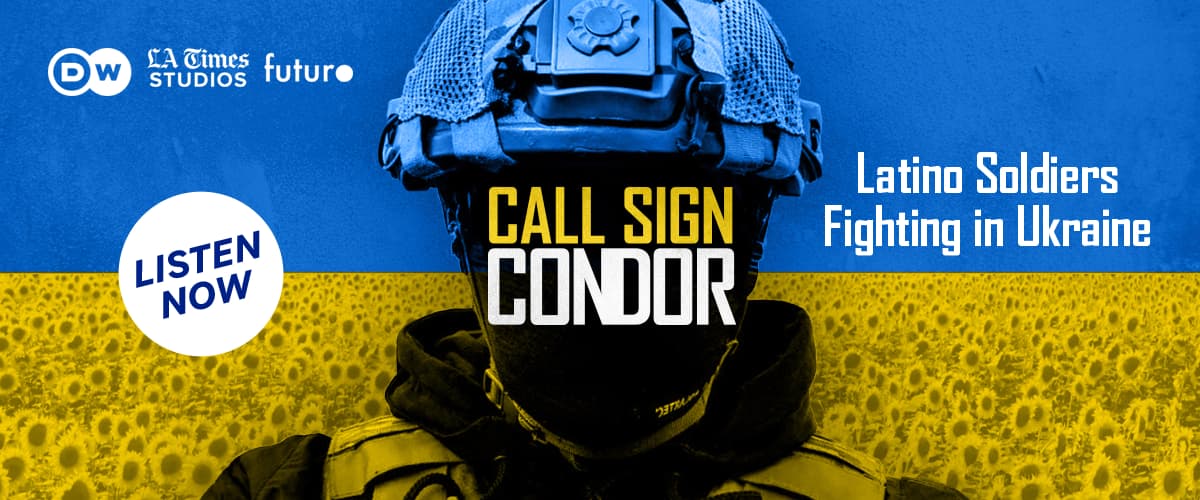
The war in Ukraine has drawn individuals from across the globe to its front lines, each with their own unique motivations and stories. Among these are a significant number of Latin Americans who have chosen to fight for Ukraine’s sovereignty. The podcast series "Call Sign Condor" (or "Alias Cóndor" in Spanish) offers an unprecedented and intimate look into the lives of these soldiers, exploring their journeys, their sacrifices, and the profound human experiences that bind them to a conflict far from their homelands. Produced by DW, LA Times Studios, and Futuro Studios, this four-part series delves into the complex reasons why these individuals risk their lives, what they seek in the crucible of war, and the indelible impact the conflict has had on their identities and aspirations.
The Human Cost of Conflict: Unveiling the Stories of Latin American Volunteers
At the heart of "Call Sign Condor" lies the narrative of its protagonist, "Condor," and his fellow Latin American combatants. The series meticulously chronicles their experiences, revealing a tapestry of courage, loss, camaraderie, and even love forged in the brutal realities of the Ukrainian battlefield. Host Carolina Chimoy guides listeners through the personal journeys of these volunteers, from their initial decision to join the fight to their ongoing struggles and triumphs. The podcast aims to humanize these soldiers, moving beyond geopolitical narratives to focus on the deeply personal motivations and the profound emotional landscapes they navigate.
The series probes the fundamental question: why would someone leave their home country and risk their life for a nation that is not their own? "Call Sign Condor" suggests that the answers are multifaceted, encompassing a spectrum of ideals, personal circumstances, and a yearning for purpose. For some, it may be a profound belief in the principles of freedom and self-determination, resonating with their own histories of struggle. For others, it could be a search for belonging, a desire to contribute to a cause greater than themselves, or perhaps a response to perceived injustices. The podcast seeks to illuminate these diverse motivations, offering a nuanced understanding of the human drive to participate in international conflicts.
A Multi-Part Exploration: Thematic Arcs of "Call Sign Condor"

The four-part structure of "Call Sign Condor" allows for a comprehensive exploration of the subject matter. Each episode is designed to build upon the previous one, gradually revealing the complexities of the soldiers’ lives.
-
Episode 1: The Call to Arms: This initial episode likely focuses on the recruitment and early experiences of the Latin American volunteers. It would explore how they learned about the conflict, the initial decisions to enlist, and the challenges of their journey to Ukraine. The podcast might delve into the specific circumstances that led individuals from countries like Colombia, Mexico, or Brazil to take up arms, highlighting any pre-existing connections or ideological leanings. The recruitment process itself, often informal and relying on word-of-mouth or online networks, could be a significant aspect of this episode, underscoring the grassroots nature of this volunteer movement.

-
Episode 2: Life on the Front Lines: This installment would immerse listeners in the day-to-day realities of combat. It would likely detail the soldiers’ training, their deployment to various sectors of the front, and the visceral experiences of warfare. The podcast would explore the psychological toll of combat, the constant threat of danger, and the coping mechanisms employed by these individuals. Furthermore, it might shed light on the logistical challenges faced by foreign fighters, including language barriers, cultural differences, and the complexities of military integration within the Ukrainian forces. The camaraderie forged under duress, a common theme in war narratives, would undoubtedly be a central focus.
-
Episode 3: Beyond the Battlefield: Relationships and Resilience: Moving beyond the immediate context of combat, this episode would likely explore the personal lives and relationships of the soldiers. It could examine their connections with their families back home, the emotional strain of prolonged separation, and the ways in which they maintain contact. The podcast might also highlight the development of new bonds and relationships formed within Ukraine, including friendships and romantic connections that blossom amidst the chaos. This episode would underscore the human capacity for love and connection even in the most extreme circumstances, offering moments of hope and resilience.

-
Episode 4: Reflections and the Future: The concluding episode would offer a look at the soldiers’ reflections on their experiences and their visions for the future. It might explore their evolving perspectives on the war, their hopes for Ukraine’s victory, and their own post-war aspirations. The podcast could address the challenges of reintegration into civilian life, both in Ukraine and in their home countries, and the lasting impact of their wartime experiences. This episode would aim to provide a sense of closure, while acknowledging the enduring legacies of the conflict and the sacrifices made by these individuals.
A Global Phenomenon: Contextualizing the Latin American Volunteer Movement

The presence of foreign fighters in Ukraine is not a new phenomenon in modern warfare. Throughout history, individuals have volunteered to fight in conflicts beyond their national borders, driven by a variety of ideological, humanitarian, or personal reasons. The current war in Ukraine has seen an unprecedented influx of volunteers from a diverse range of countries, including Western nations, but also from regions with less direct geopolitical ties to the conflict.
The participation of Latin Americans in this conflict is particularly noteworthy. While individual motivations vary, several factors may contribute to this trend:

- Ideological Solidarity: For some, the fight for Ukraine’s sovereignty may resonate with their own historical struggles against oppression or authoritarianism in their home countries. The narrative of a nation defending itself against a larger aggressor can evoke powerful sentiments of solidarity.
- Search for Purpose and Adventure: The allure of participating in a significant historical event, coupled with a desire for a sense of purpose or adventure, may draw individuals seeking to make a tangible impact or test their mettle.
- Economic or Social Factors: While not explicitly stated as primary drivers, it’s possible that in some Latin American countries, economic hardship or social instability might indirectly influence individuals’ decisions to seek opportunities or a sense of belonging elsewhere, even in challenging environments.
- Personal Connections: Some volunteers may have pre-existing connections to Ukraine, either through family ties, past experiences, or friendships, which inspire them to join the cause.
"Call Sign Condor" aims to move beyond these generalized observations to provide specific, individual accounts, offering a more granular understanding of this unique aspect of the war in Ukraine.
Production and Reach: The Collaborative Effort Behind "Call Sign Condor"

The collaboration between DW, LA Times Studios, and Futuro Studios signifies a commitment to producing high-quality, in-depth journalistic content. This partnership brings together expertise in international broadcasting, investigative journalism, and narrative storytelling, suggesting that "Call Sign Condor" is poised to be a significant contribution to understanding the human dimension of the conflict.
DW (Deutsche Welle), Germany’s international broadcaster, has a long history of reporting on global affairs and conflicts. The LA Times Studios brings a reputation for compelling storytelling and investigative depth, while Futuro Studios, known for its focus on Latinx narratives, ensures a sensitive and nuanced approach to the stories of the Latin American volunteers.

The availability of the podcast in both English and Spanish ("Call Sign Condor" and "Alias Cóndor") is a crucial element, ensuring accessibility to a broad audience and allowing for direct engagement with the experiences of the featured soldiers and their communities. This dual-language release underscores the importance of reaching both international audiences and those within Latin America, fostering greater understanding and empathy.
Implications and Broader Significance

The existence and themes explored in "Call Sign Condor" have several broader implications:
- Humanizing the Conflict: By focusing on individual stories, the podcast helps to humanize a conflict that can often be perceived through a detached geopolitical lens. It reminds audiences that wars are fought and experienced by individuals with complex lives, emotions, and aspirations.
- Understanding Motivations for Foreign Intervention: The series offers valuable insights into the complex motivations that drive individuals to participate in foreign conflicts, contributing to a deeper understanding of global volunteerism and its drivers.
- Highlighting the Diversity of Support for Ukraine: The podcast showcases the diverse global support for Ukraine, extending beyond traditional allies and demonstrating the widespread appeal of its fight for self-determination.
- The Power of Narrative Journalism: "Call Sign Condor" exemplifies the power of narrative journalism in shedding light on underreported aspects of major global events, providing context and depth that statistics alone cannot convey.
As listeners tune into "Call Sign Condor," they are invited to embark on a journey of empathy and understanding, exploring the profound human stories woven into the fabric of a devastating conflict. The podcast promises to be a poignant and essential listen for anyone seeking to grasp the full human dimension of the war in Ukraine.
