

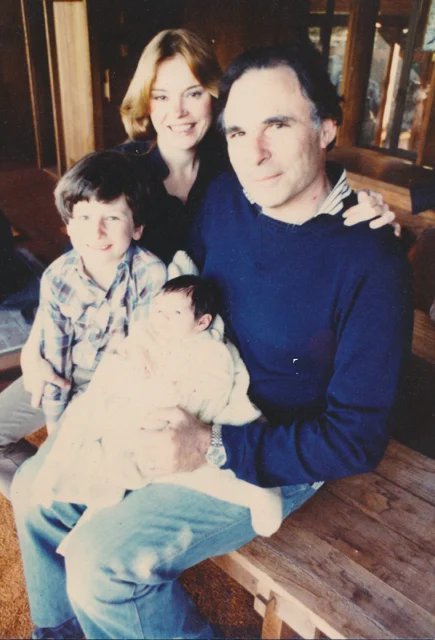
San Francisco, CA, November 17, 2025 – The scientific community and the world at large are mourning the loss of Dr. Paul Ekman, a titan in the field of psychology, who passed away peacefully at his home at the age of 91. Dr. Ekman’s groundbreaking research fundamentally reshaped our understanding of human emotion, facial expressions, deception, and compassion. His passing, announced by the Paul Ekman Group and his family, marks the end of an era for a scholar whose work has left an indelible mark on psychology, anthropology, law enforcement, and popular culture.
For over six decades, Dr. Ekman dedicated his life to unraveling the intricate tapestry of human emotional experience. His seminal work, often conducted in collaboration with anthropologists and psychologists across diverse cultures, provided compelling evidence for the universality of certain basic emotions and their corresponding facial expressions. This challenged prevailing views that emotions were solely culturally constructed, establishing a biological underpinning that resonated globally. His research laid the foundation for understanding how the human face, a seemingly simple canvas, can convey a complex spectrum of inner states.
Born in 1934, Dr. Ekman’s academic journey began with a fascination for human behavior. After earning his Ph.D. in Psychology from Adelbert College of Western Reserve University in 1958, he embarked on a career that would see him become one of the most cited psychologists of the 20th and early 21st centuries. His early work, particularly his research on facial expressions with Wallace Friesen, involved extensive fieldwork in places as disparate as New Guinea and the United States. These studies, meticulously documented and analyzed, revealed that specific facial muscle configurations consistently corresponded to the same emotional states across vastly different cultural groups, including those with minimal contact with Western civilization. This empirical validation of universal emotions was a watershed moment in the study of human affect.
The development of the Facial Action Coding System (FACS) stands as one of Dr. Ekman’s most enduring contributions. Created in the 1970s, FACS provided a comprehensive, objective, and anatomically based system for describing all observable muscular movements of the face. This standardized language allowed researchers worldwide to quantify and compare facial expressions with unprecedented accuracy, moving the field beyond subjective interpretation. FACS became an indispensable tool for scientists studying emotion, nonverbal communication, and even the diagnosis of certain neurological conditions. Its rigorous methodology provided a crucial bridge between subjective emotional experience and observable behavior.
Furthermore, Dr. Ekman’s pioneering work on microexpressions – fleeting, involuntary facial expressions that betray a person’s true emotions – opened new avenues for understanding deception and emotional leakage. His research in this area illuminated the subtle cues that can signal concealed feelings, leading to the development of training programs and tools that have been adopted by law enforcement agencies, intelligence services, and clinical psychologists. The ability to detect these rapid facial shifts offered a powerful new lens through which to examine interpersonal dynamics and the complexities of truth and falsehood.
Robert W. Levenson, Ph.D., from the Department of Psychology at the University of California, Berkeley, a long-time colleague and friend, reflected on Dr. Ekman’s impact: "Paul brought his remarkable intellect, observational skills, and unflagging energy to illuminate the ways we express and feel our emotions and how they are embodied in our physiology. His research, theorizing, and ideas for how emotions could be harnessed in service of the greater good galvanized what was a small niche area of research into a vibrant and thriving research area that will continue to be hugely influenced by his work and vision."
The influence of Dr. Ekman’s research extended far beyond the academic sphere. His ability to translate complex scientific findings into accessible language led to numerous bestselling books, including "Emotions Revealed" and "Telling Lies." These works demystified the science of emotion and deception for the general public, fostering a greater awareness of the nonverbal signals that shape our daily interactions.
Perhaps his most visible impact on popular culture came with the acclaimed television series "Lie to Me," which drew heavily from his research on microexpressions and deception detection. The show, which aired from 2009 to 2011, introduced millions of viewers to the principles of reading facial cues and understanding emotional leakage, sparking widespread interest in the scientific underpinnings of human behavior. Dr. Ekman also served as a scientific advisor for Pixar’s animated film "Inside Out" (2015), a collaboration that brought the science of emotions to a younger generation through a nuanced and engaging narrative.
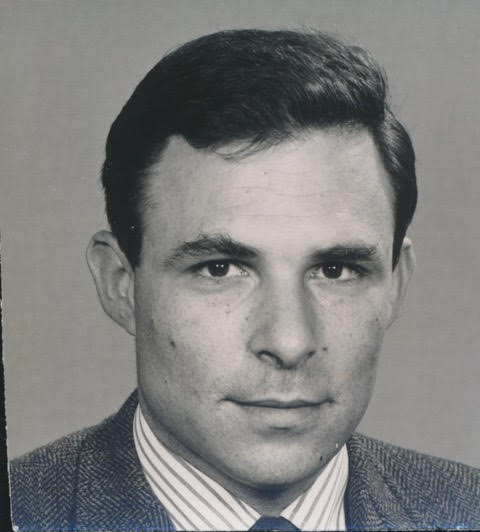
In the latter part of his career, Dr. Ekman increasingly focused on the application of his research to promote human well-being and foster a more compassionate world. This led to a significant collaboration with His Holiness the Dalai Lama, a friendship that spanned decades and explored the intersection of emotion, mindfulness, and compassion. Their joint work, including a co-authored book and webisode series titled "Developing Global Compassion," aimed to provide practical tools for cultivating emotional resilience and empathy.
This period also saw a deepening of his collaboration with his daughter, Dr. Eve Ekman, a contemplative social scientist. Together, they spearheaded the development of the Atlas of Emotions, an interactive online tool designed to expand emotional vocabulary and insight. They also played a crucial role in the development of "Cultivating Emotional Balance," a program that integrates contemplative practices with emotional skills training.
Dr. Eve Ekman shared her personal reflections: "My dad’s commitment to rigorous science, love of discovery, and dedication to alleviating pain from destructive emotions were at the very core of his brilliant mind and accomplishments. However, his huge heart and ability to vulnerably share his own struggles with emotions were what made him beloved by so many. He was an incredibly loving dad – a lover of life and unrelentingly curious."
The legacy of Dr. Paul Ekman will continue to be carried forward by the Paul Ekman Group, now under the leadership of his daughter, Dr. Eve Ekman. The organization remains dedicated to disseminating Dr. Ekman’s scientific findings and training methodologies to promote emotional intelligence, empathy, and truthfulness globally. The group’s ongoing work ensures that his insights into the human emotional landscape will continue to inform research, practice, and public understanding for years to come.
Dr. Ekman is survived by his children, Eve Ekman and Tom Ekman, and a wide circle of devoted friends and colleagues who were touched by his intellect, his passion, and his unwavering commitment to understanding the human condition.
Honoring Dr. Ekman’s Life and Legacy
In recognition of Dr. Ekman’s profound contributions, a documentary celebrating his life and scientific legacy is currently in development. This film aims to capture the breadth of his research, the impact of his discoveries, and the personal journey of a man who dedicated his life to understanding the most fundamental aspects of human experience. Those wishing to support the completion of this project can find more information and contribute through a dedicated sponsorship page.
The Paul Ekman Group is also actively collecting reflections, stories, photographs, and messages of appreciation from colleagues, students, and readers worldwide. These contributions will be compiled to create a dedicated memorial page, a digital tribute that will celebrate Dr. Ekman’s enduring influence and the rich tapestry of his life’s work. This initiative underscores the vast network of individuals whose lives and work were touched by his groundbreaking research and his profound humanity.
Dr. Ekman’s passing leaves a void in the scientific community, but his profound insights into the universality of human emotions, the nuances of facial expression, and the complexities of deception will continue to resonate and inspire for generations to come. His work provides a vital framework for understanding ourselves and each other, fostering greater empathy and a deeper appreciation for the rich emotional lives we all share. The foundation he laid will continue to support new discoveries and applications, ensuring his legacy as a true pioneer in the science of emotion endures.
