

The global digital landscape is undergoing a significant transformation as Google officially extends the reach of its flagship artificial intelligence assistant, Gemini, to lower-memory Android devices. This strategic move aims to bridge the technological divide for hundreds of millions of users who rely on entry-level hardware as their primary gateway to the internet, education, and commerce. By re-architecting the Gemini application to function within the constrained hardware environments of Android (Go edition) devices, Google is transitioning these handsets from basic communication tools into sophisticated AI-powered workstations. Previously, these devices were largely limited to basic voice commands and simplified application suites, but the introduction of Gemini represents a leap forward in the democratization of generative AI.
The Evolution of Android Go and the Shift to Generative AI
For years, the Android (Go edition) ecosystem has served as a vital lifeline for users in emerging markets and budget-conscious demographics globally. Launched originally in 2017, Android Go was designed specifically for smartphones with limited Random Access Memory (RAM) and modest processing power. While the flagship Android experience moved toward resource-intensive features, the Go edition focused on efficiency, data saving, and essential functionality. However, as generative AI became the centerpiece of Google’s software strategy, a significant gap emerged between high-end flagship users and those on entry-level hardware.
The recent announcement addresses this disparity. Google engineers have reportedly re-architected the core Gemini experience, optimizing the underlying codebase to ensure smooth performance on devices that typically operate with 2GB or 3GB of RAM. This technical overhaul allows the app to manage memory more aggressively while maintaining the responsiveness required for real-time AI interactions. The move signals Google’s commitment to ensuring that the "AI revolution" is not restricted to those who can afford premium hardware, but is instead integrated into the "everyday connection" of the global population.
Key Features and Multimodal Capabilities on Budget Hardware
The deployment of Gemini on lower-memory devices is not a "lite" version in terms of utility. Instead, Google has brought several high-value features to the platform that cater to the specific needs of its target demographic.
Gemini Live and Multilingual Support
One of the most significant additions is Gemini Live, which allows users to engage in fluid, spoken conversations with the AI. This feature is particularly impactful for users who may have varying levels of literacy or who prefer oral communication for complex tasks. Gemini Live now supports more than 45 languages, making it a versatile tool for practicing job interviews, seeking educational explanations, or brainstorming business ideas in a user’s native tongue.
Visual Intelligence and Translation
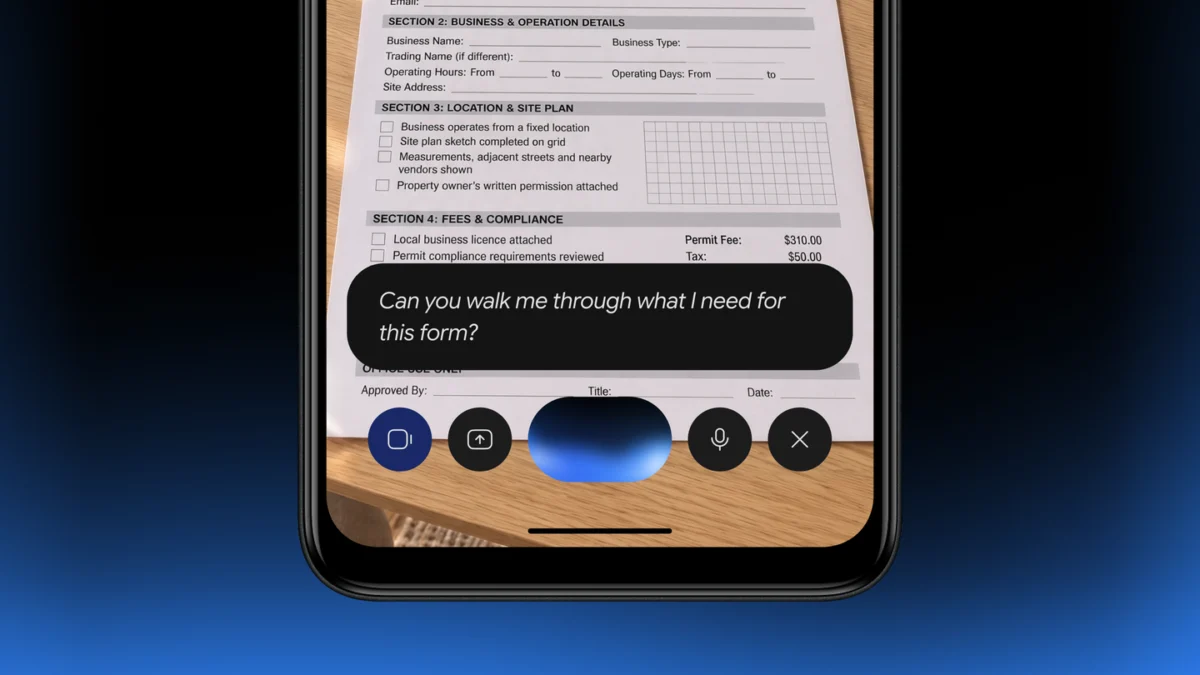
The integration of the device’s camera with Gemini’s multimodal capabilities allows users to point their phones at physical objects, handwritten notes, or official forms. The AI can then interpret the text, provide summaries, or translate documents in real-time. For a small business owner in a multilingual region or a student accessing foreign educational materials, this functionality turns a budget smartphone into a powerful cognitive tool.
Creative Tools and Image Generation
Despite the memory constraints, Google has enabled custom image creation through models such as "Nano Banana." This allows users to generate visual content, such as flyers for local businesses or educational diagrams, simply by providing a text prompt. This capability reduces the barrier to entry for digital marketing and content creation for millions of micro-entrepreneurs worldwide.
A Chronology of Google’s AI Integration Efforts
The expansion to Android Go devices is the latest milestone in a rapid timeline of AI deployment by Google. To understand the significance of this move, it is necessary to look at the progression of Google’s AI ecosystem over the past two years:
- December 2022 – Early 2023: Google intensifies its focus on Large Language Models (LLMs) following the rise of generative AI competitors.
- February 2023: Google introduces Bard, its initial AI experiment designed to compete in the conversational AI space.
- December 2023: Google unveils Gemini, a multimodal model designed to run across everything from massive data centers to mobile devices.
- February 2024: Bard is officially rebranded as Gemini, and the dedicated Gemini app is launched for high-end Android devices, replacing or supplementing Google Assistant.
- May 2024: At Google I/O, the company emphasizes "AI for everyone," hinting at broader device compatibility.
- Late 2024: The current rollout begins, specifically targeting the Android (Go edition) user base and optimizing the software for lower-memory hardware.
Supporting Data: The Scale of the Entry-Level Market
The decision to optimize Gemini for lower-memory devices is driven by the sheer scale of the user base. According to industry market research, entry-level smartphones (typically those priced under $150 USD) account for a massive portion of the market share in regions such as Sub-Saharan Africa, Southeast Asia, and parts of Latin America.
Data from International Data Corporation (IDC) suggests that while premium smartphone segments are growing, the "volume" of the market remains in the budget and mid-range categories. Transsion Holdings—the parent company of brands like Tecno, Infinix, and itel—has become a dominant player in these regions. By partnering with companies like Transsion to preload Gemini on upcoming devices, Google is securing a dominant position in the next wave of internet users. Estimates suggest that there are over 250 million active Android Go edition devices worldwide, representing a significant untapped market for AI services.
Official Positioning and Strategic Partnerships
While Google has not released a formal press conference transcript regarding the specific technical hurdles of this rollout, the company’s documentation emphasizes the "re-architecture" of the app. A spokesperson for Google noted that the goal was to ensure that hardware limits no longer dictate the level of assistance a user can receive.
Strategic partnerships are central to this rollout. Transsion, which holds a significant market share in Africa and other emerging economies, is a key partner in preloading Gemini onto its hardware. This ensures that the first experience a new smartphone user has is an AI-integrated one. By bypassing the need for manual downloads in regions where data costs can be prohibitively high, Google is lowering the friction for AI adoption.
Industry analysts suggest that this move is also a preemptive strike against competitors. As Apple focuses on "Apple Intelligence" for its high-end iPhone 15 Pro and 16 series, Google is moving in the opposite direction—downmarket. This allows Google to collect a more diverse range of data and train its models on a broader spectrum of global languages and use cases, potentially giving it an edge in "Global South" AI development.
Fact-Based Analysis of Implications
The implications of bringing Gemini to lower-memory devices are both technical and socio-economic.
Bridging the Productivity Gap
In many regions, a smartphone is not just a secondary device; it is a user’s only computer. By adding Gemini, Google is effectively providing these users with a free research assistant, a graphic designer, and a translator. This could lead to a measurable increase in digital literacy and economic productivity in developing markets.
The Technical Benchmark for AI
From a technical standpoint, this rollout proves that Large Language Models can be efficiently interfaced with low-power hardware through a combination of cloud-side processing and optimized local "edge" computing. It sets a new benchmark for software efficiency, challenging other developers to optimize their apps for the "next billion users" rather than just the elite few with the latest hardware.
Privacy and Data Considerations
As hundreds of millions of new users begin interacting with Gemini, questions regarding data privacy and local regulations will likely surface. Google will need to navigate varying international data laws while providing an AI service that requires significant data exchange with the cloud to function on low-memory devices.
Conclusion and Future Outlook
The availability of the Gemini app on Android (Go edition) marks a pivotal moment in the history of mobile computing. By enabling advanced features like Gemini Live and visual translation on hardware that was previously considered "basic," Google is redefining the value proposition of the budget smartphone. Users can now access the app via the Google Play Store, through the power button shortcut on supported models, or via pre-installed software on new handsets from partners like Transsion.
As the AI landscape continues to evolve, the focus will likely shift from what AI can do on the most powerful computers to how it can empower the most people. With this update, Google has positioned itself as the leader in inclusive AI, ensuring that the benefits of the information age are distributed more equitably across the global population, regardless of the memory capacity of their devices.
