


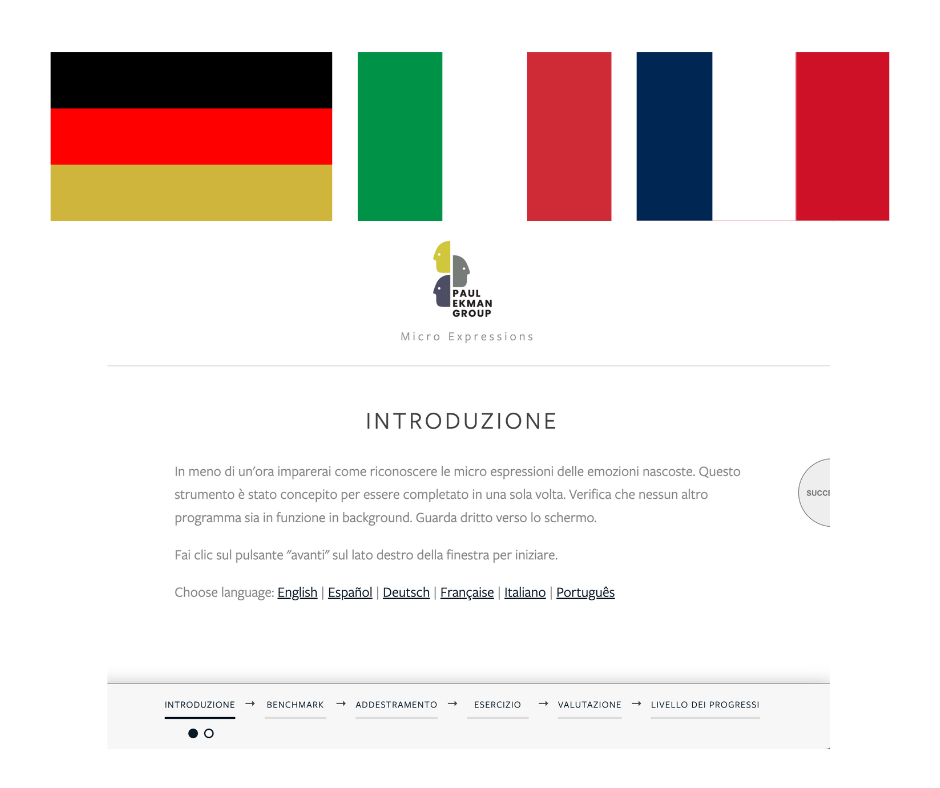
The Paul Ekman Group has announced a significant expansion of its acclaimed online micro expression training tools, with full translations now available in Italian, French, and German. This move marks a pivotal step in the organization’s ongoing mission to democratize emotional intelligence and communication skills on a global scale, making its science-based methodology more accessible to a broader international audience. Previously available in English, Spanish, and Portuguese, the addition of these three major European languages is expected to enhance the reach and impact of micro expression training for individuals, educators, and professionals across a wider geographical and linguistic spectrum.
Background and Expansion Rationale
The Paul Ekman Group, founded by the renowned psychologist and expert in emotions and their expressions, Dr. Paul Ekman, has long been at the forefront of research and training in understanding human emotions. Dr. Ekman’s seminal work on universal facial expressions and micro expressions, which are fleeting, involuntary facial movements that betray a person’s true emotional state, has formed the bedrock of the group’s training programs. These micro expressions, often lasting less than a second, can reveal emotions that individuals may be consciously trying to conceal, making them invaluable for accurate emotional assessment in various contexts.
The decision to translate the training tools into Italian, French, and German stems from a strategic commitment to overcome language barriers and cater to a growing global demand for enhanced emotional awareness. While the internet has already facilitated access to digital training modules worldwide, linguistic limitations have historically presented a significant hurdle for many potential learners. By offering comprehensive training in these languages, the Paul Ekman Group aims to empower a new cohort of users to develop critical skills in detecting and interpreting subtle emotional cues, thereby improving interpersonal understanding and professional effectiveness.
A Timeline of Accessibility
The journey towards multilingual accessibility for Paul Ekman Group’s training tools has been a progressive one. The initial offerings were primarily in English, reflecting the language of Dr. Ekman’s primary research and publications. Recognizing the need for broader reach, the organization first expanded its digital platform to include Spanish and Portuguese, acknowledging the vast number of speakers of these languages across Latin America and Europe. This initial multilingual rollout, which commenced several years ago, provided valuable insights into user engagement and the impact of language on training efficacy.
The recent announcement of Italian, French, and German translations represents the next significant phase in this expansion. This initiative, which has been in development for over a year, involved meticulous translation of all seven core online micro expression training tools. These tools are typically bundled into comprehensive training packages designed to equip users with the ability to identify and understand the nuances of micro expressions. The rollout was strategically timed to coincide with anticipated increases in global professional development and educational outreach efforts.
What the Training Packages Encompass
The seven core online micro expression training tools now fully translated into Italian, French, and German are integral components of the Paul Ekman Group’s comprehensive training packages. These packages are meticulously designed to guide users through the complexities of facial expressions and their associated emotions. Upon purchasing or logging into an existing account, users will be prompted to select their preferred language from the main menu of any Paul Ekman training tool, ensuring a seamless and personalized learning experience.
The training modules typically cover a range of essential skills, including:
- Facial Action Coding System (FACS) Fundamentals: While not always a direct component of the introductory tools, the underlying principles of FACS, the scientific system for describing all observable human facial movement, inform the identification of micro expressions. Users learn to recognize specific muscle movements associated with different emotional states.
- Identification of Universal Emotions: The training emphasizes the recognition of the seven universal emotions identified by Dr. Ekman: happiness, sadness, anger, fear, surprise, disgust, and contempt. These emotions are believed to be expressed and understood across all human cultures.
- Micro Expression Recognition: The core of the training involves presenting users with video clips of individuals exhibiting micro expressions. Users are trained to identify these fleeting expressions and correctly associate them with the underlying emotions.
- Contextual Understanding: Beyond mere identification, the training often delves into the importance of context in interpreting micro expressions. Users learn to consider situational factors that might influence emotional displays.
- Practice and Assessment: The online tools incorporate interactive exercises, quizzes, and feedback mechanisms to reinforce learning and assess proficiency. This iterative process allows users to continually refine their ability to detect micro expressions.
The availability of these seven tools in the new languages means that learners in Italy, France, Germany, and other Italian, French, or German-speaking regions can now engage with the full spectrum of micro expression training without the cognitive load of processing information in a non-native language. This is particularly beneficial for understanding the subtle, rapid nature of micro expressions.
The Significance of Micro Expression Training
Micro expressions are a critical aspect of nonverbal communication, offering a window into a person’s authentic emotional state. Their involuntary nature makes them a powerful indicator of truth, even when individuals attempt to mask their feelings. In professional settings, the ability to recognize micro expressions can dramatically enhance performance and outcomes:
- Law Enforcement and Security: For law enforcement officers, investigators, and security personnel, identifying micro expressions can be crucial in assessing truthfulness, detecting deception, and de-escalating potentially volatile situations. Studies have indicated that professionals trained in micro expression recognition can exhibit improved accuracy in detecting concealed emotions, which can be vital in interrogations and threat assessment.
- Mental Health Professionals: Therapists, counselors, and psychologists can leverage micro expression training to gain deeper insights into their clients’ emotional states, particularly when verbal communication is limited or guarded. This can lead to more effective therapeutic interventions and a stronger therapeutic alliance.
- Business and Leadership: In the corporate world, leaders, sales professionals, and human resource managers can benefit from enhanced emotional intelligence. Recognizing micro expressions can improve negotiation skills, enhance customer relations, foster more empathetic leadership, and facilitate better team dynamics. For instance, understanding a client’s fleeting expression of doubt during a sales pitch can allow a salesperson to address concerns proactively.
- Educators and Academics: Educators can use these skills to better understand the emotional well-being and engagement levels of their students, adapting their teaching methods accordingly. Academics in fields like psychology, sociology, and communication can utilize the tools for research and to deepen their understanding of human behavior.
- Personal Relationships: On a personal level, improved recognition of micro expressions can lead to more profound and empathetic connections with friends, family, and partners, fostering greater understanding and reducing misunderstandings.
The benefits extend to the development of overall emotional intelligence, a skill increasingly recognized as a key predictor of success and well-being in both personal and professional life. Research published in journals such as the Journal of Personality and Social Psychology has consistently highlighted the correlation between emotional intelligence, including the ability to accurately perceive emotions, and positive life outcomes.
Global Reach and Future Aspirations
Dr. Ekman’s foundational research into the universality of emotions and facial expressions has always underscored a global perspective. His work, which has spanned decades and involved extensive fieldwork across diverse cultures, has established that certain basic emotions and their facial expressions are innate and universally recognized. This principle forms the bedrock of the Paul Ekman Group’s commitment to making these insights accessible worldwide.
With a user base that already spans over 230 countries, the expansion into Italian, French, and German represents a significant stride towards realizing this global vision. The organization’s mission is to equip individuals with the tools to better understand themselves and others, fostering a more emotionally aware and empathetic world. By breaking down language barriers, the Paul Ekman Group aims to empower individuals who may not have English, Spanish, or Portuguese as their primary language to develop these crucial skills.
Feedback and Future Language Offerings
The Paul Ekman Group actively encourages feedback from its global community. The organization is committed to continuous improvement and expansion of its offerings. While the current expansion includes Italian, French, and German, the company is actively exploring further language translations. Users who wish to see their native language added to the training platform are encouraged to submit their suggestions directly to the customer service department via email at [email protected]. This direct line of communication allows the organization to gauge demand and prioritize future development efforts based on user input.
The organization expressed gratitude to its global community, emphasizing that the journey towards greater emotional understanding is a shared one. The addition of new languages is seen as a vital step in continuing this journey, ensuring that the science of emotions and facial expressions can be understood and applied by people regardless of their linguistic background. This commitment to inclusivity and accessibility underscores the Paul Ekman Group’s dedication to its core mission of fostering improved human understanding across all cultures and languages.
The expansion into these new languages is not merely a business decision; it is a testament to the enduring power and universal relevance of understanding human emotions. As the world becomes increasingly interconnected, the ability to accurately perceive and interpret the subtle cues of human expression is more critical than ever. The Paul Ekman Group’s proactive approach to making its world-class training accessible to a wider audience positions it as a key player in the global advancement of emotional intelligence and interpersonal communication.
