

Helping companies craft impactful moments at live events stands as the central mission for Freeman, a global leader in the event industry. Beyond their operational excellence in elevating brands and delivering immersive experiences, Freeman maintains a vigilant finger on the pulse of the events landscape, translating complex market dynamics into actionable insights through strategic data storytelling. This commitment has been particularly crucial in navigating the seismic shifts from the robust pre-pandemic era to the intricate complexities of a post-COVID world, guiding businesses to adapt to evolving consumer needs and expectations. Freeman’s widely respected quarterly Trends Reports are a testament to this, meticulously unpacking data-rich observations to foster continuous improvement in conference and trade show experiences for both businesses and attendees.
The art and science of strategic data storytelling, much like the intricate planning required for a flawless in-person event, demands meticulous planning, expert execution, and a profound understanding of narrative. Recognizing the power of collaborative expertise, Freeman forged a enduring strategic partnership with Duarte, a firm widely credited with pioneering and popularizing the discipline of data storytelling. Duarte specializes in empowering organizations to transform raw data observations into decisive, actionable strategies through compelling narratives. Over many years, Duarte has collaborated closely with Freeman to produce their influential quarterly Trends Reports, cultivating a shared methodology rooted in a deep appreciation for data-driven storytelling.
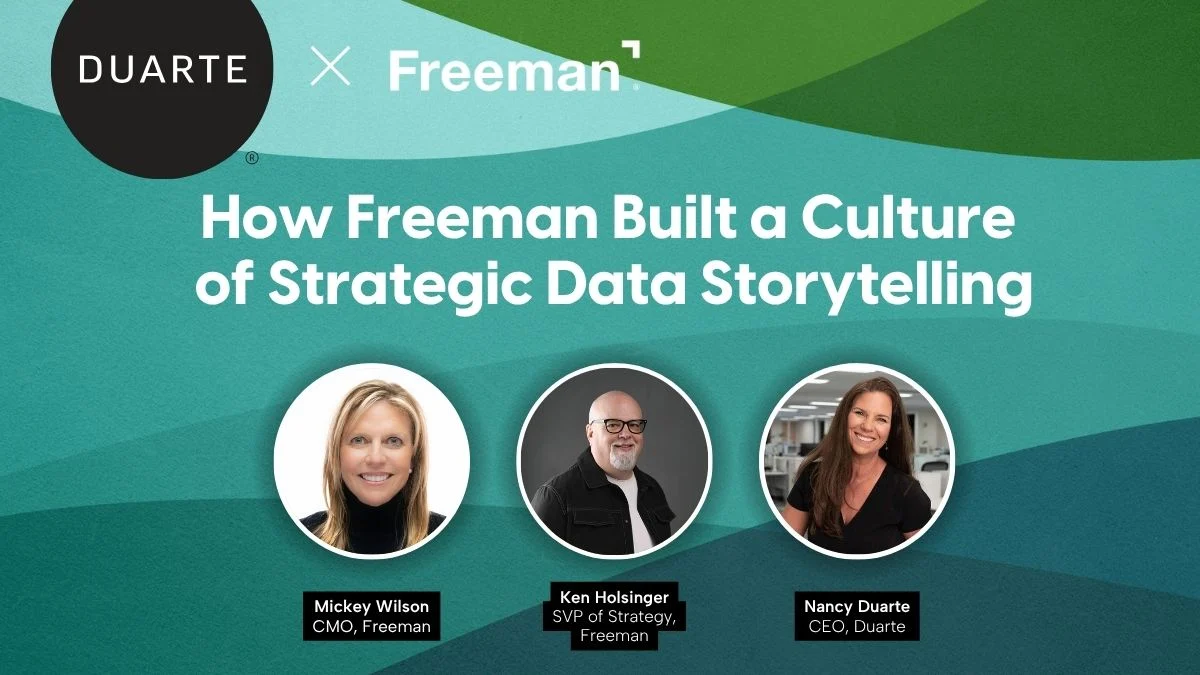
This synergistic approach was recently showcased in a illuminating webinar featuring Freeman’s CMO Mickey Wilson and SVP of Strategy Ken Holsinger. The discussion underscored that Freeman’s reputation extends beyond merely "being in the know"; the company has meticulously cultivated an organizational culture where data storytelling serves as a foundational driver for strategic alignment, permeating every level from the ground up. This internal commitment ensures that insights are not just generated but are also effectively communicated and acted upon, fostering a truly data-driven ecosystem.
The Imperative of Strategic Storytelling in Data-Driven Organizations
In an era where strategic decision-making increasingly relies on empirical evidence, the ability to effectively communicate data is paramount. Historically, leaders often relied on intuition, personal experience, and what could be described as "gut feelings" to chart a course forward. While experience remains invaluable, the modern business landscape, where virtually every facet of a company’s health and operations can be meticulously tracked, has rendered blind reliance on instinct largely obsolete. Today, the challenge lies not in the absence of data, but in parsing vast quantities of information and translating measured observations into tactical, impactful decisions. This is precisely where data storytelling becomes indispensable.
When organizations seek to share data—whether with potential buyers, existing customers, internal stakeholders, or, in Freeman’s specialized context, event organizers and companies aiming for significant in-person impact—the clarity and persuasive power of the message are critical. Often, this involves conveying the urgency of capitalizing on an identified opportunity or mitigating a nascent risk unearthed within the data. For instance, a recent Freeman Trends Report highlighted the urgent necessity for businesses across various sectors to fully harness the potential of their presence at live events, an insight that could easily be overlooked without a compelling narrative.
Freeman’s quarterly assessments are the product of rigorous data collection, in-depth interviews with industry stakeholders, on-the-ground observations from actual events, and sophisticated analytical methodologies. These efforts routinely uncover nuanced insights into what attendees genuinely seek when they register for an event. The prevailing trend, now more pronounced than ever, indicates that attendees are actively seeking real-time expertise delivered through novel, human-centric experiences that deliberately eschew conventional sales pitches. For companies marketing products, services, subscriptions, or even lifestyle concepts, such groundbreaking insights hold immense value, yet they risk being diluted or entirely lost without the appropriate narrative "packaging." Essentially, sophisticated analysis demands a powerful story to truly resonate and catalyze action. In the realm of animating data for rapid comprehension and strategic implementation, Freeman’s Ken Holsinger is a recognized master of his craft, embodying the principles of effective data storytelling.
Understanding Why Most Presentations Miss the Mark
Ken Holsinger’s incisive observation from the webinar, "If your booth is just a physical version of your website, you’re doing it wrong," encapsulates a fundamental failing in many contemporary business communications. This principle extends far beyond the confines of a trade show booth, applying equally to presentations, email campaigns, blog posts, and social media content. A prevalent issue is the delivery of static facts devoid of meaningful context or empathetic connection. Raw figures, presented without a clear "so what?" factor, often leave audiences feeling disengaged, struggling to connect the dots to their own experiences or operational challenges. This includes the common pitfall of merely rattling off product features or service metrics instead of weaving them into a compelling narrative supported by data. These are all symptoms of the same underlying problem: a failure to tell a story.
Modern audiences, whether they are stepping into an exhibition booth or reviewing a detailed analytical report, demand relevance and resonance. This is not merely Holsinger’s professional opinion; it is an insight derived from hard-won data, framed as a critical call to action for companies striving to connect authentically with real consumers. For brands to achieve genuine success at events, they must transcend a purely digital mindset and embrace the unique opportunities of in-person engagement.
The Freeman 2025 Commercial Trends Report provides compelling evidence for this perspective, revealing that a staggering 84% of attendees express a desire to engage directly with a subject matter expert. Yet, critically, less than half of exhibitors prioritize facilitating such interactions. This significant disconnect is not solely a logistical challenge; it is fundamentally a storytelling problem. When a brand’s message fails to make its audience feel genuinely seen, heard, and understood, disengagement inevitably follows. This understanding underpins Freeman’s multifaceted approach to messaging, meticulously designed to ensure their insights not only reach but deeply resonate with their target audience.
Two Formats, One Strategic Story: Maximizing Reach and Impact
Effective data dissemination requires a keen awareness of how diverse audiences consume information. Some individuals prefer the immersive experience of a live presentation, guided by a speaker who elucidates the information and its implications. Others prefer to digest information independently, often by skimming for key takeaways initially and returning later for a more in-depth review. One of Freeman’s most astute data storytelling practices involves developing two distinct versions of their reports, ensuring maximum resonance with their intended audience regardless of preference:
- The Live Presentation Deck: Designed for active, guided consumption, this format typically features concise visuals, impactful headlines, and ample space for a presenter to elaborate on findings and engage with the audience. Its purpose is to facilitate real-time dialogue and dynamic explanation.
- The Read-Ahead/Read-After Document: This format is optimized for independent consumption, offering more detailed textual explanations, comprehensive charts, and supplementary information. It serves as a standalone resource for deeper dives, reference, and sharing.
From a strategic data storytelling perspective, broadcasting a cohesive message across multiple frequencies significantly enhances the likelihood of reaching the target audience, accommodating varied learning styles and consumption habits. Nancy Duarte, a visionary in the field, has further elaborated on the efficacy of this tactic, emphasizing how both formats, despite their differences, adhere to a consistent narrative structure. This structure is built upon three core pillars: leading with empathy to connect with the audience’s existing challenges or aspirations, clearly articulating the stakes involved (what is gained or lost), and providing a clear, actionable path forward.
For organizations not yet operating with this integrated mindset, there is significant opportunity. As with any complex skill, proficiency in data storytelling is attainable through consistent practice, dedicated effort, and continuous education. Freeman’s journey offers a valuable blueprint for how to cultivate such a capability internally.
How to Build a Culture of Strategic Storytelling
The cultivation of any skill, whether it be a foreign language, physical fitness, or artistic expression, necessitates not only initial acquisition but also sustained engagement and practice. In the context of building a robust culture of data storytelling within an organization, there is no definitive endpoint; it is an ongoing process demanding continuous engagement and re-engagement to keep skills sharp and best practices front of mind.
During the webinar, Mickey Wilson provided crucial insight into how Freeman successfully integrated storytelling into its organizational fabric. She articulated, "We take it away from being a subjective conversation to an objective one… and keep educating to build momentum." This statement highlights a deliberate shift from anecdotal decision-making to a framework grounded in verifiable data, consistently reinforced through ongoing learning initiatives.
Such unwavering consistency in communication and approach naturally fosters trust—not merely with external customers and partners, but crucially, across internal teams. Freeman’s various departments now share a common lexicon and framework for interpreting data, understanding its significance, and collaboratively determining the optimal next steps. Once a foundational understanding is established and the expectation to apply this knowledge base across the organization is set, data storytelling best practices organically take root and flourish.
However, establishing this foundation is just the beginning. Duarte remains a pivotal partner, dedicated to helping organizations integrate data storytelling as an intrinsic component of their approach to information sharing and strategic decision-making.
How Duarte Empowers Organizations with Data Storytelling
Duarte works with leading organizations, including Freeman, to embed storytelling as a fundamental communication standard across all levels. Through specialized training workshops like their acclaimed DataStory® program, and high-stakes communication consulting services, Duarte equips teams with the essential capabilities to:
- Translate Complex Data into Clear Narratives: Transforming raw figures and charts into understandable, relatable stories that resonate with diverse audiences.
- Identify Key Insights and Actionable Recommendations: Moving beyond mere reporting to uncover the critical implications of data and articulate clear paths for action.
- Structure Presentations for Maximum Impact: Applying proven narrative frameworks that engage audiences, build conviction, and drive desired outcomes.
- Enhance Visual Communication of Data: Designing compelling and intuitive data visualizations that support the narrative and improve comprehension.
By meticulously marrying thoughtful data analysis with time-tested classical storytelling principles, teams, customers, buyers, and sellers can all converge around universal narrative structures. This enables a collective understanding of the profound impact of emerging trends and the strategic imperatives they present. To unlock your team’s latent data storytelling potential or to significantly enhance your existing efforts, contact Duarte to explore their groundbreaking training workshops and consulting services.
For a deeper dive into the practical application of strategic data storytelling, the full Freeman webinar, featuring insights from Mickey Wilson and Ken Holsinger, is available for viewing here. This collaboration between Freeman and Duarte exemplifies how a strategic commitment to narrative-driven data communication is not just an enhancement, but a critical differentiator in today’s competitive and rapidly evolving live events industry.
Broader Implications for the Live Events Sector
The partnership between Freeman and Duarte and their emphasis on strategic data storytelling carries significant implications for the broader live events industry, a sector that contributes trillions to the global economy and serves as a vital engine for commerce, innovation, and community building. In an industry profoundly impacted by the pandemic, where ROI, attendee engagement, and measurable outcomes have become non-negotiable, the ability to clearly articulate value propositions and emerging trends is paramount.
By setting a benchmark for rigorous data collection and compelling narrative delivery, Freeman and Duarte are effectively raising the bar for how event organizers and exhibitors approach their planning and execution. This strategic shift encourages a move away from traditional, often anecdotal, approaches to event design and marketing, towards a more sophisticated, evidence-based methodology. The focus on human-first experiences, expert interaction, and tailored content, as highlighted in Freeman’s reports, is not merely a suggestion but a data-backed imperative for future success.
Furthermore, fostering an internal culture of data storytelling, as Freeman has done, demonstrates that the benefits extend beyond external communications. It cultivates internal alignment, fosters cross-departmental understanding, and empowers employees at all levels to make informed decisions. This internal cohesion ultimately translates into more effective client solutions and a more resilient, adaptive organization.
In essence, the collaboration between Freeman and Duarte illustrates that in the complex, dynamic world of live events, data alone is insufficient. It is the story that data tells—the clear articulation of challenges, opportunities, and solutions—that ultimately drives understanding, influences behavior, and shapes the future of this vital global industry. As the events landscape continues to evolve, the ability to harness data through powerful narratives will remain a critical differentiator for those seeking to not just participate, but to lead.
