

The challenge of coexisting with individuals whose personalities, behaviors, or perspectives clash with our own is a near-universal human experience. From the familial bonds that tie us to the professional environments that shape our daily routines, encounters with difficult people are inevitable. However, a profound sermon delivered years ago by an unnamed pastor offered a paradigm shift in how one might approach these interpersonal friction points: "When I talk about difficult people, remember—someone is thinking about you." This simple yet potent statement compels a critical self-examination, forcing us to confront the uncomfortable possibility that we, too, might be the source of difficulty for others. This realization forms the bedrock of a deeper exploration into how we can cultivate love and understanding for those we find challenging, drawing parallels between theological mandates and established principles of psychological influence.
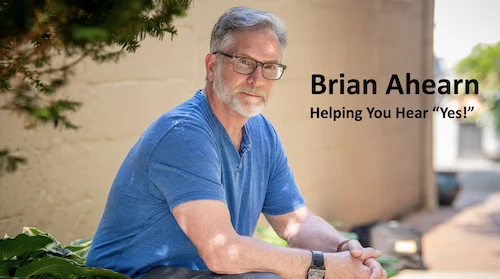
The initial impulse when confronted with difficult individuals is to identify and, if possible, distance ourselves from them. The pastor’s sermon, recounted by author and influence expert Brian Ahearn, highlights the stark asymmetry in this perception. While we are adept at pinpointing the traits that make others challenging, the prospect of embodying those same traits for someone else is often sidestepped. This cognitive dissonance raises a fundamental question: How does one extend genuine care and positive regard towards individuals with whom one experiences friction?
The intellectual wrestling match with this very question was famously undertaken by C.S. Lewis, as detailed in his seminal work, "Mere Christianity." Lewis grappled with the apparent contradiction between his Christian calling to love one’s neighbor and his personal feelings of dislike towards certain individuals. His breakthrough came not from magically altering his emotions, but from recognizing a similar dynamic within his own self-perception. Lewis acknowledged moments of profound self-disappointment, times when he disliked his own actions or character. Yet, even in these instances of self-criticism, he continued to strive for his own betterment, seeking forgiveness and personal growth. This internal reconciliation led Lewis to a crucial distinction: liking and loving are distinct, though related, concepts. Love, in this context, is not contingent on effusive affection or agreement but can originate from a deliberate commitment to seek the well-being of another.
For Christians, the directive to "love your enemies" takes on new meaning when viewed through this lens. Biblical love, often misinterpreted as a purely emotional state, is also, fundamentally, a volitional act. It is the conscious decision to act with integrity and kindness towards another, regardless of their perceived merit or their past actions towards us. This principle translates into tangible actions in everyday life. It might manifest as assisting a stranger in distress, offering support to a colleague under pressure, or extending a small act of grace to someone struggling at a point of sale. These acts stem from an acknowledgment of shared humanity and a recognition of another’s needs, mirroring the golden rule: treat others as you would wish to be treated.
The implications of this perspective extend beyond personal ethical frameworks and into the realm of interpersonal influence, as explored by renowned social psychologist Robert Cialdini. Cialdini’s extensive research into the psychology of persuasion offers valuable insights into not only how to positively influence others but also how to fundamentally alter our perception of them.
The Principle of Liking: Beyond Being Liked
A cornerstone of Cialdini’s work is the principle of Liking, which is often misunderstood as solely the endeavor to be liked by others. However, an equally critical, and perhaps more transformative, application of this principle is the active cultivation of genuine liking for the other person. This involves a conscious effort to identify common ground. These sharedalities can be as varied as supporting the same sports team, enjoying similar recreational pursuits, navigating comparable family dynamics, or championing the same social causes. While these commonalities may not erase fundamental differences, they serve to bridge the perceived chasm between individuals, fostering a sense of connection.
Furthermore, sincere compliments act as powerful catalysts for fostering liking. By intentionally seeking out and acknowledging positive attributes in others—whether it be a demonstrable strength, a thoughtful gesture, or an admirable character trait—we begin to shift our focus away from the aspects that tend to irritate us. This deliberate reframing of perspective can precede an immediate shift in emotional response, but it invariably alters how we view the individual.
Unity and Shared Identity: Forging Deeper Connections
The concept of unity, rooted in shared identity, offers an even more profound pathway to overcoming interpersonal difficulties. Consider familial relationships. Despite potential personal friction, the inherent bond of family often compels individuals to make sacrifices for one another that they might not extend to outsiders. This shared identity transcends immediate kinship, extending to encompass membership in the same organization, community, profession, nation, or faith. The more we perceive another person as "one of us" rather than "one of them," the more inclined we are to consider their welfare.

Cialdini, in his work "Pre-suasion," elucidates the neurobiological underpinnings of this phenomenon. He notes that "People experience unusually high stimulation in the self-reward centers of their brains after aiding a family member. It’s as if by doing so, they are aiding themselves." This inherent psychological reward mechanism underscores the power of perceived shared identity in motivating altruistic behavior and fostering empathy.
Reciprocity: The Power of Proactive Generosity
The principle of reciprocity, typically understood as responding to a favor with a similar favor, also offers an unexpected avenue for transforming difficult relationships. While the conventional application involves responding to kindness shown to us, choosing to be the initiator of generosity can profoundly impact our own perceptions. When we invest our time, attention, or emotional energy into another person, even when it is not immediately reciprocated, we may begin to view them as an individual worthy of that investment. This proactive engagement can subtly shift our internal calculus, making us more receptive to their positive qualities.
It is crucial to emphasize that embracing these principles does not equate to condoning harmful behavior, abandoning personal boundaries, or tolerating abuse. Loving someone does not necessitate allowing them to mistreat us. Instead, it involves a refusal to reduce an individual solely to the traits that we find challenging. It means recognizing their inherent worth and dignity, even when their actions fall short.
The iconic question posed by Tina Turner, "What’s love got to do with it?" resonates deeply in this context. From a humanistic perspective, it might seem a valid inquiry when faced with persistent difficulty. However, from a theological and psychological standpoint, love—understood as a deliberate commitment to another’s well-being—has everything to do with navigating these complex interpersonal landscapes.
Broader Implications and Applications
The insights derived from both theological teachings and psychological research have significant implications for various sectors, including leadership, conflict resolution, and community building. In organizational settings, leaders who apply these principles can foster more cohesive and productive teams. By encouraging empathy and understanding among employees, even those with differing work styles or personalities, leaders can mitigate conflict and enhance collaboration. The application of Cialdini’s principles in leadership training, for instance, has demonstrated tangible improvements in team dynamics and employee engagement. Studies on organizational psychology consistently highlight the correlation between positive interpersonal relationships and overall job satisfaction and productivity. For example, research published in the Journal of Applied Psychology has shown that fostering a sense of "psychological safety," where individuals feel comfortable expressing themselves without fear of negative consequences, is directly linked to team performance. This safety is cultivated when individuals feel valued and understood, even by those with whom they may have disagreements.
In the realm of conflict resolution, understanding the distinction between liking and loving, and employing strategies to foster shared identity and reciprocity, can pave the way for more effective mediation. Instead of focusing solely on the immediate points of contention, mediators can guide parties towards identifying common goals or shared values, thereby building a foundation for constructive dialogue. The adoption of restorative justice practices, for instance, often emphasizes understanding the harm caused and finding ways to repair relationships, a process that inherently requires empathy and a willingness to see the humanity in those who have caused harm.
A Call to Introspection
The enduring relevance of this discourse prompts a final, introspective question: Who is an individual in your life that you find particularly difficult to like? What might shift in your perception and in your interactions if, instead of waiting for a spontaneous surge of warmer feelings, you consciously chose one small, deliberate action to seek that person’s good? And as a final, humbling consideration, it is worth pondering: Who in your own life might be engaging in this very process with you, striving to find common ground and extend a hand of understanding, even when faced with your own challenging traits? The journey towards more harmonious relationships begins with this dual recognition – our capacity to be difficult, and our potential to rise above it through intentional acts of love and influence.
