

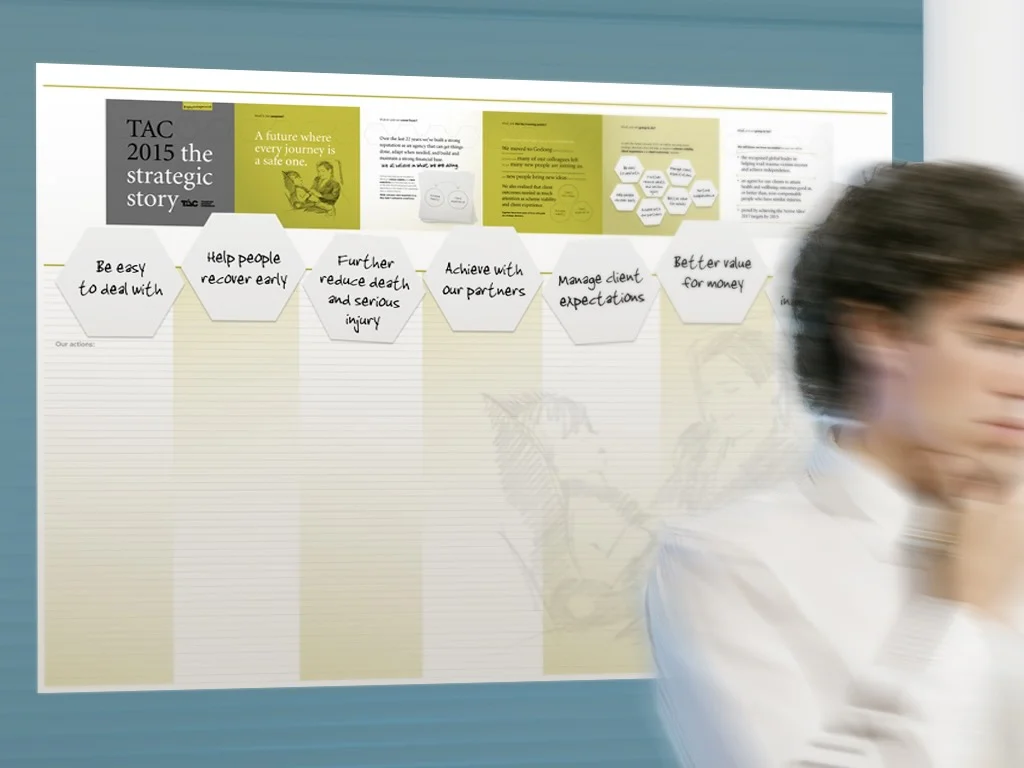
In the landscape of modern corporate governance, the chasm between executive strategy and frontline execution remains one of the most persistent challenges for global enterprises. As businesses grapple with increasingly complex market dynamics, the traditional methods of disseminating corporate vision—typically through dense slide decks and formal memoranda—are being scrutinized for their lack of efficacy. This shift in perspective is at the heart of a burgeoning movement toward "strategic storytelling," a methodology pioneered and refined over decades by practitioners such as Shawn Callahan, founder of Anecdote. The origins of this approach, detailed in the forthcoming book Making Strategies Stick, trace back to a pivotal 2009 engagement with Victoria’s Transport Accident Commission (TAC) and a broader intellectual history involving organizational complexity and narrative theory.
The Genesis of Narrative Strategy at the TAC
In 2009, the Transport Accident Commission of Victoria was undergoing a period of significant transition. Having recently relocated its headquarters to the regional city of Geelong, the statutory insurer was under the new leadership of CEO Janet Dore. The TAC, responsible for promoting road safety and supporting those injured in transport accidents, faced a perennial tension common to public sector agencies: balancing financial sustainability with the quality of claimant outcomes.
At the time, the TAC possessed a documented strategy, but internal assessments suggested a lack of "ownership" among the executive team and the broader workforce. This led to an introduction between Dore and Callahan, facilitated by board member Victor Perton. The objective was to move beyond the static presentation of goals and toward a living narrative that executives could articulate in their own words.
The methodology proposed involved a collaborative "story-crafting" process. By engaging the executive team in the construction of the strategy’s narrative, the goal was to ensure that the vision was not merely memorized but internalized. This approach was grounded in the belief that when leaders can explain the "why" and "how" of a strategy through a structured narrative, the likelihood of successful organizational adoption increases exponentially.
Intellectual Origins and the Framework of Strategic Narrative
The shift toward narrative-based strategy did not emerge in a vacuum. It was the result of a synthesis of various disciplines, ranging from public speaking techniques to complex systems theory. In the 1980s, the foundational elements of this approach were being laid through the study of speech patterns at organizations like Toastmasters. These early lessons emphasized that information is most retainable when structured around logical progressions: past, present, and future; or the sequence of point, reason, and example.
By the mid-2000s, these concepts were being adapted for the corporate environment. Influences included the work of Paul Honeywell at the London-based firm The Storytellers, and Morgan Marzec’s 2008 research, "Telling the Corporate Story." Marzec’s work specifically advocated for executive involvement in the storytelling process, a departure from the then-standard practice of delegating communication entirely to external agencies or internal PR departments.
A critical tool in this narrative arsenal is the "Story Spine," a concept adapted from playwright Kenn Adams. The framework simplifies complex strategic shifts into a digestible sequence:
- The Status Quo: How the organization functioned in the past.
- The Inciting Incident: What changed in the market or environment.
- The Response: What the organization decided to do as a result.
- The Vision: The intended outcome and its impact on stakeholders.
When applied to the TAC in 2009, this framework helped distill seven strategic directions—including "Be easy to deal with" and "Help people recover early"—into a cohesive story that resonated with the agency’s mission of injury recovery and financial viability.
The Data of Strategic Failure and the Need for Alignment
The necessity for such narrative interventions is supported by significant organizational data. Research from the Harvard Business Review and other leading institutions consistently indicates that between 60% and 90% of strategic initiatives fail to achieve their intended goals. A primary driver of this failure is the "alignment gap." According to a study by Gallup, only 22% of employees strongly agree that their leaders have a clear direction for the organization, and even fewer understand how their daily work contributes to that direction.
Furthermore, the "illusion of communication" often plagues large organizations. Executives may spend months crafting a strategy, only to spend a few hours presenting it. This creates a disparity where the leadership team has a high degree of "narrative density" regarding the strategy, while the rest of the organization receives only a "thin" version. By using storytelling to bridge this gap, organizations aim to increase the "stickiness" of their strategic goals.
Critical Lessons in Implementation: The Role of Internal Communications
While the TAC project was largely deemed a success—with CEO Janet Dore later noting that the greatest value was the newfound ownership of the strategy among the top leadership tiers—it also highlighted a critical flaw in implementation. The project initially bypassed the deep involvement of the Head of Communications, leading to a friction point where initiatives would fade once the external consultants were not present.
This experience led to a fundamental shift in the methodology of strategic storytelling: the requirement of "radical inclusion" for internal communication departments. In contemporary practice, for a strategy story to endure, the people responsible for the organization’s ongoing messaging must be co-architects of the narrative from the outset. This ensures that the story is integrated into the company’s "business as usual" processes rather than being treated as a one-off event.
Knowledge Spreading and the I-Space Framework
The philosophical underpinning of sharing these strategic methodologies is rooted in the "I-Space" framework developed by Max Boisot and popularized by Dave Snowden at IBM’s Cynefin Centre for Organisational Complexity. The framework categorizes knowledge based on how codified, abstracted, and diffused it is.
In industries where craft and tradition are paramount—such as high-end instrument making—knowledge is often uncodified and resides in the hands of a few masters. However, in the fast-paced world of management and organizational change, the I-Space framework suggests that value is created by diffusing knowledge quickly. By sharing methodologies openly through blogs, e-books, and workshops, practitioners allow their ideas to be tested and refined in diverse environments, from government offices in London to multinational corporations.
Case Study: The London Mayor’s Office
An illustrative example of this diffusion occurred when the London Mayor’s Office adopted "anecdote circles"—a technique for gathering organic stories from within an organization—to develop an oral strategy. The office sought a strategy that was highly resonant but minimally documented to avoid the risks of premature leaks to the press.
By utilizing a purely narrative approach, the Mayor’s Office was able to align its change management team and broader staff around a shared vision without the constraints of a traditional, static strategic document. This success underscored the versatility of narrative strategy: it can serve both as a tool for transparency and as a secure method for internal alignment in high-stakes political environments.
Broader Implications for Modern Management
As the corporate world enters an era defined by rapid technological disruption and shifting social expectations, the ability to communicate a coherent and persuasive "why" has become a core competency for leadership. The transition from "Putting Stories to Work" (Callahan’s 2016 publication) to the current focus on "Making Strategies Stick" represents an evolution in the field. It moves beyond the mechanics of telling a good story and into the systemic challenge of ensuring that story drives long-term behavior change.
The implications for the future of management are clear:
- Decentralization of Strategy: Strategy is no longer a document owned by the C-suite; it is a narrative shared by the entire organization.
- Cognitive Ease: Narrative structures align with how the human brain processes and retains information, making them more effective than analytical data alone.
- Resilience through Shared Meaning: Organizations with a strong, shared story are more resilient to change, as employees have a framework for making independent decisions that align with the collective goal.
In conclusion, the journey from a Geelong office overlooking the CBD to the development of a global management methodology highlights a fundamental truth in business: a strategy that cannot be told is a strategy that cannot be executed. As the upcoming publication of Making Strategies Stick suggests, the future of organizational success may not lie in the sophistication of the data, but in the power and "stickiness" of the story told about it. Leaders are now encouraged to not only be the architects of strategy but also the narrators of their organization’s future, ensuring that every member of the team understands their role in the unfolding story of the enterprise.
