


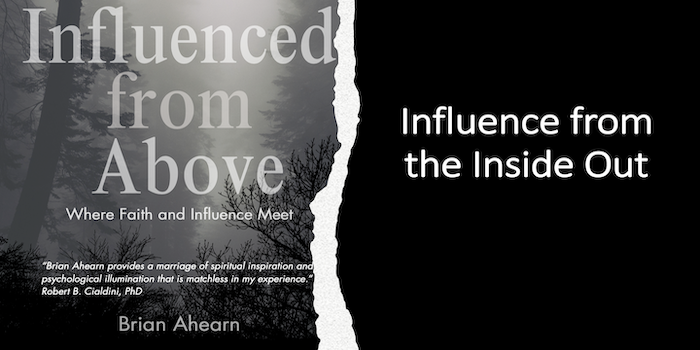
A recent discourse on professional influence has ignited a conversation that moves beyond the established tenets of ethical practice, advocating for a more profound approach termed "Loving and Eternal" influence. This nuanced perspective, initially articulated by author and influence expert Brian Ahearn, challenges practitioners to consider not just what is permissible or effective, but what is genuinely beneficial for the recipient, fostering a deeper, more enduring connection. The discussion was prompted by a probing question from LinkedIn connection Reyes Castillo, who inquired about the practical application of this elevated approach in coaching scenarios. Castillo’s query, "I’m curious how that shows up in your actual coaching. What’s the first thing someone usually has to stop doing once they start asking what’s best for the other person instead of what’s allowed?" has become a focal point for exploring the internal shift required for this transformative influence.
Ahearn’s response, refined through contemplative reflection, suggests that the genesis of this deeper influence lies not in cessation, but in cultivation. "I don’t think it starts with something we need to stop doing. I think it starts with something we need to do, so we can become," he posits, emphasizing a paradigm shift from external actions to internal being. This internal transformation, he argues, is the bedrock upon which genuine influence is built, moving beyond superficial compliance to authentic connection.
The Foundation of Influence: An Internal Imperative
The concept of "influence from the inside out" resonates with principles of personal development and leadership that have long been explored in psychological and spiritual literature. Ahearn draws parallels to well-known teachings, referencing Jesus’ admonition to the Pharisees to cleanse the inner vessel before the outer, and the parable of a good tree yielding good fruit. These analogies underscore a fundamental truth: the outward manifestation of our actions is intrinsically linked to our internal state. What emerges from an individual is a reflection of their core beliefs, values, and intentions.
This internal disposition, Ahearn contends, precedes any overt behavioral change. It’s a matter of cultivating a particular mindset before modifying specific actions. This is where the principles of influence, as popularized by Dr. Robert Cialdini, offer a valuable lens through which to examine this internal recalibration.
The Principle of Liking: A Deeper Interpretation
Cialdini’s Principle of Liking, which states that individuals are more predisposed to agree with or be influenced by people they know and like, is a cornerstone of persuasive communication. However, the common interpretation often centers on the individual seeking to be liked. Ahearn proposes a more impactful application: rather than actively seeking to elicit liking, one should focus on genuinely discovering reasons to like the other person.
This subtle yet profound shift in focus reorients the entire interaction. When an individual actively searches for commonalities and admirable qualities in another, they are not merely employing a tactic to gain favor; they are engaging in a process of authentic connection. This endeavor inherently fosters liking from both sides. As Ahearn explains, the discovery of shared interests and the offering of genuine compliments are potent drivers of mutual affinity. The critical distinction lies in the internal motivation. Whether the objective is to be liked or to genuinely appreciate the other, the observable behaviors—asking questions, seeking common ground, offering praise—might appear identical. However, the internal landscape has fundamentally changed.
This shift from self-focus to other-focus is palpable. When an individual senses genuine warmth and appreciation, trust is more readily established. This trust, built on the foundation of perceived friendship and care, is the fertile ground for influence that is both effective and ethically sound. It is influence that emanates from a place of authentic regard, not mere strategic manipulation.
Ethical vs. Loving Influence: A Spectrum of Impact
The dichotomy presented—"Lasting and Ethical" versus "Loving and Eternal"—frames influence as a spectrum, with the latter representing a more evolved and impactful form. Ethical influence, while crucial, primarily addresses the ‘what’ and ‘how’ of interaction. It prompts questions such as: "Is my approach honest? Is it appropriate? Am I respecting the other person’s autonomy?" These are essential guardrails, ensuring that influence is exercised responsibly and without coercion. Decades of professional practice and academic study have underscored the importance of these ethical considerations in building sustainable relationships and achieving positive outcomes.
However, the "Loving and Eternal" approach introduces a deeper layer of intentionality by asking the pivotal question: "Do I genuinely desire what is best for this person?" This query elevates the discourse from a transactional exchange to a relational commitment. It demands a genuine concern for the well-being and growth of the individual being influenced.
The Transformative Power of Intent
The profound difference between these two approaches lies not in the techniques employed, but in the underlying intent. Two individuals might utilize identical influence strategies, employ the same persuasive language, and ask the same probing questions. Yet, their internal motivations can be worlds apart. One might be driven by the singular goal of securing a "yes," a win for themselves. The other, however, is driven by a desire to guide the individual toward the most beneficial decision for their own journey.
This internal divergence is not always visible on the surface. The outward presentation may be indistinguishable, but the internal compass guiding the interaction is fundamentally different. This highlights the core of Ahearn’s argument: transitioning from merely ethical influence to a truly loving and eternal form is not about acquiring new strategies, but about undergoing a profound personal transformation. It is about becoming a different kind of person, one whose inherent nature fosters genuine care and a commitment to the well-being of others.
When this internal shift occurs, the outward behaviors naturally align. The focus moves from self-interest to altruism, from manipulation to empowerment. This is the essence of "influence from the inside out," where genuine concern and a desire for the other’s flourishing become the driving forces.
Re-evaluating the Starting Point: From Cessation to Becoming
Reyes Castillo’s initial question, "What’s the first thing someone usually has to stop doing?", points to a common inclination to identify and eliminate negative behaviors. However, Ahearn’s reframing suggests that the more effective starting point is not what to stop, but what to actively cultivate. The question shifts from "What do I need to stop doing?" to "Who am I becoming, and what do I genuinely want for the person I am seeking to influence?"
This introspective approach encourages a deeper self-awareness. It prompts individuals to examine their core motivations, their underlying beliefs about influence, and their commitment to the welfare of others. This self-inquiry is the catalyst for change. By understanding and nurturing their internal landscape, individuals can naturally embody the principles of loving and eternal influence.
The implications of this perspective are far-reaching, particularly in fields like coaching, sales, leadership, and even personal relationships. In a professional context, for instance, data from the corporate world consistently shows that employee engagement and retention are strongly correlated with leadership that demonstrates genuine care and concern for their team members. A study by the Harvard Business Review, for example, highlighted that employees who feel cared for by their leaders are significantly more likely to be engaged and to stay with their organization. This empirical evidence supports Ahearn’s assertion that influence rooted in genuine liking and concern yields more profound and lasting results.
Furthermore, the ethical framework of influence, as championed by Cialdini and his associates, has been instrumental in establishing standards of responsible persuasion. The Cialdini Institute, where Ahearn serves as a faculty member, has been at the forefront of promoting ethical influence practices for decades. Their work provides a robust foundation, ensuring that influence is not used for exploitative purposes. However, Ahearn’s contribution extends this foundation by advocating for an approach that is not only ethical but also deeply compassionate and aimed at mutual benefit.
The current landscape of influence, characterized by rapid digital communication and evolving social dynamics, demands approaches that foster trust and authenticity. In an era where information is abundant but genuine connection can be scarce, the ability to influence from a place of authentic care becomes a powerful differentiator. The shift from a purely transactional or rule-based ethical model to one that embraces empathy and a genuine desire for the other’s well-being can redefine professional interactions and lead to more meaningful and sustainable outcomes.
This philosophical underpinning has tangible implications for how influence is taught and practiced. Instead of solely focusing on techniques for persuasion, training programs could incorporate modules on empathy development, active listening rooted in genuine curiosity, and the cultivation of self-awareness regarding one’s own intentions. The goal would be to equip individuals not just with the tools of influence, but with the character to wield them responsibly and compassionately.
The ongoing dialogue, spurred by Castillo’s insightful question and Ahearn’s thoughtful response, invites a broader examination within the professional community. The invitation for feedback from those Ahearn has worked with over the years underscores the collaborative nature of evolving best practices. Does this recalibration of focus—from "what to stop doing" to "who am I becoming"—alter the perception and application of influence principles? The answer to this question will likely shape the future of how influence is understood and enacted, moving it from a calculated strategy to a genuine expression of care and a commitment to the highest good of all involved. The journey from ethical compliance to loving connection is not merely a theoretical ideal; it is a practical imperative for fostering deeper trust, more meaningful relationships, and ultimately, more impactful and enduring influence.
