


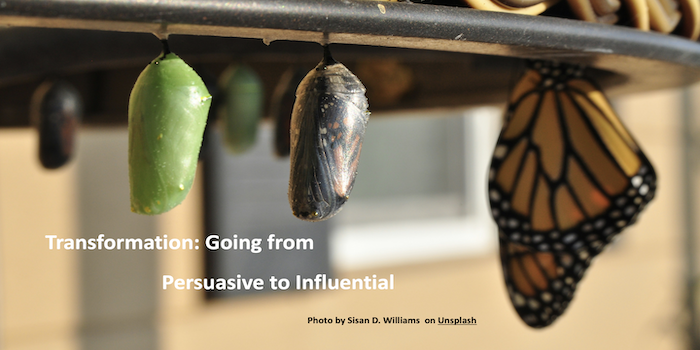
The pursuit of persuasive communication often focuses on the acquisition of techniques and strategies. However, a deeper question emerges: what kind of person are we becoming as we hone these skills? This inquiry delves into the distinction between merely applying influence principles and allowing them to fundamentally alter our character, thereby reshaping our interactions with others.
This phenomenon is powerfully illustrated by the personal journey of Brian Ahearn, a recognized expert in ethical influence and Chief Influence Officer at Influence PEOPLE. For years, Ahearn’s physical discipline was centered on weightlifting and competitive powerlifting and bodybuilding. In that era, his perspective on running was decidedly negative, viewing it as a wasteful expenditure of calories better suited for the gym. This perspective remained entrenched until, about a decade after ceasing his competitive lifting career, a friend’s challenge to complete the Columbus Marathon spurred him and a dozen others to participate. With encouragement from his wife, Ahearn decided to embark on this new endeavor.
To his own surprise, Ahearn discovered a profound enjoyment in running, particularly the invigorating feeling that followed each session. This initial interest blossomed into a deep affection for the sport, leading to a significant shift in his self-identity. The label of "weightlifter" gradually gave way to "runner." The daily ritual of waking early to run in the pre-dawn darkness became an ingrained habit, requiring no conscious deliberation. As he put it, "Runners run, and I was a runner." This transformation did not negate the physical demands of running; speed work still brought burning lungs, and long weekend runs resulted in aching legs. Marathon training, by its nature, continued to demand discipline and effort. However, the crucial difference was that the willingness to undertake these challenges became a more natural, internal response.
This subtle yet profound distinction between performing an action and embodying a characteristic was recently highlighted for Ahearn during a podcast by Dallas Willard, a philosopher and theologian known for his work on spiritual formation and the transformed life. Willard’s teachings emphasize that true discipleship involves not just outward actions but an inward transformation that reorients one’s very being.
The Interplay of Becoming and Doing
The spiritual teachings of Jesus, as often interpreted, present calls to action that can appear daunting. For instance, the directive to love one’s enemies, or to respond with gentleness when confronted with contentious arguments, can feel like insurmountable tasks if approached solely as behavioral exercises. If a person harbors deep resentment, actively loving an adversary feels like an uphill battle. Similarly, a strong internal drive to prove oneself right can make a gentle response seem nearly impossible. While one can attempt to force the desired behavior, the lasting change necessitates a deeper internal recalibration.
Within the Christian tradition, this continuous process of inner alteration is termed sanctification. As individuals cultivate trust in Christ and strive to emulate His character, their outward responses begin to originate from a transformed heart. Consequently, loving a difficult individual may still involve personal cost, and responding with patience may still require conscious effort. However, the willingness to engage in these actions gradually becomes more accessible because these behaviors increasingly reflect the evolving person they are becoming. Just as Ahearn’s transformation into a runner altered his relationship with the activity itself, this profound inner change reshapes one’s approach to the ethical and spiritual imperatives presented by religious teachings.
Influence Principles and the Transformed Self
This concept of inner transformation has significant implications for the field of influence. When Ahearn teaches about influence, he equips individuals with practical communication strategies that enhance their effectiveness. These skills are undeniably valuable. Understanding how to articulate a clear request, establish credibility, or identify common ground can lead to tangible improvements in interpersonal outcomes. However, Ahearn poses a critical follow-up question: are we solely improving our ability to secure agreement, or are we cultivating ourselves into individuals whom others have genuine reasons to trust and follow?
In his book, Influenced from Above, Ahearn explores the synergistic relationship between Dr. Robert Cialdini’s established principles of influence and foundational principles of faith. Cialdini, a pioneering social psychologist, identified several key drivers of persuasion, including liking, unity, commitment and consistency, and reciprocity.
Consider the principle of liking. The ability to find commonalities with others and offer sincere praise can undeniably strengthen relationships. When individuals cultivate a genuine interest in others, these practices naturally stem from authentic curiosity and appreciation. This, Ahearn suggests, can serve as an initial step towards extending brotherly love.
The principle of unity, which emphasizes recognizing a shared identity, can facilitate agreement. This sense of connection also fosters a deeper concern for another person’s well-being, as individuals perceive themselves as belonging to a collective. This resonates with the concept of agape love, a selfless and unconditional affection.
Commitment and consistency underscore the importance of honoring one’s word. Living by the principle of letting one’s "yes be yes and one’s no be no" builds trust through consistent, everyday faithfulness.
Finally, reciprocity helps explain why acts of generosity often inspire reciprocal generosity. However, the Golden Rule elevates this principle by directing attention beyond the expectation of return. It prompts individuals to consider how they would wish to be treated if they were in another person’s circumstances, a fundamental aspect of ethical engagement.
While these principles offer a robust framework for understanding the mechanics of influence, it is the inner transformation that shapes the motivation behind their application. When influence is rooted in genuine character development, the distinction between ethical influence and manipulation becomes virtually nonexistent. As Ahearn notes, one would not consciously seek to manipulate a friend, implying that a transformed internal state naturally aligns actions with ethical considerations.
Practicing with Purpose: The Path to Authentic Influence
The journey toward ethical influence does not necessitate waiting for a complete internal transformation to begin. Practice plays a crucial role, as the act of doing often catalyzes the process of becoming. Ahearn’s own experience as a runner illustrates this: he became a runner by consistently running. Similarly, individuals can cultivate qualities such as generosity, honesty, and care through the deliberate practice of these behaviors.
However, the ultimate objective extends beyond merely mastering a set of influence techniques. The true aspiration is to evolve into a person whose words and actions consistently convey a sincere concern for others. This involves developing the capacity to accept a "no" without jeopardizing the underlying relationship, a testament to authentic connection. It is at this juncture that ethical influence truly begins to emanate from one’s core identity.
The question then becomes a personal reflection: what skill, once practiced, has eventually become an integral part of who you are? This introspection highlights the profound impact of consistent action on shaping identity, a principle that underpins both personal growth and the cultivation of authentic influence.
Brian Ahearn is the Chief Influence Officer at Influence PEOPLE and a faculty member at the Cialdini Institute. He is a certified trainer in Robert Cialdini’s principles of ethical influence. Ahearn is the author of several books, including "Influence PEOPLE," "Persuasive Selling," and "Influenced from Above." His work focuses on applying scientific principles of influence to everyday interactions and business contexts.
