

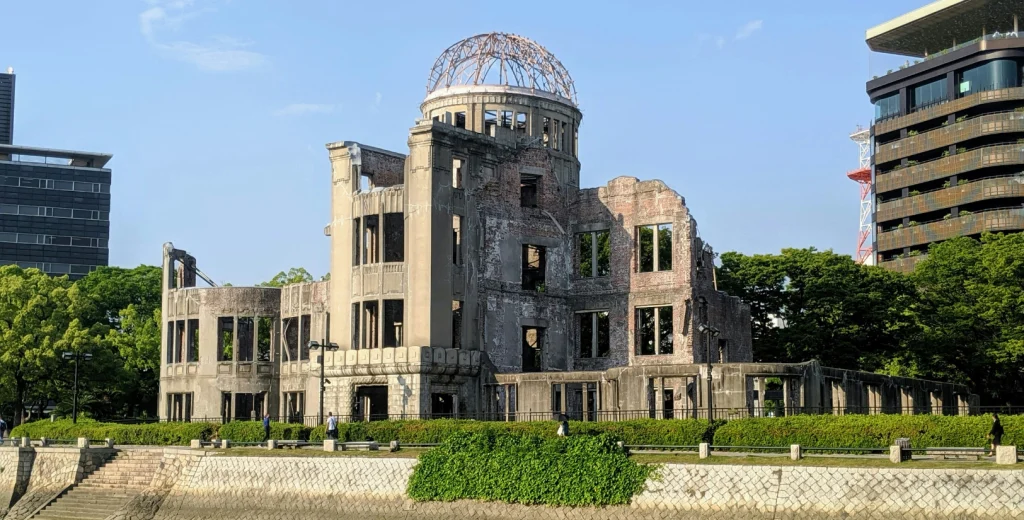
The narrative of Tsutomu Yamaguchi, the only individual officially recognized by the Japanese government as a survivor of both the Hiroshima and Nagasaki atomic bombings, has long served as a profound study in human endurance. In a recent analysis presented by Anecdote International in the 284th episode of their "Anecdotally Speaking" series, leadership experts Mark and Shawn explored how the framing of Yamaguchi’s experience offers critical insights into modern leadership, resilience, and the psychological construction of meaning within the workforce. By examining the facts of August 1945 through the lens of narrative strategy, the discussion highlights a pivotal realization for contemporary executives: while facts remain static, the meaning derived from them is a tool for organizational stability and personal fortitude.
The Chronology of a Dual Survival
The historical record of Tsutomu Yamaguchi’s ordeal begins in the summer of 1945. A 29-year-old naval engineer for Mitsubishi Heavy Industries, Yamaguchi was concluding a three-month business trip to Hiroshima. On the morning of August 6, 1945, as he prepared to leave for the train station to return to his home in Nagasaki, he realized he had forgotten his "hanko"—a personal seal required for official documents—and returned to the shipyard to retrieve it.
At approximately 8:15 a.m., the B-29 bomber Enola Gay released the "Little Boy" atomic bomb over Hiroshima. Yamaguchi was walking toward the shipyard when he witnessed a blinding flash of light. The blast, occurring roughly three kilometers from his position, threw him into a ditch, ruptured his eardrums, and left him with significant thermal burns across the left side of his upper body. Despite the devastation of the city, which saw an estimated 70,000 to 80,000 people killed instantly, Yamaguchi found the strength to spend a night in a makeshift air-raid shelter.
On August 7, Yamaguchi navigated the ruined landscape of Hiroshima to reach the railway station, which miraculously remained somewhat functional on the outskirts. He boarded a train filled with the wounded and dying, arriving in Nagasaki on August 8. Upon his arrival, he sought medical treatment for his burns, which were so severe they had begun to turn black, a symptom of radiation exposure that was poorly understood at the time.
The second phase of this extraordinary chronology occurred on August 9, 1945. Despite his injuries, Yamaguchi reported to the Mitsubishi office in Nagasaki to brief his supervisor on the catastrophe in Hiroshima. According to historical accounts, his superior expressed disbelief, questioning how a single bomb could level an entire city. As Yamaguchi attempted to explain the scale of the destruction, the "Fat Man" plutonium bomb was detonated over Nagasaki at 11:02 a.m.
Once again, Yamaguchi was approximately three kilometers from the hypocenter. The reinforced office walls provided some protection from the immediate blast wave, though he was again subjected to high-dose radiation. He survived the second attack, eventually finding his wife and infant son, who had also survived the blast while seeking cover in a tunnel.
Supporting Data: The Magnitude of the Hibakusha Experience
To understand the weight of Yamaguchi’s narrative, one must look at the statistical reality of the 1945 bombings. The Hiroshima blast produced a fireball with a diameter of approximately 370 meters, with surface temperatures reaching 7,000 degrees Celsius. In Nagasaki, the hilly terrain partially confined the blast, yet the "Fat Man" bomb was more powerful, with a yield of 21 kilotons compared to Hiroshima’s 15 kilotons.
Yamaguchi was among a small group known as "nijū hibakusha," or double-bombed people. While the Japanese government has identified approximately 165 individuals who may have been in both cities during the bombings, Yamaguchi remains the only person to be officially certified by the state in both categories. This certification, which he did not receive until 2009, shortly before his death at age 93, provided him with government-backed medical benefits and official recognition of his unique historical status.
Medical data regarding the survivors, or Hibakusha, indicates that the long-term effects of ionizing radiation led to significantly higher rates of leukemia and various solid cancers. Remarkably, despite suffering from acute radiation poisoning, including the loss of hair and persistent illness for several years following the war, Yamaguchi lived a long and productive life, eventually becoming a vocal advocate for nuclear disarmament.

Official Recognition and Late-Life Advocacy
For decades, Yamaguchi chose not to emphasize his status as a dual survivor, focusing instead on his career as an engineer and later as a teacher. However, as he entered his 80s, his perspective shifted toward the necessity of record-keeping and peace activism. In 2006, he traveled to New York to speak before the United Nations, stating, "Having experienced atomic bombings twice and survived, it is my destiny to talk about it."
The official response from the Japanese government was initially cautious. For years, his records only reflected his presence in Nagasaki. It was not until March 2009 that the city of Nagasaki officially added the Hiroshima bombing to his "hibakusha kenko techo" (survivor’s health notebook). This move was seen by historians as a significant acknowledgment of the rare and traumatic intersection of events that Yamaguchi embodied.
Narrative Framing: Luck vs. Misfortune
In the analysis provided by Anecdote International, the story of Tsutomu Yamaguchi is used to illustrate a core principle of "meaning-making." The facts of his life present a paradox: Is a man who is present for two atomic bombings the unluckiest person in history, or is a man who survives two atomic bombings the luckiest?
Mark and Shawn argue that how a leader or an individual frames this narrative determines their psychological resilience. If the story is framed as one of extreme misfortune, it fosters a sense of victimhood and helplessness. If framed as a story of miraculous survival and "destiny," it creates a foundation for leadership and purpose.
This concept is increasingly relevant in the corporate sector, where "organizational trauma"—such as mass layoffs, failed mergers, or global economic shifts—can be framed in multiple ways. Leaders who master the art of storytelling can guide their teams to view challenges not as insurmountable disasters, but as crucibles that forge greater strength.
Strategic Storytelling Techniques in Leadership
The podcast episode delves into specific techniques that leaders can borrow from Yamaguchi’s story and the broader field of narrative construction:
- Foreshadowing and Preparation: In storytelling, foreshadowing creates a sense of inevitability and preparation. In a business context, leaders can use narrative to prepare teams for upcoming changes, ensuring that when "the flash" occurs, the team has the mental framework to respond rather than just react.
- Meaning-Making through Audience Participation: The most effective stories allow the audience to draw their own conclusions. By presenting the facts of Yamaguchi’s life, leaders invite their employees to decide for themselves what resilience looks like, which leads to deeper internal buy-in than a top-down mandate.
- Communicating with Integrity: A significant challenge discussed by Anecdote International is how leaders communicate decisions they may not personally agree with. By using stories that emphasize the "why" and the broader context of survival and long-term goals, leaders can maintain their personal integrity while fulfilling their professional obligations to the organization.
Broader Impact and Implications for the Modern Workforce
The application of Yamaguchi’s story to the workforce reflects a growing trend in corporate training: the move away from purely data-driven management toward "human-centric" leadership. Anecdote International, with its network of over 60 partners in 28 countries, emphasizes that humanity is brought back to the workforce through the sharing of authentic experiences.
The implications of this approach are measurable. According to various organizational psychology studies, employees who find meaning in their work—often through the narratives shared by their leaders—report 1.7 times higher job satisfaction and are three times more likely to stay with their companies.
The story of Tsutomu Yamaguchi serves as a reminder that the human spirit does not just survive through physical endurance, but through the stories it tells itself to make sense of the world. In 1945, Yamaguchi survived the unimaginable by putting one foot in front of the other, first in Hiroshima and then in Nagasaki. In the 21st century, his legacy is utilized to teach leaders that while they cannot control the "explosions" within the global market, they have absolute control over the narrative of survival and growth that follows.
As organizations navigate an era of rapid technological change and geopolitical instability, the dual-survivor narrative provides a blueprint for resilience. It suggests that the most powerful tool a leader possesses is not a spreadsheet or a strategic plan, but the ability to take a set of harrowing facts and transform them into a story of hope, purpose, and enduring strength.
