

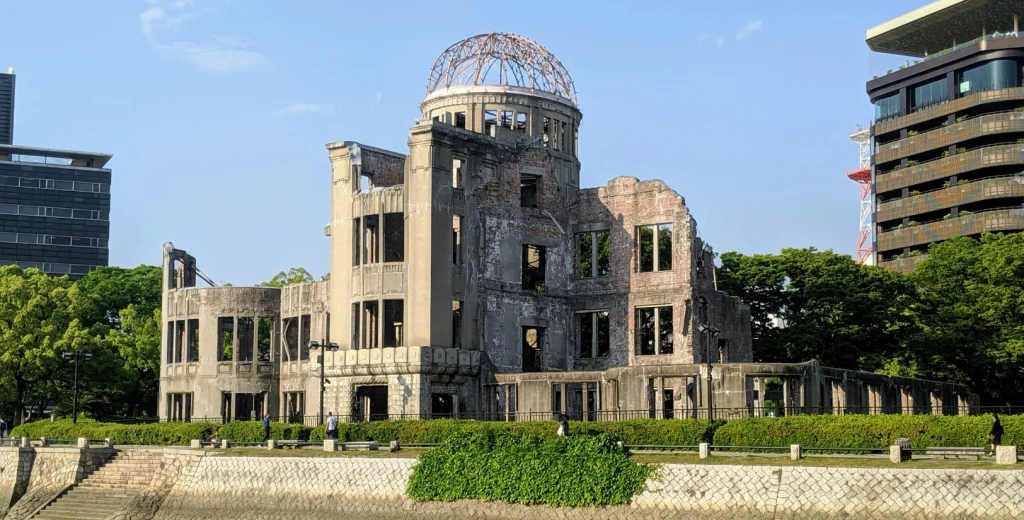
In the latest installment of the Anecdotally Speaking podcast, Episode 284, hosts Mark and Shawn explore the profound impact of internal narratives on leadership and professional resilience through the lens of one of history’s most improbable survival stories. The episode centers on the life of Tsutomu Yamaguchi, a Japanese engineer who holds the unique and somber distinction of being the only person officially recognized by the Japanese government to have survived both the Hiroshima and Nagasaki atomic bombings. By examining Yamaguchi’s experiences, the program delves into how the meanings individuals assign to events—rather than the events themselves—dictate their capacity to lead, adapt, and find purpose in the face of overwhelming adversity.
The Chronology of a Double Survival
The historical account of Tsutomu Yamaguchi begins in the summer of 1945. At 29 years old, Yamaguchi was a structural engineer employed by Mitsubishi Heavy Industries. In August of that year, he was concluding a three-month business trip to Hiroshima, where he had been working on the design of a new oil tanker. On the morning of August 6, 1945, Yamaguchi was preparing to leave the city to return to his family in Nagasaki. Realizing he had forgotten his "hanko"—a traditional personal seal used for official documents—he returned to the shipyard area.
At approximately 8:15 a.m., as Yamaguchi walked toward the Mitsubishi shipyard, the B-29 bomber Enola Gay released "Little Boy," the first atomic bomb used in warfare. The device detonated approximately 1,900 feet above the city with a force of 15 kilotons of TNT. Yamaguchi recalled seeing a "blinding flash" before being thrown into a ditch by the shockwave. Despite being less than two miles from ground zero, he survived, though he sustained severe burns to his upper body, ruptured eardrums, and temporary blindness.
After a night spent in an air-raid shelter amidst the ruins of Hiroshima, Yamaguchi navigated the devastated landscape to reach the railway station. Miraculously, some train services were still operational. He returned to his hometown of Nagasaki on August 8 to seek medical treatment. On the morning of August 9, despite his extensive bandages and significant pain, Yamaguchi reported to the Mitsubishi office in Nagasaki to brief his supervisor on the catastrophe he had witnessed in Hiroshima.
As the podcast highlights, the narrative reached its most surreal point during this meeting. As Yamaguchi’s supervisor expressed disbelief that a single bomb could level an entire city, the second atomic bomb, "Fat Man," was dropped on Nagasaki at 11:02 a.m. The 21-kiloton plutonium bomb detonated over the Urakami Valley. Once again, Yamaguchi found himself within the radius of a nuclear blast. While the office building was destroyed, Yamaguchi survived a second time, shielded by the reinforced walls of the facility.
Statistical Context and the Magnitude of the Events
To understand the weight of Yamaguchi’s story, it is necessary to examine the scale of the destruction he witnessed twice in three days. The Hiroshima bombing resulted in an estimated 140,000 deaths by the end of 1945, nearly half of the city’s population at the time. In Nagasaki, the death toll was estimated at 74,000. The combined force of the two weapons effectively ended World War II, but it also introduced a new era of existential threat.
Yamaguchi was one of a small group of people known as "nijyuu hibakusha," or double-bombed people. While historians estimate that as many as 165 people may have experienced both blasts—often fleeing Hiroshima for the perceived safety of Nagasaki—Yamaguchi remains the only one to receive official dual certification from the Japanese government. This recognition, granted late in his life in 2009, acknowledged his presence in the "hibaku" (explosion) zones of both cities.
The survival of such an event is statistically anomalous. Exposure to the initial thermal radiation, the subsequent pressure wave, and the lingering ionizing radiation (black rain) caused most victims within a two-mile radius to perish either instantly or within weeks due to radiation sickness. Yamaguchi’s longevity—he lived to the age of 93—adds a layer of biological and psychological complexity to his narrative that the podcast identifies as a cornerstone for discussing resilience.
The Narrative Framework: Luck vs. Misfortune
A central theme of Episode 284 is the duality of perspective. Mark and Shawn pose a rhetorical question to the audience: Was Tsutomu Yamaguchi the unluckiest man in history for being at ground zero of two nuclear attacks, or was he the luckiest man for surviving both?

This distinction is not merely academic; it serves as a metaphor for modern leadership and organizational psychology. The facts of Yamaguchi’s life remain static: the dates, the locations, and the injuries are historical certainties. However, the "meaning" of the story is determined by the narrator. If framed as a story of misfortune, it is a tragedy of cosmic proportions. If framed as a story of luck and resilience, it becomes a testament to the human spirit’s endurance.
In a corporate context, Anecdote International argues that leaders often face "static facts"—such as market downturns, failed projects, or organizational restructuring—that cannot be changed. The leader’s role, therefore, is to provide the "meaning" that allows a team to move forward. By choosing a narrative of resilience over one of victimhood, leaders can influence the psychological safety and motivation of their workforce.
Storytelling Techniques and Audience Participation
The podcast episode also delves into the mechanics of effective storytelling, specifically the use of foreshadowing and audience participation. Foreshadowing, as seen in the account of Yamaguchi returning for his forgotten hanko, creates a sense of narrative inevitability and tension. It anchors the listener in the mundane details of life before they are shattered by extraordinary events.
Furthermore, the hosts discuss the role of the audience in "meaning-making." A story is not a monologue; it is a collaborative process where the listener filters the facts through their own experiences. When a leader shares a story of resilience, they are inviting their team to adopt a specific mindset. The podcast emphasizes that leaders must communicate decisions—even those they may personally disagree with—by finding a narrative thread that maintains their integrity and authenticity. This involves acknowledging the difficulty of the "facts" while pointing toward a constructive "meaning."
Broader Implications for Leadership and Integrity
The implications of Yamaguchi’s story extend into the realm of ethical leadership and transparency. For decades after the war, Yamaguchi did not seek the spotlight. He worked as a translator for the U.S. occupation forces and later returned to Mitsubishi Heavy Industries. It was only in his later years that he became a vocal advocate for nuclear disarmament, realizing that his unique story carried a responsibility.
"The reason that I should tell my experience is because it’s the truth," Yamaguchi stated in his later years. "It’s a path that we must never follow again."
This transition from a private survivor to a public advocate illustrates the final stage of narrative resilience: using one’s history to influence the future. For modern leaders, this underscores the importance of authenticity. Communicating with integrity requires more than just sharing data; it requires a narrative that aligns with the organization’s values. As discussed in the podcast, when leaders are tasked with delivering difficult news, their ability to frame the "why" behind the "what" is the difference between a demoralized team and a resilient one.
Conclusion: The Legacy of the Double Survivor
Tsutomu Yamaguchi passed away in 2010 at the age of 93. His life remains a powerful case study in the human capacity to withstand trauma and re-emerge with a sense of purpose. By integrating this historical narrative into a discussion on leadership, Anecdote International highlights a critical truth for the modern professional world: we cannot always control the "bombs" that drop on our projects or careers, but we possess absolute agency over the story we tell about our survival.
Episode 284 of Anecdotally Speaking serves as a reminder that storytelling is not merely a soft skill but a strategic tool for survival and leadership. In an era of rapid change and uncertainty, the ability to find meaning in chaos is perhaps the most vital trait a leader can possess. Yamaguchi’s life proves that even when the world is flattened twice over, the narrative of survival can provide the foundation for a long and meaningful life.
The discussion between Mark and Shawn concludes by encouraging listeners to audit their own internal "story banks." By identifying stories of resilience—whether personal, historical, or organizational—leaders can better equip themselves to navigate the complexities of the modern workforce, ensuring that they, like Yamaguchi, can turn the most improbable of circumstances into a catalyst for growth and advocacy.
