

The technological landscape of mid-2026 has been defined by a fundamental shift from static generative models to active, agentic systems capable of operating across the digital and physical worlds. Throughout July 2026, Google unveiled a comprehensive suite of updates that signal the company’s maturation in the artificial intelligence sector, moving beyond experimental chatbots toward integrated infrastructure, robotics, and economic research. These announcements, ranging from specialized Gemini models to global wildfire detection satellites, represent a multifaceted approach to embedding AI into the fabric of daily life, industrial labor, and environmental protection.
Scaling Agentic Workflows with Specialized Gemini Models
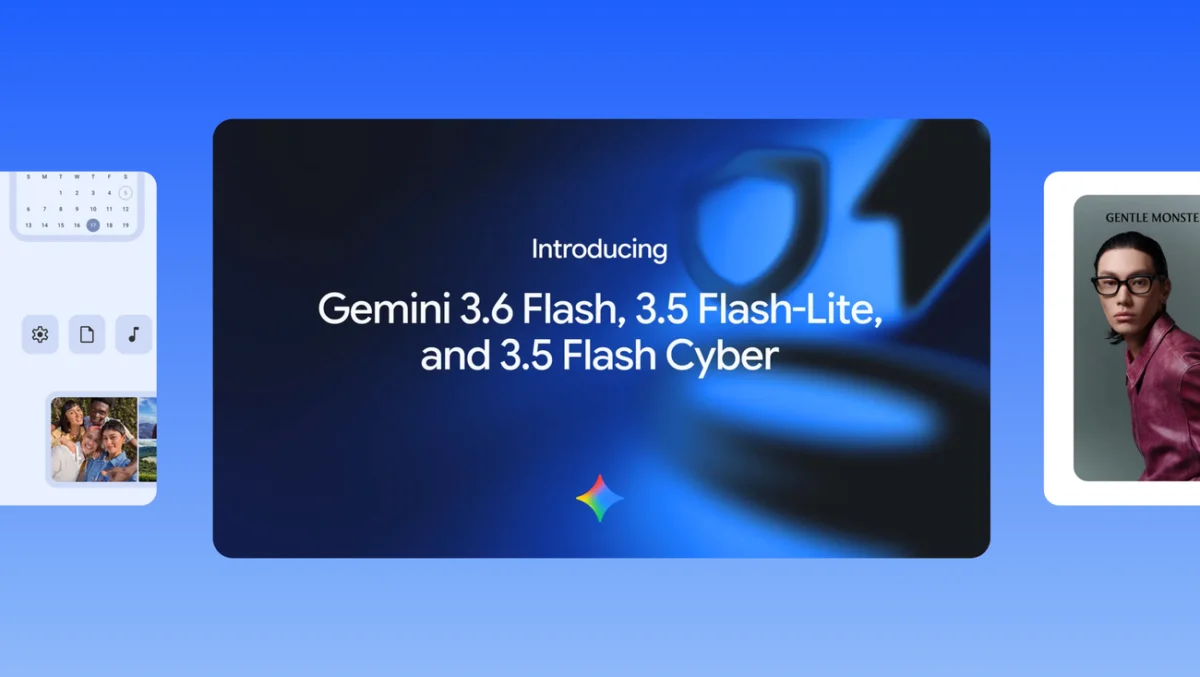
Central to the July announcements was the introduction of three new iterations of the Gemini model family: Gemini 3.6 Flash, 3.5 Flash-Lite, and 3.5 Flash Cyber. These models are engineered specifically to address the "agentic" turn in AI development, where systems are expected to perform multi-step tasks autonomously rather than simply responding to prompts.
The technical focus for these releases centers on three critical metrics: token efficiency, latency reduction, and reliability in production environments. Developers building AI agents—software entities that can navigate websites, manage databases, and execute code—require models that operate at a lower cost-per-token while maintaining high reasoning capabilities. Gemini 3.6 Flash serves as the flagship for high-speed reasoning, while 3.5 Flash-Lite offers a lightweight alternative for edge computing and mobile-first applications.
The third model, 3.5 Flash Cyber, represents a targeted expansion into cybersecurity. This model is fine-tuned for real-time threat detection and automated code auditing, providing a defensive layer against the increasingly sophisticated AI-driven exploits observed in early 2026. Industry analysts suggest that by providing these specialized "Flash" models, Google is attempting to lower the barrier to entry for enterprise-scale AI deployments, which have historically been hindered by the high computational overhead of frontier models.
Bridging the Digital and Physical: Gemini Robotics ER 2
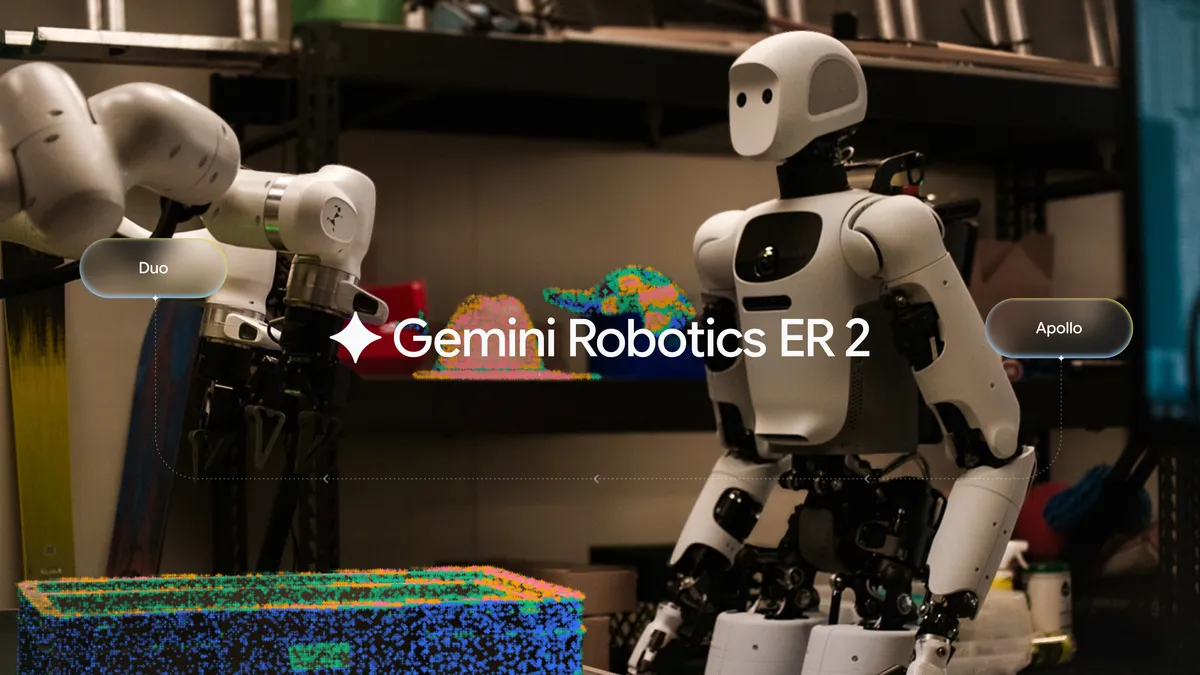
Perhaps the most significant leap in "embodied AI" came with the launch of Gemini Robotics ER 2. This model is designed to function as the "brain" for physical machines, providing what Google terms "embodied reasoning." Unlike standard large language models (LLMs) that process text and images in a vacuum, ER 2 is built to interpret spatial data and physical constraints in real-time.

The ER 2 model allows robots to engage in natural language dialogue with human operators while simultaneously navigating complex, unmapped environments. For example, a robot equipped with ER 2 can understand a command as vague as "find the leak in the warehouse and secure the area," which requires the machine to reason through several sub-tasks: identifying the leak, determining what tools are needed, navigating obstacles, and communicating progress. This release bridges the gap between digital intelligence and mechanical execution, moving robotics closer to the "general purpose" utility long sought by the industrial sector.
Mobile Integration and the Launch of Android 17
July also marked a major milestone for the consumer hardware ecosystem with the Galaxy Unpacked 2026 event. Google, in partnership with Samsung, introduced the Samsung Galaxy Z Fold8 Ultra, Z Fold8, and Z Flip8. These devices are the first to ship with "Gemini Intelligence" natively integrated at the kernel level, allowing the AI to anticipate user needs based on on-device context without compromising privacy.
Coinciding with this hardware launch was the introduction of Android 17. The new operating system features a streamlined native migration experience, allowing users to transfer data from iPhones wirelessly and more comprehensively than previous iterations. This "native migration" eliminates the need for third-party apps, handling encrypted messages, health data, and complex file structures. The integration of Gemini into Search and the Android interface suggests a future where the operating system acts as a personal concierge, capable of "Personal Intelligence" that tailors responses based on the user’s specific app ecosystem.

Productivity and Creativity: From Gemini Notebook to Lyria 3.5
In the realm of digital productivity, Google announced the evolution of NotebookLM into "Gemini Notebook." This updated tool is now fully integrated into the broader Google Workspace and Search environments. A key technical addition is the inclusion of a "secure cloud computer," which allows the AI to execute code and perform complex data analysis within a sandboxed environment, ensuring that sensitive research data remains protected.
Creativity tools also saw significant upgrades. Google Vids received two major features: Gemini Omni and personal avatars. Gemini Omni allows for the generation and editing of high-quality video clips using natural language descriptions, while the personal avatar feature enables users to create digital likenesses to narrate or star in their content.
Furthermore, Google DeepMind released Lyria 3.5, the latest iteration of its music generation model. Lyria 3.5 powers "Google Flow Music," a platform that gives creators granular control over musicality, lyrics, and vocal textures. This model addresses previous criticisms of AI music regarding "flatness" and lack of emotional resonance, utilizing new training techniques to produce tracks that are indistinguishable from studio-recorded music.
Economic Analysis and the Skilled Trades Alliance
Recognizing the disruptive potential of AI on the global workforce, Google unveiled the "AI & Economy ATLAS." This is a large-scale, de-identified study aimed at tracking how AI tools are actually being used in professional and domestic settings. Initial data from the ATLAS suggests that while AI is automating routine cognitive tasks, it is also creating a massive demand for human oversight and specialized manual labor.
In response to these findings, Google announced the "Alliance for America’s Skilled Trades," a cross-industry partnership with BlackRock, Carhartt, and Ford. The alliance aims to utilize AI-driven training modules to fast-track the development of skilled workers in sectors like construction, advanced manufacturing, and electrical engineering. By scaling evidence-based training, the alliance hopes to fill the growing labor gap that threatens to stall infrastructure projects across the United States.
For technical professionals, Google made "AlphaEvolve" generally available to Cloud customers. AlphaEvolve is a Gemini-powered code-optimization agent that acts as an "evolutionary collaborator." Developers provide a baseline algorithm, and the AI searches for more efficient iterations, returning human-readable code that can significantly reduce server costs and improve application performance.

Environmental Stewardship and Global Crisis Resilience
July 2026 saw Google’s AI initiatives extend into the stratosphere and beyond. The successful launch of three new FireSat satellites from Vandenberg Space Force Base marks a new era in wildfire management. Led by the Earth Fire Alliance (EFA) and supported by Google Research, these satellites are designed to detect fires the size of a classroom within minutes of ignition. This early detection capability is critical in an era of intensifying climate change, where traditional observation methods often fail until a fire has become unmanageable.
In the public sector, the National Oceanic and Atmospheric Administration (NOAA) has moved to modernize its supercomputing infrastructure by adopting Google Cloud’s H4D virtual machines. This partnership allows NOAA to run massive atmospheric simulations with unprecedented speed, providing meteorologists with the data needed to issue life-saving warnings for hurricanes, tornadoes, and floods.
Furthermore, Google DeepMind and Isomorphic Labs shared their "Bioresilience" framework. As AI models become more capable of assisting in biological research, there is a dual-use risk. The bioresilience program is designed to prevent the misuse of models for creating biological threats while ensuring that legitimate scientists can use the same technology to develop vaccines and treatments for emerging diseases.

Cultural Preservation: Reconstructing Pelé’s Lost Goal
In a unique application of generative technology, Google DeepMind announced the successful reconstruction of Pelé’s legendary "lost" goal from August 2, 1959. Although the goal—which involved Pelé flicking the ball over three defenders and the goalkeeper without it touching the ground—was never filmed, it has lived on in football lore. Using historical accounts, physics-based modeling, and generative video technology, Google was able to create a high-fidelity visual representation of the event, demonstrating how AI can be used to preserve and visualize human history that predates the digital age.
Implications and Future Outlook
The sheer breadth of Google’s July 2026 announcements indicates that the company is no longer viewing AI as a standalone product, but as a foundational utility. The integration of AI into robotics (ER 2), environmental protection (FireSat), and economic planning (ATLAS) suggests a strategy of "total integration."
However, this rapid expansion also brings significant challenges. The partnership with NOAA and the launch of the Bioresilience program highlight the increasing responsibility tech giants bear in managing global risks. As AI agents like Gemini Spark begin to handle "complex web errands" and manage personal passwords, the focus on security and ethical guardrails will likely become the primary concern for regulators and consumers alike.

As the third quarter of 2026 begins, the industry’s focus is shifting from what AI can say to what AI can do. With the release of specialized models for developers and embodied reasoning for machines, the "summer of AI" in 2026 may be remembered as the moment when artificial intelligence finally stepped out of the screen and into the real world.
