

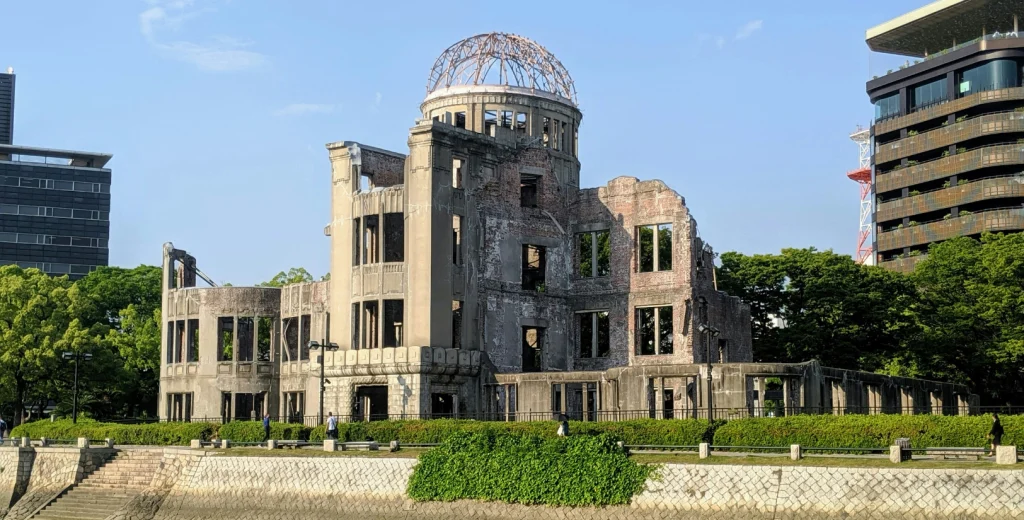
In the latest installment of the Anecdotally Speaking podcast, Episode 284, hosts Mark and Shawn examine the profound intersection of historical narrative and organizational psychology through the lens of one of the 20th century’s most improbable survival stories. The episode centers on the life of Tsutomu Yamaguchi, a Japanese engineer who holds the somber distinction of being the only person officially recognized by the Japanese government as having survived both the Hiroshima and Nagasaki atomic bombings. By dissecting Yamaguchi’s experiences, the podcast explores how the framing of a narrative—whether one views a set of facts as a series of misfortunes or a sequence of miracles—fundamentally dictates the capacity for resilience, the efficacy of leadership, and the construction of meaning within a professional environment.
The Dual Survival of Tsutomu Yamaguchi: A Chronology of August 1945
The historical record of Tsutomu Yamaguchi serves as a case study in human endurance and the randomness of fate. In the summer of 1945, Yamaguchi was a 29-year-old naval engineer employed by Mitsubishi Heavy Industries. His primary responsibility involved the design of oil tankers, a role that required frequent travel across the Japanese archipelago.
On August 6, 1945, Yamaguchi was in Hiroshima, completing a three-month business trip. He was walking toward the Mitsubishi shipyard to finalize paperwork when the United States Army Air Forces B-29 bomber, the Enola Gay, dropped the "Little Boy" atomic bomb. At approximately 8:15 a.m., Yamaguchi witnessed a blinding flash of light—an event he later described as the "lightning of a huge magnesium flare." Despite being approximately three kilometers from the hypocenter, the blast wave threw him into the air, causing severe burns to his upper body, rupturing his eardrums, and leaving him temporarily blinded.
After spending a night in a makeshift air-raid shelter amidst the ruins of a city where an estimated 140,000 people would eventually perish, Yamaguchi navigated the scorched landscape to reach the Hiroshima railway station. On August 7, he boarded a train filled with burned and traumatized survivors, heading toward his hometown: Nagasaki.
On the morning of August 9, 1945, Yamaguchi reported to the Mitsubishi office in Nagasaki. Despite his bandages and significant injuries, he attempted to describe the devastation he had witnessed in Hiroshima to his superior. Historical accounts suggest his supervisor was skeptical, questioning how a single bomb could level an entire city. At approximately 11:02 a.m., as Yamaguchi was explaining the "blinding flash," the second atomic bomb, "Fat Man," was detonated over Nagasaki. Once again, Yamaguchi was approximately three kilometers from the epicenter. Though the office was destroyed and his bandages were blown off, he survived a second nuclear blast.
Statistical Context and the Nijuu Hibakusha
The term Hibakusha refers to the survivors of the atomic bombings of Hiroshima and Nagasaki. While the Japanese government has officially recognized roughly 165 individuals as Nijuu Hibakusha (double-survivors), Yamaguchi remains the most prominent due to his later advocacy and the specific documentation of his presence at both sites.
The scale of the events Yamaguchi survived is underscored by the casualty data of the era. The Hiroshima bombing resulted in the immediate deaths of approximately 70,000 to 80,000 people, with the toll rising significantly due to radiation sickness and secondary injuries. In Nagasaki, the death toll is estimated at between 60,000 and 80,000. For an individual to be within the blast radius of both events and survive into old age—Yamaguchi lived to be 93—is statistically an outlier of extreme proportions.
According to data from the Radiation Effects Research Foundation (RERF), survivors within the 3-kilometer radius faced significant long-term health risks, including various forms of cancer and cardiovascular disease. Yamaguchi’s longevity, despite these exposures, has been a subject of interest for both historians and medical researchers studying the long-term effects of ionizing radiation.
The Psychology of Meaning: Luck versus Misfortune
The core of the discussion in Episode 284 revolves around the interpretation of these facts. Mark and Shawn pose a philosophical question to their audience: Was Tsutomu Yamaguchi the unluckiest man in history for being present at both bombings, or the luckiest man for surviving both?
This distinction is not merely academic; it is a fundamental principle of narrative framing. In a leadership context, the "meaning-making" process determines how an organization reacts to crisis. If a leader frames a setback as an unavoidable catastrophe (the "unlucky" narrative), the organizational response is often one of defeatism or passivity. Conversely, if the narrative focuses on the survival and the opportunity to rebuild (the "lucky" narrative), it fosters resilience and proactive problem-solving.

The podcast highlights that while the facts of Yamaguchi’s life are immutable, the story he chose to tell about those facts evolved. For decades, he remained relatively quiet about his experience, focusing on his career and family. However, in his later years, he embraced his narrative as a "double survivor" to advocate for nuclear disarmament, eventually addressing the United Nations in 2006. He chose to frame his survival not as a burden of trauma, but as a "destiny" to speak for peace.
Storytelling Techniques: Foreshadowing and Audience Participation
Beyond the historical narrative, the episode delves into specific storytelling techniques that leaders can utilize to improve communication. One such technique is foreshadowing. In a corporate setting, foreshadowing involves providing subtle cues or "signals" about future changes or challenges before they are fully implemented. This technique prepares an audience emotionally and intellectually, reducing the shock and resistance often associated with major organizational shifts.
Furthermore, the hosts discuss the role of audience participation in meaning-making. Effective storytellers do not dictate the "moral of the story" to their listeners; instead, they provide the narrative structure that allows the audience to arrive at the conclusion themselves. By inviting employees to interpret events, leaders can build a shared sense of purpose and ownership over the organizational direction.
Leadership Integrity and Communicating Unpopular Decisions
A significant portion of the episode is dedicated to a common leadership dilemma: how to communicate decisions that the leader may not personally agree with. This scenario often occurs in large bureaucracies or during mergers and acquisitions where top-down mandates conflict with local team sentiments.
The discussion emphasizes that maintaining authenticity and integrity is paramount. Leaders are encouraged to avoid "corporate speak" or deceptive framing. Instead, the podcast suggests a strategy of transparency—acknowledging the difficulty of the decision while clearly outlining the rationale and the "story" of why the path was chosen. By connecting the decision to a broader organizational narrative, leaders can maintain the trust of their teams even when the news is unfavorable.
This mirrors Yamaguchi’s own experience in the Mitsubishi office on August 9. He was attempting to communicate a reality (the destruction of Hiroshima) that his supervisor found impossible to believe. The "truth" of the story was eventually validated by the second blast, but the lesson for modern leaders is to build the credibility necessary for their "stories" to be believed before the metaphorical second bomb falls.
Broader Implications for the Modern Workforce
Anecdote International, the organization behind the podcast, posits that bringing "humanity back to the workforce" is essential in an era of rapid technological change and remote work. The story of Tsutomu Yamaguchi serves as a reminder of the human element in the face of overwhelming systemic forces.
The implications for the modern workforce are twofold. First, there is the necessity of "story banking"—the practice of collecting and categorizing narratives (as tagged in the podcast: Storytelling, Resilience, Leadership, Meaning, Change) to be used as tools for influence and connection. Second, there is the recognition that resilience is a narrative construct. An organization’s ability to survive "atomic-level" disruptions in their industry depends largely on the stories they tell themselves about their capacity to endure and adapt.
The Legacy of the Double Survivor
Tsutomu Yamaguchi passed away in 2010 from stomach cancer, a condition often linked to his radiation exposure. His legacy, however, remains a potent symbol of survival. In 2009, when the Japanese government finally granted him official status for both bombings, Yamaguchi stated, "My double radiation exposure is now an official government record. It can tell the younger generation the horrifying history of the atomic bombings even after I die."
For leaders and professionals, the Yamaguchi story is a testament to the power of perspective. In the face of disruption, the facts may be daunting, but the narrative provides the path forward. As explored in Anecdotally Speaking Episode 284, the ability to frame reality effectively is perhaps the most critical skill in the modern leader’s toolkit. By understanding that the meaning of a story is as important as the facts themselves, leaders can inspire resilience and maintain integrity in an increasingly complex global landscape.
