

The intersection of historical narrative and modern leadership theory provides a unique lens through which organizational resilience can be examined, a theme explored in depth during the latest release from Anecdote International. In Episode 284 of the Anecdotally Speaking podcast, hosts Mark and Shawn dissect the life of Tsutomu Yamaguchi, the only person officially recognized by the Japanese government as a survivor of both the Hiroshima and Nagasaki atomic bombings. The discussion moves beyond the harrowing historical facts of August 1945 to address a fundamental question in professional development: how the internal narratives individuals construct about their experiences dictate their capacity for leadership, decision-making, and long-term psychological endurance. By analyzing Yamaguchi’s survival not merely as a series of improbable physical events but as a study in meaning-making, the episode offers a blueprint for how modern leaders can navigate crisis and communicate complex organizational changes with integrity.
The Dual Survival of Tsutomu Yamaguchi: A Historical Chronology
To understand the magnitude of the narrative challenge discussed by Anecdote International, one must first examine the chronological facts of Tsutomu Yamaguchi’s experience during the final days of World War II. In the summer of 1945, Yamaguchi was a 29-year-old naval engineer employed by Mitsubishi Heavy Industries. He had spent three months in Hiroshima on a design project and was scheduled to return to his home in Nagasaki on August 6, 1945.
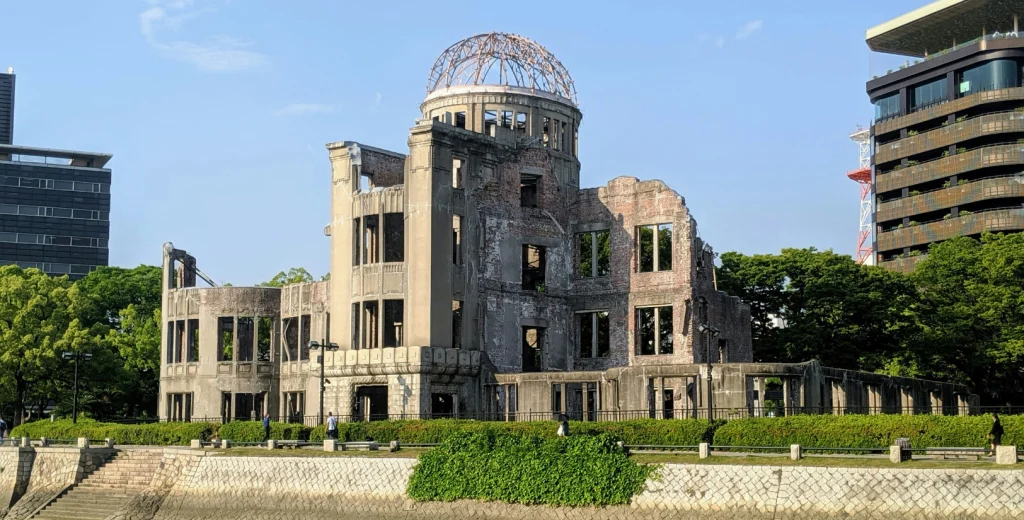
At approximately 8:15 a.m. on August 6, as Yamaguchi was walking toward the Mitsubishi shipyard to retrieve a forgotten travel permit, the U.S. B-29 bomber Enola Gay dropped the "Little Boy" atomic bomb. The blast occurred less than two miles from his position. Yamaguchi recalled seeing a "lightning-like" flash before being thrown into the air by the shockwave. He suffered significant thermal burns to his upper body, ruptured eardrums, and temporary blindness. Despite these injuries, he managed to reach a secondary air-raid shelter and, the following day, navigated the devastated city to reach the Hiroshima railway station, which miraculously remained partially functional.
Yamaguchi arrived in Nagasaki on August 8 and sought medical treatment for his burns. Despite his physical trauma, he reported for work at the Mitsubishi Nagasaki office on the morning of August 9. Historical records indicate that at roughly 11:00 a.m., while Yamaguchi was describing the total destruction of Hiroshima to his skeptical supervisor—who argued that a single bomb could not possibly level an entire city—the second atomic bomb, "Fat Man," was detonated over Nagasaki. Once again, Yamaguchi was less than two miles from the epicenter. While the office was destroyed, the reinforced concrete walls provided enough protection for him to survive a second nuclear blast.
Statistical Improbability and the Concept of Narrative Framing
The survival of a single atomic blast is a statistical anomaly; surviving two is an event of such vanishingly small probability that it challenges standard risk assessment models. Data from the Radiation Effects Research Foundation (RERF) indicates that the Hiroshima blast killed approximately 140,000 people by the end of 1945, while the Nagasaki blast claimed roughly 74,000 lives. Of the thousands of people who were in both cities during the bombings (mostly laborers and refugees), Yamaguchi is the only individual to have received the "nijyuu hibakusha" (twice-bombed person) designation for both the initial blasts and the subsequent radiation exposure.
In Episode 284, Mark and Shawn utilize this extreme case to discuss the concept of narrative framing. They pose a philosophical question relevant to leadership: Was Tsutomu Yamaguchi the unluckiest man in history for being present at both ground zeros, or was he the luckiest man for surviving both? The facts of the case—the dates, the locations, the injuries—remain static. However, the "story" told about those facts changes the psychological outcome for the individual and the audience. This process of "meaning-making" is identified as a critical tool for leaders who must frame organizational setbacks or industry disruptions for their teams. By choosing a narrative of resilience and "lucky" survival over one of "unlucky" victimhood, individuals can maintain agency in the face of overwhelming external forces.
Storytelling Techniques: Foreshadowing and Audience Participation
The podcast episode delves into the technical aspects of storytelling that can be leveraged in professional environments. One such technique is foreshadowing—the use of indicative signs or warnings about future events. In a corporate context, foreshadowing allows leaders to prepare their workforce for upcoming shifts in strategy or market conditions, reducing the "shock" of change and fostering a sense of prepared resilience.
Furthermore, the hosts discuss the role of audience participation in meaning-making. In the context of Yamaguchi’s story, the "audience" includes the listeners of the podcast, but in a broader sense, it includes the public to whom Yamaguchi eventually told his story. For decades, Yamaguchi remained quiet about his experiences, focusing on his career and family. It was only later in life, particularly after the death of his son (also a survivor), that he became a vocal advocate for nuclear disarmament. This transition from private survivor to public storyteller illustrates how the meaning of a life event can evolve over time based on the needs of the community and the intent of the narrator.

Leadership Integrity and Communicating Disagreement
A significant portion of the discussion focuses on a common dilemma for modern managers: how to communicate executive decisions that the manager may not personally agree with. This requires a high level of authenticity and integrity. Mark and Shawn argue that storytelling provides a bridge in these scenarios. Instead of delivering a corporate mandate with clinical detachment, effective leaders use narrative to acknowledge the complexities of the decision.
This mirrors the "integrity of the facts" found in Yamaguchi’s account. He did not embellish the horror of the bombings; he recounted them with a focus on the reality of the experience. Leaders are encouraged to adopt a similar approach—presenting the "truth" of a situation (including the challenges and the rationale behind a difficult decision) while framing it within a larger story of the organization’s mission and future. This prevents the erosion of trust that often occurs when leaders attempt to "spin" negative news into a purely positive light.
Official Recognition and Global Impact
While Yamaguchi’s story is often cited in historical circles, his official status was not finalized until late in his life. Although he was recognized as a hibakusha of the Nagasaki bombing in the 1950s, the Japanese government did not officially acknowledge his presence in Hiroshima until 2009, following a lengthy application process. He passed away in 2010 at the age of 93.
His legacy has since become a cornerstone for studies in both physical and psychological resilience. Researchers in the field of "Post-Traumatic Growth" (PTG) often point to individuals like Yamaguchi who, after experiencing profound trauma, develop a new sense of purpose and a deeper appreciation for life. In the professional sphere, this translates to "Organizational Resilience," where a company’s ability to survive a crisis is determined not just by its financial reserves, but by the strength of the narrative shared by its employees.
Broader Implications for Modern Management
The analysis provided by Anecdote International suggests that the stories told within an organization are not just "soft skills" but are fundamental to the "hard" outcomes of retention, productivity, and strategic alignment. In an era of rapid technological change and global instability, the ability to frame events effectively is a competitive advantage.
The following table summarizes the key leadership applications derived from the study of narrative and resilience as discussed in the podcast:
| Leadership Concept | Application in Narrative | Strategic Outcome |
|---|---|---|
| Meaning-Making | Defining the "why" behind a crisis or change. | Increased employee engagement and reduced turnover. |
| Foreshadowing | Signalling future shifts through consistent messaging. | Reduced organizational shock and better change adoption. |
| Authenticity | Acknowledging difficulties while maintaining a vision. | Higher levels of trust and psychological safety. |
| Resilience Framing | Focusing on survival and learning rather than victimhood. | Improved problem-solving and proactive behavior. |
Conclusion: The Enduring Power of the Narrative
The story of Tsutomu Yamaguchi serves as a powerful reminder that while we cannot always control external events—be they global conflicts or market crashes—we maintain total control over the narrative we construct around those events. For the leaders and consultants at Anecdote International, the lesson is clear: storytelling is the mechanism by which facts are transformed into meaning.
As Episode 284 of Anecdotally Speaking concludes, the hosts emphasize that resilience is not a passive trait but an active choice made through the stories we tell ourselves and others. By studying the extraordinary life of a man who survived the unthinkable, modern professionals can learn to navigate their own challenges with a renewed focus on perspective, integrity, and the enduring power of a well-told story. The facts of our lives may be written by circumstances, but the meaning of those facts is a story only we can tell.
