

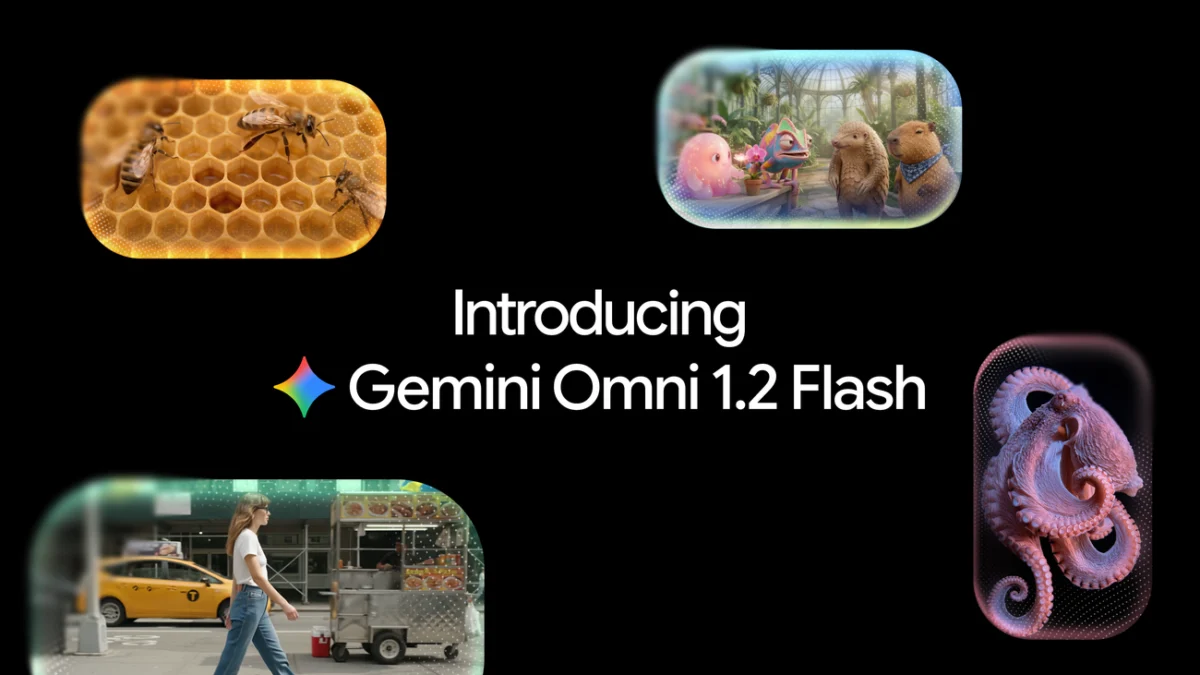
The release of Gemini Omni 1.2 Flash arrives at a critical juncture in the evolution of multimodal AI. As the industry moves beyond simple text-to-video prompts, the demand for "steerability"—the ability to precisely control the output through multiple iterations—has become the new benchmark for success. Google’s latest iteration addresses this by extending native video generation to 15 seconds, a 50% increase over the previous 10-second limit. This expansion allows for more complex storytelling, such as social media advertisements, product demonstrations, and educational explainers, to be produced in a single generation cycle. Furthermore, the model now supports duration specifications in one-second increments, ranging from 3 to 15 seconds, providing creators with the granular control necessary for precise timing in professional editing workflows.
The Evolution of the Gemini Ecosystem
To understand the impact of Gemini Omni 1.2 Flash, it is necessary to look at the chronology of Google’s development in the generative AI space. The journey began with the consolidation of Google’s AI research divisions, Brain and DeepMind, into a single unit tasked with creating a unified multimodal architecture. Following the debut of the Gemini 1.0 series, Google quickly iterated with the 1.5 Pro and Flash models, which introduced massive context windows. The Gemini Omni line represents the pinnacle of this research, specifically optimized for the high-bandwidth requirements of video and audio synthesis.
The transition from version 1.1 to 1.2 Flash is not merely an incremental update but a fundamental refinement of how the model handles spatial and temporal data. In earlier versions of generative video, "visual drift"—the phenomenon where objects or characters change appearance mid-clip—remained a significant hurdle. Gemini Omni 1.2 Flash utilizes enhanced reference-following algorithms that allow the model to maintain the integrity of faces, garments, and branding elements from the first frame to the last. This is achieved by allowing users to input character sheets, product photography, or style references that the AI uses as a persistent "truth" throughout the generation process.
Economic Viability and Workflow Optimization
One of the most significant barriers to the widespread adoption of AI video has been the cost of compute. Google has addressed this by lowering the price of Gemini Omni 1.2 Flash to $0.07 per second for 720p video. This pricing strategy is coupled with a tiered workflow designed to minimize waste. Developers and creators can now utilize a "drafting" phase, generating low-resolution clips at 360p or 720p to test compositions and motion. Once the desired result is achieved, the model allows for the upscaling of these assets to 1080p or 4K resolutions.
This workflow is further enhanced by the introduction of multi-turn conversational editing. Historically, if an AI-generated clip contained a minor error—such as a misplaced logo or an incorrect lighting cue—the user would have to re-generate the entire sequence from scratch, incurring additional costs and time. Gemini Omni 1.2 Flash permits users to refine a specific clip through follow-up prompts. A creator might generate a 15-second sequence of a model walking through a park and then, in a subsequent turn, ask the AI to change the background to a city street or swap the character’s jacket for a different color while maintaining the original motion and framing. This iterative capability mimics the relationship between a director and a visual effects editor, making the technology far more intuitive for professional use.
Technical Breakthroughs in Consistency and Control
The technical architecture of Gemini Omni 1.2 Flash introduces several key improvements that contribute to its "cinematic" output. One of the most visible upgrades is in camera control. The model is now capable of executing complex, continuous movements that were previously difficult for AI to maintain without "jump cuts" or warping. These include sweeping first-person view (FPV) drone shots, dramatic orbits, and "crash zooms" that pull out from a microscopic detail to a wide aerial vista. By maintaining scale and perspective across these transitions, the model produces footage that integrates more seamlessly with traditionally filmed content.
Furthermore, the model’s handling of human subjects has seen a marked improvement. "More Natural Speech" is a feature highlighted by Google DeepMind, focusing on the synchronization of audio and visual data. The 1.2 Flash model supports multi-speaker conditioning, allowing different voices to be mapped to specific characters within a scene. The lip-syncing is more expressive and synchronized with the nuances of dialogue, which is particularly beneficial for tools like Google Vids or the "Flow" platform, where users create avatars and narrations for corporate presentations and training videos.

Strategic Implications for the Creative Industry
The general availability of Gemini Omni 1.2 Flash is likely to trigger a shift in how marketing and media agencies approach content production. By providing tools for "virtual try-ons" and "catalog spins," Google is directly targeting the e-commerce sector. A brand can now take a single high-quality photograph of a garment and generate a 15-second video of a model wearing that garment in various environments. This reduces the need for expensive multi-day location shoots and allows for a higher volume of personalized content.
Industry analysts suggest that this move puts Google in direct competition with other generative video leaders such as OpenAI’s Sora, Runway’s Gen-3 Alpha, and Luma AI’s Dream Machine. However, Google’s advantage lies in its integration with the broader Google Cloud ecosystem. The inclusion of "Provisioned Throughput" for enterprise clients ensures that large-scale operations have the dedicated compute power necessary for high-volume tasks. Additionally, the security features inherent in Google Cloud—such as enterprise-grade data protection and the use of SynthID watermarking—address the legal and ethical concerns that have made some corporations hesitant to adopt AI.
Safety, Ethics, and the SynthID Framework
As AI-generated video becomes indistinguishable from reality, the potential for misuse in the form of deepfakes or misinformation has become a primary concern for regulators and tech companies alike. Google has integrated SynthID, a tool developed by Google DeepMind, into the outputs of Gemini Omni 1.2 Flash. SynthID embeds a digital watermark directly into the pixels of the video. This watermark is imperceptible to the human eye but can be detected by specialized software, even if the video is cropped, compressed, or edited.
This commitment to transparency is a foundational element of Google’s AI Principles. By providing a clear provenance for AI-generated content, Google aims to foster a safer digital environment where creators can prove the origin of their work and viewers can verify whether a video is synthetic. This is particularly important for the 1.2 Flash model, given its enhanced ability to replicate human faces and speech with high fidelity.
Looking Ahead: The Future of Gemini Omni
While Gemini Omni 1.2 Flash represents a milestone, Google DeepMind acknowledges that the technology is still evolving. Current limitations include the rendering of fast-paced sports action, where rapid limb movements can sometimes lead to blurriness, and complex physics interactions, such as the way liquids splash or fabrics tear. However, the trajectory of development suggests that these hurdles will be addressed in future iterations.
The rollout of Gemini Omni 1.2 Flash across the Gemini API, Google Vids, and Gemini for Business provides a robust platform for developers to build the next generation of creative applications. From automated video editing suites to interactive storytelling experiences, the potential applications are vast. As Google continues to refine the speed and cost-effectiveness of these models, the barrier between a creative idea and its visual execution continues to shrink, ushering in a new era of digital expression powered by multimodal intelligence.
In conclusion, Gemini Omni 1.2 Flash is more than an update; it is a declaration of intent. By prioritizing consistency, control, and cost, Google is attempting to standardize AI video for the professional world. As businesses begin to integrate these 15-second clips into their workflows, the impact on the global media landscape will likely be profound, reshaping the economics of creativity for years to come.
