

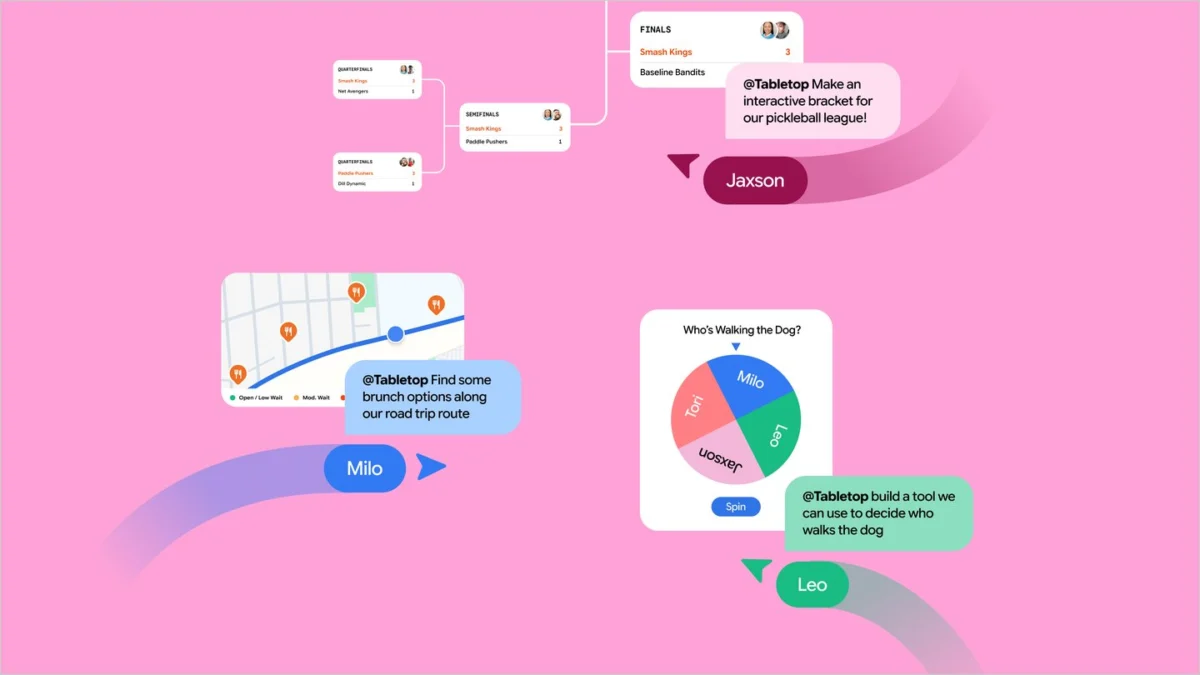
Google has officially introduced Tabletop, a new experimental platform developed within Google Labs designed to streamline group coordination through generative AI and real-time collaborative workspaces. The initiative represents a significant shift in how the tech giant approaches group productivity, moving away from fragmented communication in chat apps and static documents toward a more dynamic, "all-in-one" interactive canvas. By allowing users to aggregate links, files, and disparate ideas into a single digital space, Tabletop aims to solve the perennial friction associated with planning complex group activities such as international travel, recreational sports leagues, and large-scale social gatherings.
The Evolution of Collaborative Digital Spaces
The launch of Tabletop marks a new chapter in Google’s long-standing history of collaborative software development. Since the acquisition of Writely in 2006, which eventually became Google Docs, the company has prioritized synchronized editing. However, as digital workflows have become more complex, the limitations of traditional word processors and spreadsheets for informal group planning have become more apparent. Tabletop is positioned as a bridge between the structured environment of Google Workspace and the informal nature of group messaging.
The platform operates on a "canvas" philosophy, where the initial input is unstructured. Users can drop in various media types, including web links, PDF documents, and raw text notes. The core innovation lies in the integration of a generative AI agent, accessible via the "@tabletop" command. This agent processes the provided information to generate structured outputs such as interactive trip itineraries, dinner polls, expense splitters, and tournament brackets. This functionality mirrors the broader industry trend toward "agentic" AI—tools that do not just generate text but perform specific organizational tasks and create functional widgets.
Technical Architecture and Feature Set
At its core, Tabletop is built for real-time interaction, utilizing the same synchronization engine that powers Google Docs and Sheets. This allows multiple users to edit and interact with the generated components simultaneously. Once a user creates a "space," they can share a link with a group, enabling immediate participation without the need for complex permission settings or software installations.
The primary features of the Tabletop experiment include:
- Interactive Itineraries: By analyzing flight confirmations, hotel links, and sightseeing suggestions provided by the group, Tabletop can construct a chronological schedule that remains editable by all parties.
- Dynamic Polling: For groups struggling to reach a consensus on logistics, such as meal choices or meeting times, the AI can generate polls based on the context of the conversation within the space.
- Financial Management Tools: The platform includes built-in expense splitters, allowing groups to track spending in real-time—a feature traditionally reserved for third-party apps like Splitwise.
- Specialized Templates: Recognizing that users often start with a blank page "freeze," Google has included a library of starter templates. These templates provide a scaffolding for common activities, such as organizing a potluck or managing a sports tournament bracket.
Contextualizing Tabletop within Google Labs
Tabletop is the latest product to emerge from Google Labs, the company’s incubator for high-risk, high-reward experimental features. Google Labs was significantly revitalized following the 2023 Google I/O conference, where the company pivoted its primary focus toward generative AI across its entire product suite. Unlike the core Google Workspace tools, which are designed for enterprise stability and broad consumer reliability, Labs projects like Tabletop are intended for rapid iteration and user feedback.
Historically, Google has used Labs to test features that eventually migrate into permanent products. Notable examples include Gmail features like "Undo Send" and the integration of AI-driven "Help me write" tools. By releasing Tabletop as a Labs experiment, Google can gather data on how users interact with AI-driven group planning before deciding whether to integrate these features into Google Drive or maintain Tabletop as a standalone service.
Market Analysis and Competitive Landscape
The introduction of Tabletop comes at a time when the "all-in-one" productivity market is experiencing intense competition. Platforms such as Notion, Airtable, and Microsoft Loop have gained significant traction by offering modular workspaces that combine notes, databases, and project management tools. Tabletop distinguishes itself by leaning heavily into the "consumer-first" planning niche, rather than the "professional-first" project management niche.
Industry data suggests a growing demand for such tools. According to market research on digital collaboration, the global team collaboration software market was valued at approximately $21.69 billion in 2023 and is projected to grow at a compound annual growth rate (CAGR) of 13.9% through 2030. Much of this growth is driven by the desire for "frictionless" coordination. For many consumers, the current process of planning a trip involves jumping between a group chat in WhatsApp, a shared document in Google Docs, and a spreadsheet for expenses. Tabletop aims to consolidate these disparate functions into a single interface.
Furthermore, the integration of generative AI provides Google with a competitive edge. While Notion and Microsoft have integrated AI assistants, Tabletop’s specific focus on "generating interactive components" (like a functional bracket or a live poll) from unstructured data represents a more specialized application of Large Language Models (LLMs) like Gemini.
User Experience and Social Implications
The social dynamics of group planning are often fraught with "decision fatigue" and the "burden of the organizer." Tabletop’s design appears specifically engineered to mitigate these issues. By providing a centralized location where everyone can "pitch in, build and decide together," the platform aims to democratize the planning process.
From a sociological perspective, the automation of coordination tasks reflects a broader trend toward "algorithmic life management." When an AI agent suggests an itinerary or splits a bill, it removes the social friction of negotiation. However, this also raises questions about data privacy and the role of AI in personal social interactions. Google has addressed these concerns by implementing an age restriction (18+) and limiting the initial rollout to the United States via a waitlist, allowing the company to monitor the AI’s behavior and ensure safety guidelines are met.
Official Responses and Strategic Outlook
While Google has not released specific internal metrics regarding the development of Tabletop, the project’s mission statement emphasizes "real-time collaboration" and "customizable spaces." In official communications, Google has framed Tabletop as a solution for "doing more together," highlighting a move toward more communal digital experiences.
Analysts suggest that Tabletop could serve as a testing ground for how Google handles "unstructured-to-structured" data transformations. If Tabletop can successfully turn a series of random links and text snippets into a coherent, functional trip itinerary, the underlying technology could be applied to more complex business applications within the Google Cloud and Workspace ecosystems.
The strategic importance of Tabletop also lies in user retention. By creating a compelling environment for social coordination, Google deepens its ecosystem’s "stickiness." If a family uses Tabletop to plan their annual reunion, they are more likely to stay within the Google ecosystem for their photos, emails, and calendar events.
Rollout Details and How to Access
Tabletop is currently in its nascent stages. The rollout is limited to users in the United States who are 18 years of age or older. Access is granted through a waitlist system, a common practice for Google Labs projects to manage server load and gather controlled feedback. Interested users can sign up at the official Google Labs portal (labs.google/tabletop).
The requirement for a waitlist suggests that Google is taking a cautious approach to the deployment of Tabletop’s generative features. As with all LLM-based tools, there is a risk of "hallucinations"—where the AI might generate incorrect information for an itinerary or a poll. The waitlist period allows Google to refine the models based on real-world usage patterns before a broader international release.
Conclusion: The Future of Collaborative AI
Tabletop represents a significant milestone in the evolution of collaborative software. By moving beyond the document-centric model and embracing a flexible, AI-enhanced canvas, Google is attempting to redefine how groups interact in the digital age. Whether Tabletop remains a standalone experiment or eventually merges with the broader Google Workspace suite, its introduction signals a future where AI is not just a passive assistant but an active facilitator of human coordination.
As the experiment progresses, the tech industry will be watching closely to see if Tabletop can overcome the "blank page" problem that plagues many collaborative tools. If successful, Tabletop could become the standard for group planning, replacing the chaos of the group chat with a structured, intelligent, and truly collaborative "table" where everyone has a seat. For now, the platform stands as a testament to the potential of generative AI to transform the mundane tasks of life—planning, splitting, and deciding—into a seamless, shared experience.
