

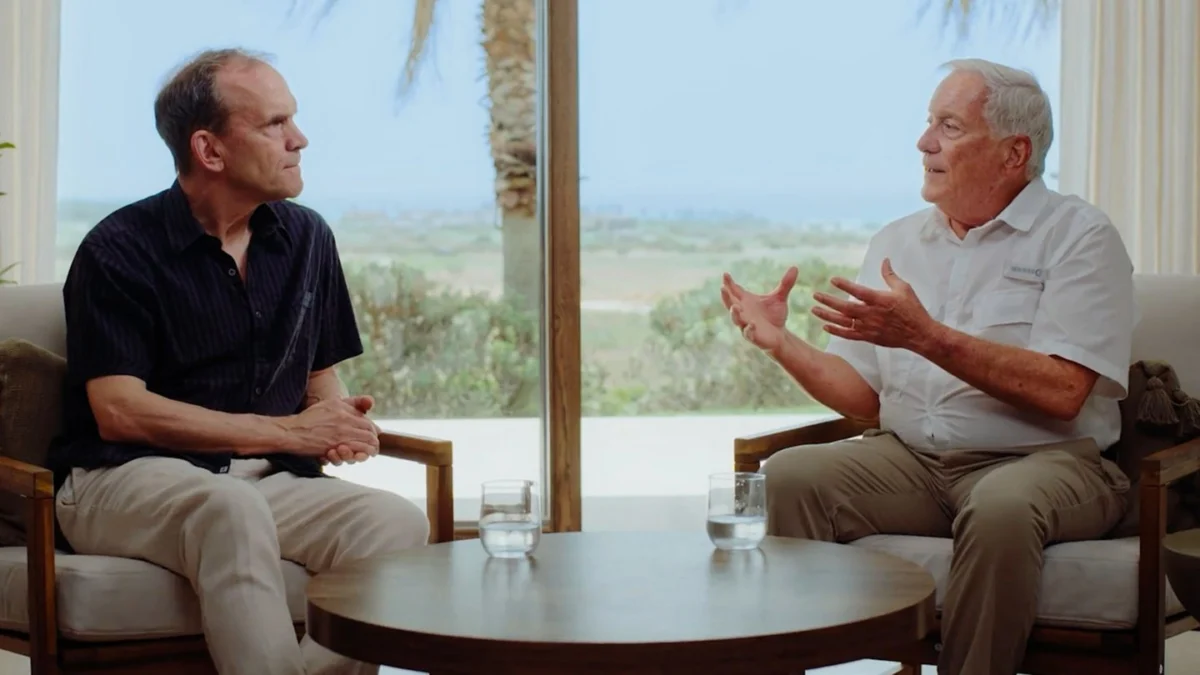
In the latest installment of the "Dialogues on Technology and Society" series, Kent Walker, President of Global Affairs for Alphabet and Google, engaged in an extensive discussion with renowned biographer and historian Walter Isaacson. The conversation centered on the historical evolution of innovation and how the lives of iconic figures like Leonardo da Vinci, Benjamin Franklin, and Ada Lovelace provide a blueprint for navigating the current era of generative artificial intelligence. As the global economy stands on the precipice of an AI-driven transformation, the dialogue highlighted a critical thesis: breakthroughs are rarely the result of solitary genius but are instead a "team sport" that requires a unique blend of cross-disciplinary curiosity and rigorous human judgment.
The discussion arrives at a pivotal moment for the technology sector. With the rapid proliferation of Large Language Models (LLMs) and automated creative tools, concerns regarding the displacement of human ingenuity have moved to the forefront of public discourse. However, Isaacson argues that history suggests a different trajectory, where technology acts as a catalyst for human potential rather than a replacement for it. By examining the "intersection of the humanities and the sciences," the dialogue sought to contextualize modern AI developments within the broader tapestry of human progress.
The Historical Precedent of Collaborative Innovation
A central theme of the discussion was the debunking of the "lone inventor" myth. Isaacson, who has chronicled the lives of Steve Jobs, Albert Einstein, and Elon Musk, noted that the most significant leaps in human history—from the Enlightenment to the Digital Revolution—were products of collaborative ecosystems. Benjamin Franklin, for instance, is often remembered for his individual experiments with electricity, but Isaacson pointed out that Franklin’s success was rooted in his ability to create networks of "ingenious neighbors" and scientific clubs that shared knowledge openly.
This collaborative spirit is equally evident in the life of Leonardo da Vinci. While often portrayed as a secluded polymath, Da Vinci’s studio was a hub of collective effort where art, anatomy, and engineering blurred together. Isaacson emphasized that Da Vinci’s ability to "see patterns across different disciplines" is precisely what made his work timeless. In the context of AI, this suggests that the most impactful applications of the technology will not come from the algorithms in isolation, but from the collaborative interface between diverse human perspectives and computational power.
The dialogue also highlighted the contributions of Ada Lovelace, the 19th-century mathematician often credited as the first computer programmer. Lovelace’s concept of "poetical science" allowed her to envision a future where machines could do more than just crunch numbers; she foresaw their potential to create music and art. Isaacson and Walker discussed how Lovelace’s vision serves as the philosophical foundation for modern generative AI, emphasizing that the human "spark" of intent is what directs the machine’s capabilities.
A Chronology of Breakthroughs and Technological Shifts
To understand the current AI age, the conversation traced a chronology of technological shifts that have redefined human creativity. Each era faced similar anxieties regarding the obsolescence of human skill, yet each ultimately expanded the scope of what humans could achieve.
- The 15th Century (The Printing Press): The democratization of information led to the Renaissance. While it challenged the monopoly of scribes, it fostered a surge in literacy and scientific inquiry.
- The 18th Century (The Steam Engine and Enlightenment): Innovation became a social endeavor. The "Lunar Society" and other groups combined practical engineering with philosophical debate.
- The 1940s-1950s (The Birth of the Computer): The development of the ENIAC and the transistor required massive teams of physicists, engineers, and logic experts. Isaacson noted that the transition from vacuum tubes to semiconductors was a collaborative triumph that set the stage for Silicon Valley.
- The 1990s-2000s (The Internet Age): Information became ubiquitous. The challenge shifted from "finding" information to "filtering" and "synthesizing" it.
- The 2020s (The AI Age): The current era represents a shift from information retrieval to information generation. The dialogue noted that while AI can synthesize vast amounts of data, the "judgment" to determine the value and truth of that data remains a uniquely human responsibility.
Supporting Data: The Economic and Educational Context
The insights shared by Isaacson and Walker are supported by emerging data regarding the future of the workforce. According to the World Economic Forum’s "Future of Jobs Report 2023," analytical thinking and creative thinking remain the most important skills for workers in the next five years. The report suggests that while 44% of workers’ skills will be disrupted by technology, the demand for "soft skills"—such as curiosity, resilience, and lifelong learning—is on the rise.
Furthermore, investment in AI is reaching unprecedented levels. International Data Corporation (IDC) projects that global spending on AI, including software, hardware, and services, will surpass $300 billion by 2026. This massive capital injection underscores the urgency of Isaacson’s message: as the "cost" of information and basic synthesis drops to near zero, the premium on human judgment and the ability to ask the right questions increases exponentially.
In the educational sector, the dialogue reflected a growing shift toward interdisciplinary studies. Data from the National Center for Education Statistics (NCES) shows a steady increase in students pursuing multi-disciplinary degrees, a trend that aligns with Isaacson’s advocacy for blending the "liberal arts with technology."
Official Responses and Industry Perspectives
Kent Walker, representing Google’s strategic vision, emphasized the company’s commitment to "responsible AI." He noted that the goal of modern technology should be to empower the "curious mind." Walker’s perspective reflects a broader industry sentiment: that AI is a tool for augmentation rather than replacement.
Industry leaders from other major tech firms have echoed similar sentiments. For example, Microsoft and OpenAI have frequently cited the "co-pilot" metaphor, suggesting that AI functions best when a human is "in the loop" to provide direction and ethical oversight. During the dialogue, Walker noted that the "Dialogues on Technology and Society" series is intended to foster exactly this type of cross-sector conversation, ensuring that the development of AI is informed by historical wisdom and ethical considerations.
Critics and ethicists, however, often point to the "black box" nature of AI as a significant hurdle. In response to these concerns, Isaacson suggested that the solution lies in the very "curiosity" he champions. By encouraging developers and users to remain skeptically curious about how AI arrives at its conclusions, society can better mitigate risks such as algorithmic bias and misinformation.
Broader Impact and Future Implications
The implications of the Isaacson-Walker dialogue extend far beyond the tech industry. As AI becomes integrated into healthcare, law, and education, the "human judgment" mentioned by Isaacson becomes a matter of public safety and social equity.
1. The Transformation of Education
The dialogue suggests that the "Age of AI" will require a fundamental shift in how we educate future generations. If information is "right in your pocket," as Walker noted, then rote memorization loses its value. Education must instead focus on "critical inquiry"—teaching students how to verify sources, connect disparate ideas, and maintain a sense of wonder. This mirrors the pedagogy of the Renaissance, where the goal was to produce "universal men and women" capable of thinking across boundaries.
2. The Evolution of Creativity
In the creative arts, the impact of AI is already being felt. Isaacson pointed out that tools like DALL-E and Gemini do not replace the artist but rather change the nature of the medium. Just as photography did not kill painting but instead pushed it toward Impressionism and abstraction, AI is likely to push human creators toward new forms of expression that emphasize "intent" and "conceptual depth" over technical execution.
3. The "Human in the Loop" Necessity
Perhaps the most significant takeaway from the discussion is the enduring necessity of human oversight. Isaacson noted that while AI can simulate creativity, it lacks "lived experience" and "moral agency." In fields like journalism, law, and medicine, the synthesis provided by AI must be vetted by a human professional who understands the nuances of context and ethics.
Conclusion: The Path Forward
The discussion between Walter Isaacson and Kent Walker serves as a reminder that the challenges of the AI age are not entirely new. The anxieties surrounding automation and the nature of intelligence have roots that stretch back to the time of Lovelace and Da Vinci. However, by looking to the past, Isaacson argues that we can find the keys to a successful future: a relentless curiosity, a commitment to collaborative effort, and the courage to apply human judgment to technological outputs.
As AI continues to evolve, the "team sport" of innovation will likely expand to include a partnership between human intuition and machine intelligence. The success of this partnership will depend not on the sophistication of the algorithms, but on the quality of the questions humans choose to ask. In the words of Isaacson, the most important breakthroughs will happen at the "intersection of the arts and the sciences," where the human spirit remains the ultimate architect of progress.
