

Selecting the right microphone is a cornerstone for any aspiring or established voiceover artist. The nuances of vocal delivery, from the subtlest whisper to the most commanding narration, are captured and conveyed through this critical piece of equipment. This comprehensive guide delves into the world of voiceover microphones, offering insights into various types, their technical specifications, and a curated selection of recommended models tailored to different budgetary constraints. Whether you are a complete novice taking your first steps into voice acting or a seasoned professional looking to upgrade your setup, understanding the capabilities and limitations of each microphone is paramount to achieving professional-grade audio quality.
Understanding the Foundations of Voiceover Audio Capture
Before diving into specific microphone recommendations, it’s essential to grasp some fundamental concepts that influence audio recording for voiceover work. These include the different types of microphones, their power requirements, and how they capture sound.
Essential Voiceover Recording Equipment
A basic voiceover setup typically involves a microphone, an audio interface or mixer, headphones, and recording software (DAW – Digital Audio Workstation). The microphone is the primary instrument for capturing your voice, while the audio interface converts the analog signal from the microphone into a digital format that your computer can process. Headphones are crucial for monitoring your audio in real-time, allowing you to detect any imperfections or unwanted noises. The choice of microphone significantly impacts the overall sound quality, the clarity of your voice, and the character it conveys.
Types of Microphones for Voiceover
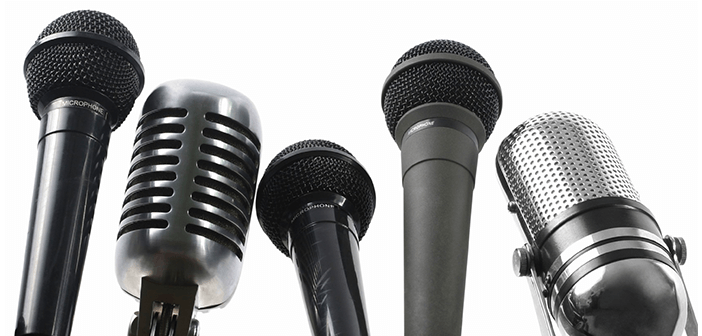
The market offers several microphone types, each with distinct characteristics suited for different applications. For voiceover work, the most prevalent categories are USB microphones, dynamic microphones, and large-diaphragm condenser microphones.
Understanding Phantom Power
A significant number of professional microphones, particularly condenser microphones, require an external power source to operate. This is known as "phantom power." It is typically supplied by an audio interface or a dedicated mixer via an XLR cable. Phantom power provides the necessary voltage to charge the condenser capsule and power its internal circuitry, enabling it to convert subtle sound waves into an electrical signal. Contrary to common apprehension, engaging phantom power is a straightforward process and should not deter users from exploring condenser microphones.
The Appeal of USB Microphones
USB microphones have gained considerable popularity, especially among beginners and those prioritizing convenience. They integrate an audio interface directly into the microphone, allowing for a plug-and-play experience with a computer.
-
USB Microphone Advantages:
- Simplicity: Easy setup with direct connection to a computer via USB.
- Portability: Ideal for on-the-go recording or small home studios.
- Cost-Effectiveness: Often more affordable than traditional XLR microphone setups.
- All-in-One Solution: Eliminates the need for a separate audio interface for basic recording.
-
USB Microphone Disadvantages:
- Limited Upgrade Path: Often cannot be upgraded with external preamps or interfaces.
- Sound Quality Variability: While improving, some USB mics may not match the nuanced audio quality of high-end XLR setups.
- Potential for Latency: Depending on the driver and system, some latency might be present.
- Less Versatility: May offer fewer options for signal processing and routing compared to XLR systems.
Dynamic Microphones: Robust and Reliable
Dynamic microphones are known for their durability and ability to handle high sound pressure levels without distortion. They work by using electromagnetic induction, where sound waves move a diaphragm attached to a coil within a magnetic field, generating an electrical signal.
-
Dynamic Microphone Pros:
- Durability: Built to withstand rough handling and demanding environments.
- High SPL Handling: Excellent for loud sources without clipping.
- No External Power Required: They do not need phantom power.
- Excellent for Untreated Rooms: Their less sensitive nature can help reject background noise in less-than-ideal acoustic spaces.
-
Dynamic Broadcast Voiceover Mic Cons:
- Lower Sensitivity: May require more gain from a preamp, potentially introducing more noise.
- Less Detailed High Frequencies: Can sometimes sound less "airy" or detailed compared to condensers.
- Often Larger and Heavier: Can be less convenient for portable setups.
Large Diaphragm Condenser Microphones: The Voiceover Standard
Large-diaphragm condenser microphones are the workhorses of professional voiceover studios. Their sensitive diaphragms capture a wide frequency range and subtle sonic details, providing a rich and detailed sound.
-
Large Diaphragm Condenser Pros:
- Exceptional Detail and Clarity: Captures the full spectrum of vocal nuances.
- Wide Frequency Response: Delivers a natural and full-bodied sound.
- High Sensitivity: Picks up subtle vocal performances with precision.
- Versatility: Suitable for a wide range of voice types and applications.
-
Large Diaphragm Condenser Cons:
- Requires Phantom Power: Needs an external power source.
- More Fragile: Can be more susceptible to damage from drops or moisture.
- Sensitive to Room Acoustics: Requires a treated or quiet recording environment to minimize background noise and reverb.
- Higher Cost: Generally more expensive than dynamic or basic USB microphones.
Understanding Polar Patterns: Directing the Sound Capture
A crucial aspect of microphone design is its polar pattern, which dictates the directionality of sound pickup. This influences how the microphone captures sound from different angles and helps in isolating the desired audio source from unwanted ambient noise.
- Omnidirectional: Picks up sound equally from all directions. Useful for capturing the natural ambiance of a room but generally not ideal for isolating a single voice in a noisy environment.
- Bidirectional (Figure-8): Picks up sound equally from the front and the rear, with null points at the sides. Useful for interviews with two people facing each other or for capturing room sound from the sides.
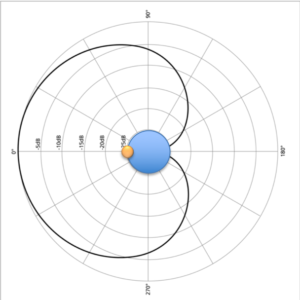
- Cardioid: The most common pattern for voiceover work. It picks up sound primarily from the front, with significant rejection from the rear and sides. This directional pickup helps to minimize background noise and room reflections.
- Supercardioid/Hypercardioid: These patterns offer even tighter pickup from the front than cardioid but have a small lobe of sensitivity directly at the rear. They provide better side rejection but require more precise positioning.
The cardioid polar pattern is paramount for voice actors. It allows the artist to focus their voice towards the front of the microphone while minimizing pickup from less desirable directions, such as computer fans, room echo, or ambient sounds. Many high-end microphones, like the Neumann U87, offer switchable polar patterns, providing flexibility for different recording scenarios. However, for most voiceover applications, a reliable cardioid pattern is the essential requirement.
Advanced Microphone Features Explained
Beyond polar patterns, other features can enhance a microphone’s utility for voiceover work.
The Role of Pads
Pads are internal attenuators within a microphone that reduce the signal level entering the microphone’s capsule. They are primarily useful for extremely loud sound sources, such as close-miking guitar amplifiers or drums, to prevent distortion. For typical voiceover recording at reasonable levels, pads are generally not a critical feature, and their absence on a microphone does not diminish its suitability for voice work.
Connecting Your Microphone: XLR vs. Jack Connectors
The type of connector a microphone uses is directly related to its power and signal transmission capabilities.
-
XLR Connectors: These are the standard for professional microphones, particularly those requiring phantom power. XLR cables are 3-pin connectors that facilitate balanced audio transmission. Balanced cables are designed to eliminate noise picked up along the cable’s length by using a differential signaling system. This results in cleaner audio signals, which is crucial for professional voiceover recordings. Any microphone that requires phantom power will invariably use an XLR connection.
-
Jack Connectors (TS/TRS): These are more common in consumer audio equipment and musical instruments. While some microphones may have a jack output, especially in lower-end or specialized models, they are generally not preferred for professional voiceover applications. If a microphone intended for voiceover work only offers a jack connector, it’s advisable to seek alternatives that utilize the superior balanced audio transmission of XLR.
Key Considerations When Selecting a Voiceover Microphone
Choosing the "best" microphone is subjective and depends on individual needs, vocal characteristics, and budget. However, several factors should guide the decision-making process.
Matching the Microphone to Your Voice and Genre
Every voice is unique, and different microphones can accentuate or complement specific vocal qualities. A microphone with a slightly brighter response might add presence to a warmer voice, while a smoother, more neutral microphone might be preferable for voices that are already very bright or sibilant. Similarly, the type of voiceover work (e.g., narration, commercials, character voices) can influence the ideal microphone choice. Some microphones are renowned for their ability to convey warmth and intimacy, while others excel at capturing crisp, energetic deliveries.
The Impact of Frequency Response
Microphones have a frequency response curve that illustrates how they amplify or attenuate different frequencies. A "flat" frequency response means the microphone reproduces the sound source accurately across the audible spectrum without artificially boosting or cutting certain frequencies. Some microphones, however, are designed with a specific frequency response that can color the sound. For instance, a microphone with a pronounced lift in the high frequencies might inadvertently make female voices sound overly sibilant (hissing sounds on "s" and "sh" consonants). Understanding a microphone’s frequency response can help in selecting one that complements your voice rather than working against it.
Budget Allocation: Value Over Price Tag
While high-end microphones often come with impressive price tags, the most expensive option is not always the best for every voiceover artist. It’s crucial to establish a realistic budget and then explore the best-performing microphones within that range. Many mid-priced microphones offer exceptional value and professional-quality sound, making them excellent choices for emerging artists. The goal is to find a microphone that delivers the clearest, most accurate representation of your voice without introducing technical issues or requiring extensive post-production correction.
A Spectrum of Voiceover Microphones: Recommendations by Budget
The following list presents a range of microphones, varying in price and features, that have proven their worth in the voiceover industry. This selection is not exhaustive but aims to provide a solid starting point for artists at different stages of their careers.
Mid-Range Powerhouses (Approx. $200 – $500)
This price bracket offers a significant step up in audio quality and is often the sweet spot for serious hobbyists and burgeoning professionals.
-
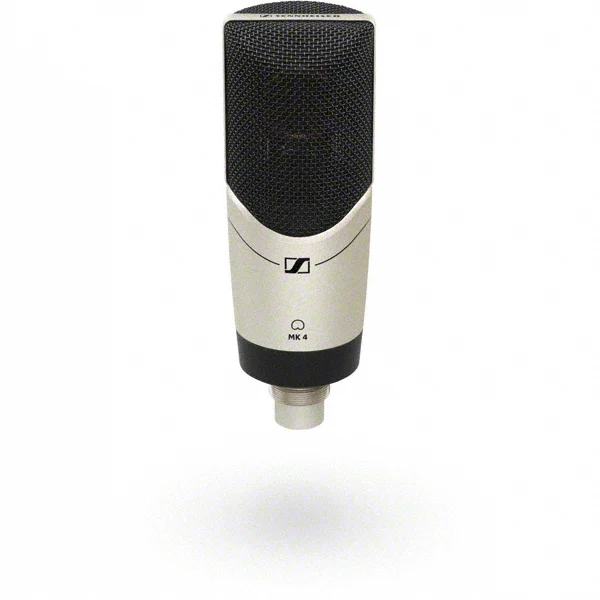
#1 – Sennheiser MK4 (~$350/£300): This large-diaphragm condenser microphone is a top recommendation for its exceptional performance and value. Developed with the expertise of Neumann, a subsidiary of Sennheiser, the MK4 features a capsule designed by the same team behind the legendary Neumann U87. It’s a cardioid-only microphone, which simplifies its use, and it lacks a pad switch, indicating its design for typical vocal applications. Its robust build quality and clear, natural sound make it suitable for both male and female voices. The MK4 is praised for its impressive sound quality relative to its price point, offering durability and reliability.
-
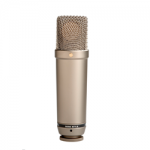
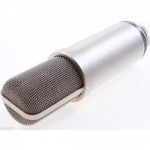
#2 – Rode NT1/NT1-A (~$249/£200): The Rode NT1 and its successor, the NT1-A, are widely regarded as excellent first microphones for aspiring voiceover artists. They offer good resonance and a frequency response comparable to more expensive studio microphones. Known for their exceptionally low self-noise and neutral sound profile, these microphones produce high-quality recordings with a broad dynamic range. While seasoned professionals might discern a subtle "Rode sound" that is less transparent than some premium options, for newcomers, the NT1 series provides a cost-effective entry into professional-grade audio.
-
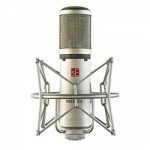
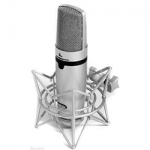
#3 – sE Electronics sE2200a II C ($299): This versatile condenser microphone delivers an upfront, high-quality sound that is well-suited for voiceover work. It features a high-pass filter and a 10dB pad, offering useful sound-shaping capabilities. Its low self-noise ensures clean recordings, making it an ideal choice for beginners looking for a flexible and reliable condenser mic.
-
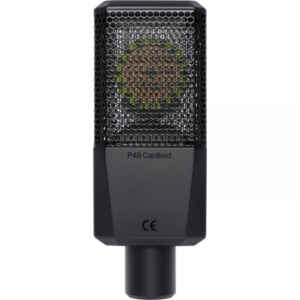
#4 – Lewitt LCT 440 Pure (£245): A more recent entrant to the voiceover microphone market, the LCT 440 Pure is a large-diaphragm cardioid condenser. Its distinctive design includes an open front, a magnetic pop filter, and an included shock mount. Tests indicate a clear and crisp sound quality, attributed to its 1-inch condenser capsule. At its competitive price point, it presents a compelling option for those seeking clarity and detail.
-
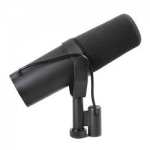
#5 – Shure SM7B ($349): While technically a dynamic microphone, the Shure SM7B is a staple in radio and sound studios worldwide, and its popularity extends to voiceover work. It’s celebrated for its exceptionally clear sound, retaining warmth and presence. Its broad frequency response can be tailored with a high-boost switch for added presence. The SM7B is particularly well-suited for home studios due to its ability to reject ambient noise and its integrated swing mount for precise positioning. Although often found in radio environments, its performance makes it a strong contender for various voiceover applications.
-
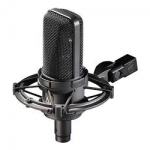
#6 – Audio-Technica AT4033 ($399): This cardioid condenser microphone is recognized for its excellent transient response and clean output signals. It features an 80Hz high-pass filter that can be switched between a flat frequency response and a low-end roll-off. This feature is beneficial for diminishing ambient noise and reducing plosive sounds ("p" and "b" sounds) during close vocal recording.
-
#8 – Rode NTK ($529): Building on Rode’s reputation, the NTK is a valve (tube) condenser microphone that offers a warm and clear sound. Its rugged construction ensures durability, making it a reliable choice for consistent use in voiceover projects. The inclusion of a vacuum tube in its design often imparts a distinct character and sonic warmth that many voice actors find desirable.
-
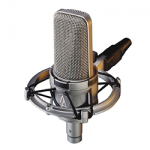
#9 – Audio-Technica AT4047 ($699): This microphone is engineered for a broad range of applications, offering sonic characteristics reminiscent of vintage FET studio microphones. Its transformer-coupled output and specially tuned element contribute to its distinct sound. With low self-noise, wide dynamic range, and high SPL capability, the AT4047 features a precision-machined brass housing for enhanced stability and sensitivity, making it a professional-grade option.
-
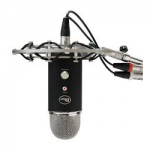
#14 – Blue Yeti Pro ($249.00): For those venturing into voiceover with a strict budget, the Blue Yeti Pro stands out among USB microphones. While USB mics are not universally recommended for professional studios, the Yeti Pro offers a notable step up. It features higher bit recording capabilities and the option for XLR output, providing greater flexibility. Its multi-pattern design also adds versatility, though its primary appeal for beginners lies in its ease of use and direct USB connectivity.
High-End Performers (Approx. $800+)
For professionals demanding the pinnacle of audio fidelity and versatility, these microphones represent significant investments that often become lifelong tools.
-
#10 – Miktek C7 ($899): This large-diaphragm FET condenser microphone is praised for its pleasing sonic character and versatility. The C7 offers three selectable polar patterns: cardioid, omnidirectional, and bidirectional. This flexibility makes it suitable for a wide array of voiceover tasks, including interviews and general voiceover work, where capturing multiple sources or specific room acoustics might be necessary.
-
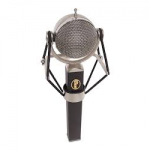
#11 – Blue Dragonfly: While not having a fixed price point readily available in the original text, the Blue Dragonfly is noted as one of Blue Microphones’ more affordable offerings that delivers a sweet, vintage-inspired sound. It’s compared to classic Neumann and AKG microphones and offers a unique sonic signature. Its adjustable capsule positioning provides significant sonic flexibility for voiceover artists exploring different recording angles and timbres.
-
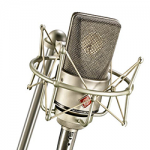
#12 – Neumann TLM 103 ($1,099): Although part of a series not originally designed specifically for voice work (TLM stands for Transistorless Microphone), the TLM 103 is a highly recommended microphone by many voice actors. Its transformerless circuit design results in very low self-noise and a wide dynamic range. The cardioid polar pattern capsule is finely tuned for acoustic balance and effective phase cancellation of sounds from the rear. A potential consideration is its slight lift in high frequencies, which can occasionally make higher-pitched female voices sound a bit sibilant.
-
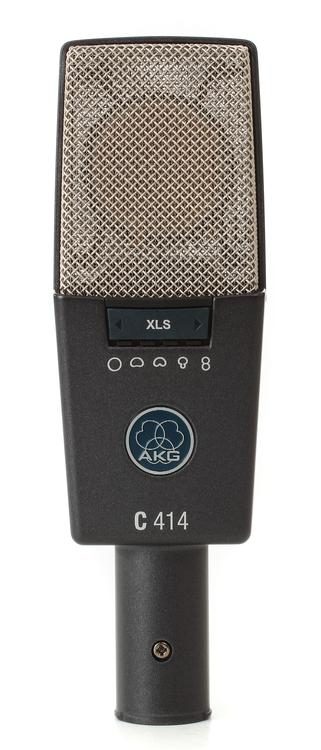
#13 – AKG C414 ($1100): The AKG C414 is a renowned, high-quality microphone with an exceptional pickup range and a desirable flat frequency response. Positioned as a mid-range professional option, it is robust, versatile, and features switchable polar patterns and a pad setting. Its comprehensive feature set and professional-grade audio capture make it an excellent choice for any working voice artist.
-
#15 – Neumann U87 ($3,180/£2,500): The Neumann U87 is arguably the most iconic microphone in professional recording studios worldwide. It has long held a reputation as one of the finest microphones for voice recording, reflected in its build quality, performance, and premium price tag. This exceptional microphone features switchable polar patterns, a pad, and a flat frequency response, making it highly versatile for both male and female voices. While a significant investment, it offers unparalleled audio fidelity. For those seeking a similar quality at a fraction of the cost, the Sennheiser MK4 is often cited as a strong alternative.
-
#16 – Sennheiser MKH 416 (Circa $700/£550): The MKH 416 is one of the most ubiquitous voiceover microphones globally. It is a hypercardioid microphone, which means it has a tighter pickup pattern than a standard cardioid and requires more precise positioning to avoid off-axis coloration. Its design, originally intended for capturing sound at a distance, yields a remarkably punchy and clear commercial sound when used for close-miking. Its exceptional ruggedness and durability make it a go-to travel microphone. Many professional voiceover artists who own an MKH 416 also possess a large-diaphragm condenser microphone to cover a broader range of applications and vocal styles.
Concluding Remarks on Choosing Your Voiceover Microphone
The selection of the optimal microphone for voiceover work hinges on a clear understanding of one’s budget and the desired sonic characteristics. The microphones highlighted in this guide are well-respected within the industry for their quality and reliability. For those seeking to deepen their knowledge of microphone technology and studio setup, comprehensive resources like the Home Recording Studio Course offered by Gravy For The Brain are invaluable. Investing wisely in a microphone that complements your voice and recording environment is a foundational step towards a successful career in voiceover.
This article was last updated on January 6, 2026, reflecting the latest industry trends and product availability.
