

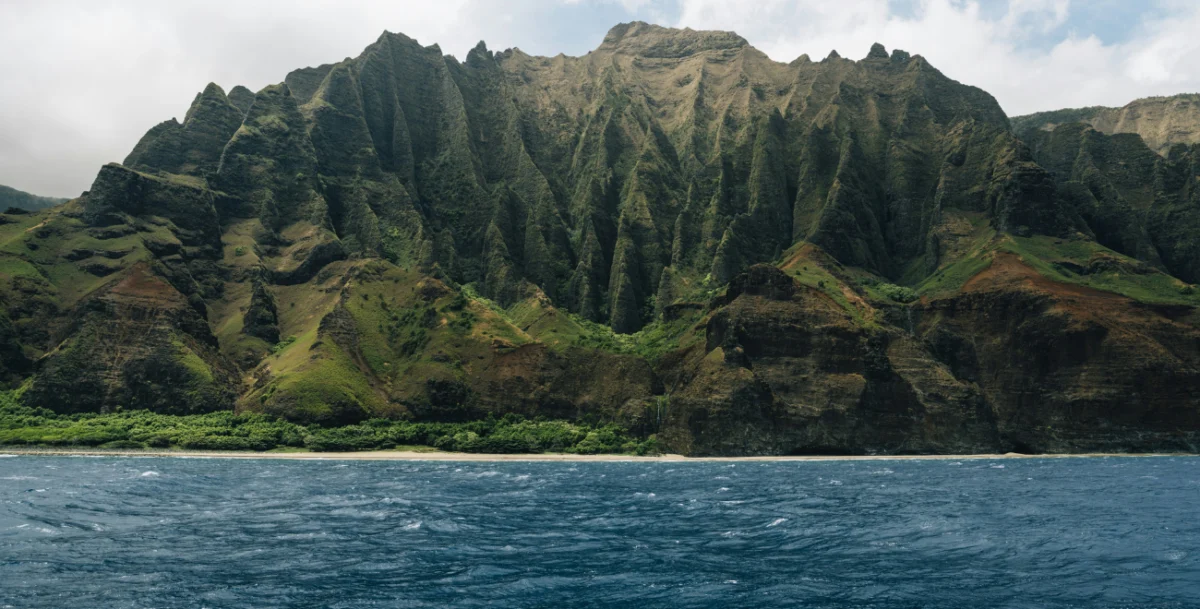
The intersection of ancient maritime traditions and contemporary corporate strategy has emerged as a focal point for leadership development, as highlighted in the latest analysis from the Anecdotally Speaking series. Episode 282 of the program explores the profound parallels between Polynesian wayfinding—the traditional art of non-instrument navigation—and the requirements for organizational alignment in the 21st century. By examining the 1976 maiden voyage of the Hōkūleʻa, a traditional double-hulled voyaging canoe, the report identifies a critical framework for leaders: the necessity of a vivid, shared mental destination as a prerequisite for navigating complex, volatile environments.
The Historical Context of Polynesian Wayfinding
For over three millennia, Polynesian navigators successfully traversed the vast "Polynesian Triangle," an area of the Pacific Ocean spanning approximately 10 million square miles, anchored by Hawaii, Easter Island (Rapa Nui), and New Zealand (Aotearoa). Unlike European explorers who relied on the sextant, the chronometer, and printed charts, these indigenous mariners utilized a sophisticated system of environmental observation. This system, known as wayfinding, integrated the movement of stars, the direction of ocean swells, the flight patterns of migratory birds, and the subtle shifts in wind and cloud color.
By the mid-18th century, when Captain James Cook entered the Pacific, the efficacy of these methods was evident, yet the underlying logic remained a mystery to Western observers. In the following centuries, the introduction of Western technology and the pressures of colonization led to a rapid decline in traditional knowledge. By the mid-20th century, the art of wayfinding was on the verge of extinction in Hawaii, leading some Western scholars, most notably Andrew Sharp in 1956, to theorize that the settlement of the Pacific had been the result of accidental drifting rather than intentional navigation.
The 1976 Cultural and Scientific Milestone
The narrative of cultural reclamation began in 1973 with the formation of the Polynesian Voyaging Society (PVS). The organization sought to prove that ancient Polynesians were deliberate explorers capable of navigating thousands of miles without modern aids. The centerpiece of this effort was the construction of the Hōkūleʻa, a performance-accurate replica of an ancient voyaging canoe.

However, the project faced a significant hurdle: no living Hawaiian possessed the knowledge required to navigate the 2,500-mile journey from Hawaii to Tahiti using traditional methods. The search for a master led the PVS to the island of Satawal in Micronesia, where Mau Piailug, one of the last traditional navigators (Pwo), agreed to share his ancestral knowledge. This cross-cultural transfer of expertise became the foundation for a new era of Hawaiian leadership and identity.
Chronology of the Wayfinding Revival
The timeline of this revival reflects a systematic approach to knowledge preservation and application that mirrors modern corporate succession planning and skill-gap analysis:
- 1973: Formation of the Polynesian Voyaging Society in Honolulu, Hawaii.
- 1975: Launch of the Hōkūleʻa at Kualoa Regional Park.
- Early 1976: Training of the crew under the tutelage of Mau Piailug. During this period, apprentice Nainoa Thompson began his intensive study of the stars and ocean patterns.
- May 1, 1976: The Hōkūleʻa departs from Honolua Bay, Maui, for Tahiti.
- June 4, 1976: The vessel arrives in Papeete, Tahiti, after 34 days at sea. Over 17,000 people—nearly half the island’s population at the time—gathered on the beach to witness the arrival, marking a pivotal moment in the "Hawaiian Renaissance."
- 1980: Nainoa Thompson becomes the first Hawaiian in centuries to navigate a canoe to Tahiti and back using only traditional wayfinding, having internalized the lessons taught by Mau.
- 2014–2017: The Hōkūleʻa completes the "Mālama Honua" Worldwide Voyage, covering 47,000 nautical miles and visiting 26 countries, demonstrating the global relevance of wayfinding principles.
The Science of Mental Models: "Can You See Tahiti?"
A central theme of the Anecdotally Speaking analysis is the dialogue between Mau Piailug and Nainoa Thompson regarding the nature of vision. When Mau asked Thompson if he could "see Tahiti" while standing on the shores of Hawaii, he was not referring to physical sight—Tahiti lay thousands of miles below the horizon. Instead, he was referencing the "mental model" of the destination.
In wayfinding, the navigator does not perceive the boat as moving toward the island; rather, they visualize the island moving toward the boat. This requires an unwavering mental image of the goal. As Mau famously stated, "If the navigator can’t see the island in his mind, he is lost." This cognitive approach is supported by modern psychological data regarding "mental rehearsal" and its impact on performance. Research in organizational behavior suggests that teams with a clear, shared mental model of their objective are significantly more resilient when faced with unforeseen disruptions.
Data-Driven Parallels in Corporate Strategy
The implications for modern business are substantial. According to studies on strategic execution, a significant percentage of employees—sometimes as high as 95%—are unaware of or do not understand their company’s strategy. This "strategic blindness" is the corporate equivalent of a crew sailing without a navigator who can "see the island."

Mark and Shawn, the facilitators of the Anecdotally Speaking discussion, argue that leadership is essentially the act of helping a collective "see Tahiti." This involves several key strategic functions:
- Filtering Noise: Just as a navigator must distinguish between "dead" swells and significant wave patterns, leaders must help their teams distinguish between market "noise" and meaningful trends.
- Continuous Orientation: Wayfinding is not a one-time calculation but a process of making hundreds of small observations daily. Similarly, agile leadership requires constant recalibration rather than rigid adherence to a static five-year plan.
- Knowledge Transfer: The relationship between Mau and Thompson illustrates the importance of mentorship in preserving "tacit knowledge"—the type of expertise that cannot be easily codified in manuals or software.
Broader Impact and Organizational Implications
The story of the Hōkūleʻa has transcended its maritime origins to become a case study in "indigenous engineering" and leadership philosophy. Organizations such as Anecdote International utilize these narratives to address the "humanity gap" in the modern workforce. By replacing abstract jargon with compelling metaphors like wayfinding, companies can foster a deeper sense of purpose and alignment.
The transition from instrument-based management (relying solely on KPIs, dashboards, and GPS-style metrics) to wayfinding-based leadership (relying on vision, intuition, and environmental awareness) is increasingly relevant in the age of Artificial Intelligence. While tools provide data, they do not provide "vision." The navigator remains the final arbiter of direction.
Conclusion: The Enduring Legacy of the Navigator
The 1976 voyage to Tahiti did more than debunk outdated theories about Polynesian migration; it provided a blueprint for how modern organizations can navigate uncertainty. The success of the Hōkūleʻa was not predicated on the absence of technology—the modern crew carries GPS in sealed containers for emergencies—but on the refusal to be dependent on it at the expense of human skill and vision.
For contemporary leaders, the lesson of the Polynesian wayfinders is clear: alignment is not achieved through the dissemination of charts and instructions, but through the cultivation of a shared mental destination. When a team can collectively "see Tahiti," the complexities of the journey—the shifting winds, the hidden currents, and the vast distances—become manageable components of a purposeful voyage. As businesses face increasingly turbulent global markets, the ancient art of "seeing the island" remains the most effective tool for reaching the shore.
