

In the landscape of modern corporate history, few narratives offer as stark a contrast between failure and triumph as the transformation of Domino’s Pizza. In 2009, the Michigan-based multinational was facing a convergence of crises that threatened its very existence. Consumer sentiment had reached an all-time low, brand reputation was being decimated by viral social media scandals, and the company’s core product was being ridiculed in national taste tests. However, through a strategy of radical honesty, technological innovation, and a complete overhaul of its culinary standards, Domino’s managed to execute one of the most significant business pivots of the 21st century. This transformation did not merely save the company; it propelled it to become a dominant force in the global food service industry, with a stock performance that eventually outpaced some of the world’s most prominent technology giants.
The Depth of the 2009 Crisis: A Brand in Freefall
By the end of 2008 and into early 2009, Domino’s Pizza was struggling to find its footing in a rapidly changing market. The global financial crisis had dampened consumer spending, but for Domino’s, the problems were deeply internal. For years, the company had prioritized speed and delivery logistics over the quality of its food. This "delivery first" mentality eventually caught up with the brand as consumers began to prioritize taste and ingredient transparency.
Market research at the time revealed a devastating reality: in brand preference surveys, Domino’s was consistently tied for last place with its major competitors. Consumers described the pizza in disparaging terms, with focus groups frequently comparing the crust to "cardboard" and the sauce to "ketchup." The brand’s identity had become synonymous with convenience at the expense of quality.
This reputational decline was exacerbated in April 2009 by a viral video incident that became a textbook example of a social media crisis. Two employees at a Domino’s franchise in Conover, North Carolina, uploaded a video to YouTube showing them engaging in unsanitary and "disgusting" acts with food intended for delivery. Although the company moved quickly to fire the employees and pursue legal action, the video garnered over a million views within days, causing a massive drop in consumer trust. By the time Patrick Doyle took over as CEO in early 2010, the company’s share price was hovering around $8.76, and the brand was viewed by many as a relic of a bygone era of fast food.
The Strategic Pivot: The "Pizza Turnaround" Campaign
Rather than attempting to mask these flaws with traditional "puffery" or defensive marketing, the leadership team, headed by Patrick Doyle and Chief Marketing Officer Russell Weiner, opted for a high-risk strategy: total transparency. Working with the advertising agency Crispin Porter + Bogusky, Domino’s launched the "Pizza Turnaround" campaign.
The campaign was centered on a documentary-style commercial that featured actual negative feedback from customers. In a move that shocked the marketing world, Domino’s aired advertisements where real people called their pizza "boring," "mass-produced," and "the worst pizza I’ve ever had." By acknowledging these criticisms publicly, the company aimed to strip away the "corporate mask" and build a foundation of authenticity.

Patrick Doyle appeared in these commercials, not to defend the old product, but to admit that it wasn’t good enough. "You can either hide from your critics or you can face them," Doyle stated during the campaign. This admission of failure—often referred to as the "Sorry We Suck" strategy—was the first step in a broader effort to regain the public’s trust. The company even went so far as to display these harsh reviews on a live ticker in Times Square, signaling to the world that they were no longer ignoring the voice of the customer.
Culinary Overhaul and the New Recipe
Transparency alone would not have been sufficient to save the company; the product itself required a fundamental transformation. In 2009, Domino’s undertook a project to reinvent its core pizza recipe from the ground up, a process that involved testing over 50 different crust seasonings and dozens of sauce and cheese combinations.
The "New and Inspired" pizza, launched in early 2010, featured several key changes:
- The Crust: The company moved away from its bland, dry dough to a richer, garlic-herb seasoned crust.
- The Sauce: The "ketchup-like" sauce was replaced with a more robust recipe featuring a "medley of herbs" and a distinct red pepper kick.
- The Cheese: The company transitioned to 100% real shredded mozzarella, enriched with a touch of provolone.
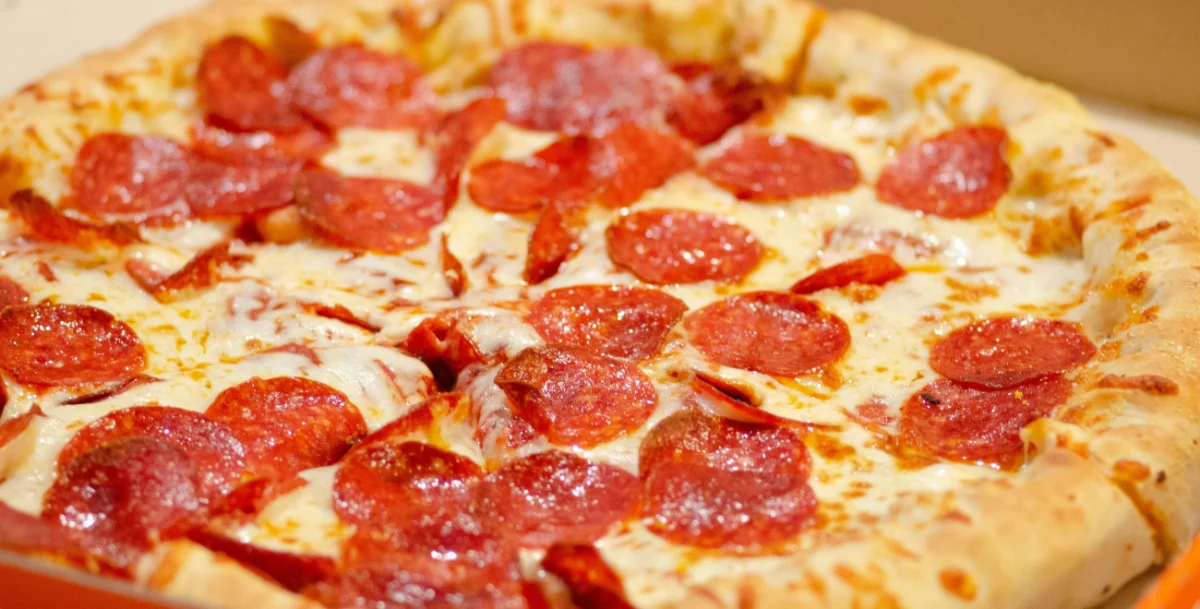
This was not a minor adjustment; it was an 80% overhaul of the menu. To prove the effectiveness of the new recipe, the company engaged in a "Pizza Holdouts" campaign, where they tracked down their harshest critics—the people who had previously vowed never to eat Domino’s again—and surprised them with the new product. The filmed reactions of these skeptics becoming converts became the centerpiece of the brand’s new narrative.
Financial Trajectory and Market Performance
The impact of these changes was almost immediate. In the first quarter of 2010, following the launch of the new recipe and the "Pizza Turnaround" campaign, Domino’s reported a 14.3% increase in same-store sales—one of the largest jumps in the history of the fast-food industry.
The long-term financial data highlights the scale of this success. An investment in Domino’s at its low point in 2008-2009 yielded returns that surpassed many high-profile tech stocks over the following decade. By 2017, the stock had reached over $200 per share, and by 2021, it peaked at approximately $540 per share. Between 2010 and 2020, Domino’s stock price increased by over 2,000%.
In 2018, the company achieved a significant milestone by surpassing Pizza Hut to become the largest pizza chain in the world by global retail sales. This growth was supported by a massive expansion in international markets, where the "Domino’s Model" of efficient delivery and consistent quality resonated with a growing middle class in countries like India, which became the brand’s largest market outside of the United States.

The Role of Technological Innovation
While the recipe change was the catalyst for the turnaround, Domino’s sustained its growth by reinventing itself as a "technology company that happens to sell pizza." Under Doyle’s leadership, the company invested heavily in its digital infrastructure, recognizing that the future of food service lay in the "frictionless" ordering experience.
The introduction of the "Domino’s Tracker" allowed customers to follow their order from the oven to their doorstep, providing a level of transparency and engagement that was revolutionary at the time. This was followed by the "AnyWare" platform, which enabled customers to order pizza via text, Twitter (now X), smartwatches, and even through voice commands on smart home devices.
By the mid-2010s, more than 60% of Domino’s sales in the U.S. were coming through digital channels. This technological edge allowed the company to weather the rise of third-party delivery apps like DoorDash and UberEats, as Domino’s maintained its own delivery fleet and a superior, proprietary ordering interface.
Broader Implications and Industry Legacy
The Domino’s turnaround has become a definitive case study in business schools and marketing firms worldwide. It demonstrates the power of "Vulnerability as a Strategy." In an era where consumers are increasingly skeptical of corporate PR, the Domino’s example suggests that admitting flaws can be more effective than claiming perfection.
Industry analysts point to several key lessons from the Domino’s saga:
- The Importance of Product Quality: No amount of clever marketing can sustain a brand if the core product is deficient.
- The Value of Data-Driven Honesty: Domino’s used its own internal data and external customer feedback to drive its strategy, rather than relying on executive intuition alone.
- Technological Agility: By embracing digital transformation early, Domino’s secured a competitive advantage that its rivals struggled to match for years.
The company’s ability to pivot from a "failing pizza joint" to a "tech-driven global powerhouse" remains a rare feat in the corporate world. It serves as a reminder that brand reputation is not static and that even the most damaged brands can find a path to redemption through a combination of humility, innovation, and a relentless focus on the consumer experience.
Chronology of the Domino’s Transformation
- 2008: Domino’s stock hits a historic low under $10 as consumer dissatisfaction peaks.
- April 2009: A viral YouTube video of employee misconduct causes a massive brand crisis.
- Late 2009: Patrick Doyle and the marketing team decide to launch the "Radical Honesty" campaign.
- December 2009: The "Pizza Turnaround" documentary and advertisements begin airing, admitting the pizza "sucked."
- Early 2010: The "New and Inspired" recipe is launched nationwide.
- Q1 2010: Domino’s records a record 14.3% increase in domestic same-store sales.
- 2011-2015: The company focuses on the "AnyWare" ordering platform and digital tracking technology.
- 2018: Domino’s officially becomes the world’s largest pizza chain by retail sales.
- 2021: The stock price reaches an all-time high, completing a decade of growth that outperformed the S&P 500 and major tech indices.
Today, Domino’s continues to evolve, experimenting with autonomous delivery vehicles and AI-driven kitchen management. However, the foundation of its current success remains the bold decision made in 2009 to stop pretending the pizza was good and start making it better. The story of Domino’s is more than just a marketing success; it is a testament to the idea that in the modern economy, the most powerful tool a brand can possess is the truth.
