

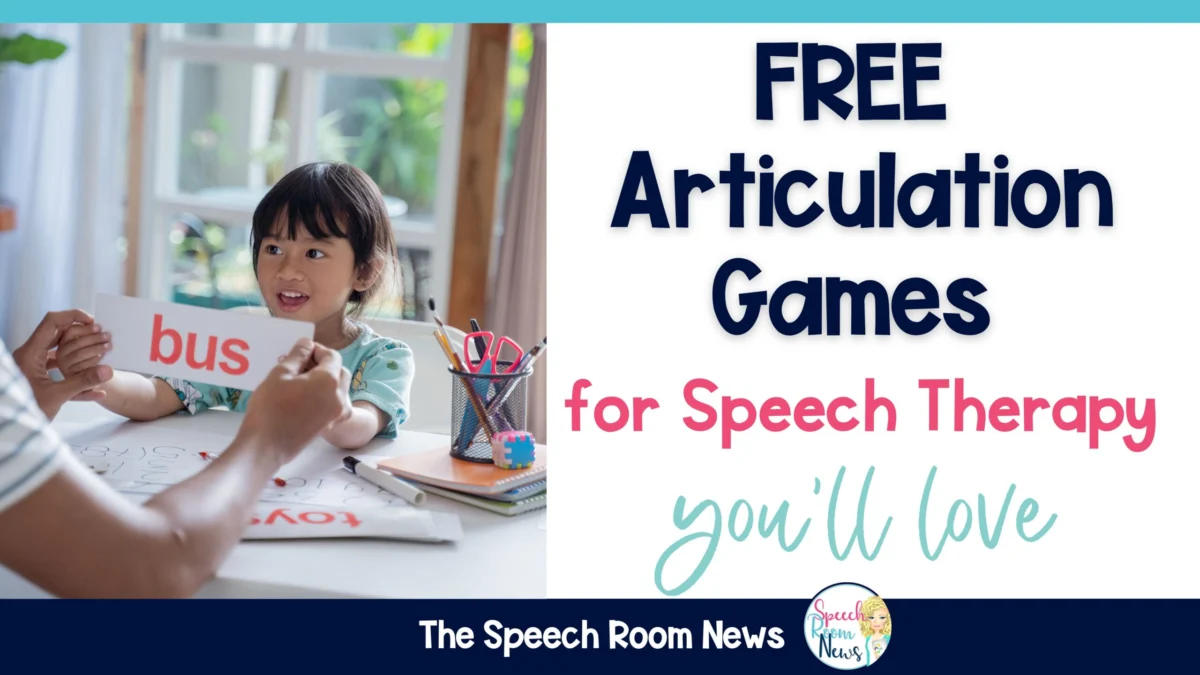
The integration of play-based learning into speech-language pathology (SLP) sessions is profoundly transforming how articulation disorders are addressed, fostering deeper student engagement and facilitating the critical generalization of language skills into everyday contexts. This pedagogical shift, increasingly supported by research in developmental psychology and education, underscores the effectiveness of making therapy memorable and enjoyable. With a diverse array of free resources now readily available, speech therapists, educators, and parents alike have unprecedented access to tools that can enhance articulation practice, regardless of whether sessions are conducted virtually, in-person, or in a hybrid model. This article explores the landscape of these invaluable, no-cost articulation games, categorizing them into interactive online platforms, versatile printable materials, and dynamic material-free activities, all designed to keep the therapeutic process engaging and effective.
The Foundational Shift Towards Play in Speech-Language Pathology
For decades, traditional speech therapy often relied on repetitive drills and rote memorization, which, while sometimes effective, frequently struggled with student motivation and the transfer of learned skills outside the clinical setting. The modern understanding of child development emphasizes that children learn most effectively through active exploration and play. Play provides a natural, low-stress environment where children can experiment with sounds, receive immediate feedback, and practice new skills without the pressure of formal assessment. This approach not only boosts engagement but also creates a more positive association with therapy, reducing anxiety and increasing participation.
Articulation disorders, which involve difficulties in producing speech sounds correctly, affect a significant portion of the pediatric population. According to the American Speech-Language-Hearing Association (ASHA), approximately 8-9% of young children have a speech sound disorder. Early and consistent intervention is crucial for mitigating long-term academic and social challenges. However, speech-language pathologists often face budget constraints when acquiring materials and continually seek innovative ways to sustain student interest, particularly in an era where digital literacy is paramount. The proliferation of free, high-quality articulation games directly addresses these challenges, democratizing access to effective therapeutic tools.
Interactive Online Platforms: Harnessing Digital Engagement for Articulation
The digital age has ushered in a new era for speech therapy, offering a wealth of interactive online resources that make practicing speech sounds both effective and inherently enjoyable. These platforms leverage technology to provide engaging, often gamified, experiences that can adapt to various learning styles and therapeutic goals.

One prominent example is ABCya’s "Alphabet BINGO." While primarily focused on early literacy and letter sound recognition, this game serves as an excellent foundational tool for younger students. By associating letters with their corresponding sounds in a familiar BINGO format, children can begin to segment and blend phonemes, a crucial precursor to complex articulation. Its interactive nature and visual feedback make it highly engaging for preschoolers and early elementary students, allowing SLPs to target initial sound production and phonological awareness in a playful context.
The Articulation Station App (Lite Version) stands out as a robust mobile solution. Available for download on various devices, the free version offers access to several core sound options and interactive games. Developed by a speech-language pathologist, the app features high-quality images and clear audio models, allowing students to practice sounds in isolation, syllables, words, sentences, and even stories. Its intuitive interface and diverse activities, such as matching, flashcards, and sentence completion, keep students actively involved. For SLPs, the app provides a convenient, portable tool that can be used in clinic, school, or even for teletherapy, offering a structured yet fun approach to sound remediation.
Language Playroom is another exceptional online resource, boasting a growing collection of free games specifically focused on articulation. With over 20 unique games, and continuous expansion into areas like fluency, language, and social communication, the site offers a comprehensive suite of tools. The games often involve clicking, dragging, and matching activities that require students to produce target sounds in various word positions. The site’s commitment to expanding its offerings ensures that SLPs can find fresh, relevant content to maintain student interest over time, a critical factor in long-term therapy success.
For visual and auditory learners, Phoneme Pop offers a dynamic experience. This online game challenges children to pop bubbles containing words that feature their target sounds. The interactive nature of popping bubbles, combined with auditory feedback, reinforces correct sound production in a fast-paced, entertaining manner. It’s particularly effective for targeting specific phonemes and encourages quick recall and accurate articulation, making it a favorite for drill-based practice disguised as play.
Finally, Boom Cards have emerged as a revolutionary digital platform for interactive learning. While some decks are premium, a vast selection of free Boom Card decks for various articulation sounds can be found on platforms like Teachers Pay Teachers and Boom Learning. These digital task cards are self-correcting and highly engaging, often featuring drag-and-drop activities, multiple-choice questions, and fill-in-the-blank exercises that require students to produce target words. SLPs appreciate Boom Cards for their versatility across teletherapy and in-person settings, their ability to provide instant feedback, and the ease with which they can track student progress. Jenna Rayburn Kirk, a prominent creator, for instance, offers numerous affordable Boom Card options, further expanding access to high-quality, engaging articulation practice.
"The digital tools available today have transformed my practice," remarks Sarah Chen, a veteran SLP practicing in a hybrid setting. "Apps and online games allow me to provide highly individualized and engaging activities without constantly buying new physical materials. The instant feedback and interactive nature keep my students motivated, and many of these resources are completely free, which is invaluable for budget-conscious therapists."
Printable Games: Hands-On Learning for Tangible Progress

Despite the rise of digital tools, printable games remain a cornerstone of effective speech therapy. They offer a tactile, hands-on experience that many children benefit from, and they are easily adaptable for use in therapy sessions or for home practice, fostering carryover of skills into the child’s natural environment. These resources often require minimal preparation and can be customized to suit individual student needs.
The "Whack-a Sound /S/ Self-Checking Articulation Freebie" is an excellent example of a printable game designed for early learners, typically preschool through second grade. This activity helps children identify the position of the target sound (/s/ in this case) within a word—initial, medial, or final. By engaging in a ‘whack-a-mole’ style activity with sound cards, students develop phonological awareness alongside articulation accuracy. The self-checking element empowers children to take ownership of their learning, making it a valuable tool for independent practice.
Articulation Worksheets from Super Duper Publications offer a range of free printable activities. Known for their high-quality educational materials, Super Duper provides sample worksheets that can be used for various articulation targets. These often include coloring pages, cut-and-paste activities, and simple word lists that encourage repetitive practice in a visually appealing format. While a small selection, these freebies serve as a fantastic introduction to their robust offerings and provide quick, no-prep options for busy therapists.
For seasonal engagement, the "Hot Chocolate Articulation Board Game" is particularly popular during winter months. This adaptable game can be used in numerous ways, most commonly with flashcards featuring target words. Students roll a die and move spaces after correctly articulating a word. This classic board game format adds an element of friendly competition and encourages repeated production of target sounds within a fun, social context. Its versatility allows SLPs to integrate different word lists and target sounds, making it a reusable resource for a wide range of students.
"100 Trial Challenges" by Peachie Speechie are widely celebrated for their effectiveness in achieving high repetition rates, crucial for articulation remediation. These printable sheets often incorporate themes and holidays, making it easy for SLPs to align therapy with seasonal events and maintain student interest. Each sheet encourages students to produce a target sound 100 times, a benchmark often cited for establishing new motor patterns for speech. The engaging themes motivate students to complete their trials, and the clear visual tracking helps both students and therapists monitor progress efficiently.
Finally, "Color & Play Ocean Articulation Bingo" provides a group-friendly or one-on-one activity. These printable bingo cards feature target words, allowing students to mark off squares as they correctly articulate the words called out. Bingo fosters auditory discrimination, turn-taking skills, and, most importantly, repeated articulation practice in a dynamic, game-show-like atmosphere. The ocean theme adds an appealing visual element, making it a hit with many children.
"Printable resources are indispensable," states Mark Johnson, an SLP working in public schools. "They are perfect for students who benefit from hands-on interaction and for sending home with families. The ability to customize them for specific sounds and word positions, without needing internet access or devices, ensures equitable access to practice for all my students."

Free Articulation Games for On-the-Go: No Materials Needed!
Articulation practice doesn’t need to be confined to a therapy room or rely on specific materials. Many effective and engaging games can be played anywhere, anytime, requiring nothing more than imagination and a focus on target sounds. These material-free activities are excellent for promoting generalization of skills in natural environments, such as during car rides, waiting periods, or daily routines.
"I Spy" is a classic game that can be ingeniously modified to target specific articulation goals. Instead of simply naming objects, children are encouraged to "spy" objects that start with, contain, or end with a particular target sound. For instance, an SLP might say, "I spy with my little eye something that starts with /s/" (e.g., sun, seat, sky). This encourages auditory processing, phonemic awareness, and accurate production of the target sound in a spontaneous, conversational context.
"20 Questions" provides another excellent opportunity for articulation practice while simultaneously developing language skills. In this game, one person thinks of an object, and others ask up to 20 yes/no questions to guess what it is. The SLP can guide the child to formulate questions that include their target sounds (e.g., "Is it soft?" for /s/, "Does it have wheels?" for /w/). This promotes descriptive language, critical thinking, and repeated articulation in meaningful phrases and sentences.
"Rhyme Time" focuses on phonological awareness, a critical component of speech development. Participants take turns saying words that rhyme with a given target word, with an emphasis on the correct articulation of each rhyming word. For example, if the target is "cat," children might say "bat," "hat," "mat," ensuring they produce the initial consonant sounds and the common vowel/ending sound accurately. This game is particularly beneficial for students working on specific vowel sounds, final consonants, and overall phonological dexterity.
"The Alphabet Game" is a versatile activity often played during car rides, and it can be easily adapted for articulation. Children go through the alphabet, taking turns saying a word that starts with each letter. The therapist can encourage the child to select words that specifically target their individual articulation goals. For a child working on /r/, they might choose "rabbit" for ‘R’ or "red" for ‘R’. This game helps reinforce initial sound production and can be scaled in difficulty by requiring words with specific sound positions or blends.
"The beauty of material-free games is their universal accessibility and portability," notes Dr. Emily Carter, a researcher in communicative disorders. "They seamlessly integrate therapy into daily life, helping children internalize that articulation practice isn’t just a clinic activity but a skill they use constantly. This ‘hidden’ practice is incredibly powerful for generalization."

Broader Impact and Future Implications
The widespread availability of free articulation games signifies a crucial step towards more accessible and equitable speech therapy services. For families who may lack the financial resources for extensive materials or private therapy, these free resources offer invaluable support for at-home practice, strengthening the home-school connection and reinforcing therapeutic gains. For speech-language pathologists, particularly those working with limited budgets in school districts or rural areas, these resources are lifelines, allowing them to provide high-quality, diverse interventions without financial strain.
The trend also underscores the power of digital innovation and collaborative communities, like Teachers Pay Teachers, in democratizing specialized educational tools. It encourages a shift towards more dynamic, student-centered therapy models that prioritize engagement and functional communication over rigid, traditional drills. As technology continues to evolve, we can anticipate even more sophisticated and adaptive free resources, potentially incorporating artificial intelligence for personalized feedback or virtual reality for immersive practice environments.
The emphasis on play and accessibility also has implications for professional development. SLPs are increasingly encouraged to integrate technology and game-based learning into their practice, requiring ongoing training in digital literacy and resource curation. This collaborative ecosystem, where therapists share and adapt free materials, fosters a culture of innovation and continuous improvement within the field. Ultimately, these free articulation games are not merely supplementary tools; they are foundational elements in a modern, effective, and inclusive approach to speech-language pathology, empowering children to find their voice with joy and confidence.
By strategically incorporating these fun and free games into speech therapy sessions and daily routines, therapists, educators, and parents can create a dynamic, engaging, and highly effective learning environment. This approach not only helps students master their speech sounds but also builds their confidence and fosters a lifelong love of communication.
