

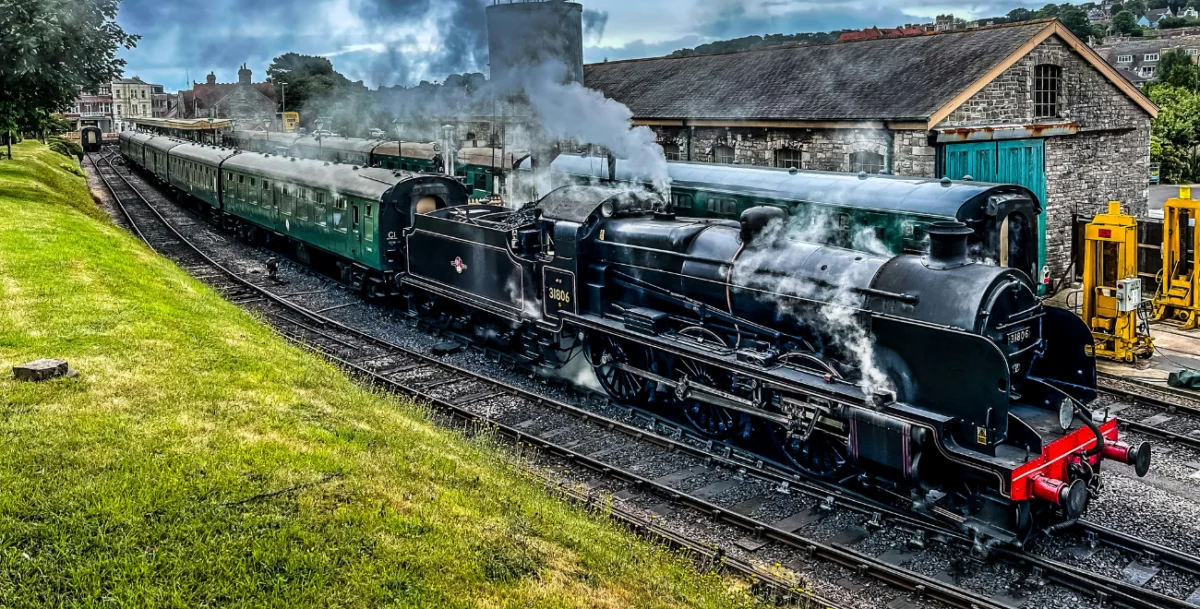
The historical evolution of industrial marketing and the strategic translation of technical specifications into consumer-centric benefits remain a cornerstone of modern business communication, as highlighted in a recent retrospective on the legacy of James Watt. While Watt is frequently celebrated for his mechanical refinements to the steam engine during the 18th century, his most enduring contribution to the global commercial landscape may have been the creation of "horsepower"—a unit of measurement designed specifically to bridge the gap between complex engineering and the practical needs of his primary customers. In the latest analysis provided by Anecdote International, business communication experts Shawn Callahan and Mark Schenk explore how Watt’s ability to "speak the customer’s language" catalyzed the adoption of steam power, providing a timeless blueprint for contemporary sales and product development.
The Technological Landscape of the Early Industrial Revolution
To understand the magnitude of James Watt’s marketing breakthrough, it is necessary to examine the industrial environment of the early 1700s. At the time, the British Empire was grappling with a significant energy crisis. As surface-level coal deposits were exhausted, mining operations were forced to delve deeper into the earth, leading to a persistent and existential threat: flooding.
In 1712, Thomas Newcomen developed the first practical atmospheric steam engine. This machine was a marvel of its time, utilizing a piston driven by the vacuum created by condensing steam. However, the Newcomen engine was notoriously inefficient. It required massive amounts of fuel because the cylinder had to be cooled and reheated during every stroke to facilitate condensation. Despite these flaws, it became the industry standard for nearly five decades, primarily because it was the only mechanical solution available for pumping water out of deep mines.
By the 1760s, James Watt, a Scottish instrument maker at the University of Glasgow, was tasked with repairing a model of a Newcomen engine. He quickly identified the inherent waste of energy and, in 1765, conceived of the separate condenser. This innovation allowed the main cylinder to remain hot while steam was condensed in a separate chamber, effectively doubling or even tripling the engine’s thermal efficiency. While the technical superiority was undeniable to an engineer, Watt faced a significant hurdle: the mine owners who held the capital were not engineers.
The Communication Gap: From Thermal Efficiency to Practical Utility
The transition from the Newcomen engine to the Watt engine represented a significant capital investment for 18th-century industrialists. Watt and his business partner, Matthew Boulton, realized that describing their machine in terms of "latent heat" or "atmospheric pressure" failed to resonate with their target demographic. Mine owners were focused on operational continuity, overhead costs, and the physical labor required to keep their mines dry and their coal moving.
At the time, the literal "engines" of the industry were horses—specifically pit ponies. These animals were used in grueling shifts to haul coal and operate "horse gins" for pumping water. A mine owner’s wealth and productivity were measured by the size and health of their stable. Consequently, when Watt attempted to sell a steam engine, he was not just competing against other machines; he was competing against a biological workforce that mine owners had relied upon for generations.

Watt recognized that to secure a sale, he needed to provide an "apples-to-apples" comparison. He needed a metric that allowed a customer to look at a massive, clanking assembly of iron and timber and see, instead, a specific number of horses. This realization led to the birth of the term "horsepower."
The Calculation and Standardization of Horsepower
The methodology Watt used to define horsepower was both a scientific estimate and a brilliant piece of psychological anchoring. Based on observations of ponies working in mines and larger horses working at breweries, Watt estimated that a horse could turn a mill wheel 144 times in an hour (or 2.4 times a minute). Given the dimensions of the wheel and the estimated force the horse exerted, he calculated that a horse could move 33,000 pounds one foot in one minute.
While some contemporary historians argue that Watt’s figure was an overestimation—noting that few horses could maintain that level of output for an entire workday—the inflation was likely intentional. By setting the "standard" of a horse’s power slightly higher than average, Watt ensured that his steam engines would always outperform the expectations of the buyer. If a customer bought a 10-horsepower engine, they were guaranteed to get at least the work of 10 very strong horses, leaving no room for disappointment or claims of underperformance.
The genius of the calculation extended to the "shift" logic of the era. A steam engine could run 24 hours a day, whereas a pony could only work for a few hours before requiring rest. Watt demonstrated that while his engine might be rated at 10 horsepower, it actually replaced 30 ponies over the course of three eight-hour shifts. When the costs of feeding, stabling, and replacing deceased livestock were compared against the cost of coal and maintenance for a single engine, the economic argument became irrefutable.
Chronology of the Steam Revolution and the Horsepower Metric
The adoption of the horsepower metric followed a clear trajectory that mirrored the expansion of the Boulton & Watt company:
- 1712: Thomas Newcomen installs the first atmospheric engine at a coal mine in Staffordshire.
- 1765: James Watt conceives the separate condenser, marking the birth of the modern steam engine.
- 1775: Watt enters a partnership with Matthew Boulton, providing the financial backing and commercial acumen necessary to market the invention.
- 1782: Watt introduces the term "horsepower" during the marketing of his rotative engine, which could power factory machinery rather than just pumps.
- 1800: By the time Watt’s patent expires, nearly 500 Boulton & Watt engines are in operation across Great Britain, the majority of which are sold using horsepower ratings.
- 1882: The Second British Association for the Advancement of Science adopts the "watt" as a unit of power, ironically immortalizing Watt’s name through a metric he did not use to sell his own machines.
Expert Analysis: The Importance of "Customer Language"
In the modern context, Shawn Callahan and Mark Schenk of Anecdote International argue that the Watt story is more than a historical footnote; it is a fundamental lesson in sales enablement and leadership. The core of the James Watt anecdote lies in the distinction between "features" and "benefits."
"Watt realized that while his steam engine was technically superior, people wouldn’t buy it unless they could understand what it meant for them," the experts noted during the Anecdotally Speaking podcast. This concept, often referred to in modern marketing as the "Value Proposition," requires a deep empathy for the customer’s daily struggles.

For the 18th-century mine owner, the struggle was not "low thermal efficiency"; it was the high cost of oats and the frequency of horse lameness. By framing the solution in terms of "horsepower," Watt removed the cognitive load from the customer. They no longer had to trust a stranger’s complex math; they only had to trust their own understanding of how many horses they currently owned.
This principle remains highly relevant in 2026. In sectors such as software-as-a-service (SaaS), artificial intelligence, and renewable energy, technical founders often struggle to explain their products to non-technical stakeholders. The James Watt example serves as a reminder that the most successful innovators are those who can translate high-level complexity into the "vernacular of the value-seeker."
Broader Impact and Global Legacy
The legacy of Watt’s marketing strategy is visible in almost every facet of modern mechanical rating. Despite the global shift toward the metric system and the use of "kilowatts" (kW) in scientific communities, the term horsepower remains the primary descriptor for automotive performance. From internal combustion engines to the latest electric vehicles (EVs), consumers continue to demand horsepower figures to assess the "strength" and "prestige" of a vehicle.
Furthermore, Watt’s strategy pioneered the use of "comparative metrics" in advertising. Every time a cloud storage provider compares their capacity to "thousands of high-definition movies" or a battery manufacturer compares their longevity to "trips around the world," they are utilizing the same psychological framework Watt established in the 1780s.
Implications for Modern Business Strategy
The analysis of James Watt’s career suggests that innovation without effective communication is often a stalled engine. For organizations looking to expand their "story bank"—a collection of narratives used to influence and inspire—the Watt anecdote provides several key takeaways:
- Identify the Baseline: Understand what the customer is currently using to solve their problem (e.g., the "pit pony" of their industry).
- Translate the Technical: Convert internal specifications (RPMs, gigabytes, lumens) into external outcomes (time saved, money earned, shifts replaced).
- Standardize the Metric: If a relatable metric doesn’t exist, create one. If it is intuitive, the industry will follow.
- The 24/7 Advantage: Highlighting the reliability of a mechanical or digital solution over a human or biological one remains a compelling sales lever.
As business environments become increasingly saturated with complex data, the ability to distill that data into a human-centric story is a competitive advantage. James Watt did not just invent a better engine; he invented a better way to talk about work. In doing so, he ensured that his technology would not just sit in a laboratory, but would instead power the world.
The ongoing discussion by Anecdote International serves as a reminder that the most powerful tool in any leader’s arsenal is not just the "what" of their invention, but the "how" of their story. As we navigate the complexities of the mid-2020s, the 250-year-old lesson of the pit pony and the steam engine remains as powerful as ever.
