

The landscape of pediatric therapy, particularly within speech-language pathology, is undergoing a notable transformation, increasingly embracing play-based interventions to enhance engagement and therapeutic outcomes. Among the array of innovative tools gaining traction, magnetic construction tiles have emerged as a remarkably versatile resource. Initially popular as an educational toy for general development, these vibrant, geometric pieces are now being strategically integrated into speech therapy sessions for young children, demonstrating efficacy across a broad spectrum of speech and language goals. Their inherent appeal lies in their open-ended nature, tactile feedback, and capacity to foster creativity, making them suitable for children from approximately one year of age upwards. This integration represents a significant step towards more dynamic, child-centered therapeutic approaches, moving beyond traditional drill-based methods to incorporate activities that intrinsically motivate and engage learners.
The evolution of therapeutic tools in speech-language pathology (SLP) reflects a broader understanding of child development and learning principles. Historically, speech therapy often relied on highly structured, repetitive drills designed to target specific linguistic deficits. While effective in certain contexts, these methods could sometimes struggle with maintaining engagement, especially among younger children who thrive on exploration and imaginative play. Over recent decades, a paradigm shift has occurred, with research increasingly underscoring the profound benefits of play-based learning for cognitive, social, and linguistic development. This shift has led clinicians to seek out tools that can seamlessly blend therapeutic objectives with enjoyable, interactive experiences. Magnetic tiles, with their intuitive design and limitless construction possibilities, perfectly embody this modern therapeutic philosophy. They offer a multi-sensory experience, combining visual appeal with tactile manipulation, which is crucial for solidifying abstract concepts and motor planning involved in speech production. Studies on early childhood education consistently highlight that children learn best when actively involved in hands-on activities, where they can explore, experiment, and communicate their discoveries. Magnetic tiles provide such a rich environment, serving as a catalyst for spontaneous language use and structured learning alike.
One of the primary benefits of magnetic tiles in a clinical setting is their capacity to foster Social Cooperative Work. In group therapy sessions or even one-on-one interactions where a clinician participates in the play, magnetic tiles become a natural conduit for back-and-forth communication. Children are encouraged to collaborate on building projects, necessitating negotiation, turn-taking, and shared decision-making. This collaborative play creates authentic opportunities for practicing pragmatic language skills, such as asking for specific pieces ("Can I have the red square?"), offering assistance ("Here, let me help you with that tower."), expressing agreement or disagreement, and planning strategies together ("Let’s build a tall castle first, then add a roof."). These interactions are critical for developing not only linguistic competence but also vital social skills like empathy, active listening, and conflict resolution, all within a low-pressure, engaging context. The shared goal of constructing something together naturally instigates conversation and problem-solving, making language practice an organic component of the activity rather than an isolated task.
Furthermore, magnetic tiles are exceptionally effective for teaching Prepositions, which often pose a challenge for young learners due to their abstract nature. Concepts like "on," "under," "beside," "between," "in front of," and "behind" become tangible when students can physically manipulate the tiles to demonstrate these spatial relationships. A therapist might instruct a child to "put the blue triangle on the yellow square" or ask, "Where is the red tile now?" as the child places it under a structure. This kinesthetic learning approach reinforces understanding through direct experience, allowing children to see, touch, and move objects in relation to one another. This hands-on method significantly aids in internalizing spatial vocabulary and improving comprehension of complex instructions, thereby strengthening both receptive and expressive language skills related to location and position.
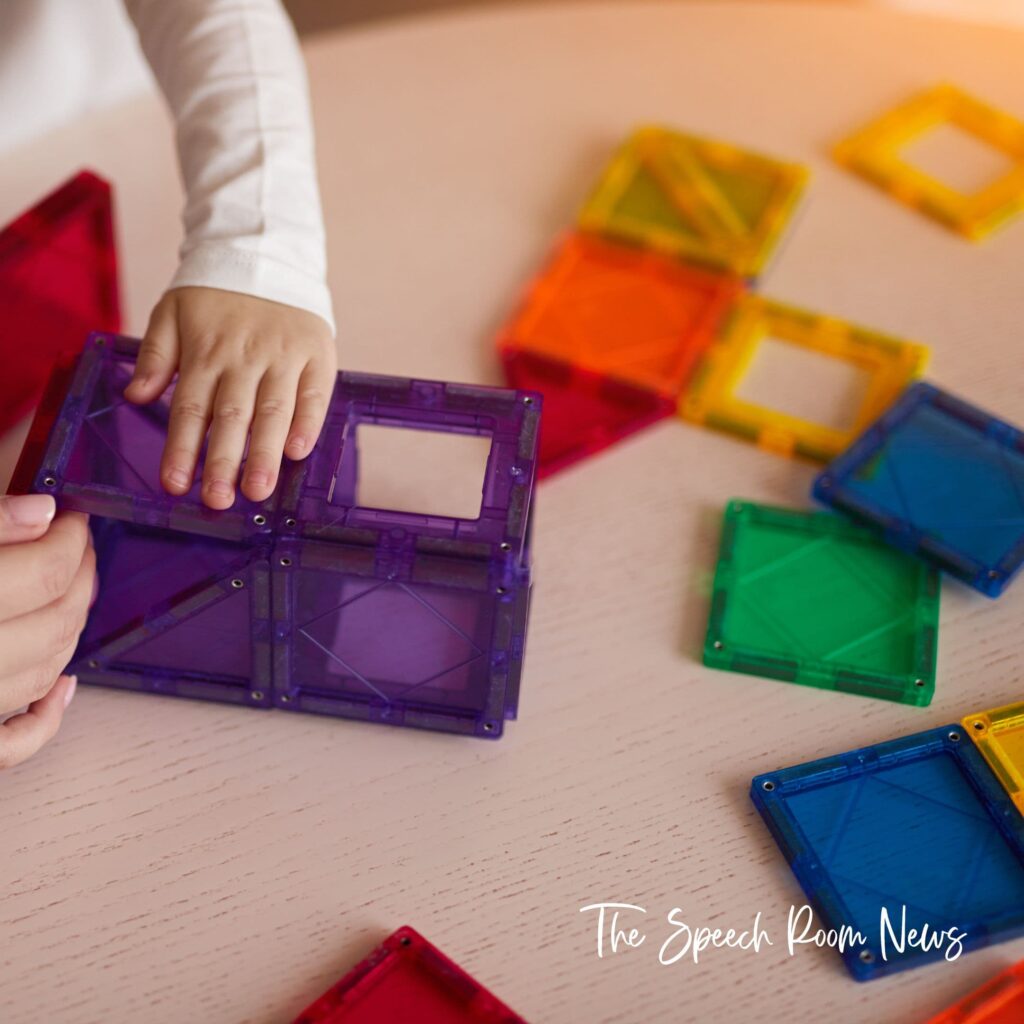
The inherent attributes of magnetic tiles also make them ideal for Sorting by Shape/Color, a foundational cognitive skill with direct implications for language development. Children can be prompted to group tiles by their geometric form (squares, triangles, pentagons) or by their hue. This activity not only expands their vocabulary related to colors and shapes but also hones their ability to identify similarities and differences, a critical prerequisite for categorization and classification skills. Beyond simple sorting, clinicians can encourage children to build "sorting bins" using the tiles themselves, further integrating the therapeutic tool into the learning process. Describing the sorting process—"I am putting all the red ones together" or "These are triangles"—provides valuable opportunities for descriptive language practice and reinforces early mathematical concepts.
For children working on Articulation, magnetic tiles offer a creative medium to embed target sounds into meaningful play. If the target sound is /k/, a child might be encouraged to build a "castle," a "kitchen," or a "car park," explicitly using words containing the /k/ sound during the construction process. Each time a related word is spoken, the child gets a natural, functional repetition of their target sound. This approach moves away from isolated word drills, integrating articulation practice into a broader, imaginative activity. Therapists can also create a game where each time a child produces their target sound correctly, they earn a tile to add to their structure, thus linking successful articulation directly to a rewarding play experience.
Magnetic tiles also present an excellent opportunity to address Irregular Verbs, which are notoriously difficult for children to master due to their unpredictable past tense forms. By constructing scenes or narrating actions with the tiles, students can practice verbs like "built" (past tense of "build"), "fell" (past tense of "fall"), "ran" (past tense of "run"), or "hid" (past tense of "hide"). For instance, a child might build a tower and then describe, "The tower fell down," or create a path and say, "The car ran on the path." This narrative-based approach allows for contextualized practice, making the learning of irregular verbs more intuitive and less reliant on rote memorization. The dynamic nature of play with magnetic tiles can easily generate scenarios that require the use of various irregular verbs, fostering their generalization into spontaneous speech.
The structured yet open-ended nature of magnetic tile activities lends itself well to practicing Executive Functioning Skills. Tasks involving planning, sequencing, and problem-solving are integral to complex construction. A therapist might challenge a child to build a specific structure, such as "a house with a garage," requiring them to conceptualize the components, plan the sequence of assembly, and execute the steps. Introducing constraints, such as a time limit or specific tile requirements, further challenges their planning abilities, organizational skills, and cognitive flexibility. During this process, children naturally engage in self-talk, verbalizing their plans and adjustments, which provides valuable insight into their thought processes and offers opportunities for the clinician to guide their language use related to planning and execution.
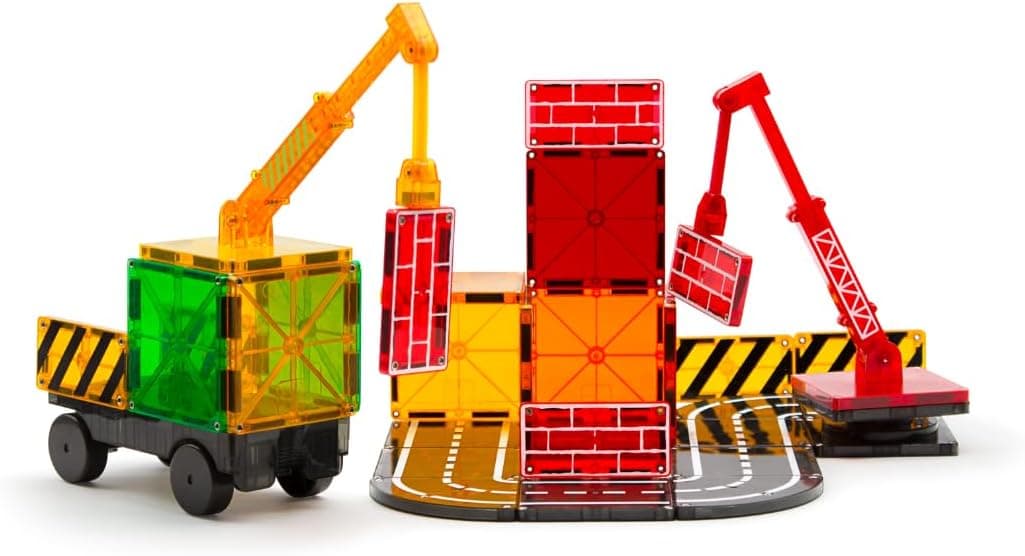
Practicing Regular Plurals becomes an enjoyable activity when magnetic tiles are involved. As children build structures, they naturally encounter multiple items of the same type. A therapist can prompt them to describe what they are seeing and building, encouraging the use of plural forms: "I have two squares," "Look at all the triangles," or "We need more blocks." This concrete representation of "more than one" helps children grasp the concept of plurals and practice adding the appropriate -s or -es endings. The visual reinforcement of seeing multiple tiles directly corresponds to the linguistic concept, making the learning process more intuitive and memorable.
Magnetic tiles also serve as an effective catalyst for practicing WH Questions—"who," "what," "where," "when," "why," and "how." The dynamic nature of building and interacting with the tiles naturally generates scenarios for these questions. "Where does this tile go?" "Who built this tall tower?" "What are we going to build next?" "When will the bridge be finished?" These questions encourage both receptive comprehension and expressive formulation of answers, prompting children to think critically and articulate their thoughts. Therapists can intentionally create situations that elicit specific WH questions, such as building a small "house" and asking, "Who lives in the house?" or "What is inside the house?"
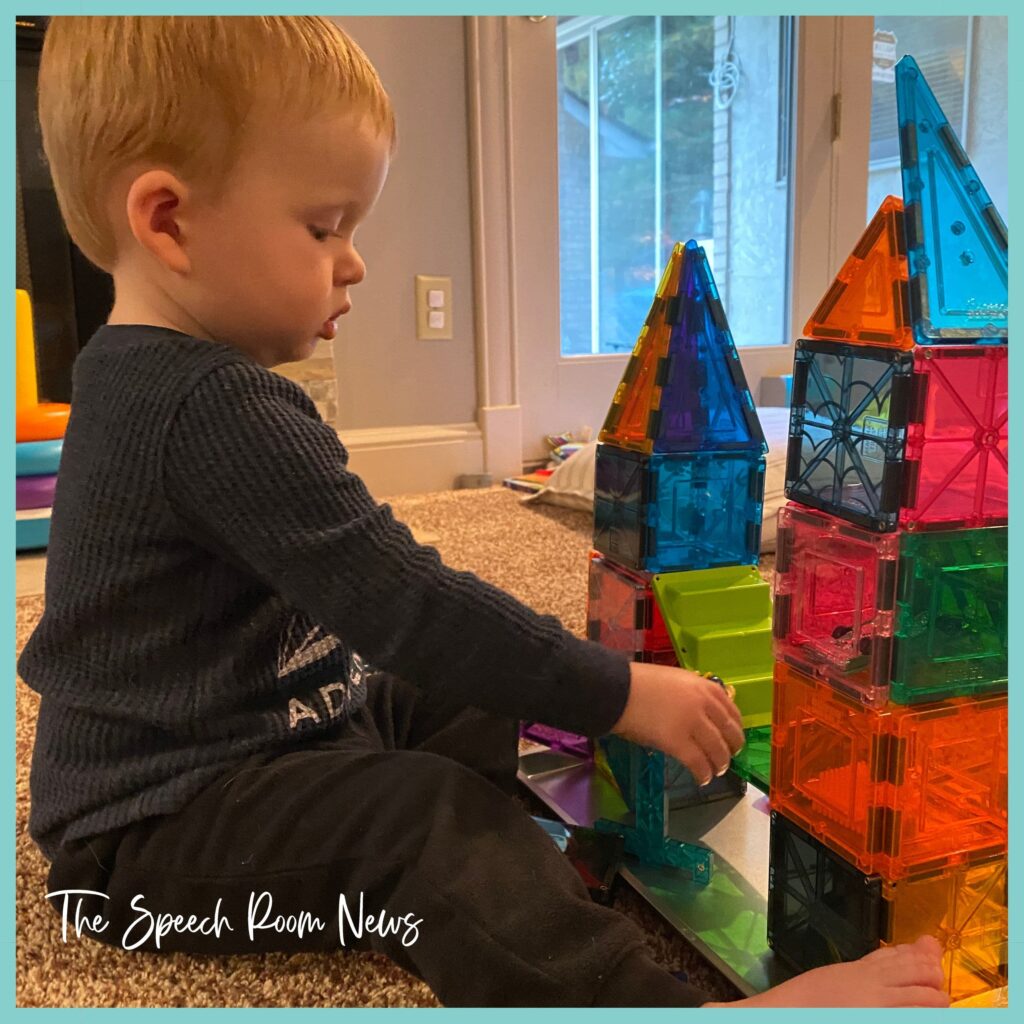
The pronoun "I" is a fundamental self-referential term crucial for developing a child’s sense of self and their ability to express personal actions and desires. Magnetic tile play provides numerous opportunities for repetitive and meaningful practice of this pronoun. By encouraging children to describe their actions and choices, therapists can elicit sentences beginning with "I." For example, "I chose the blue tile," "I am building a tall wall," or "I want to put the roof on." This practice helps solidify the correct usage of "I" in various sentence structures, moving away from common errors like using their own name instead of the pronoun, or avoiding self-referencing altogether.
Finally, magnetic tiles are an invaluable resource for reinforcing AAC Core Words (Augmentative and Alternative Communication). For children who use AAC devices or strategies, integrating core words into highly motivating activities is crucial for functional communication. Words like "more," "on," "off," "up," "down," "help," "that," "this," "go," and "stop" can be naturally incorporated into magnetic tile play. A child can request "more" tiles, indicate "on" or "off" for placing or removing pieces, direct "up" or "down" for building, or ask for "help" with a complex structure. The visual and tactile nature of magnetic tiles provides concrete referents for these abstract concepts, making it easier for AAC users to connect the core words on their device to real-world actions and objects, thereby promoting their functional use in everyday contexts.
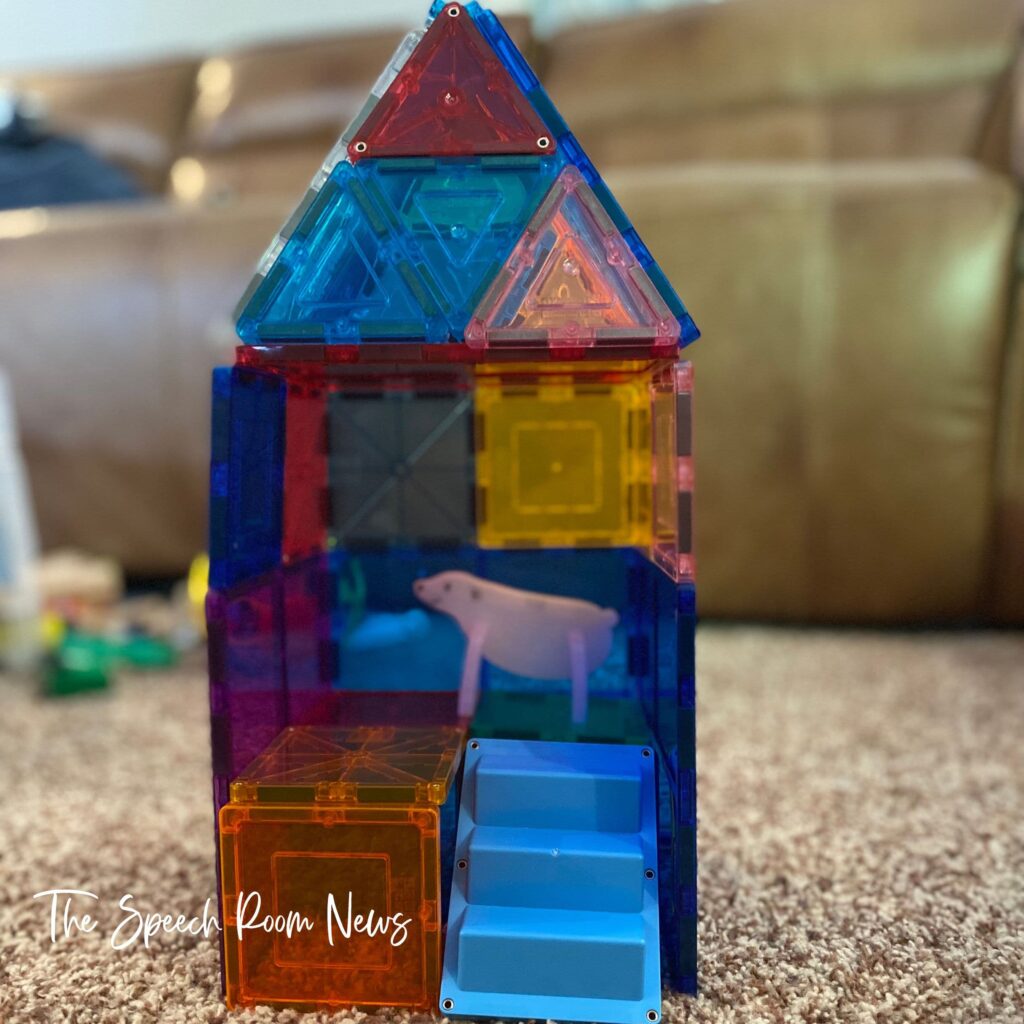
The financial aspect of acquiring magnetic tiles is a consideration for both families and clinicians. While initial sets can be an investment, their durability and longevity make them a cost-effective resource in the long run. Many speech-language pathologists actively seek grants or utilize classroom wish lists to equip their therapy rooms with such high-value educational tools. For families, these sets often feature prominently on holiday or birthday wish lists, representing a worthwhile investment in a child’s developmental play. Basic sets, often including a variety of squares and triangles, provide a strong foundation, and can be augmented with specialized add-ons like car bases, letter tiles, or marble runs to expand their therapeutic utility.
The integration of magnetic tiles into speech therapy signifies a broader trend towards leveraging engaging, open-ended play materials to achieve significant therapeutic gains. These tools not only captivate children but also provide a rich, multi-dimensional platform for targeting a wide array of speech and language goals, from foundational vocabulary and grammatical structures to complex social-cognitive and executive functioning skills. As pediatric therapy continues to evolve, the adoption of such versatile and intrinsically motivating resources promises to enhance treatment efficacy, foster greater generalization of learned skills, and ultimately contribute to more positive and enjoyable therapeutic experiences for young learners. The continued exploration of how everyday educational toys can be repurposed for clinical benefit underscores a dynamic and responsive approach within speech-language pathology, dedicated to optimizing child development through innovative and engaging methods.
