

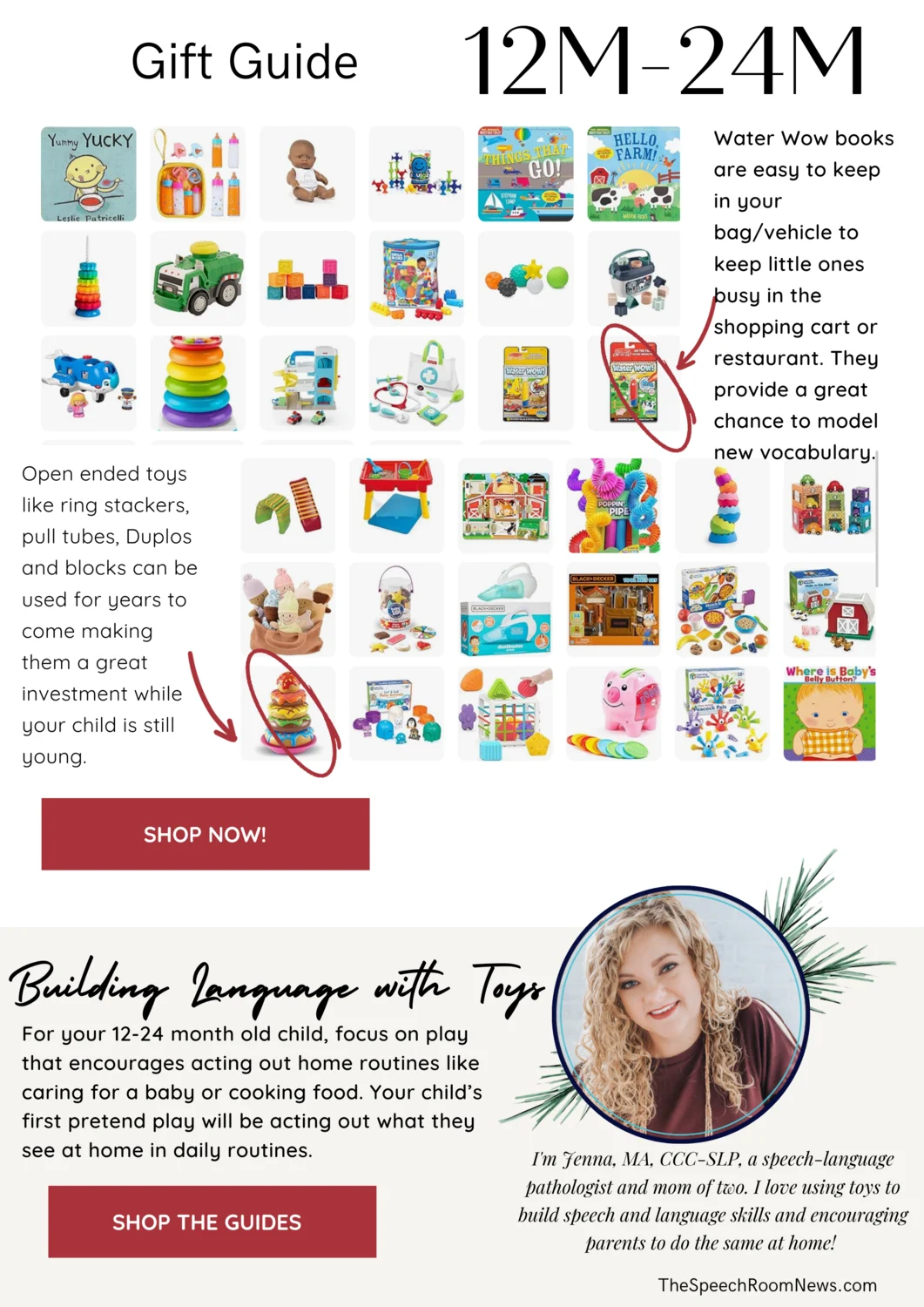
Pediatric Speech-Language Pathologist (SLP) Jenna Kirk, MA, CCC-SLP, has released a comprehensive series of gift guides designed to assist parents and caregivers in selecting toys that actively foster speech and language skills in children. This initiative, stemming from Kirk’s professional expertise and personal experience as a mother of two, including a child diagnosed with Childhood Apraxia of Speech (CAS), addresses a crucial need for informed toy selection amidst a vast and often overwhelming market. The guides aim to empower families to integrate therapeutic play into daily routines, supporting developmental milestones during critical early years.
The Foundational Role of Play in Language Acquisition
The importance of play in a child’s development, particularly concerning language acquisition, is well-documented by developmental psychologists and early childhood educators. Play is not merely a pastime but a fundamental mechanism through which children explore their environment, understand social dynamics, and build cognitive and linguistic frameworks. From birth, infants engage in sensory play that lays the groundwork for later communication, responding to sounds, facial expressions, and tactile experiences. As they grow, play evolves into more complex forms, directly influencing vocabulary expansion, sentence structure development, narrative skills, and pragmatic language use.
Symbolic play, where children assign properties to objects or imagine scenarios, is a powerful precursor to abstract thought and complex language. When a child uses a block as a phone or pretends to cook in a play kitchen, they are practicing imaginative narratives, engaging in turn-taking conversations, and developing an understanding of social scripts. This type of play naturally encourages verbalization, problem-solving through dialogue, and the expression of emotions and ideas. Constructive play, involving building blocks or puzzles, enhances spatial reasoning and provides opportunities for descriptive language ("big," "small," "on top," "underneath"). Even simple motor play, like pushing a car or rolling a ball, can be leveraged to introduce action verbs and simple directives.
Research consistently indicates that children who engage in rich, interactive play experiences tend to exhibit stronger language skills. A 2017 study published in the journal Pediatrics highlighted the significant role of parent-child interaction during play in fostering language development, emphasizing that the quality of interaction, not just the quantity of toys, is paramount. Kirk’s guides are predicated on this understanding, moving beyond generic toy recommendations to focus on items that facilitate specific language-building interactions.

Addressing Speech and Language Challenges
Speech and language disorders are prevalent developmental conditions affecting a significant percentage of children. According to data from the Centers for Disease Control and Prevention (CDC), approximately 1 in 12 children aged 3-17 years in the United States has had a disorder of speech, voice, language, or swallowing in the past 12 months. These disorders can manifest in various ways, from articulation difficulties and phonological disorders to expressive and receptive language delays, and more complex conditions like Childhood Apraxia of Speech (CAS).
Childhood Apraxia of Speech, as personally experienced by Kirk with her own child, is a neurological speech sound disorder where the brain has difficulty planning and coordinating the muscle movements necessary for speech. Children with CAS know what they want to say but struggle to execute the precise movements of the lips, jaw, and tongue. This condition requires intensive, individualized speech therapy. For children with CAS, toys that encourage repetitive sound practice, sequencing, and multi-sensory engagement can be particularly beneficial, providing playful contexts for challenging motor planning tasks.

Early identification and intervention are critical for positive outcomes in children with speech and language disorders. While professional therapy is often necessary, the home environment plays a vital supportive role. By providing access to toys specifically chosen for their therapeutic potential, parents can reinforce skills learned in therapy and create a language-rich environment conducive to development. This proactive approach can significantly impact a child’s ability to communicate effectively, succeed academically, and participate fully in social interactions.
Jenna Kirk’s Expert Framework for Toy Selection
As a pediatric Speech-Language Pathologist with extensive experience, Jenna Kirk brings a dual perspective to toy selection: that of a seasoned clinician and a parent navigating developmental challenges. Her methodology for curating the gift guides is rooted in a professional understanding of developmental milestones and therapeutic strategies, combined with practical insights gained from raising her own children. While the original post briefly mentions her "focus on a few things" when shopping, a professional analysis of an SLP’s criteria would include several key elements:

- Open-Endedness and Versatility: Toys that can be used in multiple ways, encouraging creativity and imaginative play, are highly valued. Examples include building blocks, dolls, animal figures, and art supplies. These allow children to dictate the play scenario, fostering intrinsic motivation and providing endless opportunities for new vocabulary and narrative development.
- Interaction and Social Communication: Toys that promote turn-taking, cooperative play, and conversation are crucial. Board games, pretend play sets (e.g., doctor kits, play kitchens), and puppets naturally encourage dialogue, negotiation, and understanding social cues.
- Engagement of Multiple Senses: Multi-sensory toys (tactile, visual, auditory) can enhance learning and memory, especially for children with diverse learning styles or specific sensory needs. Play-doh, sensory bins, musical instruments, and textured books are examples.
- Language Elicitation: Toys that naturally prompt specific types of language, such as action verbs, descriptive adjectives, prepositions, or narrative sequencing. A toy car ramp can elicit "go," "fast," "up," "down." A puzzle can elicit "fit," "find," "piece."
- Durability and Safety: While a given in any toy selection, ensuring toys are safe and robust enough to withstand repeated therapeutic use is important for longevity and value.
- Age-Appropriateness: Toys must align with a child’s developmental stage to be effective and engaging. A toy that is too simple will bore them, while one that is too complex will cause frustration. This principle forms the basis of Kirk’s age-sorted guides.
Kirk’s personal experience with her child’s Childhood Apraxia of Speech likely further refines her criteria, leading her to prioritize toys that can be adapted for repetitive practice, encourage clear articulation, or support the sequencing of sounds and words in a fun, non-stressful context. This blend of professional acumen and lived experience offers a particularly valuable resource for families.
The Strategic Design of the Amazon Gift Guides
The gift guides, hosted on the Amazon platform and available for direct download as a PDF, represent a strategic approach to making expert recommendations accessible. The decision to sort these recommendations by age group reflects a fundamental principle of child development: learning is sequential and cumulative. Toys that are appropriate for an infant will differ significantly from those suitable for a school-aged child, both in terms of safety and developmental benefit.

The guides cover a spectrum of ages, likely beginning from infancy through early elementary years, ensuring that parents can find targeted suggestions for their child’s specific stage of development. While specific toy examples from the guides are not detailed in the original announcement, a journalistic interpretation of such expert-curated lists would include categories like:
- Infant & Toddler (0-2 years): Focus on sensory exploration, cause-and-effect, early vocabulary (e.g., "up," "down," "more"), and imitation. Examples might include soft blocks, chunky puzzles, board books with textures, and musical instruments.
- Preschool (3-5 years): Emphasize imaginative play, narrative development, social skills, and concept building. Items like pretend play sets (kitchens, doctor’s offices), puppets, simple board games, and art supplies would be prominent. These support the expansion of sentence length, vocabulary, and conversational turn-taking.
- Early Elementary (6+ years): Encourage complex problem-solving, strategic thinking, storytelling, and refining articulation. Examples could include more intricate building kits, cooperative board games, science experiment kits, and creative writing tools. These foster advanced language structures, critical thinking, and social communication in structured environments.
- Stocking Stuffers (All Ages): Smaller, portable items that offer quick bursts of language-rich interaction. Think card games, mini-puzzles, small craft kits, or conversation-starter prompts. These are valuable for spontaneous language practice and travel.
The use of Amazon as a platform offers convenience and widespread accessibility, allowing parents to easily browse and purchase recommended items. This integration of expert guidance with practical retail solutions streamlines the process for busy families seeking to make informed choices for their children’s development. The downloadable PDF format also ensures that the guides can be readily shared and referenced.
Broader Implications for Parental Empowerment and Early Intervention

The release of these expert-curated toy guides has significant implications beyond individual gift selection. It represents a broader trend towards empowering parents as active participants in their children’s developmental journeys. In an era where information overload is common, credible resources from qualified professionals like Jenna Kirk provide a much-needed filter, helping parents discern truly beneficial toys from mere entertainment.
Such initiatives reinforce the concept of "therapeutic play" – the idea that play can be purposefully structured to achieve specific developmental goals. For families whose children are already receiving speech therapy, these guides offer a practical way to extend therapeutic activities into the home, creating a consistent and enriching language environment. This can accelerate progress and help generalize skills learned in therapy sessions to everyday contexts. For families without a diagnosed speech delay, the guides serve as a preventative resource, promoting optimal language development through engaging play experiences.
Furthermore, the emphasis on toys that foster interaction and communication encourages more engaged parent-child play. Rather than passively observing, parents are prompted to join in, ask questions, model language, and expand on their child’s utterances. This active engagement is a cornerstone of effective language facilitation.

From an industry perspective, the growing demand for "smart" and "educational" toys is evident. However, not all toys marketed as such truly deliver on their developmental promises. Expert-backed guides provide a quality assurance mechanism, guiding consumer choices towards products that are genuinely beneficial. This could also influence toy manufacturers to increasingly consult with developmental specialists to design toys with explicit therapeutic goals in mind.
In conclusion, Jenna Kirk’s initiative to create and disseminate speech and language-focused toy guides is a valuable contribution to the field of pediatric speech-language pathology and early childhood development. By demystifying the process of selecting developmentally appropriate toys, these guides equip parents and caregivers with practical tools to foster essential communication skills in children, underscore the critical role of purposeful play, and support early intervention efforts in a holistic and engaging manner. The integration of professional expertise with personal experience, presented in an accessible format, highlights a forward-thinking approach to child development support.
