

Google has officially announced the integration of advanced generative artificial intelligence into its Translate platform, marking a significant shift from literal word-for-word conversion to context-aware linguistic interpretation. By leveraging the multimodal capabilities of Gemini, Google’s flagship AI model, the update introduces features designed to assist users in navigating the complexities of tone, regional dialects, and idiomatic expressions. This development aims to bridge the gap between formal and informal communication, providing users with a more sophisticated toolkit for cross-cultural interaction. Initially rolling out on the Google Translate app for Android and iOS in the United States and India, the features are expected to expand to web platforms and additional regions in the coming months.
The Evolution of Contextual Translation
The primary challenge in machine translation has long been the preservation of intent and nuance. Traditional translation engines, while effective at conveying the basic meaning of a sentence, often struggle with the "soul" of a language—those specific cultural markers and social registers that dictate whether a phrase is appropriate for a corporate boardroom or a casual social gathering. With the integration of Gemini, Google Translate now offers tailored alternatives based on the desired tone of the conversation.
According to Google’s announcement, the AI-powered features are specifically tuned to help users "nail the tone" of any interaction. For instance, a user attempting to translate a greeting can now see variations that range from highly professional to colloquial. This is particularly relevant for languages with complex honorific systems or distinct formal and informal grammars, such as Japanese, Korean, or French. By providing these options, Google is moving beyond simple utility and toward a model of digital linguistic coaching.
Deciphering Idioms and Colloquialisms Through Gemini
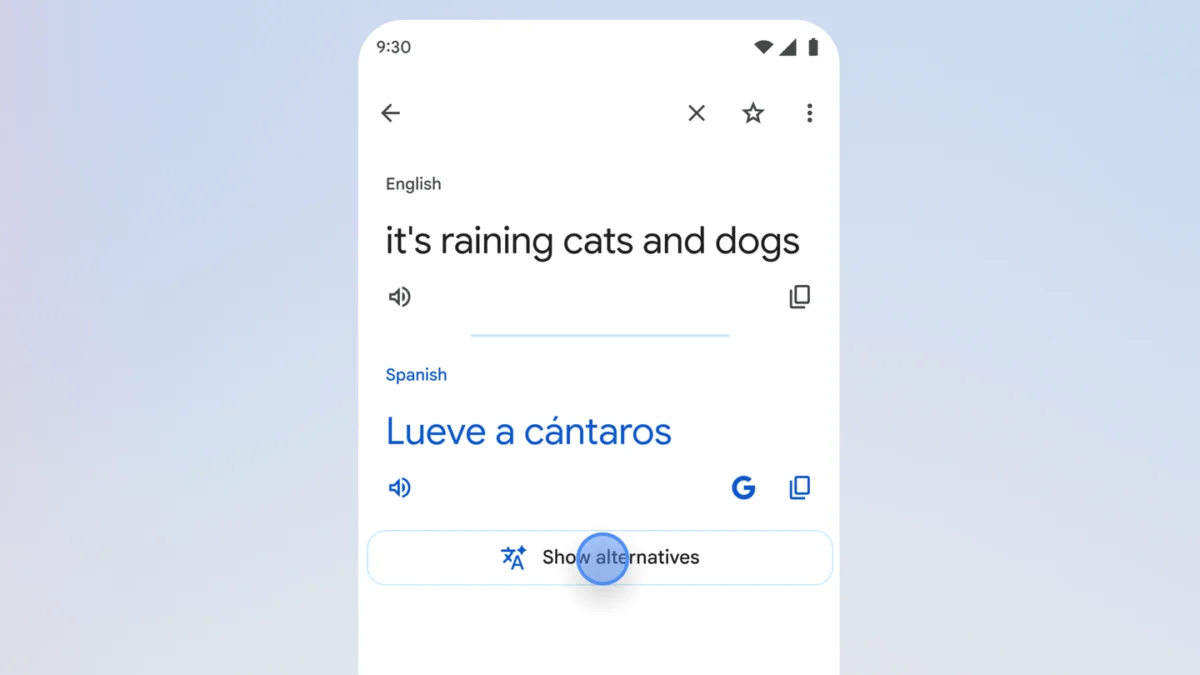
One of the most notable additions to the platform is the enhanced ability to translate idioms. Idiomatic expressions—phrases where the meaning cannot be deduced from the individual words, such as "it’s raining cats and dogs" or "break a leg"—have historically been a stumbling block for automated systems. Under the new update, Google Translate utilizes Gemini’s vast multilingual training data to offer clear tips on when and why to use specific expressions.
Instead of a singular, often literal translation, the interface now provides a selection of equivalent idioms in the target language that carry the same emotional or situational weight. For example, if a user inputs an English idiom, the AI might suggest a culturally relevant counterpart in Hindi or Spanish, accompanied by an explanation of the context. This allows users to pinpoint the exact phrasing required to avoid misunderstandings or social faux pas.
To facilitate this deeper understanding, Google has introduced two interactive features: "Understand" and "Ask." By tapping the "Understand" button, users receive a comprehensive overview of the nuances behind various translation options. The "Ask" feature allows for a more conversational interaction with the AI, where users can follow up with specific questions. A traveler might ask, "How would I say this in a specific region of India?" or "Is this phrase considered too blunt in a business setting?" This interactive layer transforms Google Translate from a static reference tool into a dynamic assistant.
A Chronology of Google’s Linguistic Innovation
The integration of Gemini represents the latest milestone in a nearly two-decade journey for Google Translate. To understand the significance of this update, it is necessary to examine the technological trajectory of the service:
- 2006 – Launch with Statistical Machine Translation (SMT): Google Translate debuted using SMT, a method that analyzed vast amounts of United Nations and European Parliament transcripts to find patterns. While revolutionary, it often produced clunky, ungrammatical results.
- 2016 – Transition to Neural Machine Translation (GNMT): This was a watershed moment. GNMT used deep learning to translate whole sentences at a time rather than pieces, significantly improving fluency and accuracy.
- 2020-2022 – Expansion of Zero-Shot Translation: Google expanded its language repertoire to include dozens of new languages, many of which had limited digital footprints, using "zero-shot" learning where the AI could translate between language pairs it had never explicitly seen together.
- 2023 – Introduction of Contextual Options: Google began rolling out more descriptive translation results, providing definitions for words with multiple meanings.
- 2024 – The Gemini Integration: The current update marks the transition into the Large Language Model (LLM) era, where the system understands the broader context of human culture and intent, rather than just linguistic patterns.
Supporting Data and Market Context
The decision to prioritize the United States and India for this rollout is strategic. India, in particular, represents a unique linguistic landscape with 22 official languages and hundreds of dialects. According to industry data, India has one of the highest rates of translation tool usage globally, driven by a mobile-first population that frequently navigates multilingual environments for education and commerce.
Recent studies on AI adoption suggest that the global machine translation market is expected to grow at a compound annual growth rate (CAGR) of over 7% through 2030. This growth is fueled by the increasing globalization of business and the rise of international tourism. However, the emergence of LLMs like OpenAI’s GPT-4 and Anthropic’s Claude has raised the bar for what users expect from translation services. Competitors such as DeepL have gained a loyal following by focusing specifically on the "naturalness" and "nuance" of translations—areas where Google Translate is now looking to reassert its dominance using Gemini.
Internal testing from Google suggests that the inclusion of Gemini-powered features has led to a measurable increase in user satisfaction regarding the "helpfulness" of translations in complex scenarios. By addressing the "why" behind a translation, Google is catering to a growing demographic of "power users" who require more than just basic comprehension.
Industry Reactions and Expert Analysis
Linguistic experts and tech analysts have largely viewed the move as an essential evolution. "Machine translation is moving out of the era of ‘good enough’ into the era of ‘precision,’" says Dr. Aris Xanthos, a computational linguistics researcher. "The challenge has never been translating the words; it’s been translating the culture. By allowing users to ‘ask’ questions about regional dialects, Google is acknowledging that language is a living, breathing entity that varies by geography and social class."
From a business perspective, the integration of Gemini into Translate is seen as a way for Google to solidify its ecosystem. As users become accustomed to Gemini’s assistance in Translate, they are more likely to utilize other Gemini-powered tools in Google Workspace, such as "Help me write" in Docs or Gmail. This cross-platform synergy is central to Google’s strategy to compete with Microsoft’s Copilot.
However, some critics point out the potential risks of relying on LLMs for translation. LLMs are known to occasionally "hallucinate" or provide overly confident answers that may be factually incorrect. In the context of translation, this could lead to the creation of phrases that sound plausible but are actually nonsensical or unintentionally offensive. Google has sought to mitigate this by providing the "Understand" overview, which grounds the AI’s suggestions in established linguistic data.
Broader Impact and Global Implications
The implications of high-nuance, AI-driven translation extend far beyond casual conversation. In the realm of international diplomacy and global business, the ability to accurately convey tone can prevent misunderstandings that might otherwise lead to stalled negotiations. For expatriates and refugees, these tools offer a lifeline, helping them navigate complex bureaucratic systems and social integration in new countries.
Furthermore, the focus on regional dialects is a significant step toward digital inclusion. Many languages are not monolithic; Spanish in Madrid differs significantly from Spanish in Mexico City or Buenos Aires. By allowing users to query specific regional variations, Google is helping to preserve the diversity of global languages rather than forcing a standardized, "mid-Atlantic" version of speech on all users.
The Path Ahead: Web Integration and Global Rollout
While the current features are limited to the mobile apps in the U.S. and India, Google has confirmed that a web-based version is "coming soon." This will be a critical step for professional users who rely on the desktop interface for translating long-form documents and emails. The company is also expected to expand the language pairs supported by these Gemini features, eventually covering the more than 130 languages currently available on the platform.
As AI continues to integrate into daily communication, the line between "human" and "machine" translation continues to blur. Google’s latest update suggests a future where the primary barrier to global communication is no longer the language one speaks, but rather the clarity of the intent behind the words. By providing the tools to "understand" and "ask," Google is not just translating text; it is teaching the world how to communicate more effectively.
The rollout of these features serves as a reminder of the rapid pace of AI development. Just two years ago, the idea of a translation app that could explain the cultural nuances of an idiom in real-time seemed like science fiction. Today, it is a tool available in the pockets of millions, fundamentally changing how humanity interacts across borders. As Google Translate continues to evolve, the focus will likely remain on refining these AI models to ensure that even the most subtle linguistic nuances are never lost in translation.
