

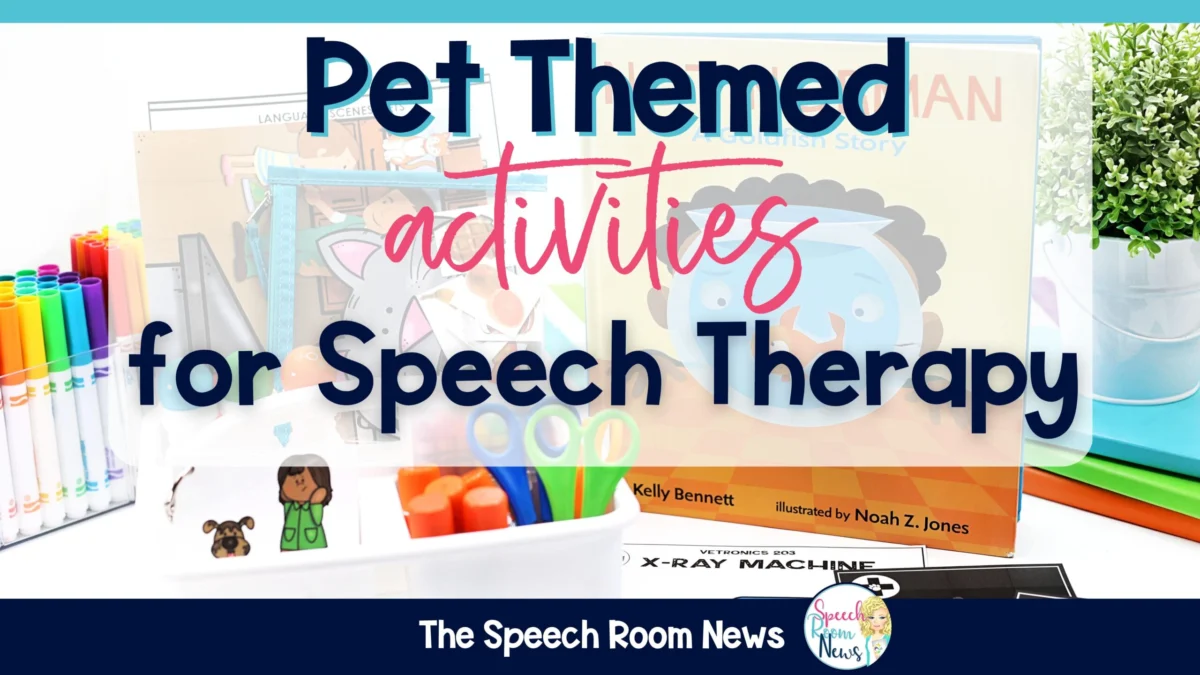
The integration of thematic units into speech and language pathology (SLP) has emerged as a highly effective and engaging pedagogical approach, with year-round themes, particularly those centered on beloved animals, gaining significant traction among therapists. This methodology not only streamlines session preparation but also profoundly enhances student engagement and facilitates the generalization of learned skills. Unlike holiday-specific materials that offer limited utility, evergreen themes like "pets" can be revisited multiple times throughout the year, proving to be a cost-effective and versatile cornerstone for diverse therapeutic goals. The shift towards context-rich, interest-based learning reflects a broader evolution in therapeutic practices, moving beyond isolated drills to embrace holistic, immersive experiences that resonate deeply with young learners.
The Foundational Rationale for Thematic Speech Therapy
The adoption of thematic frameworks in speech and language intervention is rooted in sound educational and psychological principles. Children, especially those in early childhood, learn most effectively when presented with information within a meaningful context. A thematic approach provides this context, creating a cohesive learning environment where new vocabulary, grammatical structures, and articulation targets are naturally embedded within a relatable narrative or activity. This scaffolding effect aids comprehension and retention, allowing students to build connections between different aspects of language and apply them across various scenarios.

Historically, speech therapy often involved repetitive, decontextualized drills, which, while sometimes necessary, frequently struggled to maintain children’s attention or facilitate the transfer of skills to real-world communication. The thematic model offers a powerful antidote, transforming therapy sessions into dynamic, interactive explorations. By immersing students in a chosen theme, therapists can target a wide array of speech and language objectives—from phonological awareness and articulation to complex sentence structures and pragmatic skills—all while keeping motivation levels high. This approach is particularly beneficial for preschool and early elementary students, whose cognitive development thrives on concrete experiences and imaginative play.
Furthermore, leading speech-language pathology organizations and educational experts increasingly advocate for child-centered and play-based interventions. These methods are recognized for their ability to foster intrinsic motivation, reduce anxiety associated with learning, and provide ample opportunities for spontaneous communication. Thematic units inherently align with these recommendations, offering a flexible yet structured pathway for achieving therapeutic milestones. The consistency of a theme across multiple sessions or even an entire month allows for deeper processing and consolidation of new information, moving beyond superficial exposure to genuine mastery.
Unpacking the Therapeutic Potential of a "Pets" Theme
The "pets" theme stands out as an exceptionally potent choice for speech and language therapy due to its universal appeal and rich linguistic opportunities. Most children have direct or indirect experience with pets, fostering an immediate connection and a wealth of background knowledge that therapists can tap into. This inherent relatability minimizes the cognitive load of understanding new concepts, allowing more mental resources to be dedicated to language acquisition.

1. Vocabulary Expansion and Categorization:
A pet theme offers a natural springboard for expanding vocabulary. Children can learn names of various animals (dog, cat, fish, bird, hamster), their associated sounds (bark, meow, chirp), and specific pet-related objects (leash, collar, cage, food bowl, litter box, aquarium). This also facilitates learning adjectives (furry, scaly, fluffy, tiny, big), verbs (feed, walk, cuddle, groom, swim, fly), and prepositions (in the cage, on the mat, under the bed). Critically, it provides an excellent context for categorization skills, teaching students to group animals by habitat, type (mammal, bird, reptile), or care requirements. For instance, distinguishing between a dog (needs walks, barks) and a fish (lives in water, swims) strengthens semantic networks.
2. Articulation and Phonological Awareness:
The sounds embedded in pet-related words are diverse and frequently occurring, making the theme ideal for targeting specific articulation goals. Words like "puppy," "pet," "paw" are rich in /p/ sounds; "dog," "doggie," "dirty" for /d/; "fish," "furry," "feed" for /f/; "cat," "kitten," "collar" for /k/; and "squirrel," "snake," "scaly" for /s/. Activities such as "Feed the Dog Articulation Boom Cards," where students "feed" the dog digital representations of words containing their target sounds, provide engaging, high-repetition practice with immediate auditory feedback (the "crunch" sound). This gamified approach keeps students motivated through what can often be a monotonous drill process.
3. Narrative Skills and Storytelling:
Pets are often central characters in children’s literature, providing excellent models for narrative development. Reading books like "Not Norman," "Some Pets," or "Lola Gets a Cat" allows therapists to work on story elements: characters, setting, problem, sequence of events, and resolution. Students can retell stories, predict what might happen next, or create their own narratives about a pet adventure. Role-playing scenarios, such as a trip to the vet or a day in the life of a pet, further encourages spontaneous storytelling and complex sentence formation.
4. Social Communication (Pragmatics):
The pet theme naturally lends itself to developing social communication skills. Role-playing a veterinarian’s office with a "Critter Clinic Toy Vet Set" provides opportunities for turn-taking, asking and answering questions (e.g., "What’s wrong with your puppy?", "How can I help your cat?"), expressing empathy, and following multi-step directions. Discussing pet care responsibilities helps children understand cause and effect, empathy, and the importance of routine. Observing pictures or videos of pets can also be used to infer emotions (e.g., a wagging tail indicates happiness) and discuss appropriate social responses.

5. Grammar and Syntax:
Therapists can target various grammatical structures within the pet theme. For instance, using the "Hape Family Pet Houses" to place animals "in," "on," "under," or "next to" different parts of the house reinforces prepositions. Describing a pet’s actions ("The dog is barking," "The cat was sleeping") practices verb tenses and auxiliary verbs. Constructing sentences about pet attributes ("The fish has shiny scales," "The bird is colorful") supports subject-verb agreement and descriptive language.
Practical Implementation: Engaging Resources and Activities
The success of a thematic unit hinges on the quality and versatility of its accompanying resources. The "pets" theme benefits from a wealth of readily available materials that can be adapted for various therapeutic goals.
A. Literary Foundations:

- "Not Norman" by Kelly Bennett: This humorous tale about a boy’s initial disappointment with a goldfish provides excellent opportunities for discussing emotions, perspective-taking, problem-solution, and the concept of appreciating what you have. It’s a rich source for inferencing and predicting.
- "Some Pets" by Angela DiTerlizzi: With its vibrant illustrations and diverse cast of characters and animals, this book is perfect for introducing various pet types, expanding basic vocabulary, and discussing the joys and responsibilities of pet ownership. It fosters a sense of inclusivity and introduces different family structures.
- "Lola Gets a Cat" by Anna McQuinn: This story delves into the reality of pet ownership, highlighting the responsibilities involved. It’s ideal for sequencing events, discussing cause and effect, and distinguishing between fantasy and reality. It also provides a context for practicing future tense ("Lola will feed the cat") and past tense ("Lola practiced with her stuffed animal").
- Interactive Vocabulary Books about Pets: These specialized resources often feature repetitive sentence structures and visual supports, making them invaluable for early language learners. They can target core vocabulary, concept development, and sentence expansion, often pairing directly with hands-on activities like a critter vet clinic.
B. Auditory-Verbal Learning Through Music:
Songs are powerful tools for language acquisition, leveraging rhythm, repetition, and melody to enhance memory and engagement. Pet-themed songs like "I Have a Pet," "Do You Have a Pet?," "I Love Dogs," and "Wag Your Tail" are excellent for:
- Animal Sounds: Practicing imitative sounds, crucial for early articulation and phonological awareness.
- Action Words: Learning verbs related to pet actions (wag, bark, purr, run, jump).
- Basic Vocabulary: Reinforcing pet names and related items.
- Word Patterns: Developing an ear for rhythm and rhyme, foundational for literacy.
C. Interactive Games for Skill Reinforcement:
- Color and Play Pets Bingo: This game is incredibly versatile. It can be used to target:
- Vocabulary: Naming various pets and pet-related items.
- Categorization: Grouping items or animals based on shared characteristics.
- Following Directions: "Cover the dog," "Find something that barks."
- Social Skills: Turn-taking, requesting, commenting during play.
- Feed the Dog Articulation Boom Cards: Digital interactive games like these are highly motivating for students. The act of "feeding" the dog words containing target sounds provides multisensory feedback and allows for high-repetition practice of articulation goals in a fun, engaging format. The immediate auditory "crunch" sound reinforces correct responses.
D. Hands-On Manipulatives and Role-Play:
- Critter Clinic Toy Vet Set: This classic toy is a cornerstone for imaginative play and language development. Its features (doors to open/close, locks to unlock, veterinary tools) make it perfect for:
- Action Words: Open, close, lock, unlock, examine, treat, feed.
- Prepositions: In, out, on, under the examining table.
- Problem-Solving: What’s wrong with the animal? How can we help it?
- Social Scripts: Role-playing a vet visit, practicing doctor-patient dialogue.
- Sequencing: Explaining the steps of a vet check-up.
- Hape Family Pet Houses: These small-scale accessories are excellent for targeting:
- Descriptive Language: Describing the houses, the pets, their colors, sizes, and features.
- Spatial Concepts: Placing pets "inside," "outside," "on top," "underneath" their houses.
- Narrative Play: Creating scenarios and stories about the pets living in their homes.
- Sentence Expansion: Encouraging longer, more complex utterances during play.
E. Creative Expression and Sensory Exploration:

- Clifford the Big Red Dog Craft: Arts and crafts activities, such as making a paper plate Clifford, integrate fine motor skills with language learning. Therapists can use this to:
- Follow Directions: "First, cut the paper plate. Next, glue on the ears."
- Vocabulary: Colors, shapes, body parts (ears, nose, eyes).
- Sequencing: Discussing the steps of making the craft.
- Narrative Connection: Linking the craft to stories about Clifford.
- Pet-Themed Sensory Bin: Sensory bins are invaluable for engaging multiple senses and fostering descriptive language. A bin filled with brown rice (representing pet food or dirt), small plastic pet figures, scoops, and cups allows students to:
- Descriptive Language: Use adjectives to describe the texture of the rice, the color of the pets, the actions (scoop, pour, hide).
- Inferencing: "I see a pointy black ear" – encouraging students to guess which pet is hidden.
- Turn-Taking and Sharing: Collaborative play with the bin.
Streamlining Therapy with Comprehensive Kits
Recognizing the demanding schedules of speech-language pathologists, the development of comprehensive, pre-planned thematic kits has become a significant asset. A "Pet Themed Speech Therapy Kit," for instance, can offer an entire month’s worth (four weeks) of lessons and activities. Such kits typically include:
- Therapy printables (worksheets, flashcards)
- Interactive play resources
- Structured circle time lessons
- Parent handouts (to facilitate home practice and carryover)
- Craft templates
- Book companions (guides for using specific books therapeutically)
These all-inclusive kits drastically reduce preparation time, allowing SLPs to focus more on direct client interaction and individualized intervention. They ensure a consistent, well-rounded approach to the theme, covering a broad spectrum of speech and language goals while maintaining high levels of student engagement. The strategic investment in year-round thematic materials also presents a clear financial advantage over constantly purchasing new, holiday-specific items that have limited seasonal use.
Broader Implications for Speech-Language Pathology

The growing emphasis on thematic therapy, particularly with universally appealing subjects like pets, signifies a positive trend in speech-language pathology.
- Enhanced Professional Practice: It encourages SLPs to be creative, integrating diverse modalities (literature, music, play, crafts) into their sessions, fostering a more dynamic and adaptable clinical practice.
- Improved Parent and Caregiver Involvement: The relatable nature of themes makes it easier for parents to understand and participate in home practice activities, thereby strengthening the home-school connection and promoting generalization of skills.
- Optimized Client Outcomes: Engaged and motivated students are more likely to participate actively, retain information, and apply new skills, leading to more efficient and effective therapeutic progress. This holistic approach helps address not just isolated deficits but also broader communication competence.
- Resource Development and Accessibility: The demand for high-quality thematic resources spurs innovation in the development of new materials, both digital and physical, making effective therapy more accessible to a wider range of practitioners.
In conclusion, the strategic adoption of year-round themes, exemplified by the highly effective "pets" theme, represents a significant advancement in speech and language therapy. By harnessing children’s natural curiosity and affection for animals, therapists can create rich, engaging, and multifaceted learning environments that address a comprehensive array of speech and language goals. This approach not only saves valuable time and resources but, more importantly, fosters deeper learning, greater motivation, and ultimately, more successful communication outcomes for students. The continued evolution towards such context-rich, child-centered interventions underscores the profession’s commitment to delivering the most impactful and enjoyable therapeutic experiences possible.
