

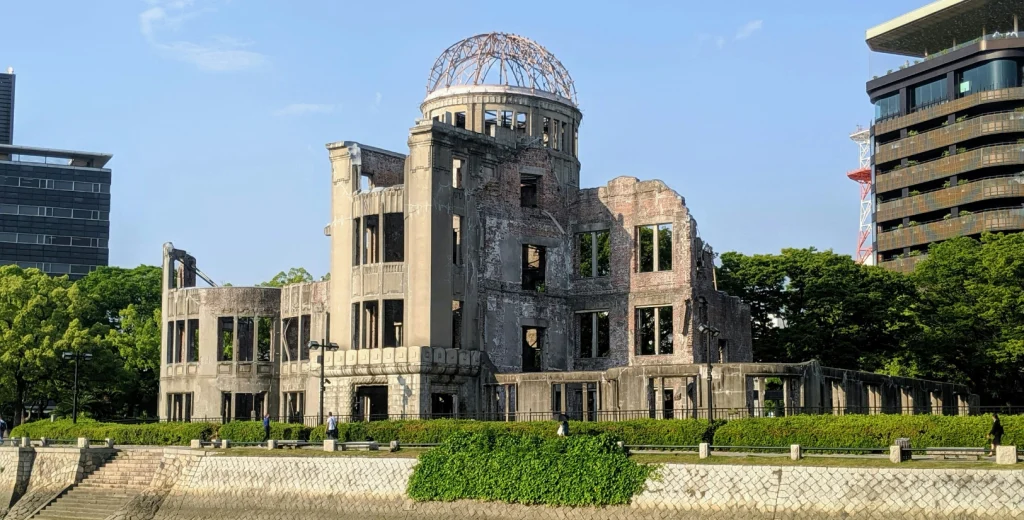
In a recent exploration of the intersection between historical narrative and professional development, the Anecdotally Speaking podcast has highlighted the profound impact of internal storytelling on executive resilience and decision-making. The latest episode, featuring hosts Mark and Shawn, centers on the life of Tsutomu Yamaguchi, the only person officially recognized by the Japanese government as having survived both the Hiroshima and Nagasaki atomic bombings. By examining Yamaguchi’s survival through the lens of narrative psychology, the discussion provides a framework for how leaders can interpret adversity and communicate complex truths within organizational structures.
The narrative of Tsutomu Yamaguchi serves as a foundational case study for understanding how the "meaning" of a factual event is often more influential than the event itself. While the historical facts of the 1945 bombings remain static, the interpretation of Yamaguchi’s life—whether he was the unluckiest man in history or the luckiest—remains a matter of perspective. This duality forms the basis of the podcast’s analysis of leadership: how the stories leaders tell themselves influence their ability to guide teams through crisis.
The Unprecedented Survival of Tsutomu Yamaguchi: A Chronology of Fortitude
The historical context of Tsutomu Yamaguchi’s experience begins in August 1945. A 29-year-old naval engineer for Mitsubishi Heavy Industries, Yamaguchi was concluding a three-month business trip to Hiroshima. On the morning of August 6, 1945, as he was preparing to leave the city, the United States B-29 bomber Enola Gay dropped the "Little Boy" atomic bomb.
Yamaguchi was approximately three kilometers from the hypocenter when the blast occurred. He recalled seeing a "blinding flash" before being thrown into the air by the resulting shockwave. The immediate physical toll was severe: he suffered significant thermal burns to the upper half of his body, ruptured eardrums, and temporary blindness. Despite the devastation that flattened Hiroshima—killing an estimated 140,000 people by the end of the year—Yamaguchi survived the night in an air-raid shelter.
The following day, demonstrating a level of resilience that would define his legacy, Yamaguchi navigated the ruined infrastructure of the city to reach the railway station. He boarded a train filled with other wounded survivors, returning to his hometown of Nagasaki to seek medical treatment and reunite with his family.
On August 9, 1945, just three days after surviving the first nuclear detonation in history, Yamaguchi reported to work at the Mitsubishi office in Nagasaki. Historical records indicate that he was in the middle of describing the "blinding flash" of the Hiroshima blast to his supervisor—who reportedly expressed skepticism that a single bomb could destroy an entire city—when the second atomic bomb, "Fat Man," was detonated over Nagasaki.
The second blast again occurred approximately three kilometers from where Yamaguchi stood. Although the office was destroyed, Yamaguchi suffered only minor injuries in the second explosion, though his bandages from the first blast were blown off. He became one of a small group of "nijū hibakusha" (double-exposed survivors), a status the Japanese government did not officially grant him until 2009, one year before his death at age 93.
Supporting Data and the Statistical Rarity of Survival
The statistical probability of surviving two nuclear attacks is infinitesimally low. To understand the gravity of Yamaguchi’s narrative, one must consider the scale of the 1945 bombings:
- Hiroshima (August 6): The "Little Boy" bomb had an explosive yield of approximately 15 kilotons. It destroyed roughly five square miles of the city.
- Nagasaki (August 9): The "Fat Man" bomb was more powerful, with a yield of approximately 21 kilotons, though the city’s hilly geography confined the blast’s total area of destruction.
- Casualty Figures: Combined, the bombings resulted in the immediate deaths of over 100,000 people, with tens of thousands more succumbing to radiation sickness and injuries in the months following.
Yamaguchi’s ability to remain functional and return to work between these two cataclysmic events provides a stark example of "active resilience." From a data-driven perspective, his longevity—living to nearly a century despite double exposure to ionizing radiation—challenges contemporary understandings of trauma and biological recovery.
The Psychological Framework of Narrative Reframing
Mark and Shawn utilize Yamaguchi’s story to pivot into a broader discussion on narrative reframing. In leadership, the "facts" of a corporate setback—a failed product launch, a missed quarterly target, or a forced restructuring—are often immutable. However, the narrative constructed around those facts determines the organizational response.

The podcast posits that if a leader views a setback through the lens of "bad luck," it often leads to a defensive or defeatist culture. Conversely, if the same facts are framed as a "survivable challenge" or a "unique opportunity for adaptation," the organizational resilience increases. This is not about toxic positivity, but about "meaning-making"—the process by which individuals and groups interpret events to maintain a sense of agency.
Strategic Storytelling in Modern Corporate Leadership
The episode delves into the mechanics of storytelling as a tool for sales enablement and leadership. Anecdote International, the organization behind the podcast, argues that storytelling is not a "soft skill" but a strategic necessity for bringing humanity back to the workforce.
With a network of over 60 partners in 28 countries, Anecdote International observes that leaders often struggle with the "authenticity gap"—the distance between corporate mandates and personal beliefs. The podcast addresses how leaders can communicate decisions they may not personally agree with while maintaining integrity. The solution, according to the hosts, lies in the transparency of the narrative. By sharing the "why" behind a decision and acknowledging the complexities involved, leaders can foster trust even in the absence of total consensus.
The Role of Foreshadowing and Audience Engagement
A significant portion of the discussion is dedicated to the technical aspects of storytelling, specifically the use of foreshadowing. In the context of Yamaguchi’s life, his journey back to Nagasaki acts as a grim foreshadowing of the second blast. In a business context, foreshadowing can be used to prepare a team for upcoming changes, allowing them to participate in the "meaning-making" process before a crisis hits.
The hosts also highlight the importance of audience participation. A story is not a monologue; it is a collaborative event where the listener fills in the gaps with their own experiences. When a leader tells a story of resilience, they invite their employees to find parallels in their own professional lives, thereby decentralizing the source of strength from the executive to the entire collective.
Broader Impact and Implications for Global Organizations
The implications of these storytelling techniques extend beyond individual leadership. As global markets face increasing volatility, the ability to maintain a coherent and motivating organizational narrative is a competitive advantage.
Anecdote International’s learning programs, which have been translated into 11 languages, suggest that the need for narrative is universal. Whether in a Mitsubishi office in 1945 or a tech startup in 2026, the human brain is hardwired to organize information through stories.
The story of Tsutomu Yamaguchi serves as a powerful reminder that while we cannot always control the "flashes" and "blasts" of external circumstances, we maintain absolute control over the story we tell about them. For leaders, this means moving beyond the role of a data-reporter and becoming a "meaning-maker."
Building a Story Bank for Organizational Growth
The episode concludes with a practical recommendation for listeners: the development of a "story bank." This is a curated collection of narratives—like that of Yamaguchi—that can be deployed to illustrate specific values such as resilience, change management, and integrity.
By categorizing stories with tags such as "Leadership" or "Meaning," as seen in the podcast notes, organizations can ensure that their cultural values are not just abstract bullet points on a mission statement, but living examples that resonate with the workforce.
In the final analysis, the life of Tsutomu Yamaguchi is a testament to the endurance of the human spirit. However, as Mark and Shawn demonstrate, it is also a masterclass in the power of perspective. Whether one views Yamaguchi as a victim of unprecedented misfortune or a hero of miraculous survival, the choice of narrative ultimately dictates the path forward. For modern leaders, the lesson is clear: the facts are the foundation, but the story is the structure.
