

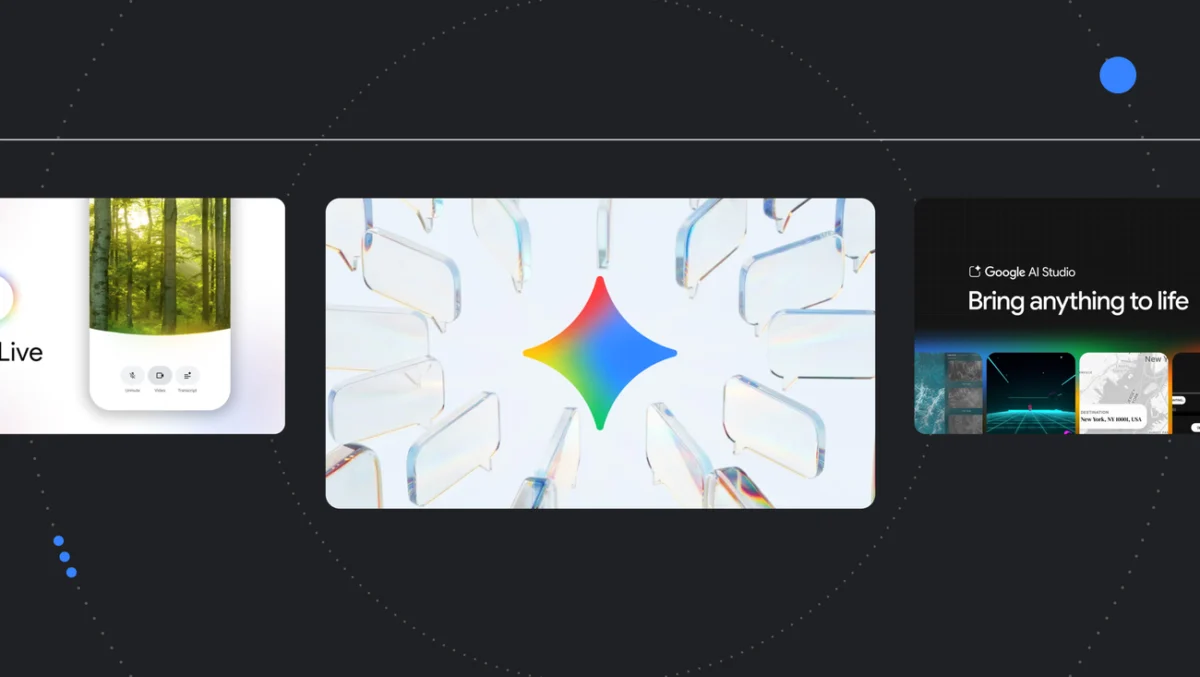
Google’s strategic trajectory in the first quarter of 2026 has culminated in a series of sweeping updates to its artificial intelligence ecosystem, marking a definitive shift from reactive assistants to proactive personal intelligence. Following two decades of foundational research in machine learning and neural networks, the company utilized March 2026 to launch several significant upgrades to the Gemini model family, expanded the geographic footprint of its real-time search capabilities, and introduced specialized tools for healthcare and software development. These developments reflect a broader industry trend toward multimodal integration, where AI is no longer a standalone interface but an invisible layer embedded across hardware, productivity software, and geographic navigation tools.

The Global Expansion of Search Live and Conversational AI
One of the month’s most significant milestones was the global rollout of Search Live, which is now accessible in over 200 countries and territories. This expansion ensures that the "AI Mode" ecosystem is nearly ubiquitous, allowing users to engage in low-latency, back-and-forth dialogue using either voice commands or live camera feeds. The technical architecture behind Search Live leverages the newly released Gemini 3.1 Flash Live model, which is engineered specifically to reduce the "lag" that has historically hindered natural human-computer interaction.
By tapping the "Live" icon within the Google app, users can now perform hands-free troubleshooting or receive real-time travel insights. For instance, a traveler in a foreign city can point their camera at a historical monument or a transit sign and receive immediate context, translation, and navigation advice without typing a single query. Parallel to this, Google expanded the availability of "Canvas" in AI Mode to the entire United States. Canvas serves as a persistent, dynamic workspace designed for long-form project management, supporting complex tasks such as creative writing and software coding within the search interface itself. This shift suggests a move away from the traditional list of blue links toward a generative environment where the search engine acts as a collaborative partner.

Productivity Reimagined: Gemini’s Integration into Google Workspace
In the realm of enterprise and personal productivity, Google introduced deeper integrations for AI Ultra and Pro subscribers within Google Docs, Sheets, Slides, and Drive. The March 2026 updates focused on "contextual synthesis," a feature that allows Gemini to securely analyze information across a user’s disparate files, emails, and web data to identify patterns or generate summaries.
The most notable advancement occurred within Google Sheets, which Google claims has reached "state-of-the-art performance" in complex data analysis. The AI can now perform sophisticated modeling and collaborative tasks that previously required advanced knowledge of scripting or pivot tables. By connecting dots between a user’s Drive folders and their Gmail correspondence, the system can now draft project status reports or budget forecasts with minimal manual input. Crucially, these updates are built on a "privacy-first" architecture, ensuring that the synthesis of personal or corporate data remains safeguarded within the user’s specific environment, addressing a primary concern for enterprise clients regarding the security of proprietary information.

The Check Up 2026: AI as a Pillar of Modern Healthcare
On the social and scientific front, Google hosted its annual health event, "The Check Up 2026," where it unveiled a $10 million funding initiative aimed at reimagining clinician education. The funding is designed to help medical organizations integrate AI tools into the training of the next generation of doctors and nurses, ensuring that the medical workforce is equipped to handle AI-driven diagnostic tools.
Furthermore, Google announced new partnerships with rural health leaders to address disparities in care delivery through AI-enabled research and remote monitoring. The Fitbit ecosystem also received a significant overhaul, with the Personal Health Coach moving into a broader Public Preview. This AI-driven coach provides personalized sleep hygiene advice and overall health metrics by synthesizing data from the user’s wearable device with their electronic medical records—provided the user opts into such a connection. New features specifically targeting mental well-being, cycle health, and nutrition logging indicate Google’s ambition to turn Fitbit from a passive tracker into an active medical companion.

Hardware Synergy: The March Pixel Drop and Live Translation
The hardware division saw the release of the March 2026 Pixel Drop, which focused on making the interaction between the user and their device more intuitive through "Magic Cue" and "Circle to Search" upgrades. The "Circle to Search" feature can now deconstruct an entire outfit from a single image, identifying individual items—from footwear to outerwear—and providing shopping links or similar alternatives.
Gemini’s role on the Pixel has also become more proactive. Through "Magic Cue," the AI can detect when a user is discussing dinner plans in a chat thread and automatically surface restaurant recommendations, reservation availability, and reviews without the user needing to leave the conversation. For iOS users, Google expanded its live translation capabilities for headphones, allowing for real-time interpretation in over 70 languages. This cross-platform expansion highlights Google’s strategy of maintaining service dominance even on competing hardware ecosystems.

Technical Milestones: Gemini 3.1 Flash and the Rise of "Vibe Coding"
March 2026 also marked a major leap in model efficiency with the release of Gemini 3.1 Flash-Lite and Gemini 3.1 Flash Live. Flash-Lite is positioned as the most cost-effective and high-speed model in Google’s lineup, designed for high-volume workloads where low latency is critical. It is aimed primarily at developers who require responsive, real-time experiences in large-scale deployments without the prohibitive costs of larger, more compute-heavy models.
Simultaneously, Google AI Studio introduced an upgraded "vibe coding" experience. This paradigm shift in software development allows users to build production-ready applications through natural language prompts. Utilizing the new "Antigravity" coding agent, developers can create multiplayer experiences, integrate databases, and connect to real-world services through a "Build mode." This agent possesses a holistic understanding of entire project architectures, allowing for precise code edits and faster iterations. This move democratizes app development, moving the focus from syntax and semantics to intent and "vibe," effectively lowering the barrier to entry for creative software engineering.

Creative Expression and the Lyria 3 Pro Model
For the creative community, Google introduced Lyria 3 Pro, its most advanced music generation model to date. This model allows for the creation of high-fidelity tracks up to three minutes in length, offering granular control over musical structures such as intros, bridges, and verses. By making Lyria 3 available in public preview via the Gemini API and Google AI Studio, the company is positioning itself at the center of the generative audio movement, providing tools that cater to both hobbyists and professional developers looking to integrate custom audio into their platforms.
A Decade of Impact: From AlphaGo to AlphaFold
The month concluded with a retrospective on the ten-year anniversary of AlphaGo’s historic victory over world champion Lee Sedol. Google DeepMind highlighted how the victory was not merely a win in a board game, but a proof of concept for AI’s ability to navigate the "physical world’s vast complexities."

This foundational work led directly to the development of AlphaFold, which solved the 50-year-old "protein folding" problem by mapping the 3D structures of proteins. This retrospective served to remind stakeholders of Google’s long-term commitment to "frontier" AI, suggesting that the consumer-facing updates of March 2026 are the direct descendants of these earlier, high-stakes scientific gambles.
Broader Implications and Market Analysis
The announcements made in March 2026 suggest that Google is aggressively pursuing an "ecosystem lock-in" strategy by lowering the friction for users to switch from competing AI services. The introduction of tools that allow users to import their chat history and "memory" from other AI apps is a direct challenge to competitors like OpenAI and Anthropic. By ensuring that a user’s personal preferences and historical context can be migrated seamlessly, Google is attempting to neutralize the "first-mover advantage" held by earlier AI platforms.

Furthermore, the emphasis on "Personal Intelligence" across Chrome, Search, and the Gemini app signals a move toward a more integrated digital identity. As AI begins to handle more sensitive tasks—such as booking reservations, managing health records, and synthesizing work emails—the issues of data sovereignty and algorithmic transparency will likely become the next major battlegrounds for the company.
From a journalistic perspective, Google’s March updates represent a transition from "AI as a tool" to "AI as an agent." The focus is no longer just on answering questions, but on performing actions and predicting needs. Whether it is through the "Antigravity" agent in coding or the "Personal Health Coach" in Fitbit, the company is betting that the future of technology lies in proactive, low-latency assistance that understands the specific, high-definition context of every individual user’s life. As these tools roll out globally, the impact on productivity, healthcare, and the creative economy will likely be profound, setting the stage for the next decade of the AI era.
