

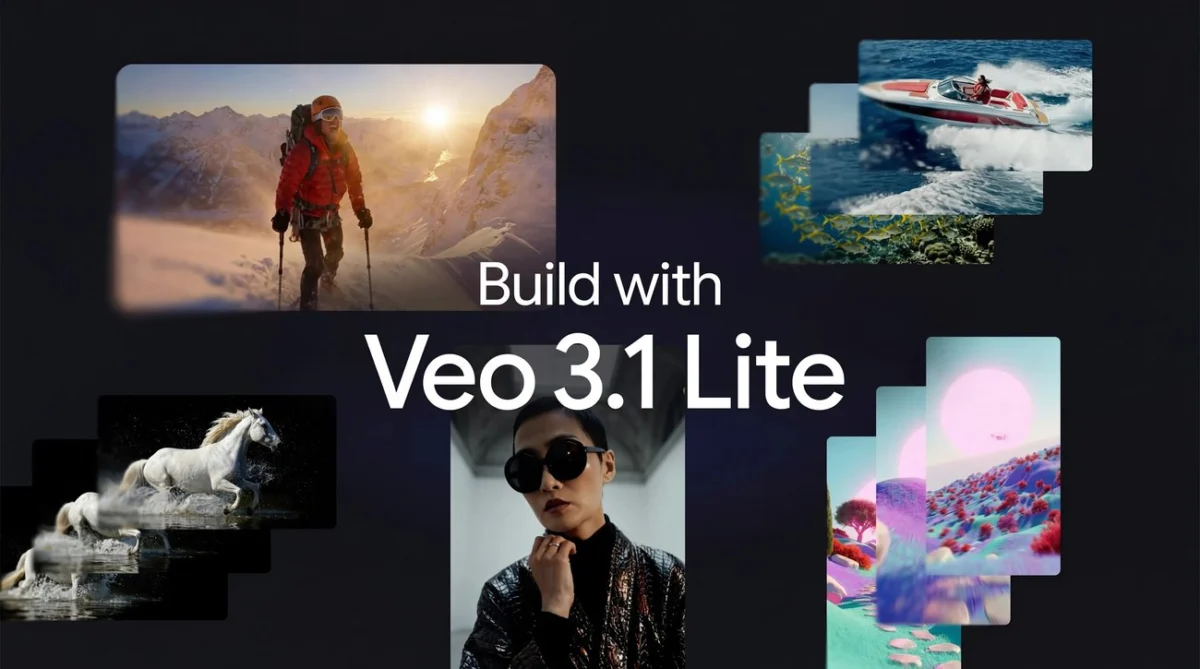
Google DeepMind has officially expanded its generative artificial intelligence portfolio with the introduction of Veo 3.1 Lite, a new video generation model specifically engineered to provide developers with a high-performance, lower-cost alternative for scalable video production. This release marks a strategic shift for the technology giant, moving beyond purely experimental high-fidelity generation toward a commercially viable ecosystem for high-volume application development. By offering the model through the Gemini API and Google AI Studio, Google aims to capture a larger share of the burgeoning enterprise market for automated content creation, social media asset generation, and interactive media.
The launch of Veo 3.1 Lite is accompanied by a significant restructuring of Google’s AI pricing model. Starting April 7, the company will implement price reductions for its flagship Veo 3.1 Fast model, effectively lowering the barrier to entry for developers who require rapid, high-quality video outputs. The new Lite variant is positioned as the most economical option in the Veo 3.1 family, delivering the same processing speeds as the Fast version but at less than half the operational cost. This tiered approach allows developers to select a model based on their specific budgetary constraints and technical requirements without sacrificing the temporal consistency and visual quality that have become hallmarks of the Veo architecture.
Technical Specifications and Capabilities
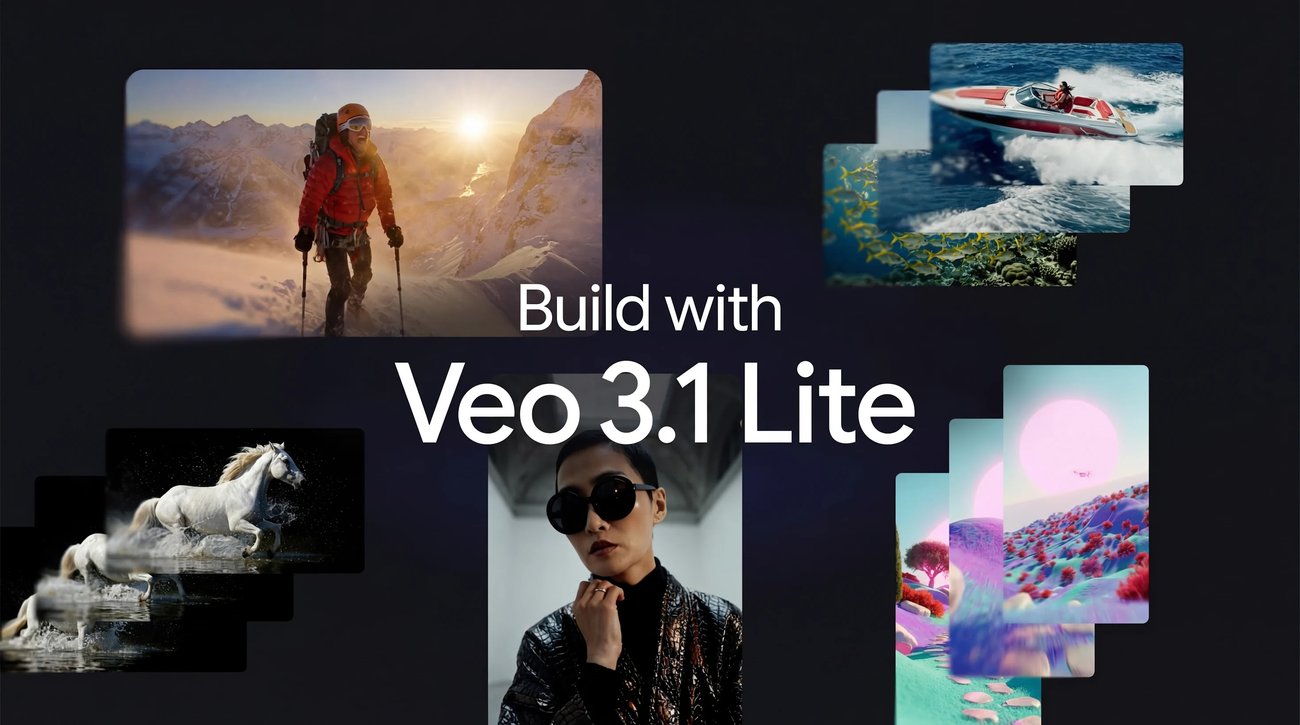
Veo 3.1 Lite is designed to balance computational efficiency with professional-grade output. It supports both text-to-video and image-to-video modalities, allowing users to generate cinematic sequences from simple natural language prompts or by using static images as a reference for motion. The model is particularly versatile in its handling of spatial dimensions, offering native support for landscape (16:9) and portrait (9:16) aspect ratios. This dual-format capability is essential for modern developers who must cater to both traditional cinematic displays and mobile-first platforms like TikTok, Instagram Reels, and YouTube Shorts.
In terms of resolution, Veo 3.1 Lite supports 720p and 1080p outputs, ensuring that the generated content remains sharp and usable in professional environments. One of the model’s most significant features for developers is the customizable duration settings. Users can generate clips in four, six, or eight-second increments. Critically, the billing structure is granular; the cost of generation scales according to the duration of the video, providing developers with precise control over their API expenditures. This flexibility is expected to be a major draw for startups and enterprise-level companies looking to integrate generative video into dynamic user interfaces or automated marketing workflows.
A Chronology of Google’s Video AI Evolution
The release of Veo 3.1 Lite is the latest milestone in a multi-year effort by Google Research and Google DeepMind to dominate the generative video space. The journey began with early experiments such as Imagen Video and Phenaki, which proved that diffusion models could be adapted for temporal data. However, these early models were often limited by low resolution and significant visual artifacts.
In early 2024, Google unveiled Lumiere, a space-time diffusion model that introduced a new method for generating consistent motion across the entire duration of a video. This set the stage for the debut of the original Veo model at Google I/O in May 2024. Veo represented a leap forward, capable of understanding cinematic terminology—such as "timelapse" or "aerial shot"—and producing 1080p video that exceeded a minute in length in its most advanced iterations.
By late 2024 and early 2025, Google transitioned from research previews to developer-centric releases. The introduction of the Veo 3.1 family earlier this year signaled the model’s readiness for commercial integration. The addition of the Lite variant today completes a three-tiered strategy: a "Standard" or "Ultra" tier for maximum quality, a "Fast" tier for rapid iteration, and now a "Lite" tier for massive-scale deployment.
Economic Implications and Market Positioning
The decision to slash prices for Veo 3.1 Fast and introduce a Lite version reflects the intensifying competition in the AI video sector. Google is currently vying for market share against well-funded startups such as Runway, Pika Labs, and Luma AI, as well as established tech rivals like OpenAI, whose Sora model remains in a controlled testing phase. By making Veo 3.1 Lite the "most cost-effective" model in its class, Google is leveraging its massive infrastructure—specifically its custom-designed Tensor Processing Units (TPUs)—to undercut competitors on price.
For developers, the cost of generating high-definition video has historically been a significant hurdle. High-fidelity video generation requires immense GPU/TPU hours, often making it prohibitively expensive for consumer-facing apps that might require thousands of generations per day. Google’s promise of a 50% cost reduction compared to the Fast model suggests that the company has achieved significant breakthroughs in model distillation and quantization. These optimization techniques allow a smaller, "lighter" version of the model to retain the core intelligence of the larger version while requiring fewer computational resources to run an inference pass.

Official Perspectives and Safety Frameworks
Alisa Fortin, Product Manager at Google DeepMind, and Guillaume Vernade, Gemini Developer Advocate, emphasized that the goal of this release is to provide "flexibility based on needs." According to the announcement, the model is already rolling out to the paid tier of the Gemini API. This integration into the broader Gemini ecosystem is a key advantage for Google, as it allows developers to chain multiple AI tasks—such as using Gemini 1.5 Pro to generate a complex video prompt, which is then fed into Veo 3.1 Lite for execution.
Safety remains a central pillar of Google’s deployment strategy. Like previous versions, Veo 3.1 Lite includes safety filters to prevent the generation of harmful, explicit, or copyrighted content. Furthermore, Google employs SynthID, a digital watermarking technology developed by DeepMind. SynthID embeds an imperceptible watermark into the pixels of the generated video, allowing for the identification of AI-generated content even if the file is compressed, cropped, or edited. This proactive approach to AI safety is designed to reassure enterprise clients and regulators who are increasingly concerned about the rise of deepfakes and misinformation.
Broader Impact on Creative Industries and Software Development
The availability of a low-cost, high-speed video model is expected to have a transformative impact across several sectors. In the gaming industry, developers could use Veo 3.1 Lite to generate dynamic cutscenes or background environments on the fly, reducing the need for massive pre-rendered video files. In the realm of e-commerce, platforms could automatically generate promotional videos for millions of products based on a handful of static images and text descriptions, providing a more engaging shopping experience without the overhead of a traditional video production crew.
Furthermore, the integration of Veo into the Gemini API suggests a future where "agentic" AI can interact with the world through video. An AI assistant could, for example, demonstrate how to perform a task—like tying a specific knot or assembling furniture—by generating a bespoke instructional video in real-time.
Industry analysts suggest that the April 7 price reduction for the Fast model may be a preemptive move to solidify Google’s user base before competitors release new updates. As the cost of "intelligence" continues to drop, the focus is shifting from whether a model can generate video to how cheaply and reliably it can do so at scale.

Looking Ahead
As Google DeepMind continues to iterate on the Veo architecture, the boundary between "Lite" and "Premium" models is expected to blur. Future updates will likely focus on increasing the maximum duration of clips and improving the model’s understanding of complex physics, such as fluid dynamics and human locomotion.
For now, the release of Veo 3.1 Lite serves as a clear signal that Google is committed to the "developer-first" approach. By providing the tools necessary for high-volume, cost-effective generation, Google is not just providing a model; it is building the foundation for a new generation of video-centric applications. Developers interested in exploring the capabilities of the new model can access the full technical documentation and pricing schedules through the Google AI Studio and the Gemini API dashboard effective immediately.
