

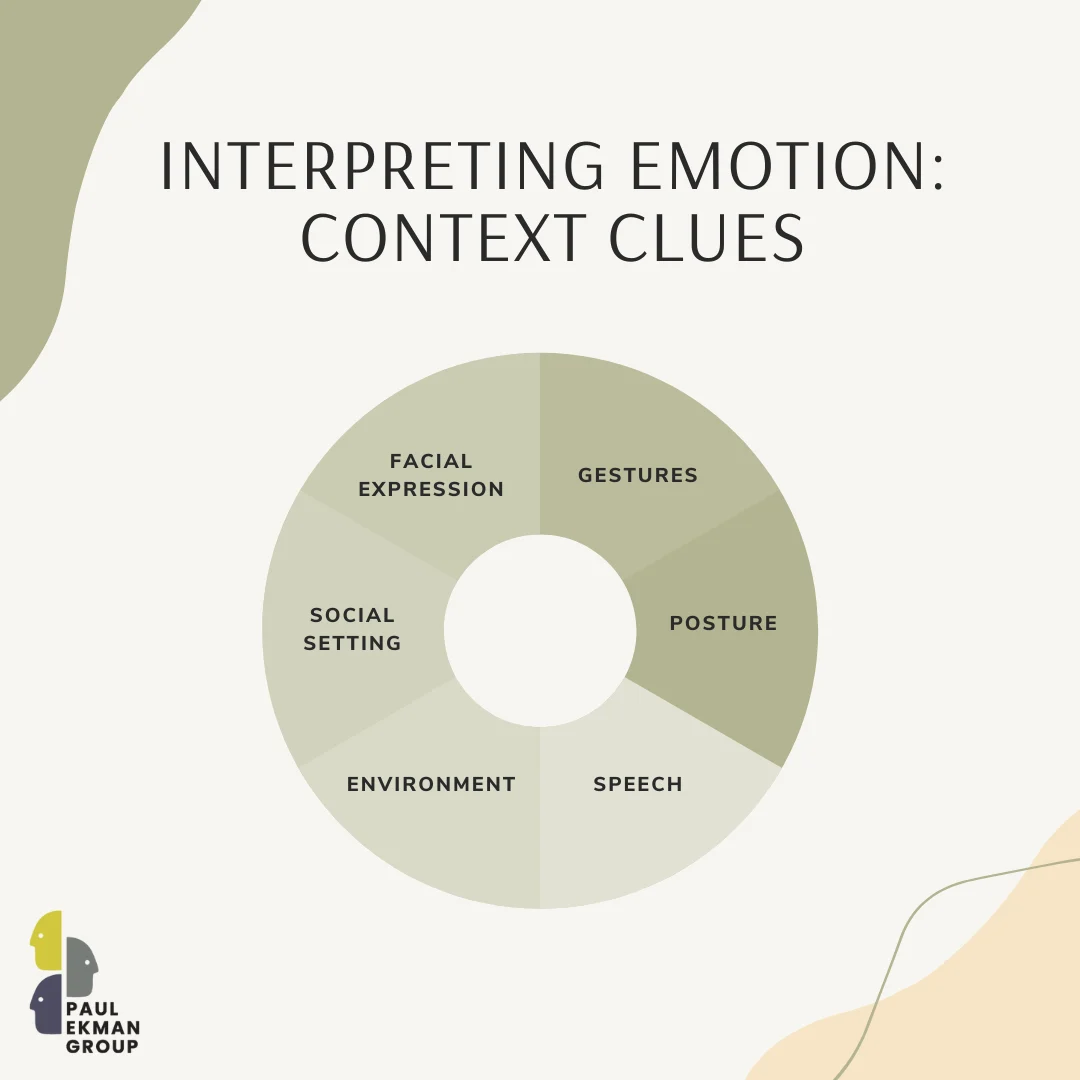
The human face is a remarkably expressive canvas, capable of conveying a vast spectrum of emotions. However, the interpretation of these fleeting expressions is far from a straightforward process. New research and established psychological understanding underscore a critical principle: facial expressions, when viewed in isolation, offer a limited window into a person’s true emotional state. It is only when these visual cues are integrated with a rich tapestry of contextual information – encompassing speech, gestures, posture, environmental details, and crucially, relational history – that a truly accurate and nuanced understanding of emotion can be achieved.
This fundamental insight challenges the common perception that facial expressions are universally transparent indicators of feeling. While a smile might suggest happiness or a frown sadness, the absence of surrounding information can lead to significant misinterpretations. When an observer lacks any prior relationship, past experiences, or current knowledge of the individual displaying the expression, the facial cues alone become ambiguous. The ability to discern intent, emotional state, or authenticity is severely hampered, akin to trying to understand a sentence with half the words missing.
The implications of this contextual dependency are profound, extending beyond academic discourse into everyday interactions, professional settings, and even legal contexts. Understanding this interplay between facial cues and social context is paramount for effective communication, empathy, and the accurate assessment of truthfulness.
The Nuances of Isolated Expressions
The research highlights that even when stripped of all external context, facial expressions retain a degree of inherent meaning. They are not entirely arbitrary signals. For instance, studies by Dr. Paul Ekman, a pioneer in the field of emotion research, have demonstrated that certain facial expressions associated with basic emotions like happiness, sadness, anger, fear, surprise, and disgust appear to be universal across cultures. These expressions are often referred to as "universals."
However, the intensity and duration of these expressions, and more importantly, their appropriateness to the situation, are heavily influenced by context. A smile during a somber funeral, for example, would be interpreted very differently than a smile at a joyous celebration, even if the underlying muscle movements of the face are identical. The social context provides the interpretive framework.
The challenge arises when attempting to analyze these expressions in a vacuum. This is often the case in forensic investigations, lie detection scenarios, or even in the simplified representations found in media. When presented with a still image of a facial expression devoid of its original setting, the observer is deprived of the critical data points that would normally guide their interpretation. This artificial isolation can lead to oversimplification and potentially erroneous conclusions.
The Richness of Social Context
In the natural flow of human interaction, we rarely encounter facial expressions in such a decontextualized manner. Even a fleeting glance at a stranger on the street provides a wealth of contextual clues. Their attire, their gait, the time of day, the location itself – all contribute to a preliminary understanding of the situation and, by extension, the potential emotional state of the individual. We infer that someone dressed in business attire walking briskly through a financial district might be experiencing different emotions than someone in casual clothing strolling through a park.
This rich interplay of contextual information allows us to make rapid, often unconscious, assessments of others. It enables us to navigate social situations, anticipate actions, and build rapport. When this contextual layer is removed, as it is in artificial experimental settings or when analyzing isolated images, we are placed in an unusual and challenging position. We are stripped of the very signals that allow us to reliably gauge intent, emotional depth, or the authenticity of an expressed feeling.
The Deceptive Potential of Facial Expressions
A critical aspect of facial expression analysis is its potential for deception. Dr. Ekman’s research has extensively explored how individuals can intentionally manipulate their facial expressions to conceal their true emotions or to feign feelings they do not possess. This ability to "lie with their faces" is a significant factor in interpersonal dynamics and has important implications for various professional fields.
While universal expressions might offer some baseline emotional information, they are not foolproof indicators of truth. The human capacity for emotional regulation and conscious control over facial muscles allows for strategic masking. For instance, a person experiencing significant distress might consciously adopt a neutral or even a pleasant expression to avoid revealing their vulnerability or to manipulate others’ perceptions.
However, the human face is also a remarkably complex system, and complete control is often elusive. This is where the concept of "microexpressions" becomes crucial.
Unveiling Hidden Emotions: The Power of Microexpressions
Microexpressions are brief, involuntary facial expressions that occur when a person is trying to conceal an emotion. They are fleeting, often lasting only a fraction of a second, and are difficult to detect with the naked eye. These subtle, almost imperceptible movements of facial muscles can betray a person’s true feelings, even when they are actively attempting to suppress them.
Research in this area suggests that microexpressions can reveal emotions that are being hidden, such as fear, anger, or disgust, even if the person is outwardly displaying happiness or neutrality. The ability to recognize and interpret these microexpressions requires specialized training and a keen observational capacity.
The discovery and study of microexpressions have opened new avenues for understanding deception and emotional authenticity. By understanding the underlying physiology and psychology of these involuntary expressions, individuals can gain a more profound insight into the emotional states of others.
Chronology of Understanding Facial Expressions and Deception
The scientific exploration of facial expressions and their link to emotions has a rich history, with key milestones shaping our current understanding:
- Early 20th Century: Psychologists begin to investigate the link between facial muscle movements and emotional states.
- Mid-20th Century: The work of figures like Carroll Izard and Paul Ekman solidifies the concept of universal facial expressions associated with basic emotions. Their research involves cross-cultural studies to demonstrate the universality of these expressions.
- 1970s-1980s: Ekman and his colleagues begin to systematically study the ability of individuals to deliberately mask emotions and the phenomenon of microexpressions, laying the groundwork for their later work on deception detection.
- Late 20th Century – Present: Development of training programs and technologies aimed at helping individuals recognize microexpressions and subtle facial cues. Research expands to explore the role of context in interpreting emotional expressions and the neurological underpinnings of facial affect.
This ongoing evolution in research demonstrates a progressive understanding of the complexity involved in reading human emotions, moving from a simple categorization of expressions to a nuanced appreciation of context and the subtle, involuntary signals that can betray deeper feelings.
Supporting Data and Empirical Evidence
The scientific basis for the importance of context in interpreting facial expressions is supported by numerous studies. For example:
- Contextual Ambiguity Studies: Experiments where participants are shown photographs of facial expressions with varying degrees of contextual information often reveal significantly lower accuracy rates in identifying the emotion when the image is presented in isolation compared to when it is accompanied by a descriptive scenario or other visual cues. A study might present a picture of a grimace and ask participants to identify the emotion. Without context, it could be pain, disgust, or even an effortful exertion. With context – for example, a person reacting to spoiled food versus a person lifting a heavy weight – the interpretation becomes much clearer.
- Cross-Cultural Variations: While basic emotions may have universal facial expressions, the display rules – the cultural norms that dictate when and how emotions should be expressed – vary significantly. This highlights how social context shapes the appropriateness and interpretation of facial displays. What might be an acceptable display of anger in one culture could be considered highly offensive in another, even if the facial muscles involved are similar.
- Deception Detection Studies: Research on deception often relies on the principle that when individuals are actively trying to deceive, their microexpressions may betray their true emotional state. Studies have shown that individuals trained to detect microexpressions are more accurate in identifying deception than untrained individuals. For example, in controlled experiments, participants asked to lie about a sensitive topic often exhibit fleeting expressions of fear or anxiety, even while maintaining a calm demeanor.
Official Responses and Applications
The understanding of facial expressions and their contextual interpretation has far-reaching implications across various sectors:
- Law Enforcement and Security: Trained professionals in these fields utilize knowledge of facial expressions and microexpressions to assess credibility, identify potential threats, and gather intelligence. The ability to detect deception is a critical tool in investigations.
- Mental Health Professionals: Therapists and counselors use facial cues, alongside verbal communication and behavioral observations, to understand a patient’s emotional state, diagnose conditions, and tailor treatment plans. The context of the therapeutic relationship is paramount in this interpretation.
- Human Resources and Management: In hiring processes and team management, understanding non-verbal communication, including facial expressions within their context, can help in assessing candidate suitability, managing team dynamics, and fostering a positive work environment.
- International Relations and Diplomacy: In high-stakes diplomatic negotiations, the ability to accurately read the emotional states of counterparts, while considering the broader geopolitical context, can be crucial for successful outcomes.
While there may not be "official responses" in the sense of government policy specifically on this research, the principles are integrated into training protocols and best practices within these professional domains. Organizations that employ individuals in roles requiring interpersonal judgment often invest in training that covers non-verbal communication, including the interpretation of facial cues.
Broader Impact and Implications
The implications of understanding the contextual nature of facial expressions extend to fundamental aspects of human connection and societal function:
- Enhanced Empathy and Interpersonal Relationships: By recognizing that facial expressions are not always direct reflections of inner feelings, individuals can approach interactions with greater nuance and empathy. This understanding fosters more meaningful connections, as people become more attuned to the complexities of emotional expression.
- Combating Misinformation and Bias: In an age saturated with images and videos, the ability to critically analyze facial expressions within their proper context is crucial for combating misinformation and preventing biased interpretations. Understanding that a single image can be misleading without accompanying information empowers individuals to seek a more complete picture.
- Ethical Considerations in AI and Technology: As artificial intelligence systems become more sophisticated in analyzing facial expressions, the ethical implications of decontextualized analysis are significant. Ensuring that AI systems are trained on diverse datasets and understand the importance of context is vital to prevent biased or discriminatory outcomes. The development of AI that can interpret emotions must be grounded in a sophisticated understanding of human psychology, not just pattern recognition.
In conclusion, the human face is a powerful communicator, but its messages are rarely delivered in a vacuum. The intricate interplay between facial expressions and the rich tapestry of social context is fundamental to accurate emotional understanding. By moving beyond a simplistic interpretation of isolated cues and embracing the complexities of context, we can unlock deeper insights into human emotion, enhance our interpersonal connections, and navigate the complexities of the modern world with greater clarity and empathy. Further research and widespread education on these principles will continue to refine our ability to read and respond to the subtle, yet profound, language of human faces.
