

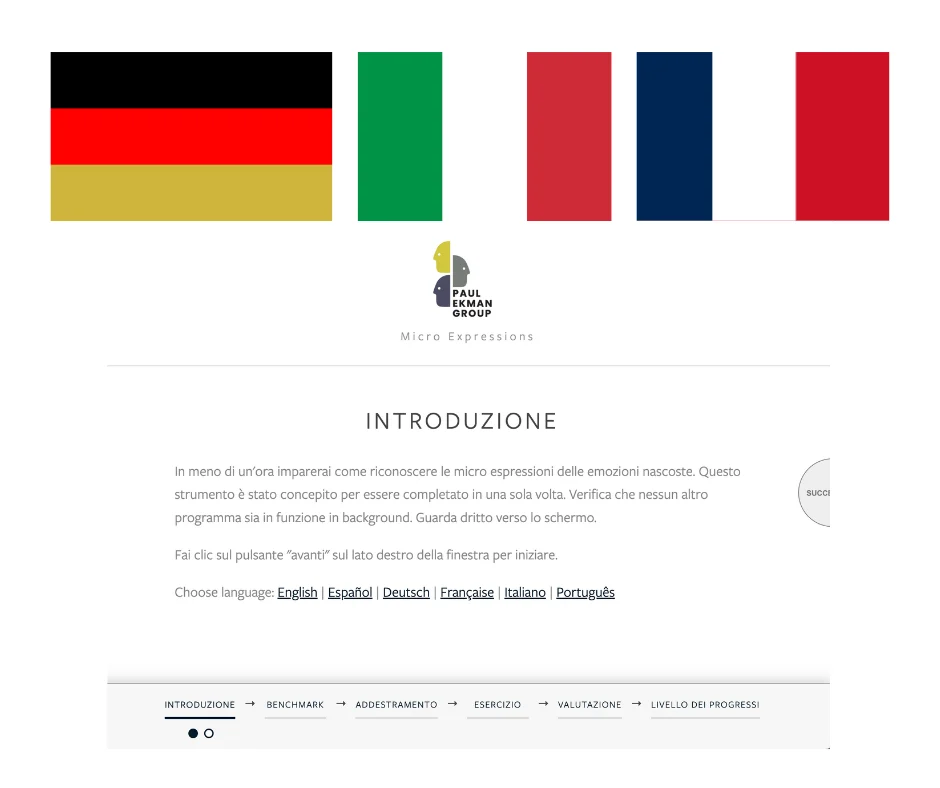
Paul Ekman Group, a leading authority in the science of emotions and micro expressions, has announced a significant expansion of its online training offerings, now making its renowned micro expression analysis tools available in Italian, French, and German. This strategic move democratizes access to crucial emotional intelligence and deception detection skills for a broader international audience, reinforcing the organization’s commitment to a global dissemination of its science-based curriculum. The expanded language options, introduced in October 2025, build upon existing translations in Spanish and Portuguese, further solidifying the Paul Ekman Group’s presence across Europe and beyond.
The newly translated suite encompasses all seven core online micro expression training tools, integrated within the organization’s comprehensive training packages. This means that individuals, educators, professionals in various fields, and organizations can now engage with Paul Ekman’s scientifically validated methodologies in their native languages. The user experience is designed for seamless integration, with learners prompted to select their preferred language at the commencement of each micro expression course. This initiative directly addresses a long-standing need for accessible, high-quality emotional awareness training that transcends linguistic barriers.
The Science of Micro Expressions and Their Universal Significance
Micro expressions, defined as fleeting, involuntary facial movements that betray a person’s genuine emotional state, represent a critical area of human interaction and understanding. These subtle expressions, often lasting mere fractions of a second, can surface even when individuals attempt to conceal their true feelings. Dr. Paul Ekman’s pioneering research, spanning decades, has established the universality of certain basic emotions and their corresponding facial expressions across diverse cultures. This foundational work underpins the efficacy of the training programs, which aim to equip individuals with the ability to recognize these nuanced signals.
The ability to detect micro expressions is not merely an academic pursuit; it holds profound practical implications across numerous professional domains and personal relationships. For instance, law enforcement officers can leverage this skill to assess credibility and detect deception during interrogations or witness interviews, potentially leading to more accurate investigations and improved public safety. Educators can gain deeper insights into their students’ engagement and emotional well-being, fostering a more supportive and responsive learning environment. Mental health professionals can enhance their diagnostic capabilities and therapeutic interventions by better understanding the underlying emotional states of their patients. Corporate leaders can improve negotiation outcomes, team dynamics, and customer relations through more nuanced emotional perception.
A Timeline of Global Accessibility
The expansion into Italian, French, and German represents a calculated step in the Paul Ekman Group’s ongoing mission to make its expertise accessible worldwide. The organization has historically operated with a global perspective, with its resources and tools reaching individuals in over 230 countries. The initial translation efforts into Spanish and Portuguese laid the groundwork for this latest phase of linguistic expansion.
- Early Research and Foundation: Dr. Paul Ekman’s foundational work on facial expressions of emotion and their universality began in the mid-20th century. This research, conducted across numerous cultures, established the scientific basis for understanding how emotions are expressed and perceived.
- Development of Training Tools: Over the subsequent decades, Dr. Ekman and his colleagues translated this scientific understanding into practical training methodologies, culminating in the development of specialized tools designed to teach the recognition of micro expressions and other emotional cues.
- Initial Online Offerings: The Paul Ekman Group began offering online training modules, making its expertise more broadly accessible than through in-person workshops alone.
- Spanish and Portuguese Translations: Recognizing the significant linguistic communities these languages represent, the organization first translated its core training materials into Spanish and Portuguese. This initial multilingual effort proved successful, demonstrating a strong demand for localized content.
- October 2025: Expansion to Italian, French, and German: The most recent announcement marks a significant expansion, with the launch of fully translated training programs in Italian, French, and German. This strategic move targets key European markets and acknowledges the vast number of speakers of these languages globally.
- Future Expansion: The organization has indicated that it is actively working on further language translations, signaling a continued commitment to global outreach.
This chronological progression highlights a deliberate and strategic approach to disseminating vital emotional intelligence skills on an international scale, moving from foundational research to localized, accessible digital learning.
Supporting Data and the Impact of Emotional Awareness
The demand for effective emotional intelligence training is underscored by a growing body of research and anecdotal evidence. Studies have consistently shown a correlation between high emotional intelligence and success in various aspects of life, including career advancement, leadership effectiveness, and personal well-being. For example, research published in journals such as the Journal of Applied Psychology has indicated that emotional intelligence is a significant predictor of job performance, particularly in roles requiring interpersonal interaction.
The ability to accurately read micro expressions is a sophisticated component of emotional intelligence. It allows individuals to move beyond surface-level interactions and gain a more profound understanding of unspoken cues. This can be particularly impactful in high-stakes environments:
- Negotiations: Understanding the subtle emotional shifts in counterparties can provide a crucial advantage, allowing for more strategic positioning and successful outcomes.
- Customer Service: Recognizing a customer’s underlying frustration or satisfaction, even when not explicitly stated, can lead to more effective problem resolution and enhanced customer loyalty.
- Team Collaboration: In teams, detecting subtle signs of discomfort or disagreement can allow for proactive intervention, preventing misunderstandings and fostering a more cohesive working environment.
- Personal Relationships: Improved emotional awareness can lead to more empathetic responses, better conflict resolution, and stronger interpersonal bonds.
The Paul Ekman Group’s training programs are built on the scientific premise that while the intensity of expressed emotions can vary culturally, the fundamental facial expressions associated with basic emotions are universal. This universality is a critical factor in the effectiveness of the training, as it provides a common language of human emotion that can be learned and applied across different cultural contexts.
Official Statements and Reactions
While specific direct quotes from external parties were not provided in the original announcement, the expansion can be inferred to be met with positive reception from professionals and organizations who have long sought such resources. A spokesperson for the Paul Ekman Group, in a statement accompanying the announcement, emphasized the organization’s core mission: "At Paul Ekman Group, our mission is to help people around the world better understand themselves and others by improving emotional awareness skills. With these new translations, we’re making it easier for individuals, educators, professionals, and organizations across Europe and beyond to learn micro expressions online in their native languages."
This sentiment reflects a broader trend towards prioritizing emotional intelligence in professional development and personal growth. Educational institutions, corporate training departments, and government agencies are increasingly recognizing the value of such specialized skills. The addition of Italian, French, and German is likely to be welcomed by these sectors within the respective linguistic markets.
Broader Impact and Implications for Global Communication
The expansion of micro expression training into new languages has significant implications for global communication and interpersonal understanding. In an increasingly interconnected world, the ability to navigate diverse cultural nuances and communicate effectively across linguistic divides is paramount.
- Enhanced Cross-Cultural Understanding: By providing training in multiple languages, the Paul Ekman Group is facilitating a deeper, more accurate understanding of human emotions, which can bridge cultural gaps and reduce misunderstandings.
- Democratization of Expertise: Previously, access to such specialized training might have been limited by language barriers. The new translations make this expertise accessible to millions more individuals, fostering a more informed and emotionally intelligent global populace.
- Advancement of Scientific Dissemination: This initiative serves as a model for how scientific research can be translated into practical tools that benefit society on a global scale. It highlights the importance of making knowledge accessible beyond its original context.
- Future-Proofing Skills: As artificial intelligence and automation continue to evolve, uniquely human skills like emotional intelligence and nuanced interpersonal perception become increasingly valuable. Training in micro expression analysis equips individuals with these enduring competencies.
The Paul Ekman Group has also expressed an openness to further expansion, actively soliciting feedback on desired languages. This proactive approach suggests a long-term vision for global accessibility, aiming to continually adapt and respond to the evolving needs of its international community. Individuals interested in suggesting new language options are encouraged to contact the organization directly.
In conclusion, the launch of micro expression training in Italian, French, and German by the Paul Ekman Group represents a pivotal moment in the global dissemination of emotional intelligence education. By breaking down linguistic barriers, the organization is empowering a wider audience with the critical skills needed to understand themselves and others more profoundly, fostering greater empathy, accuracy, and insight in a world that increasingly values these human capacities. The commitment to ongoing expansion underscores a dedication to building a more emotionally aware and connected global community.
