

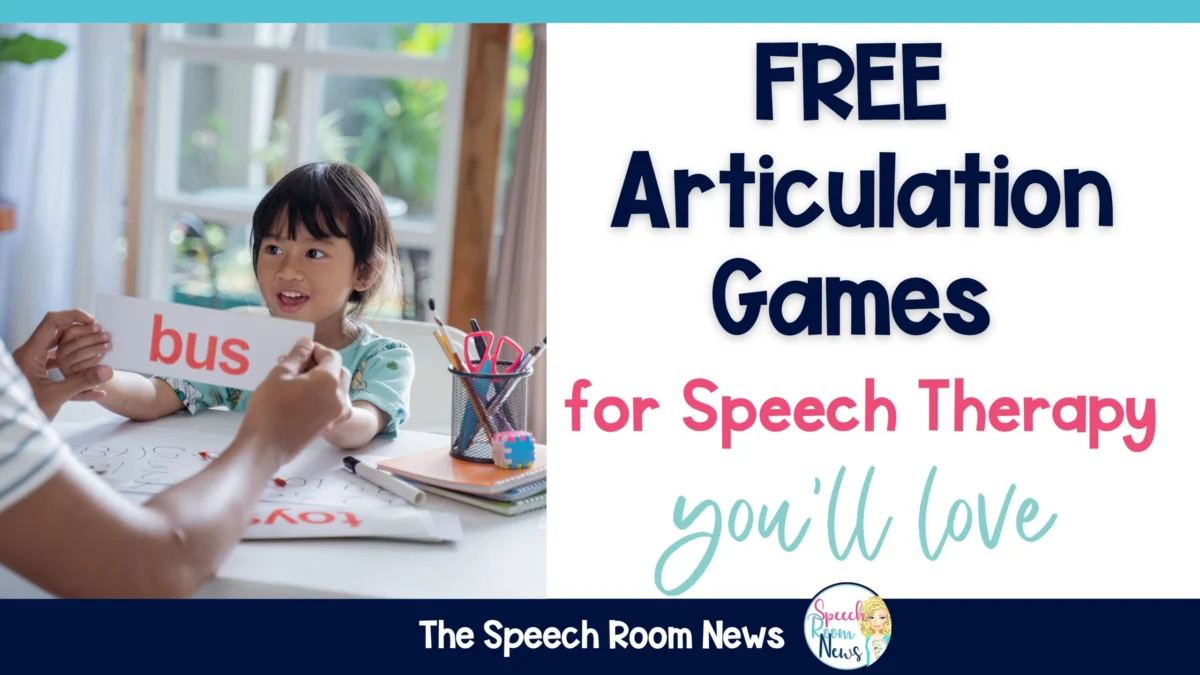
The landscape of speech-language pathology is undergoing a significant evolution, driven by a growing recognition of the efficacy of play-based interventions and an increasing demand for accessible, engaging resources. Central to this transformation is the proliferation of free articulation games, which are proving instrumental in enhancing student engagement, facilitating skill generalization, and democratizing access to crucial therapeutic tools across diverse settings, from in-person clinics to virtual sessions and home practice. This shift is not merely a convenience; it represents a strategic advancement in addressing speech sound disorders (SSD) and fostering comprehensive language development for children globally.
The Foundational Importance of Articulation Therapy
Articulation refers to the clear and precise production of speech sounds. When a child struggles with articulation, they may substitute, omit, add, or distort sounds, leading to speech that is difficult to understand. Speech sound disorders are among the most common communication disorders in children, affecting an estimated 8% to 9% of preschool-aged children and up to 5% of school-aged children. Untreated, these disorders can impact literacy development, academic performance, and social-emotional well-being. Traditional articulation therapy typically involves repetitive drills and targeted practice, which, while effective, can sometimes be monotonous for young learners. The integration of games injects an element of fun and motivation, making the often-challenging process of correcting speech sounds more palatable and ultimately, more successful. This play-centric approach aligns with developmental psychology principles, which emphasize that children learn best through active engagement and enjoyable experiences.

The Evolution of Therapeutic Resources: A Chronological Perspective
Historically, speech therapy relied heavily on physical flashcards, worksheets, and specialized therapeutic toys. While effective, these materials often required significant investment from clinicians or school budgets and were limited in their adaptability for home practice or teletherapy. The late 20th and early 21st centuries saw the gradual introduction of computer-aided instruction, but it was the rapid advancements in digital technology and the widespread availability of the internet that truly revolutionized resource accessibility.
The 2010s marked a turning point with the rise of educational apps and dedicated online platforms. The COVID-19 pandemic further accelerated this digital transition, forcing therapists and educators to innovate rapidly and embrace virtual tools. This period saw an explosion in the creation and sharing of free online and printable resources, often developed by speech-language pathologists (SLPs) themselves, who understood the practical needs of their peers and the families they served. This collective effort has cultivated a rich ecosystem of no-cost materials that support diverse learning styles and therapeutic goals, ensuring that high-quality intervention is not solely contingent on financial resources.
Leveraging Digital Frontiers: Interactive Online Games

Interactive online games have emerged as a cornerstone of modern articulation therapy, offering dynamic and engaging experiences that transcend the limitations of static materials. Their appeal lies in their immediate feedback mechanisms, vibrant visuals, and gamified structures that captivate young minds.
- ABCya’s “Alphabet BINGO”: This platform, designed primarily for early learners, skillfully integrates letter sound recognition with a familiar game format. By focusing on initial phoneme awareness, it lays crucial groundwork for articulation development. The visual and auditory cues reinforce correct sound-letter associations, making it particularly effective for pre-readers and those beginning their phonological journey. Its simplicity and intuitive interface ensure accessibility for even the youngest students, fostering a positive initial experience with digital learning.
- Articulation Station App (Lite Version): Often cited as a gold standard in speech therapy apps, the free "Lite Version" provides a valuable entry point. It typically includes several target sounds and various interactive activities, such as flashcards, matching games, and sentence completion. The app’s structure allows for focused practice at different levels of complexity (isolation, syllable, word, phrase, sentence), which is critical for systematic articulation intervention. Its availability on common mobile devices makes it a portable and convenient tool for both therapists and parents.
- Language Playroom: This dedicated website stands out for its growing collection of free online games specifically tailored for articulation. The continuous expansion to include fluency, language, and social communication activities highlights a commitment to holistic speech and language development. The site’s games are often designed with specific articulation targets in mind, providing targeted practice in a fun, browser-based environment that requires no downloads, simplifying access.
- Phoneme Pop: A classic example of gamified learning, "Phoneme Pop" engages children by allowing them to interact directly with words containing their target sounds. The act of "popping" bubbles provides immediate positive reinforcement and a clear, enjoyable task that maintains focus. This type of game is particularly effective for auditory discrimination and sound identification within words, crucial steps in mastering articulation.
- Boom Cards: These interactive, self-grading digital task cards have gained immense popularity within the educational and therapeutic communities. Available on platforms like Teachers Pay Teachers and Boom Learning, a vast array of free Boom Card decks exists for nearly every articulation sound. Their drag-and-drop, multiple-choice, and fill-in-the-blank formats make them highly versatile. SLPs can assign these decks for homework, use them during teletherapy, or integrate them into in-person sessions, benefiting from their data-tracking capabilities and engaging interactive elements. The ability for therapists to create and share their own decks further fosters a collaborative professional environment.
Tangible Learning: Printable Games for Hands-On Practice
While digital resources offer undeniable advantages, printable games retain a vital role, especially for hands-on learners, contexts with limited technology access, or for reinforcing skills through traditional play. They provide a tangible, screen-free alternative that can be easily customized and sent home for consistent practice.
- Whack-a-Sound /S/ Self-Checking Articulation Freebie: This game exemplifies how printables can be both fun and diagnostically valuable. Geared towards younger students (preschool to 2nd grade), it focuses on identifying the position of a target sound (initial, medial, or final) within a word. The "self-checking" aspect empowers children to monitor their own progress, fostering independence and meta-linguistic awareness. This type of activity is crucial for developing phonological awareness, a precursor to successful articulation and literacy.
- Articulation Worksheets from Super Duper Publications: Super Duper Publications is a renowned provider of speech therapy materials, and their offering of free printable worksheets is a testament to the value of foundational paper-based activities. These worksheets often include various exercises, such as word lists, picture-based sound identification, and simple sentence completion, providing structured practice that complements more dynamic game-based approaches. Their utility lies in their straightforward design and targeted approach to specific phonemes.
- Hot Chocolate Articulation Board Game: Seasonal or themed games like this board game enhance engagement by connecting therapy to relatable experiences. The flexibility to use flashcards with target words means it can be adapted for any sound or skill level. The simple mechanic of rolling a die and moving spaces provides a clear objective, while the requirement to produce a target word before moving reinforces articulation goals in a fun, social context. This type of game encourages turn-taking, problem-solving, and sustained attention.
- 100 Trial Challenges by Peachie Speechie: The concept of "100 trials" is a cornerstone of articulation therapy, emphasizing the high volume of repetitions needed for motor learning. These themed and holiday-specific sheets transform what could be a mundane task into an engaging challenge. By providing a structured yet visually appealing format for tracking trials, they motivate students to achieve their repetition goals while making it easy for SLPs and parents to monitor progress. The thematic variety keeps the practice fresh and relevant throughout the year.
- Color & Play Ocean Articulation Bingo: Bingo is a universally popular game that adapts seamlessly to articulation practice. These printable cards, featuring target words often accompanied by engaging ocean animal imagery, can be used effectively in both individual and group settings. The act of coloring or marking off spaces adds a kinesthetic element, while the competitive or collaborative nature of Bingo encourages participation and repeated sound production. This format is excellent for practicing target sounds in a randomized, yet structured, manner.
Beyond Materials: Free Articulation Games for Everyday Life

The ultimate goal of articulation therapy is the generalization of newly acquired sounds into spontaneous speech in natural environments. "No-materials-needed" games, particularly those playable in settings like a car, are invaluable for this purpose, transforming everyday situations into therapeutic opportunities. They encourage creative thinking, auditory processing, and sustained attention without the need for screens or physical props.
- I Spy: Modifying this classic game to focus on objects starting with a specific target sound provides immediate, context-rich practice. For example, if the target sound is /s/, a child might "spy something shiny" or "something striped." This game strengthens auditory discrimination, expands vocabulary, and encourages spontaneous use of target sounds in descriptive language.
- 20 Questions: This deductive reasoning game encourages children to formulate questions and use descriptive language to identify an object, person, or place. By guiding children to incorporate their target articulation sounds into their questions and responses, SLPs and parents can embed practice naturally. The cognitive demands of the game also support language organization and critical thinking.
- Rhyme Time: Focusing on phonological awareness, "Rhyme Time" involves taking turns saying words that rhyme with a target word. This activity not only reinforces articulation by requiring precise sound production but also enhances auditory memory and phonemic manipulation skills, which are foundational for reading and spelling. The playful nature of rhyming makes it an enjoyable way to practice.
- The Alphabet Game: Going through the alphabet and identifying words that start with each letter is a versatile game. It can be adapted to target specific articulation sounds by focusing on letters relevant to the child’s goals or by emphasizing clear pronunciation of each word. This game supports letter-sound correspondence, vocabulary expansion, and sustained attention during travel or downtime.
Broader Implications and Impact
The proliferation of free articulation games carries profound implications for the field of speech-language pathology and the broader educational landscape.
- Enhanced Accessibility and Equity: For families with limited financial resources, or those in remote areas without easy access to specialized clinics, free resources are a game-changer. They provide an equitable pathway to supplementary practice and reinforce therapeutic gains, potentially reducing disparities in speech and language development outcomes.
- Empowerment of Parents and Caregivers: Free games empower parents and caregivers to become active participants in their child’s therapy journey. By providing readily available, easy-to-understand tools, these resources enable consistent home practice, which is critical for skill generalization and long-term retention. This collaboration between home and clinic/school is a key predictor of therapeutic success.
- Increased Therapist Efficiency and Innovation: For speech-language pathologists, free resources offer a vast, diverse, and cost-effective toolkit. They reduce the burden of material creation, allowing SLPs to spend more time on direct therapy, assessment, and individualized planning. Furthermore, the collaborative nature of platforms like Teachers Pay Teachers fosters a community where SLPs share innovative ideas, continuously enriching the pool of available resources. The ability to quickly adapt materials for teletherapy sessions has also streamlined service delivery.
- Improved Student Engagement and Outcomes: The primary beneficiaries are the students themselves. By transforming therapy into an enjoyable experience, these games increase motivation, reduce resistance, and foster a positive attitude towards learning. This enhanced engagement translates directly into more consistent practice, better skill acquisition, and ultimately, improved articulation and communication abilities. Research consistently demonstrates that play-based interventions lead to better generalization of skills than traditional drill-and-practice methods alone.
- Fostering a Growth Mindset: When therapy feels like play, children are more likely to persevere through challenges and view their progress as a fun achievement rather than a tedious task. This fosters a growth mindset, encouraging resilience and self-efficacy in their communication journey.
Challenges and Future Directions

While the benefits are substantial, it is also important to acknowledge potential challenges. The quality of free resources can vary, necessitating careful vetting by qualified SLPs. Concerns about screen time, while mitigated by the availability of printable and material-free games, remain a consideration for digital resources. Moreover, these tools are most effective when used under the guidance of a trained speech-language pathologist, as they provide diagnosis, individualized goals, and ongoing progress monitoring.
Looking ahead, the integration of artificial intelligence (AI) in speech therapy holds promise for even more personalized and adaptive game-based interventions. Virtual reality (VR) and augmented reality (AR) could offer immersive environments for articulation practice. The trend towards open educational resources and collaborative content creation is likely to continue, further enriching the pool of accessible tools.
In conclusion, the widespread availability and strategic integration of free articulation games represent a pivotal advancement in speech-language pathology. These resources not only make therapy more engaging and effective but also significantly enhance accessibility and equity, empowering children, families, and therapists alike. As the field continues to embrace innovation, the spirit of playful learning, supported by accessible tools, will undoubtedly remain at the forefront of fostering clear and confident communication for all.
